Table of Contents >> Show >> Hide
- How We Chose the Best Rotary Tools of 2025
- Top Rotary Tool Picks at a Glance
- Best Overall Corded Rotary Tool: Dremel 4300
- Best Overall Cordless Rotary Tool: Dremel 8250 (12V Brushless)
- Best for Pros and Battery-Platform Users: Milwaukee M12 Brushless Rotary Tool
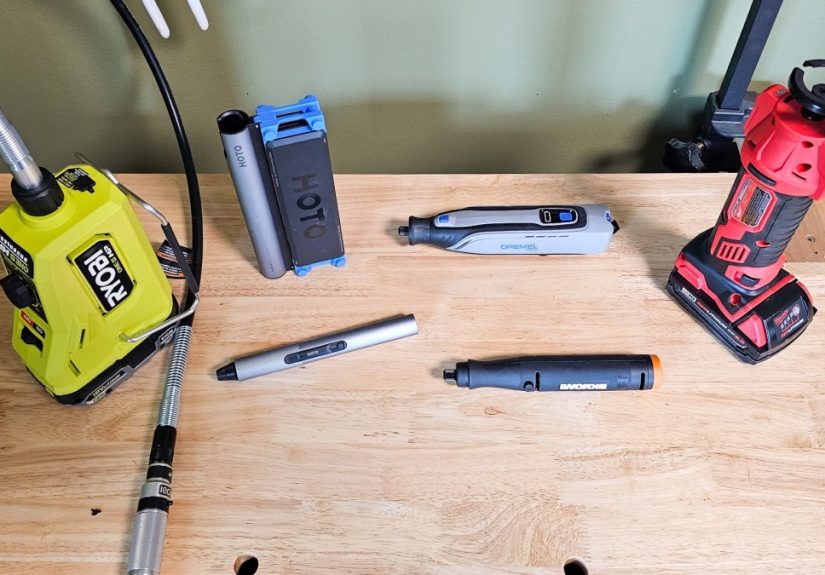
- Best for Detail Work at a Bench: RYOBI 18V ONE+ Rotary Tool Station
- Best Budget Rotary Tool That Still Delivers: Dremel 3000
- Best Lightweight Rotary Tool for Quick Jobs: Dremel Lite 7760 (and compact cordless options)
- Best for Design-Lovers and Light Crafting: Hoto SnapBloq Rotary Tool
- What to Look for When Buying a Rotary Tool in 2025
- Rotary Tool Jobs You’ll Actually Do (and Which Pick Fits)
- Safety Tips (Because Spinning at High RPM Is Not a Vibe)
- Bottom Line: The Best Rotary Tools of 2025
- Experiences That Make You Appreciate a Great Rotary Tool (500+ Words)
Rotary tools are the tiny tornadoes of the DIY world: they spin fast, do a little bit of everything, andif you’re not carefulwill happily turn your
“quick fix” into a “why is it smoking?” situation. In 2025, the category is better than ever: corded classics keep getting smoother and smarter, cordless
models are finally strong enough to feel like real tools (not just “portable sanding noises”), and accessory ecosystems have gotten so big you could start a
small museum of tiny grinding bits.
This guide breaks down the best rotary tools of 2025 with real-world reasoning: which ones feel powerful, which ones feel precise, which kits are actually
useful (instead of 200 mystery accessories you’ll never touch), and what to buy if you already live in a battery platform. Let’s get you the right spinner.
How We Chose the Best Rotary Tools of 2025
A rotary tool is only as good as the moments when you need it mostcutting, carving, sanding, grinding, polishing, and doing all of that without shaking
like a caffeinated hummingbird. Here’s what matters when picking a winner in 2025:
- Power under load: The best tools keep speed and torque when cutting metal, shaping hardwood, or grinding stubborn material.
- Speed control that makes sense: Wide RPM range is great; predictable, controllable speed is better.
- Ergonomics and vibration: You’re holding this thing like a fat marker for long stretchescomfort and balance are not optional.
- Accessory ecosystem: A rotary tool without good accessories is a sports car with bicycle tires.
- Kit value: We favor kits that include the attachments you’ll actually use (flex shafts, cutting guides, decent cases), not just bulk.
- Use-case fit: “Best” depends on whether you’re polishing jewelry, carving wood, or cutting bolts in a cramped corner.
Top Rotary Tool Picks at a Glance
- Best Overall (Corded): Dremel 4300
- Best Overall (Cordless): Dremel 8250 (12V brushless)
- Best for Trades & Battery-Platform Folks: Milwaukee M12 Brushless Rotary Tool
- Best for Detail Work at a Bench: RYOBI 18V ONE+ Rotary Tool Station
- Best Budget “Do-It-All” Kit: Dremel 3000
- Best Lightweight, Quick Jobs: Dremel Lite 7760 (or compact cordless options)
- Best for Design-Lovers & Light Crafting: Hoto SnapBloq Rotary Tool
Best Overall Corded Rotary Tool: Dremel 4300
If rotary tools had a “reigning champ” belt, the Dremel 4300 would still be walking into 2025 wearing itconfident, slightly overprepared, and ready to
sand, cut, carve, polish, and generally make other tools feel underemployed. It’s powerful for a handheld rotary tool, offers a broad variable-speed range,
and works seamlessly with a huge lineup of attachments.
Why it wins
- Power and consistency: Strong performance on tougher tasks like cutting and grinding without feeling bogged down.
- Accessory flexibility: A keyless chuck option makes swapping accessory shank sizes less of a scavenger hunt.
- Built for control: Better lighting and attachment options help when your project involves precision instead of brute force.
Best for
DIYers who want one rotary tool that can handle nearly everything: sharpening lawn tools, cleaning metal, carving wood signs, trimming plastic, sanding tiny
corners, polishing headlights, or cutting a stuck screw when your patience is already gone.
Real-world example
Imagine restoring a vintage cabinet: you’ll sand delicate profiles, grind a rusty hinge pin, polish hardware, and touch up a tight corner where your sander
can’t fit. The 4300’s “steady and strong” feel matters more than raw RPM bragging rights.
Best Overall Cordless Rotary Tool: Dremel 8250 (12V Brushless)
Cordless rotary tools used to be the “nice in theory” optiongreat until you asked them to do anything remotely serious. That’s changed. The Dremel 8250 is
the cordless pick that finally feels like it belongs in the main toolbox, not the “maybe for crafts” drawer. The brushless motor delivers smoother power,
and the tool feels stable when carving, sanding, or cutting.
Why it shines in 2025
- Brushless efficiency: Better power delivery and typically less heat and wear than brushed designs.
- Serious capability: It’s widely regarded as Dremel’s most capable cordless rotary tool class.
- Convenience without surrender: You get mobility without feeling like you traded away performance.
Best for
People who hate cords (or have a workspace where cords become booby traps). Also great for jobs outside the shoptouch-ups in the garage, patio repairs, or
detail work where extension cords are just another argument waiting to happen.
Real-world example
You’re carving hardwood for a small sign or shaping an inlay: the 8250’s smoothness matters because vibration is the enemy of clean detail. Cordless makes it
easy to rotate around the work without dragging a cable across your project like an uninvited snake.
Best for Pros and Battery-Platform Users: Milwaukee M12 Brushless Rotary Tool
Milwaukee’s M12 ecosystem is basically a lifestyle at this point, and the M12 brushless rotary tool is a strong reason people stay committed. It’s compact,
has a sensible multi-speed setup, and is designed for people who want jobsite-ready control without juggling cords.
What makes it a smart pick
- Ergonomic grip and control: Built to be held close for precision, not just “point-and-pray.”
- Brushless motor + practical speed steps: Speed selection is straightforward and repeatable.
- Battery convenience: If you already run M12 batteries, this becomes an easy “grab it and go” tool.
Best for
Tradespeople and serious DIYers who already own M12 batteries, plus anyone who wants cordless power with a professional feel for cutting, sanding, deburring,
and detail shaping.
Real-world example
Deburring a drilled hole in metal, cleaning up a weld edge, trimming a plastic electrical box, then switching to a polishing accessory for a quick finish.
That’s the M12 rotary tool’s comfort zone: lots of short, precise tasks across different materials.
Best for Detail Work at a Bench: RYOBI 18V ONE+ Rotary Tool Station
If you’ve ever wished your rotary tool felt more like a pen, RYOBI’s Rotary Tool Station is the “why didn’t I do this sooner?” option. The station setup
places the motor in a base and uses a flexible shaft to a pen-style handpiece, making it easier to do controlled detail work for longer sessions.
Why the station format works
- Pen-like precision: A smaller handpiece can be easier to control for engraving, carving, and delicate sanding.
- Comfort for longer sessions: Less hand fatigue compared with gripping a full-size rotary tool the whole time.
- Part of ONE+: If you already have RYOBI 18V batteries, it slides into your setup naturally.
Best for
Crafters, model builders, and DIYers who do a lot of engraving, carving, and fine sanding at a workbenchespecially when accuracy matters more than raw
muscle.
Real-world example
Engraving nameplates, cleaning up 3D prints, sanding tiny curves on a project box, or polishing small metal parts. The pen-like feel helps you steer, not
wrestle.
Best Budget Rotary Tool That Still Delivers: Dremel 3000
Not everyone needs the top-end model with every bell, whistle, and gadget that looks suspiciously like it belongs in a dentist’s office. The Dremel 3000
remains a reliable budget-friendly option that still covers the fundamentals: variable speed, broad accessory compatibility, and enough power for common home
and hobby tasks.
Why it’s a great “first real rotary tool”
- Solid capability for the price: Plenty for sanding, light cutting, carving softwoods, polishing, and cleaning tasks.
- Massive accessory compatibility: A huge ecosystem means you can upgrade your bits and attachments over time.
- Lower-stakes learning curve: You can learn technique without feeling like you’re risking a premium tool.
Best for
Beginners, apartment DIYers, hobbyists, and anyone who wants a dependable rotary tool without spending like you’re opening a custom guitar shop.
Best Lightweight Rotary Tool for Quick Jobs: Dremel Lite 7760 (and compact cordless options)
Sometimes you don’t need “maximum performance.” Sometimes you need “I want to polish this, trim that, and not wake up the whole household.” Lightweight
cordless rotary tools are great for small sanding jobs, light polishing, minor trimming, and quick touch-upsespecially when you’re working in tight spaces.
Where light-duty tools win
- Convenience: Grab it, use it, put it awayno cord, no setup ceremony.
- Comfort: Less fatigue for quick tasks and delicate handling.
- Better for “tiny” work: Great for craft cleanup, gentle polishing, and small sanding jobs.
The tradeoff is simple: they’re not ideal for heavy grinding or extended cutting through metal. If your projects are mostly detail and finishing, you’ll
love the lighter feel. If you need power under load, go with the corded champ or a brushless cordless model.
Best for Design-Lovers and Light Crafting: Hoto SnapBloq Rotary Tool
Not every rotary tool is trying to look like it survived a construction site. The Hoto SnapBloq tool is part of a modular, design-forward toolkit aimed at
hobbyists and casual tinkerers. It’s compact, USB-C charged, and feels more like premium tech than traditional shop gear.
Who should consider it
- Apartment DIYers and hobbyists: Light polishing, sanding, and small craft tasks.
- People who value portability: A tidy kit you’ll actually store and carry.
- Anyone who wants “nice to use” over “maximum power”: Great for casual projects, not heavy-duty work.
The honest truth: tools like this prioritize convenience and style. For extended, demanding use, the power and runtime limits show up. For light tasks, it’s
fun, clean, and approachablelike the rotary tool equivalent of a minimalist desk setup.
What to Look for When Buying a Rotary Tool in 2025
Corded vs. cordless
Corded is still king for long sessions and heavy loads. You’ll get consistent power and never wait on a battery. Cordless
wins for mobility, quick jobs, and work in awkward spaces. In 2025, brushless cordless tools finally make the cordless choice feel “primary,” not
“backup”especially if you already own batteries in that platform.
Speed range (and why it matters)
Different materials like different speeds. Cutting metal often benefits from controlled speed and the right wheel. Polishing plastics and delicate materials
can require lower speeds to avoid melting or scorching. A wide RPM range is useful, but smooth control is what keeps you from ruining a finish in one
enthusiastic second.
Collet sizes and quick changes
Most rotary tool accessories use common shank sizes (often 1/8 inch), but you’ll run into specialty bits and smaller shanks for detail work. A keyless chuck
or a quick-change collet system can dramatically improve the experiencebecause stopping every five minutes to fight a tiny wrench is how villains are made.
Accessory ecosystem and attachments
Rotary tools are famous because they’re modular. The tool is the engine; the attachments are the personality. When comparing brands, consider whether you
want:
- Flex shaft: For pen-like control and less fatigue during engraving and carving.
- Right-angle attachment: For tight corners and awkward cuts.
- Cutting guides / circle cutters: For more repeatable results in plastic, wood, and thin materials.
- Shield / guard accessories: For cleaner, safer cutting and grinding.
Rotary Tool Jobs You’ll Actually Do (and Which Pick Fits)
Cutting and trimming
For cutting bolts, trimming tile edge pieces, or slicing thin metal rod, prioritize the corded Dremel 4300 or a powerful brushless cordless option (Dremel
8250 or Milwaukee M12 brushless). Use the right cutting accessories and keep control over speed and pressure.
Carving and engraving
If your projects involve wood carving, sign making, detail engraving, or cleaning up intricate cuts, choose comfort and stability first. A station-style
setup (RYOBI Rotary Tool Station) is especially friendly for precision because the handpiece feels more like a pen than a power tool.
Sanding and surface prep
Sanding inside spindles, tight corners, grooves, and curved profiles is where rotary tools feel like magic. For occasional sanding, the Dremel 3000 is great.
For longer sessions, the comfort and smoothness of the higher-end models matter.
Polishing and cleaning
Polishing metal hardware, cleaning rust spots, shining small parts, or restoring cloudy headlights can all be rotary-tool jobs. Lower speeds and soft
polishing accessories help you avoid overheating materials and leaving swirl marks.
Safety Tips (Because Spinning at High RPM Is Not a Vibe)
- Wear eye protection: Cutting wheels and tiny fragments do not respect personal space.
- Control dust: Sanding and grinding can create fine particleswork in a ventilated area and consider a dust mask.
- Let the tool do the work: Excess pressure increases heat, wears accessories faster, and can reduce control.
- Match speed to the job: Too fast can melt plastics or scorch wood; too slow can snag or chatter.
- Use the right accessory: “Close enough” is how you end up with a shattered wheel and a new fear of loud noises.
Bottom Line: The Best Rotary Tools of 2025
If you want one tool that can handle almost anything, the Dremel 4300 remains the safest “buy once, use forever” corded option. If you
want cordless freedom without giving up muscle, the Dremel 8250 is the standout. For tradespeople and anyone invested in a battery
ecosystem, the Milwaukee M12 brushless rotary tool is a clean, powerful pick. And if you live for fine detail work at a bench, the
RYOBI Rotary Tool Station is a precision-friendly setup that can feel more controlled than a handheld barrel tool.
The best rotary tool is the one you’ll actually useso pick the one that matches your projects, your workspace, and your tolerance for cords.
Experiences That Make You Appreciate a Great Rotary Tool (500+ Words)
Rotary tools have a funny way of becoming “the tool you didn’t know you needed” until you own onethen suddenly you’re finding excuses to use it like it’s a
new superpower. A lot of DIYers have the same first experience: they buy a rotary tool for one specific job (maybe cutting a stuck screw, or sanding a weird
corner), and within a month it’s the unofficial MVP of small repairs. The reason is simple: it’s fast to set up, easy to aim, and ridiculously adaptable.
One common “aha” moment happens during cleanup work. Big tools are great until the last 10% of a projectthe part where you’re trying to smooth an inside
edge, clean up a notch, or sand a curved profile without flattening it. That’s where a rotary tool feels like it was invented by someone who got tired of
filing things by hand. With the right sanding drum, you can sneak into tight spaces and refine shapes quickly, and it often feels more controllable than
trying to force a bulky sander into a corner it clearly doesn’t want to enter.
Another classic experience: polishing. People imagine polishing is glamorouslike a car-commercial montage. In reality, it’s usually you holding a part at an
awkward angle, trying not to fling it across the garage. A rotary tool makes polishing small hardware, fixtures, and metal trim more manageable because the
accessories are sized for detail work. The trick most folks learn pretty quickly is to keep the speed reasonable and let the polishing compound and wheel do
the work. Too much speed and pressure can heat materials fast, and then you’re not polishing anymoreyou’re experimenting with “new textures.”
Cutting is where the learning curve shows up. The first time someone uses a cutting wheel, they often discover two truths: (1) the tool is capable, and (2)
technique matters more than enthusiasm. When you keep a steady hand, maintain control, and don’t shove the wheel through the material, the cut feels smooth.
When you rush, it can chatter, bind, or wander. That’s why corded power or a strong brushless cordless tool feels so different: when a tool holds speed
under load, it’s easier to guide and far less likely to feel sketchy.
Detail carving and engraving are where people fall in love with precision setups. In many workshops and hobby spaces, the flexible-shaft “pen” approach gets
rave reviews because it reduces hand fatigue and improves control. It’s the difference between writing with a thick marker and writing with a fine pen: both
can do the job, but one feels more natural when you’re doing small, careful movements. If you do a lot of lettering on wood, engraving on soft metals, or
detailed sanding on mini projects, the pen-like feel can make the work calmer and more accurate.
Finally, there’s the “rotary tool rescue” momentwhen something breaks, sticks, strips, or refuses to cooperate. Maybe a rusty bolt won’t budge. Maybe a
plastic edge is too tight. Maybe you need to trim something by a hair. Rotary tools excel at these awkward, in-between situations: not big enough for an
angle grinder, not delicate enough for a hand file, and definitely too annoying to ignore. When you have a reliable rotary tool and a small collection of
quality accessories, you stop feeling stuck so often. You start thinking, “I can fix that,” and then you actually do.
That’s the real experience of owning one in 2025: it’s less about having a “cool tool,” and more about reducing friction. Small jobs become quicker. Detail
work becomes cleaner. Repairs become less intimidating. And yessometimes you’ll still end up with dust in your hair. But at least you’ll have the right
tool to clean it up.