Table of Contents >> Show >> Hide
- Before You Try a Muscle-Up, Earn the Right
- Muscles Worked in a Muscle-Up
- Way #1: How to Do a Strict Bar Muscle-Up
- Way #2: How to Do a Kipping Bar Muscle-Up
- Way #3: How to Do a Ring Muscle-Up
- Common Muscle-Up Mistakes
- A Simple Training Plan to Work Toward Your First Muscle-Up
- Which Type of Muscle-Up Should You Learn First?
- Real-World Experiences on the Road to a Muscle-Up
- Conclusion
- SEO Tags
If the pull-up is the cool kid of upper-body training, the muscle-up is that cool kid who also plays guitar, surfs before breakfast, and somehow never spills coffee on a white shirt. It looks flashy, sure, but it is not just for show. A good muscle-up blends pulling strength, pressing strength, grip, timing, shoulder stability, and body control into one smooth movement.
The catch? Most people try to brute-force it, and gravity responds with a polite but firm “absolutely not.” The good news is that there is more than one way to learn this skill. In this guide, you will learn three ways to do a muscle up: the strict bar muscle-up, the kipping bar muscle-up, and the ring muscle-up. You will also learn what strength you need first, what mistakes sabotage the movement, and how to practice without turning your shoulders into complainers.
Before You Try a Muscle-Up, Earn the Right
A muscle-up is an advanced bodyweight exercise. Translation: it is not the place to wing it. Before you chase your first rep, build a foundation with:
- Strict pull-ups: You should be able to pull your chest high with control, not fling your chin over the bar like it owes you money.
- Straight-bar dips or ring dips: The top half of a muscle-up is still a press, and your triceps need to know that.
- Grip strength: Weak hands end a muscle-up attempt faster than weak lats.
- Core tension: A loose midline turns a clean rep into a wiggly mystery.
- Shoulder mobility and scapular control: If you cannot control your shoulder blades, your transition will feel sticky and awkward.
If you are still building those basics, that is not bad news. It is actually the smart route. Plenty of great athletes spend weeks or months getting stronger with pull-up negatives, ring rows, support holds, scapular drills, and dips before a true muscle-up shows up. Boring? Maybe. Effective? Absolutely.
Muscles Worked in a Muscle-Up
The muscle-up is a full upper-body party. Your lats, biceps, rear delts, triceps, forearms, pecs, and core all pitch in. Your scapular stabilizers matter too, especially during the pull and transition. That is one reason the move feels so athletic: it is not just about one big muscle doing all the work. It is about coordination.
Way #1: How to Do a Strict Bar Muscle-Up
The strict bar muscle-up is the cleanest, strongest version of the skill. No giant swing, no dramatic dolphin action, no pretending momentum is strength. Just raw pulling power, sharp transition mechanics, and a strong press-out on top of the bar.
Why Learn It
If you want a muscle-up that looks controlled and feels earned, this is your move. It builds serious upper-body strength and teaches you to own every inch of the rep.
How to Do It
- Grip a straight bar just outside shoulder width.
- Start from a dead hang with your core braced and shoulders active.
- Pull explosively, aiming your chest as high as possible toward the bar.
- As you rise, lean your chest over the bar and bring your wrists around so the bar moves from below your chest to under your torso.
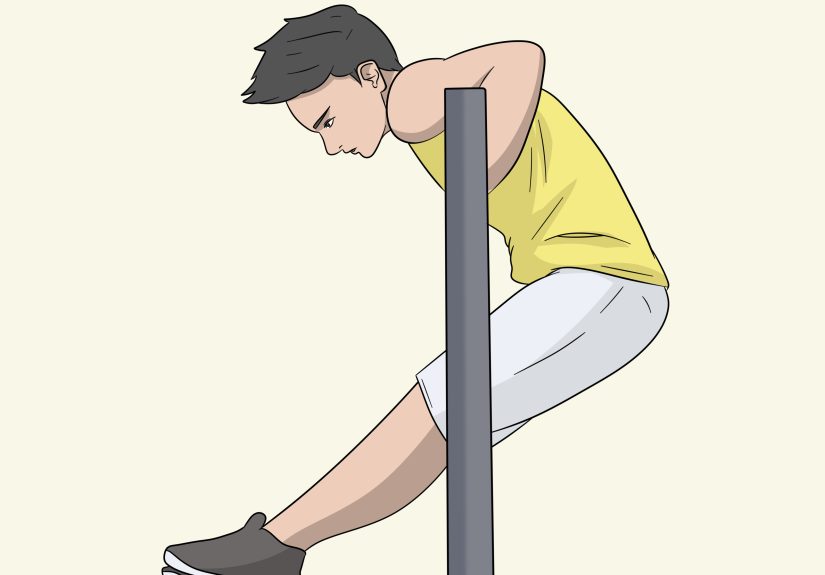
- Once your chest is over the bar, press down into a straight-bar dip until your elbows lock out.
- Lower under control if possible instead of dropping like a bag of laundry.
Best Cues
- “Pull to the ribs, not just to the chin.”
- “Keep the bar close.”
- “Chest over hands, then press.”
- “Stay tight through the abs and glutes.”
What Makes It Hard
The transition is the troublemaker. Many people can pull high and many people can dip, but connecting those two pieces is where the rep falls apart. If you get stuck right at the bar, you usually need more chest-to-bar pulling power, better timing, or more practice with transition drills.
Progressions for the Strict Bar Muscle-Up
- Chest-to-bar pull-ups
- Eccentric pull-ups and slow negatives
- Straight-bar dips
- Scapular pull-ups
- Low-bar transition drills
- Hollow holds and L-sit work
Way #2: How to Do a Kipping Bar Muscle-Up
The kipping bar muscle-up uses momentum from a controlled swing to help you travel over the bar. This version is common in CrossFit and other high-skill fitness settings. It is faster, more dynamic, and usually more accessible once you understand the rhythm. That said, it should not be your first stop if your strict basics are shaky.
Why Learn It
If you want to perform muscle-ups in workouts, string reps together, or compete in functional fitness, the kip is useful. Done well, it is efficient. Done badly, it looks like a panicked fish trying to escape a dock.
How to Do It
- Start in a strong hang on the bar with active shoulders.
- Move through a controlled arch and hollow swing, keeping your body long and tight.
- As the swing reverses, drive down on the bar and pop the hips upward.
- Pull hard as your body rises, guiding your chest over the bar.
- Rotate the wrists quickly and transition into the top position.
- Finish with a strong press-out above the bar.
Best Cues
- “Swing with purpose, not chaos.”
- “Use the hips, then pull.”
- “Stay hollow as you turn over.”
- “Think smooth, not wild.”
When to Use Caution
The kip adds speed and force. If your shoulders are unstable, your grip is weak, or your pull-up mechanics are sloppy, the kipping muscle-up can magnify every problem you already have. Learn to control the swing first. Learn to bar dip confidently. Then earn the turnover.
Progressions for the Kipping Bar Muscle-Up
- Kip swings
- Beat swings with hollow and arch control
- Chest-to-bar pull-ups
- Jumping transition drills on a low bar
- Bar dips
- Core drills such as hollow rocks and hanging knee raises
Way #3: How to Do a Ring Muscle-Up
The ring muscle-up is a different beast. Rings move, which means your body has to stabilize them while you pull, transition, and press. The reward is a beautiful, athletic movement that feels equal parts strength and circus wizardry.
Why Learn It
Rings allow a natural wrist path and can feel smoother once you understand the transition. They also expose weaknesses fast. If your ring support is shaky, your rings will tell on you immediately.
How to Do It
- Take a false grip, with the rings set high in the hands near the wrist crease.
- Hang with your core engaged and shoulders active.
- Pull the rings toward your chest or sternum, keeping them close to your body.
- Lean forward and roll your chest over the rings as your elbows move around and back.
- Land in the bottom of a dip position above the rings.
- Press to full support with the rings stable and close to your sides.
Best Cues
- “Keep the rings close.”
- “Pull deep to the sternum.”
- “Fast elbows around.”
- “Stay over the rings, then press.”
Why the False Grip Matters
On rings, the false grip shortens the distance between pull and press. Without it, the transition gets much tougher. Yes, the grip feels awkward at first. Your wrists may complain. That is normal. Like many useful skills, it starts out rude and becomes helpful later.
Progressions for the Ring Muscle-Up
- False-grip ring hangs
- Ring rows
- False-grip pull-ups
- Ring support holds
- Toe-assisted or low-ring transitions
- Deep ring dips
Common Muscle-Up Mistakes
1. Trying It Too Early
If you cannot do pull-ups and dips with control, the muscle-up is not your next logical step. It is your next logical fantasy. Build the basics first.
2. Pulling Too Low
A weak pull leaves no room for a clean transition. Think high chest, not just chin over bar.
3. Losing Core Tension
A floppy body leaks force. Keep your abs, glutes, and legs organized so power travels where it should.
4. Ignoring Shoulder Position
Poor scapular control often shows up as shrugged shoulders, loose support, and ugly turnover mechanics. Shoulder packing, rows, push-up plus work, and posture drills can help.
5. Depending on Bands for Everything
Assistance has a place, but too much band help can teach bad timing. Use drills that improve the actual transition and body position, not just your confidence level.
A Simple Training Plan to Work Toward Your First Muscle-Up
Day 1: Pull Strength
- Strict pull-ups: 4 sets
- Chest-to-bar pull-ups or negatives: 3 sets
- Ring rows or rows: 3 sets
- Hollow holds: 3 rounds
Day 2: Push Strength and Stability
- Bar dips or ring dips: 4 sets
- Ring support holds: 3 rounds
- Push-up plus: 3 sets
- Shoulder packing and Y-T-W drills: 2 rounds
Day 3: Skill Work
- Scapular pull-ups: 2 sets
- Low-ring or low-bar transition drills: 4 to 5 short sets
- Kip swings or false-grip practice, depending on your goal: 3 sets
- 1 to 3 high-quality muscle-up attempts if you are ready
Keep the volume reasonable. This is a skill, not a punishment. Quality reps beat sloppy marathons every time.
Which Type of Muscle-Up Should You Learn First?
If your goal is raw strength and clean mechanics, start with the strict bar muscle-up or strict ring progressions. If your goal is CrossFit-style workouts, the kipping bar muscle-up matters, but you should still build strict pulling and pressing first. If you love gymnastics-style control, the ring muscle-up is the most technical and arguably the most satisfying.
There is no universal best version. The best one is the variation that matches your goals, your equipment, and your current level of strength. The worst one is the one you attempt just because someone on social media did it shirtless with suspicious ease.
Real-World Experiences on the Road to a Muscle-Up
Most people imagine the muscle-up journey as one dramatic moment: you train, you struggle, you finally pop above the bar, and a choir of angels immediately sings your name. Real life is less cinematic. It is usually a long stretch of almosts.
At first, the experience is mostly humbling. You hang from the bar, pull as hard as you can, and discover that your body has several opinions about this plan. Your grip gets tired early. Your shoulders feel the work. Your abs realize they can no longer go through life pretending they are decorative. The first few sessions often feel less like skill practice and more like being introduced to muscles you forgot to invite.
Then something interesting happens. The movement starts to break into pieces. You stop seeing the muscle-up as one impossible stunt and start seeing it as a pull, a transition, and a press. That mental shift matters. Suddenly, every ring row, every deep dip, every false-grip hang, and every hollow hold feels connected to something bigger. Progress becomes easier to notice. Maybe you do not have a full muscle-up yet, but your chest gets higher on the bar. Your support hold gets steadier. Your transition drill feels less like a wrestling match with a shopping cart.
There is also a strange emotional pattern that comes with training this skill. One week you feel unstoppable. The next week your kip is off, your timing disappears, and you wonder whether your bar has become slippery out of spite. That is normal. The muscle-up is a coordination skill as much as a strength feat, so it can feel magical one day and suspiciously unavailable the next. That does not always mean you are weaker. Sometimes it just means your rhythm took a short vacation.
For many athletes, the first successful rep is not even pretty. It may involve a face that says “I am both thrilled and alarmed.” It may be a little asymmetrical. It may end with you on top of the bar looking around like you accidentally entered a restricted area. But it counts, and more importantly, it teaches you that the movement is real. After that first rep, training changes. Confidence shows up. You stop guessing and start refining.
Another common experience is realizing that the muscle-up improves more than the muscle-up. People often notice stronger pull-ups, better dip control, tougher grip, sharper body awareness, and more confidence on rings or bars in general. In other words, the chase itself pays off. Even before you master the skill, the work you do on the way there makes you a more complete athlete.
And yes, there is a final truth nobody tells beginners often enough: the muscle-up remains a skill that needs maintenance. You do not unlock it like a video game achievement and keep it forever without practice. But once you have built the strength, timing, and control, getting it back is much easier. Your body remembers. Your hands remember. Your ego definitely remembers.
So if your current muscle-up experience is mostly failed attempts, sore forearms, and muttering “one more try” under your breath, you are probably closer than you think. Stay patient, keep the drills honest, and let your technique catch up with your ambition. The rep usually arrives right after you stop trying to force it and start moving like you actually belong above the bar.
Conclusion
Learning 3 ways to do a muscle up gives you options, not confusion. The strict bar muscle-up builds serious strength and clean mechanics. The kipping bar muscle-up adds efficiency and flow for functional fitness. The ring muscle-up develops high-level control, coordination, and stability. Whichever version you choose, the formula stays the same: build your pull, own your dip, practice the transition, and respect your shoulders.
The muscle-up is not a party trick. It is a skill. Skills take practice, patience, and the willingness to look slightly ridiculous before you look impressive. Luckily, that is a pretty fair trade.