Table of Contents >> Show >> Hide
- What Is Myositis Ossificans?
- Common Causes and Risk Factors
- Symptoms of Myositis Ossificans
- How Myositis Ossificans Is Diagnosed
- Treatment Options for Myositis Ossificans
- Prognosis and Possible Complications
- Living With and Preventing Myositis Ossificans
- Real-World Experiences with Myositis Ossificans
If you’ve ever had a nasty muscle bruise from sports, a fall, or an accident and thought,
“This should be getting better by now… why does it feel like there’s a rock in there?”
myositis ossificans might be on the suspect list. The name sounds like a spell from a
fantasy novel, but it simply describes what’s happening: muscle (“myositis”) that starts
to turn into bone (“ossificans”) where bone absolutely does not belong.
In this guide, we’ll break down what myositis ossificans is, why it happens, how doctors
diagnose it, and what treatment and recovery typically look like. We’ll also talk about
how to reduce your risk after an injury and share some real-world experience-based tips
from the point of view of athletes and patients who’ve been through it.
What Is Myositis Ossificans?
Myositis ossificans is a benign (noncancerous) condition where bone forms inside muscle or
other soft tissues after an injury. It’s considered a type of heterotopic
ossification, meaning bone growth in places where bone isn’t supposed to be. In
most people, it shows up after a significant muscle contusion (deep bruise) or strain,
especially in large muscles like the quadriceps (front of the thigh) or brachialis (front
of the upper arm).
Typically, a blunt trauma causes bleeding inside the muscle. For reasons that aren’t
completely understood, the healing process sometimes goes off script. Instead of just
repairing muscle fibers, the body starts laying down cartilage and bone-like tissue in
the bruised area. Over several weeks, that soft bruise can slowly become a firm, often
tender lump.
The good news? Myositis ossificans is usually self-limited. That means
it tends to stabilize, and in many cases it partially or even significantly shrinks over
time. It’s annoying, sometimes painful, and can restrict motion but it is not bone
cancer and does not “spread” throughout your body.
Common Causes and Risk Factors
Trauma and Sports Injuries
The most common trigger is a direct blow to a muscle think a knee to the thigh in
soccer, a hard tackle in football, or a fall onto a hard surface. These contusions can
cause a large intramuscular hematoma (a collection of blood inside the muscle). If that
hematoma isn’t managed well or is repeatedly traumatized before it has time to heal,
the risk of myositis ossificans increases.
Athletes in contact or high-impact sports are therefore overrepresented in myositis
ossificans case reports. Repeated strain or early return to play, especially when the
muscle is still swollen and painful, can also contribute.
Other Triggers
While classic myositis ossificans follows blunt trauma, abnormal bone formation in soft
tissues (heterotopic ossification) can also occur after:
- Major orthopedic surgery (such as hip or elbow surgery)
- Fractures or dislocations near a joint
- Severe burns or blast injuries
- Spinal cord or traumatic brain injuries
In these cases, the process is very similar bone forms where it shouldn’t but the
pattern may be more widespread around joints rather than a single lump in one muscle.
Who’s Most at Risk?
You’re more likely to develop myositis ossificans if:
- You are a young, physically active person (especially between 15 and 35)
- You play contact sports such as football, rugby, hockey, or martial arts
- You had a large, deep bruise or strain that caused noticeable swelling and stiffness
- You kept playing or training hard on an injured muscle
- You had aggressive massage or forceful stretching very soon after the injury
There are also extremely rare genetic forms of heterotopic ossification
like fibrodysplasia ossificans progressiva, but these are very different disorders and
usually show up in childhood with characteristic skeletal changes. Typical sports-related
myositis ossificans is a localized, one-off problem.
Symptoms of Myositis Ossificans
Early Symptoms: The First Two Weeks
At the beginning, myositis ossificans looks a lot like a normal muscle injury. In fact,
you usually don’t know it’s anything unusual until several weeks later. In the first
days to weeks after a contusion or strain, you might notice:
- Deep, aching pain in the injured muscle
- Swelling and warmth
- Bruising and tenderness to touch
- Difficulty using the limb or putting weight on it
These symptoms are normal after significant muscle trauma, which makes early myositis
ossificans hard to distinguish from a routine injury.
Later Symptoms: Weeks to Months
The red flag for myositis ossificans is what happens after the usual healing window.
Normally, muscle bruises feel significantly better within 1–2 weeks, and function
steadily improves. With myositis ossificans, people often report:
- A firm or hard lump in the muscle that appears 2–4 weeks after injury
- Pain that plateaus or even gets worse instead of improving
- Restricted range of motion in the nearby joint
- Weakness or “blocked” feeling when trying to stretch the muscle fully
On examination, the lump may feel like someone hid a small rock or bar of soap in your
muscle. As the abnormal bone matures over a few months, pain often decreases, but
stiffness and mechanical restriction can remain.
How Myositis Ossificans Is Diagnosed
Because a persistent lump in a muscle can also be a tumor, it’s very important that
myositis ossificans be properly evaluated and not just guessed at. Diagnosis usually
involves:
Medical History and Physical Exam
Your healthcare professional will ask about:
- Recent injuries, sports, or accidents
- How quickly the lump appeared and how it has changed
- Whether pain has improved, worsened, or stayed the same
- Any systemic symptoms like weight loss, fever, or night sweats
A clear history of trauma followed by a slowly hardening lump is a classic setup for
myositis ossificans.
Imaging Tests
Imaging helps confirm the diagnosis and rule out more serious conditions:
-
X-rays: Often normal in the first couple of weeks, but after
3–4 weeks they may show a characteristic ring of bone at the edges of the mass with
a clearer center. This “zoning” pattern is very typical of myositis ossificans. - Ultrasound: Can detect soft-tissue changes and early calcification.
-
CT scan or MRI: Used in more complex cases to define the exact
location, size, and relationship of the mass to nearby structures.
In many cases, the imaging pattern plus the injury story is enough to make the
diagnosis. A biopsy is not routinely done because very early myositis
ossificans can look like a sarcoma (malignant tumor) under the microscope, which can
be confusing. Most specialists prefer to watch the lesion evolve over time with repeat
imaging if needed.
Treatment Options for Myositis Ossificans
The treatment strategy depends on the stage of the condition and how much it bothers
you. Broadly, there are two phases: managing the initial injury to reduce the risk of
myositis ossificans, and treating the condition once abnormal bone has formed.
Early Injury Care: Preventing Myositis Ossificans
During the first 48–72 hours after a serious contusion or strain, classic
RICE/PRICE principles are your best friend:
- Protection: Avoid activities that aggravate pain.
- Rest: Give the muscle time off from intense use.
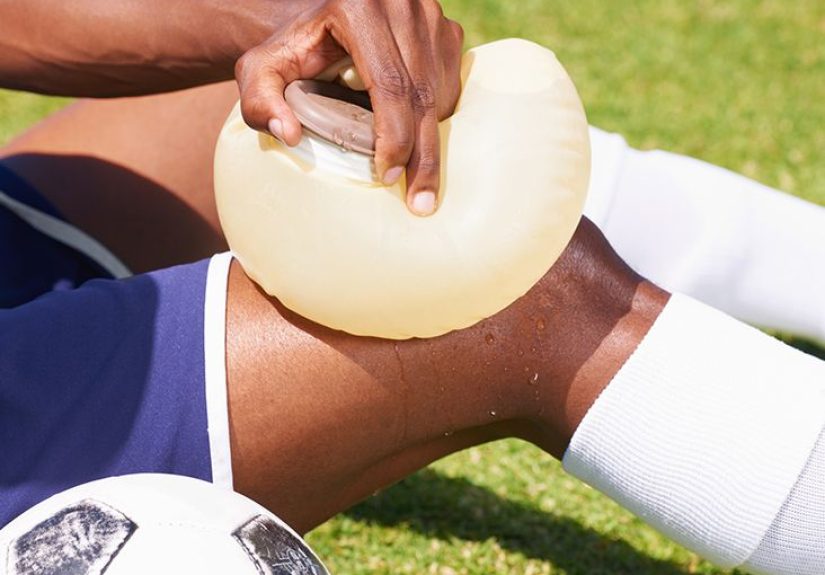
- Ice: Apply cold packs for 15–20 minutes at a time several times a day.
- Compression: Use an elastic bandage to control swelling, but not so tight that it affects circulation.
- Elevation: Raise the limb above heart level when possible.
It’s also important to avoid:
- Deep or aggressive massage on a freshly bruised muscle
- Forceful stretching that significantly increases pain
- Jumping back into full-impact activities before you can move the limb comfortably
Some clinicians may recommend nonsteroidal anti-inflammatory drugs (NSAIDs), such as
ibuprofen, for a short period to reduce pain and inflammation, although the research
on NSAIDs specifically preventing myositis ossificans is mixed. Always follow your
provider’s advice on medication.
Conservative Management Once Bone Has Formed
Once myositis ossificans is established (usually 3–4 weeks after injury), the focus
shifts to symptom control and safe movement. Conservative treatment may include:
- NSAIDs or other pain relievers as recommended
- Gentle, pain-free range-of-motion exercises
- Gradual strengthening of the affected muscle
- Activity modifications to avoid high-impact stress on the area
A physical therapist can design a program that keeps the joint as mobile as possible
without irritating the mass. The key is gradual progression too much
too soon can flare pain, while too little movement can lead to stiffness and weakness.
In many patients, the bony mass stabilizes by about 3–6 months and may slowly remodel
over a year or more. Symptoms often improve even if imaging still shows some residual
bone.
When Is Surgery Needed?
Most people with myositis ossificans do not need surgery. However, surgical
removal of the mass may be considered if:
- Pain remains significant after the lesion has matured (often 6–12 months or more)
- Range of motion is severely limited and affecting work, daily activities, or sports
- The mass compresses nerves, tendons, or blood vessels
- The diagnosis is uncertain and malignancy must be ruled out
Surgeons typically prefer to wait until the bone is mature and no longer actively
growing. Removing the mass too early can increase the risk that it will grow back.
In some cases, medications or radiation therapy are used around the time of surgery to
reduce the chance of recurrence, particularly in people at high risk for heterotopic
ossification after major orthopedic procedures.
Medications and Other Therapies
Beyond NSAIDs for pain, other treatments may occasionally be used in select cases:
-
Bisphosphonates: Drugs that affect bone metabolism, sometimes
considered off-label for extensive heterotopic ossification. -
Physical therapy modalities: Heat, ultrasound, and manual therapy
applied cautiously once the acute inflammatory phase has passed. -
Radiation therapy: Rarely, low-dose radiation is used around major
joint surgery in high-risk patients to prevent HO formation, though this is usually
targeted at surgical HO, not simple sports-related myositis ossificans.
These strategies are individualized; your treating team will weigh potential benefits
against side effects and long-term implications.
Prognosis and Possible Complications
The outlook for myositis ossificans is typically good. Many people:
- Return to normal daily activities
- Regain most or all of their range of motion
- Experience a gradual reduction in pain over months
However, a few lingering issues can occur:
- Persistent stiffness or tightness in the affected muscle
- Mild asymmetry (e.g., one thigh feeling “fuller” than the other)
- Occasional discomfort with direct pressure on the area
The biggest concern is making sure the lump is truly benign. A rapidly enlarging mass,
severe pain without clear injury, systemic symptoms (fever, weight loss), or unusual
imaging features should prompt careful evaluation by an orthopedic or sports medicine
specialist to rule out more serious conditions like soft-tissue sarcoma.
Living With and Preventing Myositis Ossificans
Smart Injury Management for Athletes
If you’re involved in contact sports, you can’t eliminate every risk but you can
lower your chances of developing myositis ossificans:
-
Take deep muscle contusions seriously. If you limp off the field, that’s your body
waving a big red flag. -
Follow early rest, ice, compression, and elevation guidelines instead of trying to
“walk it off.” - Delay aggressive stretching and massage until the acute pain and swelling calm down.
- Work with your athletic trainer or physical therapist on a structured return-to-play plan.
Protective gear (like thigh pads in football) can also reduce the impact of direct blows
and lower the chance that a large hematoma forms in the first place.
When to See a Doctor
Make an appointment with a healthcare professional if:
- A muscle bruise remains very painful after 1–2 weeks
- You feel a growing hard lump in a muscle weeks after an injury
- Your range of motion is getting worse instead of better
- You have unexplained lumps without any clear trauma
Early evaluation provides peace of mind and helps your care team guide you on the right
mix of rest, movement, imaging, and (if needed) specialist referral.
Real-World Experiences with Myositis Ossificans
Reading about myositis ossificans in medical language is one thing; living through it is
another. While everyone’s experience is different, a few themes show up again and again
in people who’ve dealt with this condition.
“I Thought It Was Just a Bad Charley Horse”
Many athletes describe the original injury as something they initially tried to shrug
off. A soccer player might remember colliding with another player’s knee, going down
hard, then limping for a few days but still finishing the game. The bruise was ugly,
the leg was sore, but nothing felt “broken,” so they pushed through.
A couple of weeks later, when the bruising started to fade, they noticed that instead of
feeling looser, the muscle felt harder. Stretching was suddenly more
uncomfortable, and sprinting felt like the leg “hit a wall” at a certain stride length.
That mismatch between what the calendar says (“this should be better by now”) and how
the leg actually feels is often what finally sends people to the clinic.
Learning to Respect the Pace of Healing
One of the toughest lessons people with myositis ossificans describe is learning to be
patient. It’s tempting to search for a quick fix a miracle stretch, a deep tissue
massage, a supplement that will “dissolve the bone.” Unfortunately, that’s not how this
condition works.
Instead, recovery is usually more like a long, slow slope upward:
-
The first few weeks focus on calming pain and protecting the area less about
performance, more about comfort. -
The next phase is regaining range of motion with careful, pain-limited stretching and
low-load strengthening. -
Only later do you reintroduce explosive movements, heavy lifting, or full-speed
sport-specific drills.
Many athletes admit they needed a coach, trainer, or therapist to “hold them back”
during this process not because they didn’t want to get better, but because motivation
often outpaces biology.
Practical Tips from the Rehab Journey
People who’ve recovered from myositis ossificans often share similar practical advice:
-
Track your progress in a simple log. Note your pain levels, what
exercises you did, and how far you can move the joint. Small improvements over weeks
become obvious on paper, even when they feel frustratingly slow. -
Listen to “good” vs. “bad” pain. Mild discomfort and stretching
sensations are usually okay; sharp, stabbing pain or pain that lingers long after
activity is a sign to back off. -
Prioritize sleep and nutrition. Your body does a lot of tissue repair
while you’re sleeping, and muscles need adequate protein, vitamins, and minerals to
remodel. -
Work the rest of your body. Just because one leg or arm needs extra
caution doesn’t mean the rest of you has to decondition. Many athletes focus on upper
body, core, or cardio alternatives while rehabbing a lower-limb myositis ossificans.
Returning to Sport (or Just Normal Life)
Eventually, most people with myositis ossificans reach a point where the mass is stable,
pain is much improved, and daily life feels fairly normal again. At that stage, the main
questions are:
- How much stiffness is acceptable?
- Do I need that last few degrees of range for my sport or job?
- Am I okay with a small, hard lump that doesn’t really bother me anymore?
Some athletes return to full competition with no surgery and only a slight reminder in
the form of a firm spot in the muscle. Others, especially those whose performance
depends on extreme flexibility or full joint travel (like dancers, gymnasts, or certain
martial artists), may choose surgical removal once the bone is mature.
The common thread in positive stories is a combination of:
- Early recognition that recovery wasn’t following a normal timeline
- Clear diagnosis with appropriate imaging
- Consistent, guided rehab with realistic expectations
- Open communication with coaches, employers, or family about limitations
Myositis ossificans is rarely anyone’s favorite plot twist after an injury, but with
time, good management, and a bit of patience, most people get back to doing the things
they love even if they have a tiny “souvenir rock” tucked inside a muscle as proof of
what they’ve been through.