Table of Contents >> Show >> Hide
- Why Ben Pentreath Makes Sense for Tablescapes
- What a Cabinet of Curiosities Really Is
- Translate the Wunderkammer to the Dinner Table
- The Pentreath-ish Rules of a Curious Table
- Step-by-Step: Build Your Cabinet-of-Curiosities Tablescape
- Step 1: The base layer (linen, runner, or placemats)
- Step 2: Place settings that feel curated, not chaotic
- Step 3: Centerpieces that multitask
- Step 4: Add the “curiosities” (the point of the whole show)
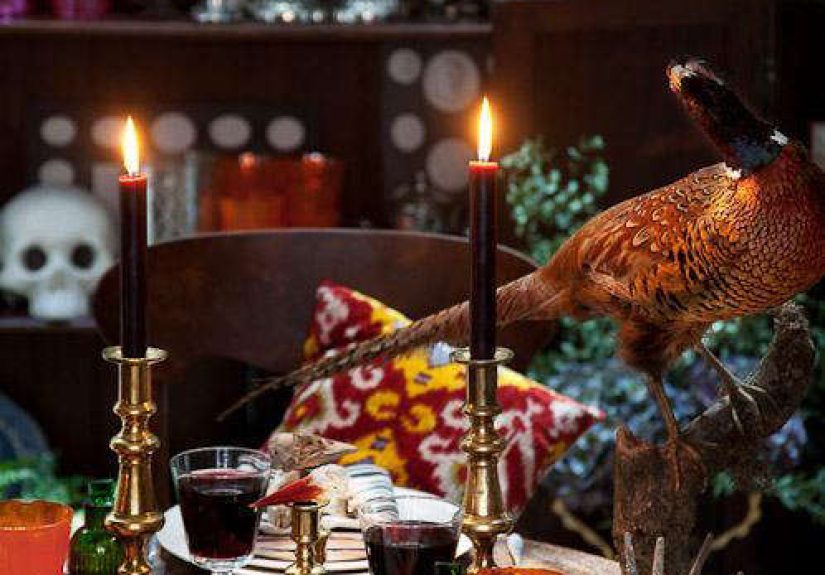
- Step 5: Lighting that flatters everyone (including the chicken)
- Step 6: The finishing touches that make guests feel hosted
- Three Example Tablescapes (Steal These)
- Common Mistakes (And How to Fix Them Fast)
- Quick Shopping & Thrifting Checklist
- Conclusion
- Extra : The Experience of Hosting a Curiosity Table
If a dining table could talk, most would politely say, “Please pass the rolls.” A Ben Pentreath–inspired table would
lean in and whisper, “Also, would you like to hear about this tiny brass turtle that once lived on a mantelpiece,
survived three moves, and now presides over the butter dish like a retired admiral?”
This is the special magic of a “cabinet of curiosities” mindset applied to tablescapes: a tabletop that feels
collected, layered, slightly mischievous, and deeply welcominglike the best rooms, where the eye is always finding
something new, and the conversation has a running start.
Why Ben Pentreath Makes Sense for Tablescapes
Ben Pentreath’s design world is a love letter to classic proportions with a wink. The vibe is never “matchy-matchy”
museum sterile; it’s “well-read maximalist who still knows where the exits are.” His rooms often balance tradition
and personalityold and new, serious architecture and playful findsso translating that sensibility to the dinner
table is almost unfairly easy.
A tablescape, after all, is a temporary room you build for one night. It has structure (place settings), lighting
(candles), textiles (linens), art (ceramics and glass), and narrative (the objects that make guests ask, “Waitwhat
is that?”). If your table looks “finished” but nobody talks about it, congratulations: you made a catalog page. If
your table looks finished and sparks stories, you made a cabinet of curiosities.
What a Cabinet of Curiosities Really Is
Historically, cabinets of curiosities (often called wunderkammer, or “wonder chambers”) were private
collections where natural objects, art, artifacts, and oddities lived togethercategorized, displayed, and arranged
to convey knowledge, taste, and a sense of wonder. Think shells, prints, gemstones, scientific specimens, carved
boxes, miniature paintings, and objects that felt rare, unusual, or simply too fascinating to ignore.
For modern hosting, you don’t need a crocodile dangling from the ceiling (please don’t). What you need is the
principle: curate a small universe on your tablean intentional blend of the everyday (plates) and
the extraordinary (the “curiosities”) that makes people feel like they’ve stepped into a story.
Translate the Wunderkammer to the Dinner Table
A curiosity-driven tablescape isn’t about buying a “set.” It’s about composing a scene. Here’s the translation:
- Collection → Mix old and new pieces so the table feels lived-in, not rented-in.
- Display → Give objects breathing room; make the “exhibits” readable at a glance.
- Order → Keep the place settings consistent enough that guests don’t need a map.
- Wonder → Add a few unexpected objects that feel personal, funny, or poetic.
The goal is not clutter. The goal is curation. If you’ve ever loved a bookshelf where the novels and the
framed photo and the weird little rock all somehow belong togethersame concept, lower altitude.
The Pentreath-ish Rules of a Curious Table
1) Anchor the chaos with something classical
Start with a strong base: a crisp tablecloth, a runner with structure, or placemats that create consistent “zones.”
Think of it as the architectural envelope. Once the base is stable, you can get playful with pattern, color, and
objects without the table feeling like it’s doing improv.
2) Build a color story (not a color prison)
Cohesion is usually a palette problem, not a “you bought the wrong fork” problem. Pick one dominant color family
and let it guide the mix. That doesn’t mean everything is the same shadeit means the table reads as intentional.
If you like bold, choose a saturated hero color and repeat it in small doses (napkins, a ribbon, a glass, a flower).
If you like calm, stay tonal and let texture do the talking.
3) Mix patterns like you’re telling a joke with a good punchline
Pattern mixing works when there’s a “straight man.” Pair a busy floral plate with a simple solid charger. Or use
patterned linens with plain dinnerware and a single patterned accent plate. The eye needs a place to restotherwise
your guests will feel like they’re eating inside a kaleidoscope.
4) Use your good stuff on a random Tuesday (yes, Tuesday)
A cabinet of curiosities is built from objects that were loved enough to keep. Don’t let your favorite serving dish
become an attic legend. Bring it out. Let it do its job. Your table will instantly feel richernot because it’s
expensive, but because it’s chosen.
5) Make the centerpiece low, layered, and conversation-friendly
If guests can’t see each other, they’ll start making friends with the bread basket instead. Keep florals and objects
below eye level, and create interest by layering multiple small moments: clusters of bud vases, grouped candles, a
bowl of citrus, a few little curiosities dotted between.
Step-by-Step: Build Your Cabinet-of-Curiosities Tablescape
Step 1: The base layer (linen, runner, or placemats)
Pick one “field” for your objects to live on: a white cloth for crisp contrast, a patterned cloth for instant
personality, or a runner to create a central spine. If your dinnerware is wildly patterned, go quieter on the base.
If your dinnerware is simple, let the linen be more expressive.
Step 2: Place settings that feel curated, not chaotic
Keep the essentials consistent in placement so guests feel at ease. From there, bring in variety through layering:
a charger, a dinner plate, then a salad plate or bowl. Mix-and-match china is fair gamejust keep a unifying thread:
one color family, repeated rim shapes, or a shared motif (all botanicals, all blue-and-white, all earthy glazes).
Pro move: repeat the same glass shape at every seat (so it feels “set”), then vary color or texture (so it feels
“collected”). Your table will read polished and personal at the same time.
Step 3: Centerpieces that multitask
Don’t limit yourself to flowers. A centerpiece can be:
- a cluster of candles at different heights,
- a shallow bowl of fruit (citrus, pears, pomegranateschoose the vibe),
- small bud vases with simple stems,
- a tray that corrals little objects like a “mini exhibit.”
Keep it low, keep it layered, and keep it easy to remove if you’re serving family-style. If the centerpiece becomes
a logistical obstacle, it will be moved to the kitchen counter and quietly resent you.
Step 4: Add the “curiosities” (the point of the whole show)
This is where your table stops being a “setup” and becomes a “scene.” Choose 5–9 small objects from one or two
categories, then repeat them across the table:
- Natural: shells, stones, dried seed pods, herbs, branches
- Crafted: tiny brass animals, match strikers, carved boxes, ceramic pears
- Printed: place cards with little “museum labels” (“Object: Lemon. Medium: Very real.”)
- Personal: a small framed photo, a postcard, a miniature souvenir
The rule: each curiosity should be small enough to share the table with food. If your curiosity requires its own
chair, it’s no longer a curiosityit’s a guest. And you will need to feed it.
Step 5: Lighting that flatters everyone (including the chicken)
Candlelight is the quickest way to make a table feel cinematic. Mix taper candles with votives or tea lights to get
depth. Vary heights, but keep sightlines open. If you’re nervous, stick to a repeated rhythm down the center: taper,
taper, votive, taper, taper. It reads intentional even if you’re assembling it 12 minutes before the doorbell.
Step 6: The finishing touches that make guests feel hosted
- Napkins: folded simply, or tied with ribbon and a sprig of herb
- Place cards: handwritten, or printed like mini exhibit labels
- Salt + pepper: one beautiful set per table, or individual pinch bowls
- One “unexpected” moment: a tiny figurine near the butter, a funny menu, a single odd object
Three Example Tablescapes (Steal These)
1) The Neoclassical-with-a-Wink Table
Start with a pale linen cloth and classic white plates. Add one bold colordeep green, cobalt, or oxbloodin your
napkins and a few candles. Then bring in the curiosities: a pair of small brass animals, a vintage match striker,
and a bowl of glossy fruit. Keep the florals minimal: one type of flower repeated in bud vases.
It feels formal at first glancethen you notice the tiny turtle guarding the salt cellar. That’s the wink.
2) The Jacobean Garden Party Table
Use a patterned floral tablecloth (or a runner) and mismatched plates unified by a single palettegreens, creams,
and soft reds. Centerpiece: herbs in small pots mixed with candles. Curiosities: shells, seed pods, and old keys
(cleaned, obviously). Add handwritten place cards with guests’ names and a small “object title” beneath:
“Rosemary, still alive (miracle).”
3) The Modern-Collector’s Table
Keep the base minimal: a solid cloth, simple dinner plates, and clean glassware. Then bring in one graphic element:
a striped napkin, a bold runner, or a set of sculptural candleholders. Curiosities here should feel “gallery”:
a small ceramic piece, a stone bowl, a single dramatic branch in a low vessel. The table becomes a calm room with a
few strong statementslike a collector who knows when to stop.
Common Mistakes (And How to Fix Them Fast)
-
Mistake: Everything is beautiful, but nothing feels personal.
Fix: Add 3 objects with a story: a thrifted find, a postcard, a tiny oddity, a weird salt spoon. -
Mistake: Too many patterns fighting for attention.
Fix: Introduce a solid “rest” layer: plain chargers or a neutral runner. -
Mistake: Centerpiece blocks conversation.
Fix: Split it into smaller moments (bud vases + low candles) and spread them out. -
Mistake: Looks great, but service is a nightmare.
Fix: Put the “exhibits” on a tray so you can lift-and-move when food arrives.
Quick Shopping & Thrifting Checklist
You’re not buying a “look.” You’re building a collection. Here’s what to hunt for:
- Plates: 2–3 patterns that share a color family + 1 plain neutral
- Glassware: one consistent shape, varied textures/colors optional
- Linens: one solid base + one patterned accent (runner or napkins)
- Candles: tapers + a pack of votives/tea lights
- Vessels: bud vases, small bowls, trays for corralling
- Curiosities: tiny brass objects, shells, stones, old postcards, small boxes
Conclusion
A Ben Pentreath–style cabinet-of-curiosities tablescape isn’t about perfectionit’s about personality with good
manners. You anchor the table with classic structure, then you layer in collected charm: mixed patterns, repeated
colors, candlelight, and a handful of objects that make guests smile, lean closer, and start talking.
If your table feels like a little museum, loosen the tie. If your table feels like a yard sale, add structure. The
sweet spot is curated wonder: a place where people feel hosted, not inspectedand where the butter knife might sit
next to a tiny brass fox for absolutely no practical reason, other than joy.
Extra : The Experience of Hosting a Curiosity Table
The first thing you notice when you host with a curiosity-driven tablescape is that guests arrive differently. They
don’t just walk in and look for the nearest chair; they slow down. Their eyes move across the table the way they
move across a good bookshelfscanning, pausing, smiling. Someone points at a small object and says, “Okay, wait.
What’s that?” and suddenly you’ve started the night with a story instead of small talk about traffic.
The second thing you notice is how much the table does for you. A well-built tablescape is a social engine. Those
little “exhibits” (a shell, a postcard, a tiny figurine, a bowl of lemons) become conversation prompts that don’t
require you to be an on-demand entertainer. People trade guesses. They share memories. They tell you about the weird
thing they collect. The table quietly turns a group of individuals into a group with a shared scene.
You also notice that “curation” feels better than “decoration.” Decoration can feel like performancelike you’re
being graded on napkin folds. Curation feels like hospitality: you’re simply putting meaningful, beautiful, amusing
things where people can enjoy them. The pressure drops. You stop asking, “Is this fancy enough?” and start asking,
“Is this me enough?” That shift is the whole point.
Practically speaking, the experience is surprisingly forgiving. If the flowers are last-minute grocery store stems,
nobody caresbecause they’re framed by candlelight and repeated in small vases that look intentional. If the plates
don’t match, nobody caresbecause the palette does. If one napkin is slightly wonky, it reads as “relaxed charm,”
not “crime scene,” especially when there’s a sprig of rosemary tied on top like a tiny edible boutonnière.
The most delightful moment usually comes mid-meal, when the table transitions from “pretty” to “alive.” A few
curiosities get picked up and passed around. Someone asks if the brass turtle has a name. Someone else admits they
collect miniature spoons and suddenly you’re learning about their grandmother’s kitchen. The table becomes a
permission slip for warmth and weirdnessthe good kind. You realize the real luxury isn’t expensive china; it’s
attention. You gave the table a point of view, and guests respond by bringing their own.
And when the night ends, here’s the best part: you don’t pack away a “theme.” You put your objects back where they
live. The curiosities return to their shelves, the plates go back in the cabinet, the linens get folded. The next
time you host, you’re not starting from zeroyou’re simply rearranging your little universe into a new story. That’s
how cabinets of curiosities are built: one gathered object, one shared meal, one “wait, what is that?” at a time.