Table of Contents >> Show >> Hide
- What Makes an Animal Heart “Bizarre”?
- 1) Octopus: Three Hearts and a Lot of Attitude
- 2) Hagfish: The Vertebrate With Backup Pumps
- 3) Earthworm: Five “Hearts” That Aren’t a Single Heart
- 4) Medicinal Leech: Two Hearts, Two Rhythms, One Very Organized System
- 5) Tunicate: The Heart That Reverses Direction
- 6) Crocodilians: Four Chambers With a Built-In Detour
- 7) Snakes: A Heart That “Moves” on the Body Map
- 8) Giraffe: High-Pressure Plumbing With Safety Features
- 9) Hummingbird: The Tiny Heart That Runs at Race-Car RPM
- 10) Antarctic Icefish: Big Hearts, Cold Water, and “Clear” Blood
- What These Bizarre Hearts Teach Us
- Quick FAQs About Strange Animal Cardiovascular Systems
- Experiences: How to Get Closer to the World of Bizarre Animal Hearts (Without Needing a Lab Coat)
- Conclusion
If you think hearts are all basically the sametwo atria, two ventricles, thump-thump, cue the inspirational soundtracknature would like a word.
Across the animal kingdom, “heart” can mean a muscular pump, a set of synchronized tubes, a peristaltic squirter, or (in one case) a pump that literally
changes direction like it forgot its keys and turned around mid-commute.
In this guide to bizarre animal hearts, we’ll meet ten creatures whose cardiovascular setups are weird in the best, science-y way.
Along the way you’ll pick up fun facts, real biological reasons, and a few “how is that even legal?” design choices that evolution apparently rubber-stamped.
Expect odd chamber counts, backup pumps, pressure hacks, and at least one heart with the audacity to reverse its beat.
What Makes an Animal Heart “Bizarre”?
A heart gets upgraded from “normal” to “bizarre” when it breaks one of the assumptions we carry around from human anatomy. For example:
multiple hearts (or heart-like pumps), blood that uses different oxygen-carrying chemistry, unusual heart placement, built-in detours that redirect
blood flow, or extreme performance (think: a heart rate that would make a treadmill burst into flames).
These aren’t party tricks. Each strange heart is an adaptation to a lifestylediving, flying, burrowing, climbing, living in icy water, or being a
soft-bodied genius with eight arms and zero bones.
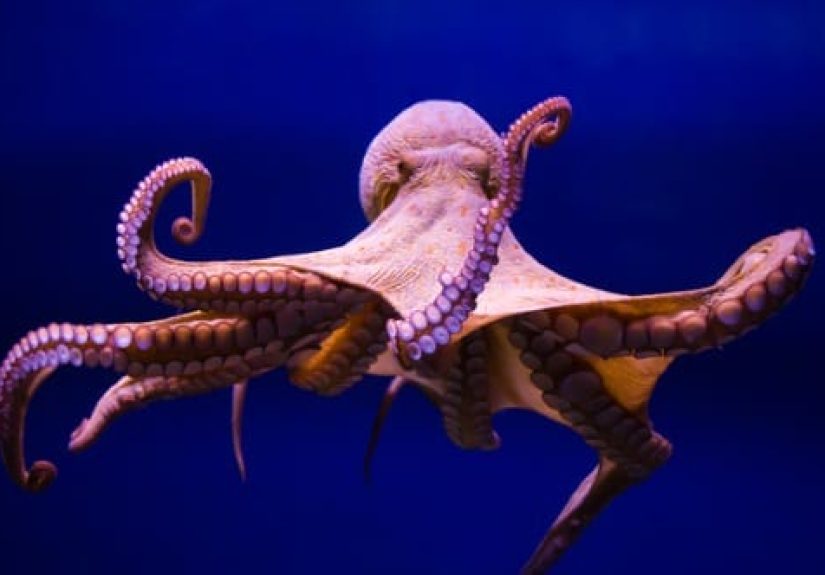
1) Octopus: Three Hearts and a Lot of Attitude
Let’s start with a headline-maker: the octopus has three hearts. Two are “branchial” hearts that push oxygen-poor blood through the gills.
The third is the “systemic” heart that sends oxygen-rich blood to the rest of the body.
Why the extra hardware? Cephalopods (octopuses, squids, cuttlefish, and their relatives) are active predators with high oxygen demands. Splitting the workload
helps keep oxygen moving efficiently through gills and out into the body.
Add the fact that many cephalopods use hemocyanin (a copper-based molecule) rather than hemoglobin to transport oxygen, and you’ve got a circulatory system
that’s both effective and delightfully non-human. In short: the octopus didn’t just get a bigger engineit added two booster pumps.
2) Hagfish: The Vertebrate With Backup Pumps
Hagfish look like eels designed by someone who really enjoys science fiction. Their circulatory system matches the vibe: they have a main heart plus
additional accessory “hearts” (pumps) that help move blood back toward the central circulation.
In many descriptions, hagfish are noted for having one primary heart (often described as the systemic/branchial heart) and several auxiliary pumps
(commonly discussed as portal, caudal, and cardinal pumps) that assist blood return in a body with large sinuses and unusual flow patterns.
What’s the advantage? Think of it as logistics for a body plan that doesn’t rely on a single, high-pressure, tightly piped system the way mammals do.
Hagfish can hold a substantial portion of their blood volume in sinus-like spaces, and the extra pumps help keep traffic moving.
Also, hagfish physiology is famous for tolerating low-oxygen conditions that would quickly overwhelm many animals. When oxygen availability is limited,
keeping circulation functional becomes a survival superpowerand the hagfish is basically the poster creature for “still pumping.”
3) Earthworm: Five “Hearts” That Aren’t a Single Heart
Earthworms don’t have one central, chambered heart like you do. Instead, many common earthworms have five pairs of aortic arches
muscular loops around the esophagus that contract to move blood through a closed circulatory system.
People often call these arches “five hearts,” because they act as pumps, pushing blood from vessel to vessel. If you’re counting literally, that can feel like
a worm is flexing ten mini-hearts. Biologically, it’s more accurate to say the worm uses a series of pumping structures rather than one centralized pump.
Why do it this way? A long, segmented body benefits from distributed pumping that keeps blood moving along the worm’s lengthespecially when the worm is
squeezing through soil like a living accordion.
4) Medicinal Leech: Two Hearts, Two Rhythms, One Very Organized System
Leeches are not here to win popularity contests, but their circulation is impressively engineered. The medicinal leech has two long, segmented,
tube-like hearts that propel blood through its closed circulatory system.
Here’s the bizarre twist: those hearts can switch pumping patterns. Researchers have described alternating coordination stylesone side may run a
peristaltic wave of contractions, while the other side uses a more synchronous pattern, and then they trade roles after a set number of beats.
This isn’t random weirdness. Changing patterns can help manage flow distribution through a segmented body and maintain efficient circulation under different
conditions. Leeches prove that a “heartbeat” doesn’t have to be one fixed rhythm to get the job done.
5) Tunicate: The Heart That Reverses Direction
Tunicates (sea squirts and their relatives) are the plot twist of ocean biology: they’re chordates (relatives on the broader family tree that eventually
includes vertebrates), yet many look like squishy filter-feeding blobs.
Their heart is a peristaltic tube that pumps fluid through the body… and then, every few minutes, it reverses. That’s right:
the direction of pumping flips, sending blood the other way.
Why would any animal want two-way circulation? The leading idea is that in a relatively simple body plan with vessels that function more like channels,
reversing flow helps distribute nutrients and gases without needing complex valves and branching logic. It’s the biological equivalent of “no need for a roundabout
if the road sometimes becomes one-way the other direction.”
6) Crocodilians: Four Chambers With a Built-In Detour
Crocodilians (alligators, crocodiles, caimans, gharials) have hearts that look surprisingly “modern” at first glance: four chambers, like birds and mammals.
But they also keep a remarkable feature: a way to shunt blood between pathways.
A key structure often discussed is the foramen of Panizza, which connects the left and right aortas near the heart. Crocodilians also have
valves and pressure relationships that can enable a right-to-left shunt under certain conditions.
What’s it for? One well-supported explanation is that shunting can help during diving (when lung oxygen exchange is limited) and may support digestion by
influencing how carbon dioxide-rich blood is delivered to the gut, which can affect acid secretion and processing.
Translation: the crocodilian heart is not just pumping bloodit’s routing it like a traffic engineer who also moonlights as a scuba instructor.
7) Snakes: A Heart That “Moves” on the Body Map
Most of us assume hearts go in roughly the same place across similar animals. Snakes, being long and frequently vertical (hello, climbing), have a major
gravitational problem: keeping blood pressure adequate at the head when the body is oriented upright.
Studies comparing many snake species have found that heart position varies in ways linked to ecology and body plan.
In general terms, habitat (arboreal vs. terrestrial vs. aquatic) and lineage can influence where the heart sits along the body.
Why does placement matter? If the heart is too far “down” while a snake is vertical, the head can be at risk of low pressure.
If it’s too “up,” other tradeoffs appear in overall circulation and organ layout. Evolution has been tuning this placement like a slider control:
more climbing and vertical posture, different pressure demands, different optimal heart location.
8) Giraffe: High-Pressure Plumbing With Safety Features
Giraffes have a cardiovascular challenge you can visualize instantly: a heart that must pump blood to a brain roughly two meters above it.
That means fighting gravity with sheer pressure.
Research on giraffe physiology reports very high arterial blood pressure compared with many mammals, supported by a powerful left ventricle
and specialized vascular features.
But pressure alone isn’t enoughyou also need control. Giraffes have adaptations such as jugular vein valves and a carotid rete (a network that can help
manage cerebral blood flow dynamics). Otherwise, every time a giraffe lowered its head to drink, the brain would face a dangerous surge.
The giraffe’s heart is a reminder that “bizarre” often means “extreme engineering”: not weird for weirdness’ sake, but weird because physics demanded it.
9) Hummingbird: The Tiny Heart That Runs at Race-Car RPM
If you’ve ever watched a hummingbird hover, you already know it’s not living a calm, slow-breathing lifestyle. Their flight is metabolically expensive,
and their cardiovascular system responds accordingly.
A hummingbird’s heart rate can soar to well over 1,000 beats per minute during flight, with lower (but still impressive) rates at rest.
That’s not a typo. Their hearts are built for rapid circulation to supply oxygen and fuel to hard-working muscles.
They also have a clever energy strategy: many hummingbirds enter torpor, a nighttime slowdown that reduces metabolic demand when feeding isn’t possible.
In other words, the hummingbird heart isn’t just fastit’s flexible, shifting between “rocket mode” and “battery saver.”
10) Antarctic Icefish: Big Hearts, Cold Water, and “Clear” Blood
Antarctic icefish are famous because many lack hemoglobin, and some species also lack myoglobin. That means dramatically reduced oxygen-carrying capacity
compared with typical fishyet they survive in cold, oxygen-rich Antarctic waters.
One major compensation is cardiovascular: icefish tend to have large hearts, increased blood volume, and circulatory traits that help move
oxygen dissolved directly in plasma. Cold water holds more dissolved oxygen, and low blood viscosity can make pumping easierso the environment and the biology
team up.
It’s a wild reminder that “normal” solutions (like hemoglobin) aren’t mandatory when the ecosystem offers a different path. Icefish hearts show how evolution can
redesign the entire oxygen-delivery approach when the setting is right.
What These Bizarre Hearts Teach Us
The common thread across these strange hearts is tradeoffs. Multiple pumps can increase control and efficiency, but they cost energy and complexity.
Shunts can help with diving or digestion, but they require precise pressure regulation. Extreme heart rates can power flight, but they demand constant fuel and careful
recovery time. And distributed pumps can work beautifully in a segmented worm, but they don’t scale into a giraffe.
For science and medicine, these systems are more than curiosity. Studying how animals tolerate low oxygen, manage extreme blood pressure, or route blood flow
differently can inspire new questions in cardiovascular research and bioengineering. Nature is basically running millions of R&D experimentssome of them
extremely slimyand we get to read the results.
Quick FAQs About Strange Animal Cardiovascular Systems
Do animals with multiple hearts have “better” hearts?
Not betterjust better for their lifestyle. Extra pumps can support gills, move blood through long bodies, or compensate for unusual vessel layouts.
Evolution doesn’t chase “best,” it chases “good enough to survive and reproduce.”
Is a tunicate the only animal whose heart reverses?
Heartbeat reversal is famously associated with tunicates and is often highlighted as a standout feature of their circulatory system.
The reversal happens on a regular schedule in many species, effectively flipping circulation direction every few minutes.
Which heart here is the “strongest”?
“Strongest” depends on the metric. The blue whale’s heart wins for size (and sheer pumping volume), hummingbirds win for speed, and giraffes are champions of
sustained high pressure. Meanwhile, hagfish deserve a trophy for stubbornly continuing under low-oxygen stress.
Experiences: How to Get Closer to the World of Bizarre Animal Hearts (Without Needing a Lab Coat)
You don’t have to dissect anything (or even touch a slimy creature, if that’s your personal boundary) to have memorable, real-world experiences with the ideas
behind bizarre animal hearts. Start with aquariums and natural history museums. Many large aquariums spotlight cephalopods, and once you see an octopus glide
through water like a living thought bubble, the “three hearts” fact stops being trivia and becomes a logical answer to a very active life. Watching an octopus
change texture, color, and posture in seconds makes you appreciate the behind-the-scenes physiology needed to power that kind of constant, responsive motion.
It’s like realizing the special effects in a movie are powered by an entire server farm.
Museums can turn cardiovascular facts into “whoa” moments, especially when they display large-animal anatomy. If you ever encounter an exhibit featuring a
whale heart (or even a detailed replica), it reframes the concept of scale instantly. You’ll find yourself doing the math in your head: each beat moves an
enormous volume of blood, and the vessels are built like industrial hoses. That experience tends to stick, because it’s not just a number anymoreit’s a
physical object with weight, height, and presence. Even if you only see it in a well-produced exhibit video, the size cues are unforgettable.
Want an experience you can have outdoors? Birdwatching is surprisingly on-theme. Spot a hummingbird feeding, hovering, then darting away like it got an urgent
text from the universe. You can practically feel the metabolic intensity. Pair that moment with a short educational read about hummingbird heart rates and torpor,
and suddenly behavior and biology snap together: the frantic feeding isn’t “cute chaos,” it’s cardiovascular economics. Many people come away with a new kind of
respectless “aww” and more “this tiny animal is an elite endurance athlete with wings.”
For a more science-forward experience, try a citizen-science event, a university outreach lecture, or an extension program open house. These often include
hands-on demos (models, microscope slides, videos of circulation) that make invertebrate systems easier to understand. Earthworms and leeches are especially
good teaching animals because their pumping structures are conceptually clear: you can map “tube contracts here, blood moves there” without needing advanced
anatomy. People who see a clear diagram of leech heart coordination often have the same reaction: “Wait… they can switch rhythms? On purpose?” It’s one of those
moments where you realize biology isn’t just anatomyit’s timing, control, and patterns.
Finally, one of the most relatable experiences is simply learning to notice how different environments shape bodies. Think about a snake climbing vertically,
a crocodilian diving and resurfacing, a giraffe bending down to drink, or an icefish living in oxygen-rich cold water. Next time you see a documentary clip,
pause and ask: “What does the heart have to do to make that possible?” That little question turns passive watching into active biological thinkingand it’s the
closest thing to wearing an invisible lab coat in everyday life.
Conclusion
The animal kingdom doesn’t do one-size-fits-all hearts. It does “whatever works,” and the results range from three-heart cephalopods to heartbeat-reversing
tunicates to crocodilians with built-in routing tricks. These bizarre animal hearts aren’t random odditiesthey’re practical solutions shaped by physics,
oxygen demands, body shape, and habitat. And the best part? The more you learn about them, the more normal your own heart seems… which is comforting,
because yours has enough to do already.