Table of Contents >> Show >> Hide
- What is Plain English, exactly?
- Why Americans fell for it (and why it’s not just a trend)
- The design DNA: Georgian joinery, Shaker practicality, modern restraint
- Key Plain English features that show up again and again
- How Plain English came to the US (and what that means for projects here)
- A concrete example: the Remodelista feature that made people stop scrolling
- How to get the Plain English look without copying it
- Planning realities: timeline, budget, and logistics
- Is it worth it?
- Real-World Experiences (Extra): Living with a Plain English–Style Kitchen
If you’ve ever looked at a “luxury” kitchen and thought, Why does this feel like a fancy airport lounge?you’re not alone.
The past decade has delivered plenty of glossy, handle-free minimalism and enough white lacquer to make your retinas file a complaint.
Then along comes Plain English: a British kitchen company that’s basically saying, “Let’s build cupboards that look calm,
work hard, and still feel good in 20 years.” It’s a refreshingly un-hyped vibe… which is probably why it caused a small (polite) design
stampede when the brand began expanding in the United States.
Remodelista helped introduce many American design lovers to Plain English’s approach: bespoke cabinetry rooted in Georgian-era joinery,
updated for modern life, and delivered with that very British talent for understatement (plus a little mischievous color).
This article breaks down what “Plain English style” actually means, why it translates so well to American homes, and how you can steal the
spirit of the lookwhether you’re commissioning a full custom build or just trying to make your kitchen feel less like a showroom and more like
a place where people live, snack, and occasionally burn toast with confidence.
What is Plain English, exactly?
Plain English is a British design-and-joinery company known for handcrafted, made-to-order cupboards (their wordbecause “cupboard” sounds
like it’s been around long enough to know better than to follow trends). Founded in the early 1990s by Tony Niblock and Katie Fontana,
the brand grew out of a desire for a painted, traditional kitchen at a time when the market skewed either shiny-and-modern or rustic-and-rough.
That “third option”simple cabinetry with strong proportions, thoughtful detailing, and long-term durabilitybecame their calling card.
What makes Plain English feel different isn’t one signature door style or one “iconic” hardware pull. It’s the overall discipline:
cabinetry that supports the architecture instead of wrestling it, plus materials and finishes chosen to age gracefully rather than “stay perfect.”
In practice, that means you’ll see painted cupboards, framed construction, restrained profiles, and layouts that prioritize how you actually move
through a kitchencooking, cleaning, storing, gatheringwithout turning every wall into a bank of boxes.
Why Americans fell for it (and why it’s not just a trend)
American kitchens are often asked to do everything: family command center, party hub, homework station, coffee shop, and sometimes therapy office.
We love big islands, we love storage, and we love an “open concept” until we realize open concept also means everyone can see the dishes.
Plain English lands in a sweet spot: it reads classic without feeling fussy, and it hides modern function behind a calm exterior.
There’s also a cultural overlap that’s easy to underestimate. Traditional American architectureespecially in New England and older East Coast
neighborhoodsshares lineage with Georgian proportion and classic joinery. Even in newer builds, that sense of “human scale” (cupboards that
feel like they belong in the room instead of being installed at the room) can make a kitchen feel instantly more settled.
The design DNA: Georgian joinery, Shaker practicality, modern restraint
1) Proportions first, decoration second
Plain English kitchens tend to feel “right” even when they’re bold in color, because the bones are quietly disciplined:
rails and stiles that aren’t too skinny, reveals that are consistent, and spacing that looks intentional rather than crammed.
It’s the kitchen equivalent of a well-tailored blazer: not flashy, but you notice when it’s done correctly.
2) Craft and construction that’s meant to last
The brand leans on traditional construction methods and high-quality materialsthink joinery techniques you’d expect in serious furniture
rather than disposable cabinetry. The point isn’t nostalgia. It’s longevity. When cupboards are built and finished well, they can take years of
real use and still look better, not worse.
3) “Below-stairs” simplicity (in the best possible way)
A recurring theme in coverage of Plain English is the inspiration drawn from the practical service areas of historic homesspaces designed for
work, not performance. That’s a helpful north star for anyone planning a remodel: make the kitchen beautiful, sure, but make it useful
first. A kitchen doesn’t need to look expensive; it needs to feel capable.
Key Plain English features that show up again and again
Larder cupboards and “back kitchen” thinking
Americans talk about pantries; the British talk about larders. The Plain English larder cupboard is essentially an organized, tall storage
solution that brings order to food and kitchen items without requiring a full walk-in room. In many modern homes, the larder mindset expands into
the “back kitchen” conceptspaces like sculleries and butler’s pantries that keep clutter, prep, and cleanup slightly out of sight while the main
kitchen stays pleasant to be in.
If you’re working with enough square footage, a scullery (a small room adjacent to the kitchen used for prep and cleanup) can be a game-changer.
A butler’s pantry, meanwhile, typically bridges kitchen and dining and supports serving and entertaining. If you’re tight on space, you can still
borrow the principle: create a dedicated zone where the messy work happens, and let the main kitchen breathe.
Counter-standing cupboards (storage with a little personality)
One detail people love is the counter-standing cupboard: a tall element that rises off the countertop and breaks up long runs of base cabinetry.
It adds storage while keeping the room from feeling like a uniform wall of doors. It also gives you a place for things that want a “home”:
coffee supplies, breakfast items, everyday glassware, or the snacks you pretend you don’t buy.
Integrated appliances without the “kitchen gadget showroom” vibe
A modern American kitchen often includes integrated appliancesand Plain English is happy to conceal them behind doors for a quieter look.
The takeaway isn’t that every appliance must disappear. It’s that visual calm is a design feature, too.
Color that’s confident (not chaotic)
Plain English is famous for paint. Not “one safe greige forever,” but colors that feel grounded: inky blacks, deep blues, and heritage-inspired
shades with names that sound like you could order them in a pub. If you’re color-shy, the lesson is still valuable: even a neutral kitchen gains
depth when you vary finishes (painted wood, marble, aged brass) and let materials do some of the talking.
How Plain English came to the US (and what that means for projects here)
According to Remodelista’s reporting, a key step in the US expansion involved establishing a New York City base and taking on American projects
across multiple regions. Plain English cabinetry is made to order in Suffolk, England, then shipped to the United Stateswhile items like
appliances and countertops are commonly sourced locally for practicality and compatibility.
The brand’s US presence has also become more tangible over time. The New York showroom (in Manhattan) gave American clients a place to experience
the scale, finishes, and details in person. More recently, a Los Angeles showroom opened to serve West Coast projects. In other words: this isn’t
just “UK inspiration” anymoreit’s a workable path for American remodels, provided you plan for lead times and the realities of custom work.
A concrete example: the Remodelista feature that made people stop scrolling
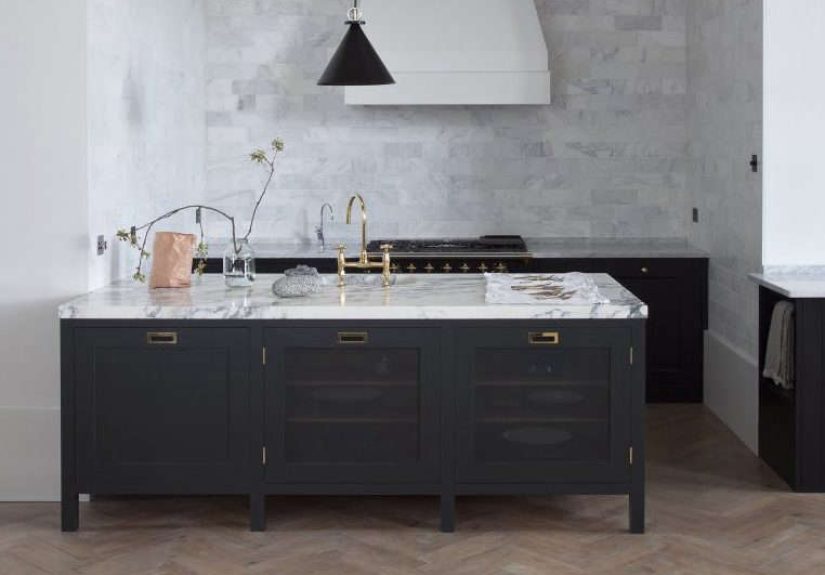
Remodelista highlighted a Plain English kitchen set in an old schoolhouse in South London, combining under-counter cupboards from the brand’s
Spitalfields line with an island from its Osea range. The palette played with contrastdark painted cupboards against lighter surfacesand leaned
on stone (including marble) to bring quiet drama without busy ornamentation.
Here’s what’s useful about that example for American remodels: it shows how “classic” can still feel modern when you balance elements.
The cabinetry is restrained, but the materials (like boldly veined stone) and lighting choices keep it from looking flat. It’s not about copying
the exact components. It’s about combining a calm foundation with a few deliberate statement moves.
How to get the Plain English look without copying it
You don’t need to import cupboards from Suffolk to borrow the spirit. What you need is a strategy. Here are practical moves that consistently
show up in Plain English-style kitchens (and work beautifully in American homes):
Start with the room, not the catalog
Before you pick doors or hardware, look at the architecture: ceiling height, window placement, wall depth, natural light, and circulation.
A “perfect” cabinet layout that ignores the room will always feel off. A good layout can make even simple cabinetry feel expensive.
Choose one hero moment (and let everything else behave)
A big range, a dramatic hood, a beautiful stone backsplash, or a standout islandpick one focal point and let the rest support it.
This is how you get richness without clutter.
Invest in the finishes people feel, not just the ones they photograph
Floors matter more than most budgets want to admit. So do hardware feel, drawer action, and countertop edges.
If you want the kitchen to feel “settled,” prioritize the surfaces and elements you touch daily.
Keep storage intentional (because cupboards can become emotional baggage)
Plain English advice often circles back to restraint: don’t overfill a room with cupboards for things you rarely use.
Build storage around real habitscooking style, entertaining frequency, coffee ritualsso the kitchen stays functional without becoming bulky.
Planning realities: timeline, budget, and logistics
Bespoke work is a marathon, not a microwave. Remodelista noted that orders can take months to build before shipping even begins, and shipping
itself adds additional time. That planning window can actually be a gift: it forces you to make thoughtful decisions early, coordinate trades,
and avoid the classic remodel surprise of “Why is the sink arriving two weeks after the countertops?”
Budget-wise, truly bespoke imported cabinetry sits at the luxury end of the market. Remodelista cited an average price per linear foot for Plain
English cabinetry, which can help you estimate ballpark costs for a full kitchen. But remember: total project cost depends heavily on scope
(pantry/scullery/mudroom), local labor, appliances, stone, plumbing, electrical, and structural changes.
- Smart approach: Decide where you need custom (awkward corners, specialty storage, period details) vs. where standard solutions will do.
- Common win: Put the “bespoke” budget into one high-impact zone (like a larder wall) and simplify elsewhere.
- Don’t forget: Lead time and coordination are part of the costplan for them like you plan for countertops.
Is it worth it?
“Worth it” depends on what you value. If you want a kitchen that photographs like a trend report today and feels dated in five years, you can
do that for less money and far less waiting. But if you want a kitchen that feels quietly better over timebecause the proportions are calm,
the storage works, and the materials develop characterthen the Plain English philosophy makes a compelling case.
There’s also a sustainability angle hiding inside the word “longevity.” A kitchen that lasts (and can be repainted, repaired, and reconfigured)
reduces the pressure to tear everything out when tastes shift. In the long run, “timeless” can be the most budget-friendly styleassuming you
don’t buy a new countertop every time a new shade of beige trends on social media.
Real-World Experiences (Extra): Living with a Plain English–Style Kitchen
Let’s talk about the part design photos can’t capture: the everyday experience. People who choose a Plain English–style kitchen (whether it’s
the real thing or a faithful interpretation) often describe the same first-week surprise: the kitchen feels calmer. Not emptyjust calmer.
That’s because the visual hierarchy is simpler. When cabinetry is restrained and storage is thoughtfully planned, your eyes don’t have to “read”
a thousand competing elements just to find the coffee mug.
One common experience is how much a larder-style setup changes routines. Instead of a pantry that becomes a black hole of half-used bags,
a larder cupboard encourages categories: baking, breakfast, snacks, oils and vinegars, backstock. The door opens and you can actually see what
you own. The result is less duplicate buying and fewer “mystery jars” that graduate into science projects. In households that cook frequently,
this can be the difference between a kitchen that supports you and one that quietly sabotages you at 6 p.m.
Another lived-in detail: a “back kitchen” mindset reduces stress when you host. Even without a full scullery, people create a hidden prep zone:
an appliance garage, a secondary counter run, or a butler’s pantry that holds glassware and serving pieces. The experience is oddly freeing.
You can have friends over, keep the main kitchen looking decent, and still operate like a real human who produces dishes. If your home is open
plan, this is especially valuablebecause open plan doesn’t just share light; it shares mess.
Color is its own experience, too. A deep painted cabinet color (inky black, moody green, navy) often feels intimidating in theory and comforting
in practice. Owners report that darker paint hides daily wear better than high-gloss finishes, and it makes stone, brass, and wood feel richer.
The key experience-based lesson is balance: if you go dark on the base cabinets or island, many people prefer to keep walls, ceilings, or upper
elements lighter so the room stays bright and welcoming.
Then there’s the “aging gracefully” factor. In a kitchen built around durability, small marks don’t read as failure; they read as life.
People who love this style tend to stop treating the kitchen like a museum. They cook more. They use the countertops without fear. They hang a
tea towel on the handle without apologizing to the internet. The kitchen becomes a place to live, not just a place to perform.
Finally, a practical experience note: bespoke-style kitchens reward good habits. Because the storage is specific, putting things back where they
belong becomes easier (and more obvious). That’s not just organizationit’s design reducing decision fatigue. When you don’t have to fight your
kitchen, you use it more. And that might be the most luxurious feature of all.