Table of Contents >> Show >> Hide
- What Is Beef Stroganoff, Exactly?
- The Big Decisions: Beef Cut, Mushrooms, and “Don’t Break the Sauce”
- Classic Beef Stroganoff Recipe (Serves 4)
- Pro Tips for Next-Level Stroganoff
- Variations (Because Stroganoff Is Flexible Like That)
- What to Serve with Beef Stroganoff
- Storage, Reheating, and Make-Ahead Tips
- Frequently Asked Questions
- Kitchen Experiences: The Stroganoff Moments You’ll Recognize (and Love)
- Conclusion
Beef Stroganoff is what happens when tender beef, buttery mushrooms, and a tangy-creamy sauce decide to throw a cozy
dinner partyand egg noodles are the guest of honor. It’s equal parts comfort food and “wow, I made that?” energy.
This guide gives you a classic Beef Stroganoff recipe plus the little technique upgrades that keep the sauce silky,
the beef juicy, and your kitchen confidence dangerously high.
What Is Beef Stroganoff, Exactly?
At its heart, stroganoff is sautéed beef and mushrooms in a creamy sauce with a pleasant tang (usually from sour cream),
traditionally served over noodles. In American kitchens, you’ll often see supporting actors like Dijon mustard, Worcestershire sauce,
paprika, and a splash of wine or brandy. The dish has a reputation for being “fancy,” but that’s mostly because it tastes like you
own a candle collection and say things like “notes of umami.”
The Big Decisions: Beef Cut, Mushrooms, and “Don’t Break the Sauce”
Best beef for stroganoff
Stroganoff can be either a quick sauté (tender cuts) or a slow simmer (tougher cuts). Choose based on your mood:
-
Fast & weeknight-friendly: ribeye, sirloin, tenderloin, strip steak, hanger, flank, or skirt. These cook quickly and stay tender
when sliced against the grain. - Slow & cozy: chuck or stew meat (great when braised). The payoff is meltier texture, but it takes longer.
Mushrooms: flavor sponge, texture hero
Cremini (baby bella) mushrooms are a popular sweet spot: deeper flavor than white button mushrooms without getting too “forest floor.”
The trick is browningif mushrooms crowd the pan, they steam and turn pale. Give them space and a little patience.
How to keep sour cream from curdling
Sour cream hates sudden heat the way cats hate surprise baths. Add it off the heat or temper it:
whisk a ladle of warm sauce into sour cream first, then stir the warmed mixture back into the pan. You get creamy, not grainy.
If you want extra insurance, crème fraîche is more heat-stable and still deliciously tangy.
Classic Beef Stroganoff Recipe (Serves 4)
Ingredients
- Egg noodles: 10–12 oz wide egg noodles
- Beef: 1 1/4 lb sirloin, ribeye, strip, or tenderloin (or skirt/hanger for big flavor)
- Seasoning for beef: 1 tsp kosher salt, 1/2 tsp black pepper, 1 tsp paprika (sweet or smoked)
- Fat: 2 tbsp neutral oil + 3 tbsp unsalted butter, divided
- Aromatics: 1 medium onion (or 2 shallots), thinly sliced; 3 cloves garlic, minced
- Mushrooms: 12 oz cremini mushrooms, sliced (or quartered for meatier bites)
- Thickener: 2 tbsp all-purpose flour
- Deglaze (optional but tasty): 1/3 cup dry white wine or 2 tbsp brandy + extra broth
- Liquid: 2 cups low-sodium beef broth
- Flavor builders: 1 tbsp Dijon mustard, 1 tbsp Worcestershire sauce, 1 tbsp tomato paste (optional but adds depth)
- Creamy finish: 3/4 cup sour cream (room temperature helps)
- Fresh finish: chopped parsley or dill, plus extra black pepper
- Optional brightness: 1–2 tsp lemon juice (tiny amount, big effect)
Step-by-step instructions
-
Cook the noodles. Boil egg noodles in well-salted water until just tender. Drain and toss with a little butter
(or a splash of pasta water + butter). Set aside. -
Prep the beef for tenderness. Pat beef dry. If using steaks (sirloin/strip/ribeye/tenderloin), keep them in larger pieces for better browning,
then slice after cooking. Season with salt, pepper, and paprika. -
Sear the beef. Heat a large skillet over medium-high heat. Add oil. Sear beef in a single layer (work in batches).
Brown well on both sides. For steaks: aim for medium-rare to medium; they’ll warm later. Transfer to a plate. -
Brown the mushrooms. Add 1 tbsp butter to the same skillet. Add mushrooms and spread them out. Let them sit
undisturbed for 2–3 minutes to develop color, then stir. Cook until browned and their moisture has cooked off, 6–8 minutes. -
Soften aromatics. Add remaining butter, then onion/shallot. Cook 3–5 minutes until soft and lightly golden.
Stir in garlic for 30 secondsjust until fragrant, not burnt and bitter. -
Build the sauce base. Stir in tomato paste (if using) for 30 seconds. Sprinkle flour over the mushroom-onion mixture and stir well
for 1 minute. This cooks out the raw flour taste and helps thicken the sauce. - Deglaze. Pour in wine (or brandy) and scrape up the browned bits from the bottom of the skillet. Those bits are flavor gold.
- Simmer. Add beef broth, Dijon, and Worcestershire. Bring to a simmer and cook 4–6 minutes, stirring occasionally, until slightly thickened.
-
Return the beef. If you cooked steaks whole, slice them thinly against the grain now. Add beef (and any juices) back to the skillet
and simmer 1–2 minutesjust to warm through. -
Finish with sour cream (no curdling drama). Turn off the heat. In a bowl, whisk sour cream with a ladle of warm sauce
to temper it, then stir the mixture back into the skillet. Taste and adjust salt, pepper, and a tiny squeeze of lemon if desired. - Serve. Spoon the creamy mushroom sauce over egg noodles. Shower with parsley or dill. Eat immediately while it’s silky and glorious.
What it should look and taste like
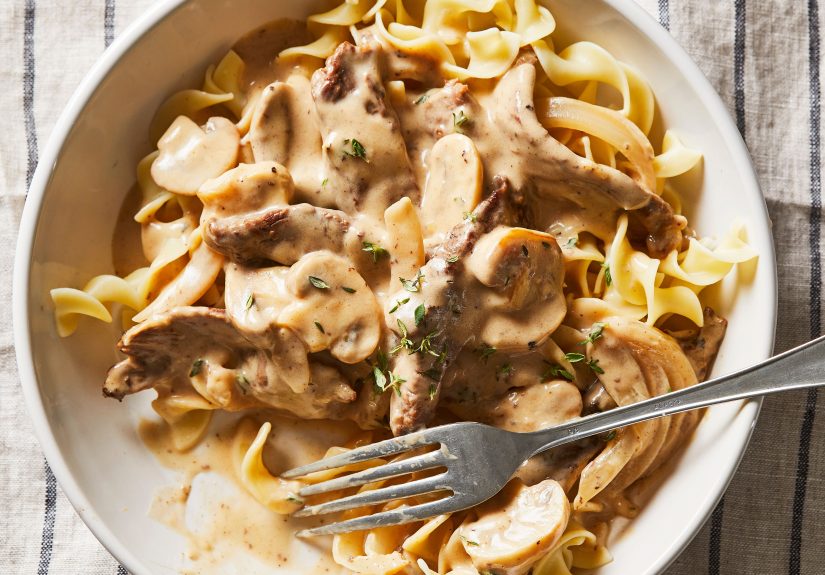
The sauce should be glossy, lightly tangy, and savorynot sour. Mushrooms should taste browned, not watery. Beef should be tender, not gray and chewy.
If you hit those three targets, congratulations: you’ve just unlocked “restaurant comfort food” at home.
Pro Tips for Next-Level Stroganoff
1) Don’t crowd the pan (for beef or mushrooms)
Crowding creates steam, steam creates sadness. Brown in batches so you get caramelizationthose browned bits translate into deeper flavor in the sauce.
2) Slice against the grain
Look at the direction of the muscle fibers and cut across them. This shortens the fibers and makes each bite more tender. It’s a small step with a big payoff.
3) Use low-sodium broth
Worcestershire + mustard + broth can creep into salty territory. Low-sodium broth lets you control the finish.
4) Add sour cream gently
Temper it or add it off heat. This keeps the sauce smooth and creamy instead of grainy. If you’re nervous, crème fraîche is the friend who never panics.
5) Brighten at the end
A small squeeze of lemon juice can make the whole dish taste more livelylike it had a great night’s sleep and a green smoothie.
Variations (Because Stroganoff Is Flexible Like That)
Quick Ground Beef Stroganoff
Swap steak for 1 lb ground beef. Brown it, drain excess fat, then follow the sauce steps. Many shortcut versions also use cream of mushroom soup
for a “30-minute comfort” vibe. It’s not traditional, but it is extremely weeknight.
Slow Cooker Stroganoff
Use chuck roast or stew meat. Cook low and slow with mushrooms, onions, broth, and seasonings until tender. Thicken at the end (cornstarch slurry works well),
then stir in sour cream off heat right before serving. This version is “set it and forget it,” minus the part where you remember to eat.
Chicken or Turkey Stroganoff
Thin-sliced chicken breast or boneless thighs cook quickly and play nicely with the creamy mushroom sauce. Keep heat gentle when adding dairy.
Vegetarian Mushroom Stroganoff
Double the mushrooms, add umami boosters like soy sauce or a small amount of miso, and use vegetable broth. Finish with sour cream, Greek yogurt, or a vegan alternative.
Serve over noodles, rice, or mashed potatoes.
Gluten-free
Use gluten-free noodles and thicken with cornstarch (mix 1 tbsp cornstarch with 1 tbsp cold water, then whisk into simmering sauce).
Confirm Worcestershire sauce is gluten-free depending on brand.
Keto-ish
Skip noodles and serve over cauliflower mash or zucchini noodles. Some low-carb recipes use cream cheese plus sour cream for extra body.
What to Serve with Beef Stroganoff
- Classic: buttered egg noodles
- Cozy alternatives: mashed potatoes, rice, buttered spaetzle
- Fresh balance: crisp green salad, roasted broccoli, sautéed green beans, quick-pickled cucumbers
- Party move: serve family-style with extra herbs and black pepper at the table
Storage, Reheating, and Make-Ahead Tips
Fridge
Store leftover stroganoff in an airtight container for up to 3–4 days. If possible, store noodles separately so they don’t absorb sauce and turn into
delicious beige sponges (not a crime, just a vibe).
Reheating
Reheat gently over low heat, stirring often. Add a splash of broth to loosen. High heat can cause the sour cream to separate.
Freezing
Creamy sauces can change texture after freezing. If you want to freeze, freeze the beef-and-mushroom sauce before adding sour cream, then
thaw and stir in sour cream at the end while reheating. Freeze noodles separately (or better: cook fresh).
Frequently Asked Questions
Why is my stroganoff sauce thin?
It usually needs a few more minutes of simmering, or your flour wasn’t cooked long enough before adding liquid. Simmer to reduce slightly,
or use a small cornstarch slurry to tighten it up.
Why is my sauce grainy?
Sour cream likely got too hot too fast. Next time, temper it with warm sauce first or add it off heat. Keep reheating gentle.
Can I skip mushrooms?
You can, but you’ll lose some signature stroganoff character. If mushrooms are a no-go, try caramelized onions plus a little extra Worcestershire for depth.
What’s the most important step?
Browning. Brown the beef, brown the mushrooms, scrape up the fond. Stroganoff is a sauce dishyour sauce can only be as flavorful as your browning.
Kitchen Experiences: The Stroganoff Moments You’ll Recognize (and Love)
Beef Stroganoff has a funny way of turning regular weeknights into “wait…why does it smell like a restaurant in here?” nights.
It’s the kind of recipe people come back tonot because it’s complicated, but because it delivers that creamy, savory payoff with just enough technique
to make you feel like you did something impressive. The experience starts the moment the beef hits the hot pan and you hear that confident sizzle.
That sound is basically the kitchen equivalent of a motivational speech.
One common stroganoff experience: learning the difference between browning and “accidentally steaming everything.” The first time you make it,
it’s tempting to toss all the beef into the skillet at once. It fits, technically. But then the pan cools, liquid shows up, and suddenly your beef looks
like it’s attending a spa day instead of getting seared. Once you try browning in batches, the whole dish changesmore caramel flavor, richer sauce,
and beef that tastes like it actually met a skillet instead of merely waving at one from across the room.
Mushrooms bring their own mini storyline. At first, they seem like they’re doing nothing… then they release water… then you wonder if you’ve made soup…
and thenfinallythey brown and smell nutty and deep. That’s a real cooking lesson hiding inside comfort food: patience pays.
It’s also oddly satisfying to watch mushrooms transform from “wet slices” to “golden flavor coins.”
Then comes the moment that makes even confident home cooks a little jumpy: adding sour cream. If you’ve ever had a sauce split on you,
you know the feelinglike your dinner just unfollowed you. Stroganoff teaches a gentle kind of kitchen calm: turn the heat down, temper the sour cream,
and everything stays silky. It’s a small win that builds big confidence, because suddenly you’re not just following stepsyou’re controlling texture.
Stroganoff is also a social dish. It’s easy to serve, it looks generous, and it makes people hover near the stove “just to check how it’s going,”
which is absolutely not code for “I want a bite right now.” It’s common to see someone sneak a mushroom, then pretend they didn’t.
It’s also one of those meals where the conversation quiets down after the first few bitesalways a compliment, and always slightly hilarious.
Leftovers have their own charm. The next day, the flavors often deepen, and the sauce gets even more savory. Reheated gently,
it becomes a cozy lunch that feels like you planned your life well. And if you serve it over something differentmashed potatoes one day,
rice the nextyou’ll feel like you made multiple dinners, even though you’re basically just enjoying the same delicious decision twice.
Finally, there’s the “signature move” experience: once you’ve made stroganoff a few times, you start customizing without thinking.
A little extra Dijon for tang. More mushrooms because mushrooms are never the problem. A pinch of smoked paprika for warmth.
A tiny squeeze of lemon at the end because you like how it brightens the sauce. Stroganoff becomes less of a strict recipe and more of a cozy framework
reliable, forgiving, and always ready to make your kitchen smell like you know exactly what you’re doing.