Table of Contents >> Show >> Hide
- Why Studio Ghibli’s Sad Scenes Hit So Hard
- The 16 Saddest Moments in Studio Ghibli Films
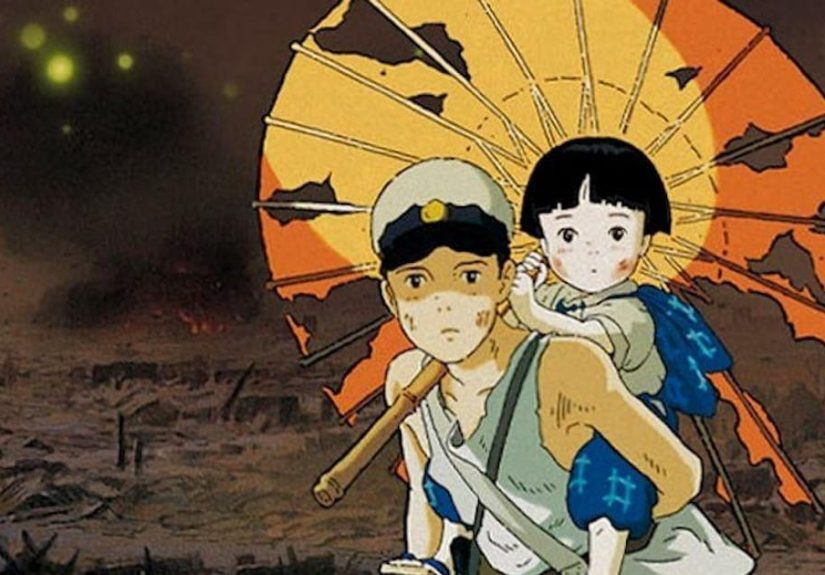
- 1. Setsuko’s Death – Grave of the Fireflies (1988)
- 2. Seita’s Lonely Death at the Train Station – Grave of the Fireflies
- 3. Mei Gets Lost and the Shoe in the Pond – My Neighbor Totoro (1988)
- 4. Satsuki’s Breakdown Over Her Mother’s Illness – My Neighbor Totoro
- 5. Chihiro’s Parents Turn Into Pigs – Spirited Away (2001)
- 6. Chihiro and Haku’s Goodbye – Spirited Away
- 7. Ashitaka and San Choose Separate Paths – Princess Mononoke (1997)
- 8. Nausicaä’s Sacrifice in the Golden Field – Nausicaä of the Valley of the Wind (1984)
- 9. Naoko Leaving for the Sanatorium – The Wind Rises (2013)
- 10. Arrietty and Sho’s Farewell – The Secret World of Arrietty (2010)
- 11. Anna’s Final Goodbye to Marnie – When Marnie Was There (2014)
- 12. Kaguya Taken Back to the Moon – The Tale of the Princess Kaguya (2013)
- 13. Shizuku’s Breakdown Over Her Writing – Whisper of the Heart (1995)
- 14. Taeko Saying Goodbye to Her Childhood Self – Only Yesterday (1991)
- 15. Umi and Shun Think They Might Be Siblings – From Up on Poppy Hill (2011)
- 16. Sophie Returning Howl’s Heart – Howl’s Moving Castle (2004)
- Why We Keep Rewatching These Heartbreaking Scenes
- Experiences With Ghibli’s Saddest Moments
Studio Ghibli has a reputation for cozy vibes: fluffy forest spirits, talking fires,
flying castles, and food so beautiful you can almost taste it through the screen.
But longtime fans know the truthbehind all that whimsy, these movies are emotional
wrecking balls in disguise. Ghibli doesn’t just make you cry; it quietly pulls up a
chair next to your soul and asks, “Hey, have you processed your feelings lately?”
From war-torn cities to bittersweet goodbyes and childhood heartbreak, the saddest
Studio Ghibli moments stick with you long after the credits roll. They aren’t sad
just because bad things happen, but because those moments feel honest: love that
can’t quite work, people doing the right thing too late, children facing realities
they should never have to understand.
Below, we’ll revisit 16 of the saddest moments in Studio Ghibli filmsscenes that
fans around the world still think about years later. Fair warning: massive spoilers
ahead for multiple Ghibli movies. Grab some tissues (and maybe a comforting bowl of
ramen) before you dive in.
Why Studio Ghibli’s Sad Scenes Hit So Hard
A lot of animated films keep sadness simple: something bad happens, characters cry,
then everything is neatly fixed. Studio Ghibli rarely does that. Its most emotional
scenes usually:
- Blend sadness with beauty – A field of fireflies, a glowing
train, a moonlit sky. The framing is gorgeous even when your heart is breaking. - Stay grounded in real emotions – Fear of losing a parent,
guilt over a mistake, regret for time wasted, grief that doesn’t have easy answers. - Refuse clean, perfect endings – Relationships don’t always
work out, sacrifices leave scars, and “happy” is often mixed with “bittersweet.”
That combination of fantasy and emotional realism is exactly why certain Ghibli
moments are talked about again and again. Let’s look at the ones that hit the hardest.
The 16 Saddest Moments in Studio Ghibli Films
1. Setsuko’s Death – Grave of the Fireflies (1988)
If you ask Ghibli fans what the saddest moment in the studio’s history is, Setsuko’s
death usually comes up first. Watching a little girl slowly die of malnutrition
during wartime isn’t just sadit’s devastating. There’s no last-minute rescue, no
miracle, no “it was all a dream.” It’s just a gentle, heartbreaking fade-out of a
child who never did anything but exist in the wrong place at the wrong time.
The tragedy hurts more because we’ve seen her joy: playing with fireflies, drawing
in the dirt, trying to live in a shelter like it’s a game. Her death isn’t treated
as shock valueit’s the logical conclusion of a world that has failed her. And for
many viewers, that’s exactly why it’s unforgettable.
2. Seita’s Lonely Death at the Train Station – Grave of the Fireflies
The film opens with Seita dying in a train station, dirty, starving, ignored by the
adults walking past him. By the time the movie loops back to that moment at the end,
you know everything he’s done to keep his sister alive. You’ve watched his pride,
his mistakes, his love, and his desperation. So when you see his final collapse,
it’s not just sadit feels almost unbearable.
The coda, where Seita and Setsuko’s spirits watch over modern Kobe, adds a quiet
layer of melancholy. They appear peaceful, but the film never lets you forget the
cost of that peace. Seita’s death is less dramatic than a big battle or a scream;
it’s a boy quietly disappearing in a world that has no room left for him.
3. Mei Gets Lost and the Shoe in the Pond – My Neighbor Totoro (1988)
My Neighbor Totoro is often pitched as “the comforting one,” but there’s a
sequence that hits way too close to real-life fear. Mei, angry and worried about
her sick mother, runs off to bring her an ear of corn and never makes it to the
hospital. When the villagers find a child’s sandal in a pond, Satsuki’s reaction is
brutalshe screams, sobs, and begs them to say it isn’t Mei’s.
For a moment, the movie leans fully into that terror every caregiver knows: the
single second when you can’t find a child and your brain instantly fast-forwards to
the worst-case scenario. Totoro and the Catbus eventually save the day, but the
emotional damage has already been done. Ghibli reminds you that even in magical
worlds, kids can be in real danger.
4. Satsuki’s Breakdown Over Her Mother’s Illness – My Neighbor Totoro
Another quietly brutal moment comes when Satsuki, usually the responsible big
sister, completely loses her composure. After hearing that her mother might not be
coming home from the hospital as planned, she erupts in front of Kanta’s grandmother,
sobbing and asking what they’ll do if their mother dies.
Ghibli doesn’t play this scene for melodrama. There’s no swelling soundtrack, just
a child collapsing under the weight of fear she’s been trying to hold back. For
many viewers, especially those who’ve had a sick parent, it doesn’t feel like a
“cartoon moment” at allit feels like a memory.
5. Chihiro’s Parents Turn Into Pigs – Spirited Away (2001)
The first real gut punch in Spirited Away happens early: Chihiro’s parents
dig into a mysterious feast, ignore her warnings, and are transformed into pigs.
It’s surreal, yesbut emotionally, it’s terrifying. In a matter of seconds, the two
people she relies on most become unrecognizable, and she’s left alone in a world
she doesn’t understand.
The sadness lingers throughout the film. Every time Chihiro walks past the pigpens,
trying to figure out which pigs are her parents, you’re reminded that beneath the
fantasy setting is a child’s deepest fear: being abandoned, even if it’s not by choice.
6. Chihiro and Haku’s Goodbye – Spirited Away
By the time Chihiro and Haku say goodbye on the grassy hillside, you’ve watched
their bond transform from wary alliance to something soft and deeply meaningful.
When Haku tells her not to look back as she crosses out of the spirit world, it’s
more than just a mythological ruleit’s a painful instruction to move forward and
accept that this chapter of her life has to stay behind.
The scene is simple: no big kiss, no dramatic speech, just two kids holding hands
in the sky and then letting go. That restraint is precisely what makes it hurt.
They save each other, and then they have to separate. It’s a masterclass in
bittersweet goodbyes.
7. Ashitaka and San Choose Separate Paths – Princess Mononoke (1997)
On paper, the ending of Princess Mononoke is hopeful: the forest spirit
returns in a new form, Irontown gets a second chance, and the war cools down. But
emotionally, it’s anything but straightforward. Ashitaka chooses to help rebuild
the human town; San decides she can’t forgive humanity and will stay in the forest.
They care about each other deeplyand still recognize they can’t live the same life.
Their promise to “see each other” feels tender and grown-up, but also quietly sad.
Ghibli rejects the easy fairy-tale ending where love fixes everything. Instead,
it gives us something harder: two people who find connection, but not total
compatibility. That hurts precisely because it feels real.
8. Nausicaä’s Sacrifice in the Golden Field – Nausicaä of the Valley of the Wind (1984)
Technically pre-Ghibli but spiritually part of the family, Nausicaä features
one of the studio’s most haunting climaxes. Nausicaä throws herself between a raging
herd of Ohmu and the humans they’re about to trample, trying desperately to stop the
cycle of violence. She’s knocked down, apparently killed, her dress soaked and tattered.
The Ohmu lift her body over their golden tendrils, fulfilling the long-quoted
prophecy of a figure in blue walking a golden field. She is revived, yesbut the
sadness comes from the raw cost of her compassion. For a moment, the film dares
you to imagine a world where doing the right thing costs you everything.
9. Naoko Leaving for the Sanatorium – The Wind Rises (2013)
The Wind Rises is already soaked in melancholy: it’s about a man designing
beautiful machines that will inevitably be used for war. But the emotional core is
Jiro’s relationship with Naoko, who suffers from tuberculosis. When she quietly
leaves to return to the sanatorium so he won’t have to watch her die, the film
shifts into pure heartbreak.
She chooses to disappear from his life out of love, leaving him with memories
instead of a prolonged goodbye. By the time Jiro meets her again in his dreamlike
vision at the end, the sadness isn’t loud. It’s soft, heavy, and lingeringlike
grief that’s never fully gone, just folded into the rest of your life.
10. Arrietty and Sho’s Farewell – The Secret World of Arrietty (2010)
The Secret World of Arrietty ends not with tragedy, but with an aching
sense of things that could never quite be. Sho is a human boy facing risky heart
surgery; Arrietty is a tiny Borrower whose family has to move on to survive. Their
goodbye beside the flowing water is gentle and politeand quietly crushing.
When Arrietty tells Sho that he’s given her courage and he tells her that her fight
to live has given him hope, it’s one of those rare moments where a children’s movie
bluntly acknowledges mortality. They don’t promise to see each other again. They
just wish each other a good life, and then go their separate ways.
11. Anna’s Final Goodbye to Marnie – When Marnie Was There (2014)
At first, When Marnie Was There feels like a dreamy summer friendship
story. Anna, lonely and anxious, meets the mysterious Marnie at the Marsh House.
Their bond is intense, intimate, and just a little bit otherworldly. When the truth
comes outthat Marnie is essentially a memory, a spectral echo of Anna’s
grandmotherthe entire relationship is reframed through grief and healing.
The final goodbye, where Anna thanks Marnie and lets her go, is quietly devastating.
It’s the sadness of realizing that someone you love has always been gone, combined
with the relief of understanding that you were loved all along. The film doesn’t
shout its emotions; it just lets them wash over you like tides.
12. Kaguya Taken Back to the Moon – The Tale of the Princess Kaguya (2013)
Few endings are as spiritually painful as Kaguya’s return to the moon. Celestial
beings arrive in a blindingly beautiful procession, playing serene music and
insisting that she’ll be free of sorrow once she forgets her life on Earth. Kaguya,
in tears, begs not to forget the people and memories she’s made.
When the heavenly robe is placed on her and her earthly memories slip away, it’s
the emotional equivalent of watching someone’s entire life erased. Her adoptive
parents collapse in grief. The film suggests a cruel irony: peace without emotion
may be worse than a life full of joy and pain. It’s an ending that leaves you
quiet for a long time.
13. Shizuku’s Breakdown Over Her Writing – Whisper of the Heart (1995)
No war, no magic, no monstersjust a girl and her feelings absolutely imploding.
Shizuku pours herself into writing her first story, only to realize how far she is
from her dreams. When she breaks down in tears, convinced she isn’t talented enough,
it hits anyone who has ever tried to create something and felt like a failure.
Her pain is small in the cosmic sense, but enormous in the personal one. That’s
what makes it so sad: Ghibli treats her creative insecurity as seriously as any
world-ending curse. The scene says, “Your emotions are valid, even if the world
doesn’t notice them,” and that empathy is what makes it sting.
14. Taeko Saying Goodbye to Her Childhood Self – Only Yesterday (1991)
Only Yesterday quietly crushes you with nostalgia. Taeko, a 27-year-old
woman feeling lost in adult life, spends the film remembering her 10-year-old self.
In the final scenes, as she rides the train away from the countryside, her younger
self and childhood classmates appear, silently watching her and encouraging her
toward a braver decision.
When those ghostly kids fade from the train windows, it feels like saying goodbye
not just to childhood, but to every version of yourself you’ve ever been. It’s not
tragic in the traditional sense, but it’s deeply sad in that “oh no, I’m growing up
and I can’t go back” way that hits adults right in the chest.
15. Umi and Shun Think They Might Be Siblings – From Up on Poppy Hill (2011)
On the surface, From Up on Poppy Hill is about students trying to save
their beloved school clubhouse. Underneath that, though, is a very uncomfortable
emotional twist: Umi and Shun, who clearly like each other, are led to believe they
might actually be brother and sister.
The scenes where they very politely try to suppress their feelingspulling back,
avoiding each other, carrying heavy emotional weight in quiet glancesare painfully
sad. Even once the misunderstanding is cleared up, the memory of that brief,
awkward heartbreak lingers. It’s a reminder of how fragile young love can be when
the world interferes.
16. Sophie Returning Howl’s Heart – Howl’s Moving Castle (2004)
Howl’s Moving Castle is full of charm and chaos, but its emotional peak is
surprisingly intimate. Sophie travels into Howl’s past, sees him give his heart to
Calcifer, and realizes just how long he’s been living literally heartless. Later,
when she holds that stolen heart in her hands, she’s terrified: if she returns it,
will he liveor die?
The moment she presses it back into his chest, apologizing and crying, is one of
the saddest and most tender in the film. It’s the fear of losing someone you love,
mixed with the understanding that you can’t protect them from everything. You can
only give their heart back and hope they’ll choose to keep living.
Why We Keep Rewatching These Heartbreaking Scenes
So why do Ghibli fans willingly rewatch a movie like Grave of the Fireflies
or cry all over again at Chihiro’s goodbye? Part of it is catharsisthese movies
give us a safe space to feel things that real life sometimes doesn’t let us process.
But it’s also about how respectfully Ghibli treats pain. Sadness isn’t a glitch in
the story; it’s a natural part of being alive.
Even the most heartbreaking scenes usually come with a glimmer of something else:
connection, love, or hope. Setsuko and Seita’s spirits watching modern Kobe, Arrietty
giving Sho courage, Ashitaka and San promising to meet againnone of that erases the
sadness, but it keeps the films from feeling cruel. They acknowledge that life is
hard and beautiful at the same time.
Experiences With Ghibli’s Saddest Moments
Ask around in any anime community and you’ll hear a familiar chorus: “I’m never
emotionally recovering from Grave of the Fireflies,” “I cried at the end
of The Wind Rises,” “Why does Totoro make me anxious even though
it’s supposed to be cute?” Ghibli sadness has become a shared cultural experience.
For many viewers, their first encounter with these films happened in childhood,
which makes the emotional impact even stronger. Someone might have watched
My Neighbor Totoro as a kid and just remembered the Catbus and the fluffy
forest spirit. Then, as an adult, they rewatch it and suddenly feel the raw panic
of a missing child and the unspoken fear of losing a parent. The movie didn’t
changethe viewer did.
Other fans talk about using Ghibli movies as emotional checkpoints. When life feels
overwhelming, they return to Spirited Away to remind themselves that
bravery isn’t about being fearless, it’s about moving through fear. Or they watch
Whisper of the Heart when they’re doubting their creative path, and seeing
Shizuku’s meltdown makes them feel less alone in their own imposter syndrome.
There’s also a generational layer. Many people are now sharing Ghibli films with
their own kids. They’ll say things like, “I watched Nausicaä with my dad;
now I’m watching it with my daughter.” The sad scenes hit differently when you’re
the adult in the room, watching a child on-screen face danger and loss. You feel
protective, but you also recognize that these stories offer something quietly
powerful: a way for kids to learn that it’s okay to feel scared, heartbroken, or
uncertain.
And then there are the people who can’t quite bring themselves to rewatch the
saddest films at allespecially Grave of the Fireflies and
The Tale of the Princess Kaguya. They’ll say, half-jokingly, “Once was
enough,” but underneath the joke is respect. These movies didn’t just make them
tear up; they rearranged something in the way they think about war, family, or the
quiet struggles of everyday life.
That’s the real power behind the saddest Studio Ghibli moments. They don’t just
aim for shock value or temporary tears. They invite you to sit with complex
emotionslove tangled with loss, hope existing right next to griefand come out
the other side a little more human. You may not be ready to rewatch all of them
right now, but chances are, a line, an image, or a single shot from one of these
scenes is still living rent-free somewhere in your heart.