Table of Contents >> Show >> Hide
- What you’re actually buying (in plain English)
- Why “Oyster” is the neutral you didn’t know you needed
- Belgian linen: not just a buzzword (it’s the vibe)
- Cascade Roman Shade + Oyster: the “structured neutral” formula
- Customization cheat sheet: lining, mount, and controls
- Where this shade shines: room-by-room ideas
- Care and maintenance: keep it looking intentional
- Value talk: why people consider Barn & Willow in the first place
- How it compares to other popular window treatments
- Buying checklist: make your decision like a pro
- Conclusion: the shade for people who like “calm,” but not “boring”
- Real-world experiences (what owners commonly notice after living with it)
- SEO tags (JSON)
Some people collect art. Others collect throw pillows. And then there are the quietly powerful among us who collect
window treatmentsbecause nothing says “I have my life together” like a shade that hangs perfectly straight at
7:00 a.m. and still looks good at 7:00 p.m. after you’ve opened and closed it seventeen times like a curious raccoon.
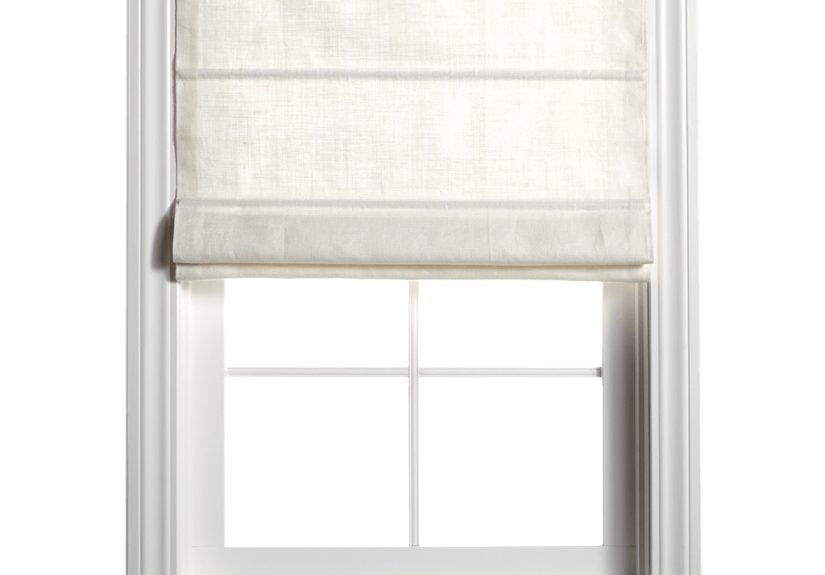
If you’re eyeing the Barn & Willow Belgian Linen Cascade Roman Shade in Oyster, you’re shopping in that
sweet spot where “relaxed and natural” meets “tailored and intentional.” The linen texture keeps things warm and lived-in,
while the cascade construction brings structureaka, it won’t look like your window is wearing a crumpled napkin.
This article breaks down what the shade is, why the Oyster color is sneakily versatile, how to choose the right lining,
and how to measure without turning your tape measure into a haunted slinky.
What you’re actually buying (in plain English)
A Roman shade is basically the hybrid child of curtains and blinds: it’s fabric (soft, stylish) that raises
and lowers like a shade (functional, space-saving). Instead of rolling up like a roller shade, it stacks into horizontal
folds at the top of the window when lifted.
The cascade style is the more architectural version of the Roman-shade family. Think defined folds and
a clean, structured frontcreated with stitched pleats and support elements (often dowels/rods) so the shade lifts into a
tidy stack instead of a mushy fabric bunch. It’s tailored without being fussy, like a blazer over a T-shirt.
Why “Oyster” is the neutral you didn’t know you needed
“Oyster” lives in that deliciously in-between zone: not stark white, not beige overload, not gray that makes your room feel
like a Tuesday. It reads as a warm, soft neutral that can swing slightly different depending on the light.
How Oyster tends to behave in real rooms
- Morning light: often brighter and fresher, with the linen texture doing most of the visual “work.”
- Afternoon sun: warmer and creamierespecially if your walls lean warm or you’ve got wood tones nearby.
- Evening lamps: cozy and mellow, where the shade becomes part of the room’s glow rather than a bright rectangle.
Pairing ideas that rarely miss:
white walls + natural oak (Scandi calm), greige walls + black hardware (modern classic),
or sage/olive paint + brass accents (quiet luxury without shouting about it).
Belgian linen: not just a buzzword (it’s the vibe)
Linen is made from flax fibers, and it’s loved for being strong, durable, and naturally textured. In window treatments,
that texture is the point: linen diffuses light in a way that feels soft and expensive, even when your furniture is mostly
“assembled with determination.”
Belgian linen, specifically, has a reputation for qualityoften tied to long-standing mills and tight standards. Barn & Willow’s
Belgian linen story has been highlighted in design coverage, including notes about their linen being woven at a long-running mill
in Belgium and then made-to-order elsewhere, which is part of how the brand tries to balance quality and cost.
(Translation: you’re paying for fabric and construction, not a luxury logo tax.)
What linen does well on windows
- Texture without visual clutter: it adds depth even when the color is understated.
- Light diffusion: it can soften harsh daylight and reduce that “spotlight on my dust” effect.
- Aging gracefully: linen tends to relax and soften over timemore “lived-in chic,” less “new plastic smell.”
Cascade Roman Shade + Oyster: the “structured neutral” formula
The magic here is the combo:
cascade construction gives you crisp folds and a consistent silhouette, while
Oyster Belgian linen keeps it warm and organic. That’s why this shade works in both directions:
it can look “designer minimal” in a modern space and still feel right in a traditional home with crown molding.
It’s also a strong choice if you’re trying to avoid the two most common window-treatment tragedies:
(1) “my shade looks like a wrinkled paper bag,” and (2) “my shade is so stiff it feels like office blinds.”
Cascade + linen avoids both.
Customization cheat sheet: lining, mount, and controls
Lining options: pick your privacy level like a grown-up
Most people decide on lining based on one of three things: sleep, privacy, or
screen glare. Barn & Willow’s Roman shade line has been described as offering common liner choices:
unlined, privacy, blackout, and a combined optionso you can steer how much light filters through.
- Unlined: best for soft glow and rooms where you don’t need privacy (or you live in a forest with polite squirrels).
- Privacy lining: a great everyday pickdiffuses light while reducing silhouettes from outside.
- Blackout lining: ideal for bedrooms, nurseries, media rooms, or anyone who takes naps seriously.
- Combination options: useful when you want privacy plus more light control without going full cave mode.
Practical example: If your bedroom window faces east and your alarm clock is “the sun,” blackout is your friend.
If you want a living room that feels bright but not exposed, privacy lining is usually the sweet spot.
Inside mount vs. outside mount: decide before you measure
Inside mount sits within the window frame for a built-in look. It’s clean and tailoredespecially with cascade folds.
Outside mount mounts above/around the frame and can help cover trim, reduce light gaps, or make a small window feel larger.
How to measure Roman shades (without rage-Googling later)
Measuring guides across major shade retailers tend to agree on the basics:
measure carefully, measure multiple spots, and write things down like you’re defusing a bomb.
- Inside mount width: measure the width in three places (top/middle/bottom) and use the smallest number.
-
Inside mount height: measure in multiple places and use the largest or as instructed by the retailer,
depending on how the shade is built and mounted. - Outside mount width: measure the width you want to cover and add overlap for better light control and privacy.
-
Depth check: inside mount typically needs sufficient depth; many guides note minimum depths (often around 3/4" or more)
depending on hardware and style.
Quick sanity check example: If your inside width measures 35 7/8" at the top, 35 3/4" in the middle,
and 35 13/16" at the bottom, you use 35 3/4". Your window is not “almost square.” Your window is a liar.
Controls and child safety: modern homes don’t need dangling cords
If there are children (or pets with chaotic ambitions) in the home, cordless or safer control options matter.
The U.S. Consumer Product Safety Commission has long urged cord-safety steps for window coverings, and federal rules have also addressed
operating cords on custom window coverings. In other words: if you can choose a safer lift system, do ityour shade should be stylish,
not suspenseful.
Where this shade shines: room-by-room ideas
Living room
Oyster linen brings softness without looking “too beige,” and cascade folds keep it crisp. If your living room has multiple windows,
this shade helps them look unifiedlike they belong together, not like you bought one in 2018 and another during a 2 a.m. scroll.
Consider privacy lining for daytime glow with fewer neighbor silhouettes.
Bedroom
If your goal is a calm, hotel-ish bedroom, Oyster is a strong base neutral. Pair it with blackout lining if you’re light-sensitive.
If you love waking up gently, privacy lining gives you that “soft morning light” feeling without turning your bedroom into a fishbowl.
Kitchen
Roman shades are popular in kitchens because they’re tidy and don’t steal counter space. Oyster is forgiving with white cabinets,
butcher block, stainless appliances, and even colorful tile. Practical tip: in kitchens, prioritize easy-to-maintain habits
(regular dusting, quick spot-cleaning) so linen doesn’t become a magnet for “mystery cooking splatter.”
Home office
Linen softens light and can reduce screen glare when paired with the right lining. If you’re on video calls, Oyster reads as warm and clean
behind youmore “well-designed background” and less “witness protection program.”
Care and maintenance: keep it looking intentional
Linen is durable, but window treatments live a hard life: sun exposure, dust, and the occasional handprint from a person who
definitely knew better. A few habits help:
- Dust regularly: a vacuum brush attachment or gentle pass keeps fibers from holding onto grime.
- Spot clean fast: blotdon’t rubthen use a mild cleaner appropriate for linen.
- Avoid harsh chemicals: bleach can damage fibers and alter color on many linens.
- Mind the sun: bright, direct sunlight can cause gradual fading over time; liners can help buffer that.
If you’re thinking, “Can I throw my Roman shade into the washer?”deep breath. Most Roman shades are constructed with internal components
and hardware that make machine-washing impractical. Instead, lean on regular dusting and careful spot cleaning. For deep cleaning,
professional methods are often the safest move.
Value talk: why people consider Barn & Willow in the first place
Barn & Willow has positioned itself as a more accessible route to custom window treatments, emphasizing premium fabrics and a more direct
pricing approach. The brand’s product pages call out messaging like avoiding huge markups and offering free shipping timelines, and design coverage
has discussed their manufacturing model and typical options (styles, colors, lining choices, included hardware).
The practical value is in the details:
custom sizing, hardware included, and a fabric that looks “designer” without requiring a
designer’s budget. It won’t be the cheapest window covering you can buy, but it can be the kind you don’t want to replace in two years.
How it compares to other popular window treatments
If you’re deciding between Roman shades and other styles, here’s the honest vibe-check:
-
Roman vs. roller: rollers are sleeker and more minimal; Romans are softer and more dimensional.
If you want texture and warmth, Roman wins. -
Roman vs. blinds: blinds are great for precise tilt control; Romans are better for a fabric-forward,
layered look. - Roman vs. drapes: drapes add drama and fullness; Romans keep things tidy and tailoredespecially in smaller rooms.
And if energy efficiency is part of your decision, window coverings can help manage heat gain/lossespecially when fitted well.
Insulating styles like cellular shades are often the top performers, but any well-chosen window covering can improve comfort
by controlling sunlight and drafts. Think of Roman shades as “comfort plus style,” not “space-age insulation.”
Buying checklist: make your decision like a pro
- Choose your mount: inside for a built-in look, outside for coverage and presence.
- Measure carefully: multiple spots, record precisely, don’t round like it’s a personality trait.
- Pick your lining: privacy for everyday, blackout for sleep, unlined for max glow.
- Confirm controls: consider cordless/safer optionsespecially for homes with kids and pets.
- Order swatches: Oyster is a neutral, but your lighting will have opinions.
Conclusion: the shade for people who like “calm,” but not “boring”
The Barn & Willow Belgian Linen Cascade Roman Shade – Oyster is a smart pick if you want a window treatment that feels
elevated but still relaxed. The cascade fold gives structure; the Belgian linen adds texture; the Oyster color plays well with almost everything.
Choose the lining that matches your life (not your fantasy life), measure like a responsible adult, and you’ll end up with windows that look finished
the interior-design equivalent of finally putting your laundry away.
Real-world experiences (what owners commonly notice after living with it)
People rarely fall in love with a window shade on day one because it’s “a shade.” They fall in love around day fivewhen they realize the room feels
calmer, the light looks better on everything, and the window stops screaming for attention. With a Belgian linen cascade shade in Oyster, the first
experience many buyers describe (especially in reviews and design write-ups) is the texture effect: in daylight, the linen isn’t flat.
It has that subtle weave that makes the window feel dressed even when the shade is fully lowered. It’s the difference between a plain T-shirt and a
well-made cotton tee that somehow looks sharper without trying.
The second common “oh, that’s nice” moment is color realism. Oyster often looks simple onlinelike a safe neutral. In person, it tends to
show a gentle warmth that can make a room feel less clinical. In bright rooms, owners often say it reads fresh and clean; in rooms with warm bulbs and
wood tones, it can look creamier and cozier. That’s why swatches matter: two homes can have the same shade and swear they got different colors.
Lighting is basically an unpaid interior designer with a strong opinion.
Installation tends to be the make-or-break experience for any custom shade. The most reported wins are straightforward:
having the right tools ready (a drill, level, pencil, tape measure) and using a second pair of hands for larger widths.
Even people who are comfortable with DIY often appreciate help holding the headrail level while marking holes. The cascade style also earns points for
looking intentionally “tailored” right after install. When raised, the folds stack neatly; when lowered, the face looks structured rather than saggy.
That structure is often exactly what people wanted after living with flimsier shades that looked rumpled by lunchtime.
Daily use brings up the practical stuff: light gaps, privacy at night, and maintenance.
Owners who choose privacy lining often describe the daytime effect as “bright but softened”you still get a pleasant glow, but the room feels less exposed.
At night, privacy lining usually handles most neighbor concerns, but if you have strong exterior lighting or you’re very close to other houses, blackout
(or a combined option) can feel more secure. And yes, Roman shades can have small light gaps at the sidesespecially with inside mountsbecause fabric
shades need room to move. People who can’t stand light leakage often prefer outside mounts or more overlap.
Maintenance is the part nobody posts on social media because “I vacuumed my shade” isn’t exactly going viral. But it matters. The most common rhythm is
simple: dusting every week or two (often with a brush attachment), quick spot cleaning when life happens, and avoiding anything harsh that could change
the color. Linen is durable, but it’s still fabricso greasy fingerprints, splash marks, and enthusiastic pets are all part of the story. Owners who keep
their shades looking best tend to treat them like upholstery: gentle cleaning, no aggressive scrubbing, and a healthy respect for sunlight over time.
Some people even rotate how often they raise/lower shades across windows to even out exposure, especially in rooms that get strong afternoon sun.
The most satisfying long-term experience people describe is how a linen shade changes the feel of a space without changing the space itself. You didn’t
knock down walls. You didn’t buy a new sofa. But suddenly the room looks more finished. Oyster linen can make paint colors look richer, wood tones look
warmer, and daylight feel more flattering. It’s one of those upgrades that’s not flashy, but it’s feltlike switching from harsh overhead lighting to a
lamp that makes everyone look well-rested. And in the best cases, it’s the kind of “quiet upgrade” you notice every day, which is exactly the point of
good design: it works, it lasts, and it makes your home feel like a place you actually meant to create.