Table of Contents >> Show >> Hide
- Why pumpkins rot so fast (especially after carving)
- Tip 1: Start with a “good bones” pumpkin
- Tip 2: Delay carving (or choose a “less cut” design)
- Tip 3: Clean and sanitize the pumpkin (yes, before you carve)
- Tip 4: Hollow it out like you mean it
- Tip 5: Carve smart for strength (and fewer sad collapses)
- Tip 6: Seal exposed flesh to slow dehydration
- Tip 7: Control the environment: cool, shaded, and off the ground
- Tip 8: Use cool lighting + do tiny “daily tune-ups”
- Quick “What should I do?” guide
- Field Notes: Practical experiences people run into (and what works)
- Conclusion
Nothing says “Halloween spirit” like a crisp, glowy jack-o’-lantern… and nothing says “Halloween regret”
like watching it turn into a saggy, fuzzy science experiment before trick-or-treaters even show up.
The good news: pumpkin decay isn’t mysterious. It’s basically a three-part horror movie starring
microbes (mold/bacteria), moisture (too much or too little), and temperature (heat speeds everything up).
Below are eight practical, science-friendly ways to slow the slump. You don’t need a lab coatjust a little
strategy, a tiny bit of maintenance, and the willingness to treat your pumpkin like the seasonal VIP it is.
Why pumpkins rot so fast (especially after carving)
A whole pumpkin is protected by its skin. The moment you cut into it, you expose juicy flesh to oxygen and
invite microbes to dinner. Then the pumpkin starts losing water, shrinking and wrinkling as it dehydrates.
Add warm weather (or a candle inside), and you’ve basically turned your porch into a pumpkin spaexcept the
pumpkin did not consent, and it will absolutely dissolve into mush.
The goal is simple: reduce microbes, reduce moisture problems, and keep it cool.
Every tip below attacks at least one of those.
Tip 1: Start with a “good bones” pumpkin
Pumpkin longevity begins at the store (or patch). Choose a pumpkin that’s firm, heavy for its size,
and free from soft spots, bruises, cracks, or oozing areas. Those blemishes are basically tiny “Welcome” signs
for rot.
Quick checklist
- Stem intact: A healthy-looking stem (not snapped off) helps the pumpkin stay stable longer.
- No squishy zones: Press lightly around the pumpkinsoftness can mean decay has started.
- Flat base: Easier to display without rolling into your shrubbery like a runaway bowling ball.
Pro tip: don’t carry a pumpkin by the stem. It’s not a purse handle. It’s a pumpkin stem having a very stressful day.
Tip 2: Delay carving (or choose a “less cut” design)
The single biggest life-extender is timing: if you carve too early, you’re betting against biologyand biology
is undefeated. In warmer climates, carving just a day or two before Halloween often works best. In cooler weather,
you can carve a few days ahead without losing your pumpkin’s will to live.
Longer-lasting alternatives
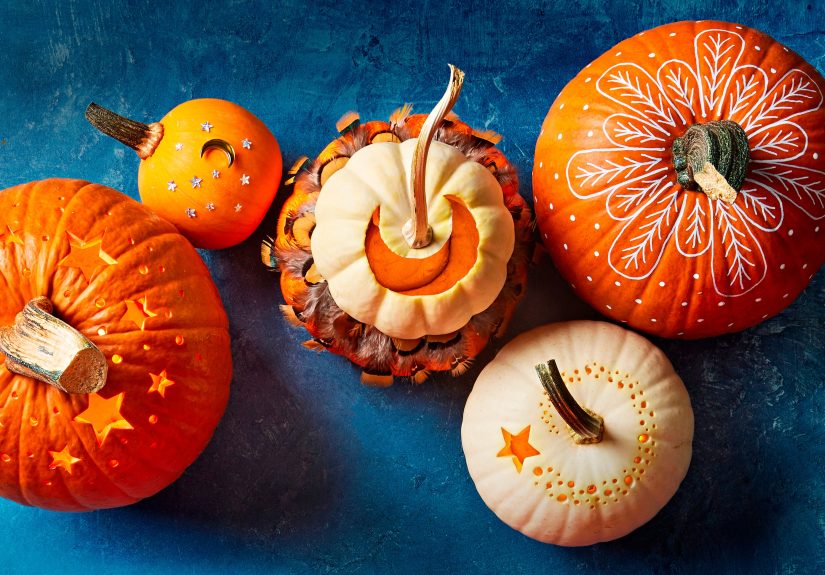
- Paint it: No cuts = far less rot. Great for porch displays that need to last weeks.
- Etch it: Scrape the skin instead of cutting through. It gives detail without huge openings.
- Carve smaller openings: Less exposed flesh means less dehydration and fewer entry points for microbes.
If you want the full jack-o’-lantern glow, don’t worrycarving can still last. You’ll just want the next tips.
Tip 3: Clean and sanitize the pumpkin (yes, before you carve)
Dirt and residue on the rind can carry microorganisms. Cleaning helps; sanitizing helps more. The key is
dilution and common sense. You’re not trying to pickle the pumpkinyou’re lowering the microbial load.
Option A: Diluted bleach solution (classic method)
- Wash off visible dirt first with water (sanitizer works poorly on dirty surfaces).
- Make a diluted solution (common guidance ranges from roughly 1 tablespoon per gallon of water to a 1:10 bleach-to-water mix).
- Wipe, spray, or briefly dip the pumpkin; then let it air-dry completely.
Safety notes: Use gloves, avoid splashing, and keep the solution away from kids and pets. If the pumpkin might later be composted
or fed to animals, skip bleach and use the vinegar option below.
Option B: Vinegar solution (great bleach alternative)
Mix about 10 parts water to 1 part vinegar. Spray or wipe the pumpkin (inside and out if it’s carved),
let it dry, and repeat as needed. Vinegar creates a less microbe-friendly surface without using bleach.
Either way: drying matters. Moisture trapped around the stem or inside the cavity accelerates rot.
Tip 4: Hollow it out like you mean it
Those stringy bits and leftover pulp are basically a buffet for mold. The cleaner the interior, the fewer places microbes can settle.
Best practice steps
- Scoop thoroughly: Remove seeds and scrape the inner walls until they feel smoother.
- Let the cavity dry: Give it time to air-dry before carving (a fan helps).
- Clean your tools: Especially if you’re carving multiple pumpkinscross-contamination is real, even in Halloween crafting.
If you’re carving with kids, this is also the moment to turn “scooping duty” into a competition. Winner gets first pick of the roasted pumpkin seeds.
Tip 5: Carve smart for strength (and fewer sad collapses)
A pumpkin is basically a biodegradable sculpture. Thin sections dry out and droop faster, and big cutouts remove structural support.
Your design can be spooky and stable.
Design choices that help
- Go thicker: Avoid razor-thin bridges of pumpkin flesh that can curl or snap.
- Smooth cuts: Jagged edges dry faster and invite more breakdown.
- Cut from the bottom or back: A bottom opening can reduce top “lid moisture pooling” and makes candle/LED access easier.
Think of it like architecture: fewer dramatic cantilevers, more “this porch display will survive until the big night.”
Tip 6: Seal exposed flesh to slow dehydration
Once carved, the exposed surfaces start drying immediately. A light barrier helps keep moisture in and slows that shriveled look.
The most common household fix is petroleum jelly.
How to do it without making a greasy mess
- After the pumpkin is clean and dry, apply a thin layer to cut edges and exposed areas.
- Use a gloved finger, cotton swab, or paper towel for control.
- Reapply lightly if edges start looking dry.
You can also use a small amount of cooking oil in a pinch. But here’s the big safety caveat:
oils and petroleum jelly can be flammable. If you’re using a real candle, skip oily sealants and switch to LED lighting instead.
Tip 7: Control the environment: cool, shaded, and off the ground
Heat speeds up microbial growth and dehydration. Rain and damp surfaces encourage mush and mold. Your pumpkin wants to live somewhere like
a cozy fall postcard: cool, shaded, and not sitting in a puddle.
Make your porch pumpkin-friendly
- Shade matters: A covered porch beats direct sun every time.
- Elevate it: Set the pumpkin on a tray, plate, cardboard, or a small riser rather than bare concrete or soil.
- Avoid freezing: Freezing damages the tissue; when it thaws, it breaks down fast.
- Bring it in: If days are hot or nights are too cold, move it indoors when not on display.
Emergency revive move: the ice bath
If your carved pumpkin starts to shrivel early, a brief soak in cold water can plump it back up temporarily.
Remove any lights first, soak for a short time, then dry it thoroughly and reapply your preservation steps.
Tip 8: Use cool lighting + do tiny “daily tune-ups”
A real candle warms the interior (translation: it “cooks” the pumpkin). Heat + moisture + sugars = a party for microbes.
Battery LEDs or glow sticks give you the glow without turning your jack-o’-lantern into compost on fast-forward.
A 60-second maintenance routine
- Quick check: Look for wet spots, soft areas, or mold fuzz.
- Dry the stem area: Water likes to pool there after rain or mist.
- Light mist (optional): A vinegar or diluted sanitizing spray can help slow microbial growththen let it dry.
- Cover overnight: If you have fridge space, chilling helps. If not, loosely covering can reduce dehydration (don’t trap moisture).
The theme is “small interventions before the pumpkin gets dramatic.” Because once it gets dramatic, it gets… fragrant.
Quick “What should I do?” guide
If you want a pumpkin to last weeks (uncarved)
- Pick a firm, unblemished pumpkin and keep it cool, dry, and shaded.
- Keep it off damp ground and away from overly warm indoor spots.
- Consider painting instead of carving.
If you want a carved jack-o’-lantern to last as long as possible
- Carve close to Halloween.
- Sanitize + dry, hollow thoroughly, seal exposed cuts, keep it cool, and use LED lighting.
- Do quick daily tune-ups.
Field Notes: Practical experiences people run into (and what works)
If you’ve ever hosted a pumpkin-carving night, you’ve probably seen the same patterns play out: the early-carved pumpkins look amazing
on day one, a little tired on day three, and by day five they’re auditioning for a low-budget zombie movie. The biggest “aha” moment for most
households is realizing that pumpkin longevity isn’t about one magic hackit’s the combination that buys you extra days.
For example, many people try only one steplike sealing the cuts with petroleum jellyand feel disappointed when mold still shows up.
Sealing helps with dehydration, but it doesn’t erase microbes that were already present. That’s why the sanitize-and-dry step is so clutch:
when the pumpkin starts cleaner and drier, the sealant is working on a calmer playing field. You’ll notice the difference most in the carved edges,
which tend to wrinkle first. With a quick wipe-down and a thin reapplication, those edges usually stay sharper-looking longer.
Temperature is the other big “experience teacher.” People in warmer regions often learn (the hard way) that carving a week early is basically
signing up to carve twice. If daytime temperatures stay high, a pumpkin can soften in a matter of daysespecially if it’s sitting in direct sun
or on heat-holding concrete. A common fix is relocating the pumpkin to a shaded spot and bringing it indoors during peak afternoon heat.
Even without a refrigerator, that simple move can stretch the display long enough to get you through the main event.
Then there’s rainpumpkin’s frenemy. A wet pumpkin looks fine until moisture lingers in the stem “dip” or collects inside the cavity, and suddenly
you get that fast, mushy breakdown. People who keep pumpkins under a covered porch, wipe them down after storms, and elevate them on a tray or plate
typically report fewer “surprise puddle” issues. Elevation also helps with the classic “bottom rot” problem, where the underside stays damp and turns soft first.
Lighting choices also show up in real-life results. Traditional candles are cozy, but the heat dries out the interior and can accelerate decay.
Folks who switch to LED tea lights often notice their carved pumpkins look less “baked” and hold their shape longer. Plus, there’s less worry about
flammabilityespecially important if you used any oil-based sealing method. In homes with kids running around (or windy porches), LED is the easy win:
same glow, fewer risks, and more pumpkin life.
Finally, the most practical “experience tip” is setting expectations by pumpkin type and weather. A carved pumpkin isn’t meant to last forever.
But if you stack the habitssanitize, dry, seal, cool location, LED, and tiny daily checksyou’re no longer hoping your pumpkin survives.
You’re managing it. And that’s the difference between greeting trick-or-treaters with a crisp grin… and apologizing for the compost monster on your steps.