Table of Contents >> Show >> Hide
- What “Rounded Shoulders” Really Means (And Why It Happens)
- The Game Plan: Stretch + Strength + Small Habit Tweaks
- 12 Exercises & Stretches to Fix Rounded Shoulders
- 1) Doorway Pec Stretch
- 2) Corner Pec Stretch (Single-Arm Focus)
- 3) Thoracic Extension on a Foam Roller
- 4) Open-Book Thoracic Rotation Stretch
- 5) Arm-Elevated Child’s Pose (Lat + Upper-Back Stretch)
- 6) Chin Tucks (Deep Neck Flexor Builder)
- 7) Shoulder Blade Squeeze (Scapular Retraction Isometrics)
- 8) Wall Angels (or Wall Slides)
- 9) Band Pull-Aparts
- 10) Face Pulls (Band Version)
- 11) Prone Y-T-W (Upper-Back Trio)
- 12) Scapular Push-Ups (Push-Up Plus) or Serratus Punches
- How to Put This Into a Weekly Routine
- Posture Habits That Make the Exercises Work Better
- When to Get Help
- Conclusion
- Real-Life Experiences: What People Notice When They Commit (Extra )
If your shoulders have been slowly creeping forward like they’re trying to eavesdrop on your keyboard, you’re not alone.
Rounded shoulders are one of the most common “modern human” posture patternsright up there with the
“phone neck” and the “I live in this chair now” stance.
The good news: you don’t need a fancy posture gadget or a vow of silence at your desk. Most people can improve rounded
shoulders by combining two things: opening what’s tight (usually the chest/front of shoulders) and
strengthening what’s sleepy (usually the upper back and shoulder stabilizers).
Quick note: This is general fitness information, not medical advice. If you have sharp pain, numbness/tingling, recent injury, or symptoms that worsen quickly, check in with a qualified clinician.
What “Rounded Shoulders” Really Means (And Why It Happens)
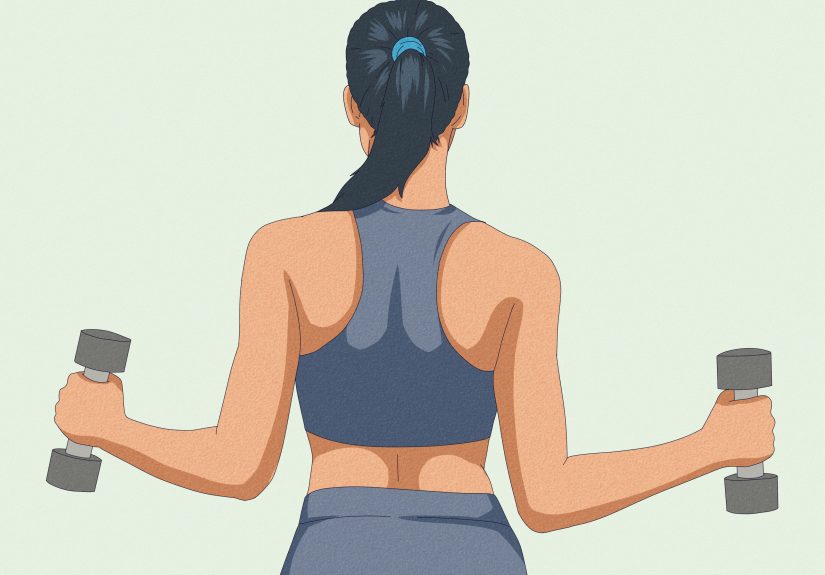
Rounded shoulders usually show up as shoulders drifting forward and inward, with the shoulder blades sitting more
“spread” on the ribcage (scapular protraction). Often, it travels with a forward head and a slightly hunched upper back.
In posture-nerd terms, this can resemble upper crossed syndromea pattern of tightness in the front (like pecs)
and weakness/endurance deficits in the back (like mid/lower traps and external rotators).
Common drivers include long hours of sitting, lots of screen time, repeated reaching in front of you, and strength programs
that heavily favor pressing (push-ups, bench) without balancing pulling (rows, face pulls). Stress can also play a role;
many people literally “guard” their chest by rounding forward.
Signs you might have rounded shoulders
- Your shirt collars or backpack straps creep toward your neck.
- Your shoulders feel tight in the front, and your upper back feels “weak” or fatigued.
- Overhead reaching feels stiff, pinchy, or limited (especially after sitting).
- You see your shoulders sitting forward of your ears in photos.
A 30-second self-check
- Stand tall and relax your arms.
- Without forcing anything, notice where your thumbs point. If they naturally turn inward and your shoulders hang forward, that’s a hint.
- Try a “wall check”: stand with your butt, upper back, and head near a wall. If getting the back of your head close requires your chin to jut up, forward-head posture is likely tagging along.
The Game Plan: Stretch + Strength + Small Habit Tweaks
Think of posture like a playlist. You can’t fix it by skipping one song. You need:
- Mobility for the chest/front of shoulders and the upper back (thoracic spine).
- Strength and endurance for the muscles that pull the shoulder blades back/down and rotate them well.
- Micro-habits so your day stops “undoing” your workouts.
The exercises below are a practical starter set. Pick a handful and do them consistently. Consistency beats heroic workouts
that happen once every leap year.
12 Exercises & Stretches to Fix Rounded Shoulders
You can do these with minimal equipment (a wall, a floor, and optionally a resistance band and foam roller).
For most moves, aim for 2–3 sets. If you’re new, start with one set and build up.
1) Doorway Pec Stretch
Targets: chest (pec major/minor), front of shoulders
How: Stand in a doorway with elbows bent about 90° and forearms on the doorframe. Step one foot forward
and gently shift your chest through the doorway until you feel a stretch across the chestno low-back arching, no “dramatic movie kiss” lunge.
Dosage: Hold 15–30 seconds, 2–4 rounds.
Common mistake: shrugging shoulders up or letting the ribs flare. Keep the neck long and ribs stacked over the pelvis.
2) Corner Pec Stretch (Single-Arm Focus)
Targets: chest and anterior shoulder, especially helpful if one side feels tighter
How: Face a corner (or use a single doorframe). Place one forearm on the wall slightly below shoulder height.
Gently rotate your torso away until you feel a stretch in the chest/front shoulder.
Dosage: Hold 20–30 seconds per side, 2–3 rounds.
Pro tip: Move the elbow a bit up/down to find the “sweet spot,” but keep it pain-free.
3) Thoracic Extension on a Foam Roller
Targets: upper-back (thoracic spine) extension mobility
How: Lie on your back with a foam roller across your upper back (not your neck). Support your head with your hands.
Gently extend over the roller like you’re opening your chest to the ceiling. Keep ribs from flaring wildlythink “open the upper back,” not “snap the spine.”
Dosage: 6–10 slow extensions, then move the roller slightly and repeat.
Common mistake: letting the low back do all the work. Keep your core lightly braced.
4) Open-Book Thoracic Rotation Stretch
Targets: thoracic rotation, chest/upper back tension
How: Lie on your side with hips and knees bent (stacked). Arms straight in front, palms together.
Rotate your top arm open like turning a big book page, letting your chest rotate toward the floor behind you.
Keep knees stacked so the rotation comes from the upper back, not the lower back.
Dosage: 6–10 reps per side, slow breaths.
5) Arm-Elevated Child’s Pose (Lat + Upper-Back Stretch)
Targets: lats, upper back, shoulder flexion comfort
How: From child’s pose, walk your hands forward and rest forearms on a chair, couch, or yoga blocks if you have them.
Let your chest sink gently while keeping your neck relaxed.
Dosage: Hold 20–40 seconds, 2–3 rounds.
Why it helps: tight lats can limit overhead reach and subtly pull the shoulders forward.
6) Chin Tucks (Deep Neck Flexor Builder)
Targets: deep neck flexors; counters forward head posture
How: Sit or stand tall. Glide your head straight back like you’re making a gentle double chin.
Keep your chin leveldon’t tilt up or down. Imagine lengthening the back of the neck.
Dosage: 2–3 sets of 8–12 reps, holding each rep 3–5 seconds.
Common mistake: jamming the head back hard. This should feel controlled, not cranky.
7) Shoulder Blade Squeeze (Scapular Retraction Isometrics)
Targets: mid-back muscles that pull the shoulder blades back
How: Sit or stand tall. Gently pull your shoulder blades back and slightly down (like putting them in your back pockets).
Hold without shrugging.
Dosage: Hold 5–10 seconds, repeat 5–10 times.
Make it better: exhale as you squeeze; keep your ribs from popping up.
8) Wall Angels (or Wall Slides)
Targets: shoulder mobility + upper-back endurance
How: Stand with your back against a wall, feet a few inches forward. Keep ribs gently down.
Start with arms in a “goalpost” position. Slide arms up and down, maintaining as much contact with the wall as you can.
Move slowlythis is posture training, not speed dating.
Dosage: 2–3 sets of 6–10 controlled reps.
Modify: if contact is tough, reduce range or do it seated against a wall.
9) Band Pull-Aparts
Targets: rear shoulders, mid-back; balances lots of pushing
How: Hold a resistance band at shoulder height with arms straight. Pull the band apart until your hands move wide and your shoulder blades squeeze together.
Keep shoulders away from ears and don’t flare the ribs.
Dosage: 2–3 sets of 10–15 reps.
Common mistake: bending elbows to “cheat.” Keep arms long; make the upper back do the work.
10) Face Pulls (Band Version)
Targets: rear delts, mid/lower traps, external rotators
How: Anchor a band at about face height. Pull the band toward your face, leading with elbows out and back.
Finish with hands near temples and shoulder blades back/down. Think “proud chest,” not “shrug and pray.”
Dosage: 2–3 sets of 8–12 reps.
Form cue: keep wrists neutral and neck relaxed.
11) Prone Y-T-W (Upper-Back Trio)
Targets: lower traps, mid traps, rhomboids; endurance for upright posture
How: Lie face down (floor or bench). With thumbs up, lift arms into a “Y,” then “T,” then “W.”
Keep the neck neutral and shoulders away from ears. Use tiny ranges at firstthis is about control.
Dosage: 2 sets of 5–8 reps in each letter (Y, T, W).
Common mistake: using momentum or shrugging. If your upper traps are doing all the work, scale down.
12) Scapular Push-Ups (Push-Up Plus) or Serratus Punches
Targets: serratus anterior (the “shoulder blade on ribcage” stabilizer)
How (scapular push-up): In a plank or wall push-up position with straight elbows, let your chest sink slightly so shoulder blades move together,
then push the floor away to spread shoulder blades apart. No elbow bendingthis is a shoulder-blade move.
Dosage: 2–3 sets of 8–12 reps.
Modify: do it against a wall if a full plank is too spicy.
How to Put This Into a Weekly Routine
Option A: 10-minute daily reset
- Doorway pec stretch: 2 rounds
- Open-book rotations: 6 reps/side
- Chin tucks: 10 reps
- Wall angels: 8 reps
- Shoulder blade squeezes: 5 holds
Option B: 3x/week strength focus (15–20 minutes)
- Band pull-aparts: 2–3 x 12
- Face pulls: 2–3 x 10
- Prone Y-T-W: 2 rounds
- Scapular push-ups: 2–3 x 10
- Finish with pec stretch + thoracic extension
Progression rule: When you can do the reps with clean form and no neck/upper-trap takeover, add a little resistance,
slow the tempo, or add a set. The goal is durable posture, not a one-week “posture glow-up” that disappears by Monday.
Posture Habits That Make the Exercises Work Better
Desk setup: make it easier to sit tall
- Screen height: bring the top third of your monitor closer to eye level.
- Keyboard/mouse: keep elbows near your sides so shoulders don’t creep forward.
- Back support: sit back so your upper back isn’t doing a constant “hover.”
Micro-breaks: the secret weapon
Every 30–60 minutes, stand up and do one “posture rep”: a shoulder blade squeeze, a chin tuck, or a doorway stretch.
Tiny reps sprinkled through the day often matter more than a single perfect workout.
What to avoid (for now)
- Endless chest stretching without strengthening the upper back (you’ll feel looser but may not stay aligned).
- Heavy pressing volume with little pulling work.
- Posture braces worn all dayhelpful as a short reminder, but muscles still need training to hold position.
When to Get Help
Rounded shoulders are common, but you should seek evaluation if you have persistent pain, radiating symptoms,
new weakness, a history of shoulder dislocations, or if overhead movement consistently feels sharp or pinchy.
A physical therapist can tailor a plan based on your specific anatomy, sport, or work demands.
Conclusion
Fixing rounded shoulders isn’t about walking around like a soldier who swallowed a broomstick. It’s about restoring comfortable,
efficient alignmentso your neck isn’t doing overtime and your shoulders can move the way they’re built to move.
Start simple: stretch the chest, mobilize the upper back, strengthen the muscles that pull the shoulder blades back and down,
and add a few micro-breaks to your day. Give it a few weeks of steady practice and your posture will start to feel less like a “pose”
and more like your default setting.
Real-Life Experiences: What People Notice When They Commit (Extra )
Here’s the part most posture articles skip: the experience of actually doing the work when life is busy, your calendar is rude, and your chair is unusually comfy.
In real life, improving rounded shoulders often feels less like a dramatic makeover and more like a string of small wins that add up.
A common story goes like this: someone starts because their neck feels tight after work. They try a doorway stretch once, feel a little relief,
and think, “Cool, fixed.” Then the next day, the tightness returnsbecause their body is excellent at returning to whatever it practices the most
(and for many of us, that’s the sport of sitting).
The people who see the biggest changes tend to do two things consistently: they pair stretches with strengthening, and they build tiny posture interrupts
into the day. For example, one “desk reset” every hourstand up, shoulder blade squeeze for five seconds, chin tuck for three seconds, and a deep breath.
It’s almost comically simple, but it chips away at the daily accumulation of slouch.
Another frequent experience: the upper traps try to hijack everything. When someone begins band pull-aparts or face pulls, they may feel the work mostly
in the neck/shoulders (the “I’m shrugging my way to better posture” approach). With practice, they learn to keep the shoulders down and feel the effort
between the shoulder blades instead. That shift is huge. It often comes with a surprising side effect: less tension at the base of the neck, especially after
long computer sessions.
People who lift weights often notice posture improvements in the gym first. Pressing movements (like bench or overhead press) can feel smoother when the shoulder
blades can set and rotate well. Rows and face pulls start to feel more “connected” to the back instead of the arms doing a solo performance. Over time, that better
scapular control can make everyday tasksreaching into the back seat, grabbing something off a shelf, carrying groceriesfeel less cranky.
There’s also a subtle confidence effect. Many folks report they look more “awake” in photos, even without trying. Not because they’re forcing a rigid posture,
but because their chest is more open and their head stacks more naturally over the torso. The best part? It tends to feel easier to breathe deeply when the ribcage
isn’t constantly collapsed forward.
The most realistic expectation is this: posture isn’t a final destinationit’s maintenance. After a few good weeks, you’ll probably have a day where you’re back to
hunching like a question mark. That’s not failure; it’s a reminder that your body adapts to what you do repeatedly. If you can keep 3–4 exercises as your “core set”
(like doorway stretch, thoracic extension, chin tucks, and one band pull), you’ll always have a quick way to get back on trackno guilt spiral required.