Table of Contents >> Show >> Hide
- What Makes an Alum “Famous,” Anyway?
- A Quick Roll Call: University of Melbourne Notable Graduates
- Politics and Public Leadership
- War, Engineering, and Large-Scale Problem Solving
- Science and Nobel-Level Discovery
- Ideas That Changed the Conversation
- Literature and Storytelling
- Entertainment and Satire
- Global Business and Finance
- What These Famous University of Melbourne Alumni Have in Common
- Experiences That Connect to the University of Melbourne Alumni Story (Approx. )
- Conclusion
The University of Melbourne (often lovingly shortened to “UniMelb”) has a talent for producing graduates who go on to run countries, rewrite scientific textbooks,
reshape public debate, and occasionally invent characters so iconic they feel like distant relatives at Thanksgiving. If you’ve ever wondered why the phrase
“famous University of Melbourne alumni” keeps popping up in conversations about politics, Nobel Prizes, media, and global financewelcome. You’re in the right place.
This guide spotlights a cross-section of University of Melbourne notable graduates who are widely documented in major reference works, top publications,
and institutional biographies. It’s not a complete list (a university this old has a very long “who’s who”), but it is a highly representative onespanning public leadership,
science, ideas, literature, entertainment, and business.
What Makes an Alum “Famous,” Anyway?
“Famous” isn’t just about red carpets and Wikipedia page length. When people search for University of Melbourne famous graduates,
they usually mean alumni who have done at least one of the following:
- Held national or global leadership roles (prime ministers, major public officials, top regulators)
- Changed how we understand the world (Nobel-winning research, foundational theories)
- Shaped culture and public conversation (books, journalism, performance, enduring ideas)
- Led influential organizations (major corporations, financial institutions, global initiatives)
UniMelb’s alumni story is also a story of place: a research-intensive university in a city that’s equal parts policy, art, science, and caffeine.
The result is a steady stream of graduates who learn to argue clearly, think rigorously, and handle pressureskills that are useful whether you’re
defending a legal brief, leading a lab, or trying to get a group project across the finish line without “accidentally” changing your name.
A Quick Roll Call: University of Melbourne Notable Graduates
Before we dive deeper, here’s the highlight reelour featured Melbourne University alumni and what they’re known for:
- Julia Gillard Prime Minister of Australia; major voice on education and women’s leadership
- Sir Robert Menzies Long-serving Prime Minister; key architect of modern Australian politics
- Harold Holt Prime Minister; known for strong U.S. alliance era leadership
- Sir John Monash World War I commander; engineer and organizer extraordinaire
- Elizabeth Blackburn Nobel laureate; breakthrough work on telomeres and telomerase
- Sir Macfarlane Burnet Nobel laureate; major advances in immunology
- Sir John Carew Eccles Nobel laureate; pioneering work in neurophysiology
- Peter Singer Philosopher and ethicist; globally influential in applied ethics
- Germaine Greer Writer and public intellectual; landmark voice in modern feminism
- Helen Garner Celebrated author and journalist; major figure in Australian letters
- Barry Humphries Comedian and satirist; creator of Dame Edna Everage
- James P. Gorman Global finance leader; longtime Morgan Stanley executive
Politics and Public Leadership
Julia Gillard (BA, LLB) Prime Minister and Global Education Advocate
Julia Gillard served as Australia’s 27th prime minister and remains one of the country’s most internationally recognized modern leaders.
Documented biographies note her University of Melbourne law and arts degrees and trace her path from legal practice into public service and national leadership.
After politics, her work has been closely tied to education and women’s leadership on the global stageproof that a campus debate habit can scale up into world affairs.
Sir Robert Menzies Nation-Shaping Prime Minister
Sir Robert Menzies is one of the most historically significant Australian political leaders, widely covered in major reference sources.
Accounts of his early life and career identify the University of Melbourne as part of his education before he rose through law and politics to become prime minister.
If political longevity were a sport, Menzies would have a highlight montageand probably a rule named after him.
Harold Holt Prime Minister and the U.S. Alliance Era
Harold Holt, another Australian prime minister, is frequently associated with a period of strong alignment with U.S. policy in Vietnam-era geopolitics.
Youth reference biographies and institutional history sources describe Holt studying law at the University of Melbourne before entering public life.
His public legacy is often discussed in the context of foreign policy, leadership, and a very persistent place in popular historical memory.
War, Engineering, and Large-Scale Problem Solving
Sir John Monash Military Commander and Master Planner
Sir John Monash is remembered as a transformative World War I commander and an influential figure in engineering and civic leadership.
Major biographical references describe him attending Melbourne University and earning degrees across disciplinesarts, engineering, and law.
Monash’s reputation is built on organization, logistics, and strategy: the kind of thinking that turns “complicated” into “coordinated.”
Science and Nobel-Level Discovery
Elizabeth Blackburn (BSc, MSc) Nobel Laureate in Physiology or Medicine
Elizabeth Blackburn’s research helped illuminate how chromosomes are protected by telomeres and the role of telomerasework recognized with a Nobel Prize.
U.S. scientific institutions explicitly note that she earned her B.Sc. and M.Sc. degrees at the University of Melbourne before advanced study and a career in top research environments.
In other words: yes, your biology homework really can grow up and win a Nobel.
Sir Macfarlane Burnet Nobel Laureate and Immunology Pioneer
Sir Macfarlane Burnet shared a Nobel Prize in Physiology or Medicine for discoveries tied to acquired immunological tolerance, foundational for transplantation science.
Educational references describe him earning his medical degree from the University of Melbourne.
Burnet’s career is a reminder that “medical school grind” can translate into discoveries that change how medicine workspermanently.
Sir John Carew Eccles Nobel Laureate in Neuroscience
Sir John Eccles won a Nobel Prize for work on how nerve cells communicateresearch central to modern neurophysiology.
Major biographies note that he graduated from the University of Melbourne and then continued study at Oxford.
Eccles’s legacy sits at the intersection of biology, medicine, and the deep, strange question: “How does thinking happen?”
Ideas That Changed the Conversation
Peter Singer Ethics, Animal Rights, and Applied Philosophy
Peter Singer is one of the most influential living philosophers, known for reshaping debates in animal ethics, global poverty, and applied moral reasoning.
Princeton’s own profile describes him as educated at the University of Melbourne and the University of Oxford, and major reference biographies specify his Melbourne degrees in philosophy and history.
Whether you agree with him or argue with him, Singer has made it impossible to pretend ethics is “just theoretical.”
Germaine Greer Writer, Scholar, and Public Intellectual
Germaine Greer is widely recognized as a major voice in modern feminism and cultural criticism.
Biographical references describe her education at the Universities of Melbourne and Sydney before doctoral work at Cambridge.
Greer’s influence is less about a single moment and more about sustained impactbooks and arguments that kept echoing long after the first reaction.
Literature and Storytelling
Helen Garner A Distinctive Voice in Modern Writing
Helen Garner is celebrated for writing that blends clarity, emotional intelligence, and sharp observation.
Major cultural profiles note she went to the University of Melbourne, and institutional materials also describe her completing an honors arts degree.
Garner’s work is a reminder that “serious writing” can still be readable, human, and occasionally funnylike life, but with better editing.
Entertainment and Satire
Barry Humphries The Mind Behind Dame Edna
Barry Humphries became an international comedy icon through characters like Dame Edna Everage.
Biographical sources note he attended Melbourne University but left to pursue actingan early example of a career plan that sounded risky until it worked spectacularly.
Humphries’ legacy shows how university theatre and campus creativity can become globally recognizable cultural satire.
Global Business and Finance
James P. Gorman (BA, Law) Morgan Stanley Leader and Global Finance Figure
James P. Gorman built a high-profile career in global finance, including long service as CEO and chairman of Morgan Stanley.
Major institutional biographies in the United States state that he received BA and law degrees from the University of Melbourne and later earned an MBA from Columbia.
It’s a classic UniMelb-to-the-world trajectory: strong academic foundations, then a career that operates at “international chess match” speed.
What These Famous University of Melbourne Alumni Have in Common
Put a prime minister, a Nobel laureate, a philosopher, a novelist, and a global banker in one room, and you don’t get a normal dinner partyyou get a very intense panel discussion
and at least one person politely asking, “Should we define our terms first?”
Still, patterns emerge across these University of Melbourne notable graduates:
- Communication under pressure: leadership, persuasion, and clear reasoning show up everywherefrom politics to labs to boardrooms.
- Cross-disciplinary strength: many alumni studied broadly (law plus arts, science plus research training, etc.), giving them range.
- Public-facing impact: their work didn’t stay “inside the institution”it reached the public, changed policy, or rewired cultural norms.
- Comfort with complexity: a theme that spans immunology, ethics, war strategy, and finance (also known as “fields where shortcuts backfire”).
Experiences That Connect to the University of Melbourne Alumni Story (Approx. )
If you talk to people who study at (or visit) the University of Melbourne, the experience they describe often sounds like a mix of tradition and forward momentum:
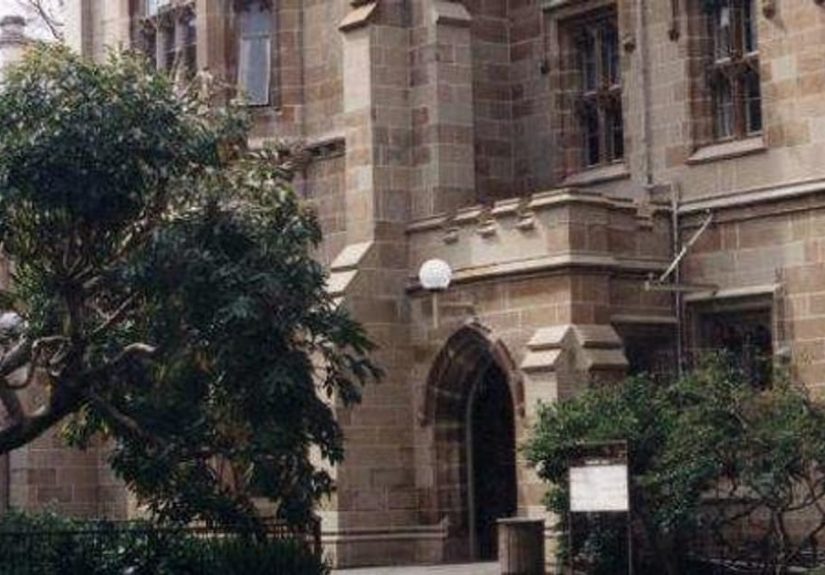
old buildings and new ideas, quiet courtyards and loud opinions, serious research and the very unserious problem of finding a seat during peak café hours.
Those everyday realities are part of what makes the “famous alumni” story feel believablebecause the university environment is built for practice. Practice thinking,
practice arguing, practice testing, practice revising, practice failing safely, then trying again with better evidence.
One common thread is the way students learn to speak up early. Universities don’t just teach content; they teach confidence with uncertainty.
You read something smart, then realize an even smarter person wrote a rebuttal, and suddenly your brain is doing push-ups. That patternclaim, counterclaim, evidence, revision
shows up later in the careers of famous graduates. In politics, it looks like speeches and policy arguments that must land with the public. In science, it looks like hypotheses that
must survive peer review. In finance, it looks like decisions made with incomplete information but real consequences. The campus becomes a training ground where “being wrong”
isn’t the end of the world; it’s the start of a better draft.
Another experience tied to the UniMelb alumni legacy is the culture of interdisciplinary overlap. Students frequently cross paths with people outside their majorlaw students
taking humanities electives, science students picking up communication skills, arts students learning research discipline. That matters because many “famous” careers are not tidy.
Leaders rarely succeed by staying in one lane. A public intellectual needs history, language, and persuasion. A researcher needs creativity and skepticism. A commander or executive
needs logistics, people skills, and an ability to turn a complicated situation into a plan others can execute. When alumni biographies show arts-and-law combinations or science-and-research
trajectories, it reflects a campus reality: your best ideas often come from the class you didn’t expect to love.
Finally, there’s the emotional experience of walking in big footstepswithout being crushed by them. The phrase “famous University of Melbourne alumni” can be inspiring,
but it can also feel intimidating: Nobel Prize winners, prime ministers, legendary writers… and you’re just trying to finish a reading list that multiplies when you’re not looking.
The healthiest way many students frame it is simple: those people were once students too. They wrote awkward drafts. They argued in tutorials. They changed direction.
Some didn’t even finish the path they startedand still built extraordinary careers. That perspective turns alumni fame into something useful: not a pedestal, but a reminder that
ambitious outcomes start with ordinary days of work.
Conclusion
The University of Melbourne’s alumni story isn’t about one “type” of success. It’s about range: public leadership, scientific discovery, cultural influence, and global business.
The famous namesJulia Gillard, Robert Menzies, Harold Holt, John Monash, Elizabeth Blackburn, Macfarlane Burnet, John Eccles, Peter Singer, Germaine Greer, Helen Garner,
Barry Humphries, and James P. Gormanshow how a single institution can feed many worlds. If you came here searching for University of Melbourne famous graduates,
the real takeaway is this: UniMelb alumni don’t just join the conversation. They often help write the agenda.