Table of Contents >> Show >> Hide
- What the Pipeline 40 Is (in Real-World Terms)
- What “40” Actually Means (Spoiler: Not 40 Inches)
- Design DNA: Minimalism with a Purpose
- Light Output: How Bright Is Pipeline 40, Really?
- Where Pipeline 40 Works Best
- How High Should You Hang It?
- Planning Brightness Like a Grown-Up (Without Becoming One)
- Color Temperature: Warm vs. Cool (and Why Your Marble Cares)
- CRI: The “Why Does My Food Look Sad?” Factor
- Dimming and Drivers: The Part People Skip (Then Regret)
- Installation Notes That Save Your Sanity
- Pipeline 40 vs. Other Linear Pendants
- Buying Checklist: What to Confirm Before You Click “Add to Cart”
- Conclusion: A Small Line That Makes a Big Difference
- Real-World Experiences with the Pipeline 40 (The Stuff You Only Learn After Living with It)
Some lights want to be the main character. Others are quietly confidentlike that friend who shows up in a plain white tee
and somehow looks more put-together than everyone wearing sequins. The Pipeline 40 LED Linear Pendant Light
is the “plain white tee” of modern lighting: minimalist, architectural, and weirdly mesmerizing once it’s floating over a kitchen
island, dining table, or conference room where important people say things like “synergy.”
This guide breaks down what the Pipeline 40 is, why designers keep reaching for it, how to plan placement and height, what light
quality to expect, and how to avoid the classic “I bought a gorgeous pendant and now my dimmer hates me” situation.
Expect practical advice, a few laughs, and zero guilt if you decide your current ceiling boob light has overstayed its welcome.
What the Pipeline 40 Is (in Real-World Terms)
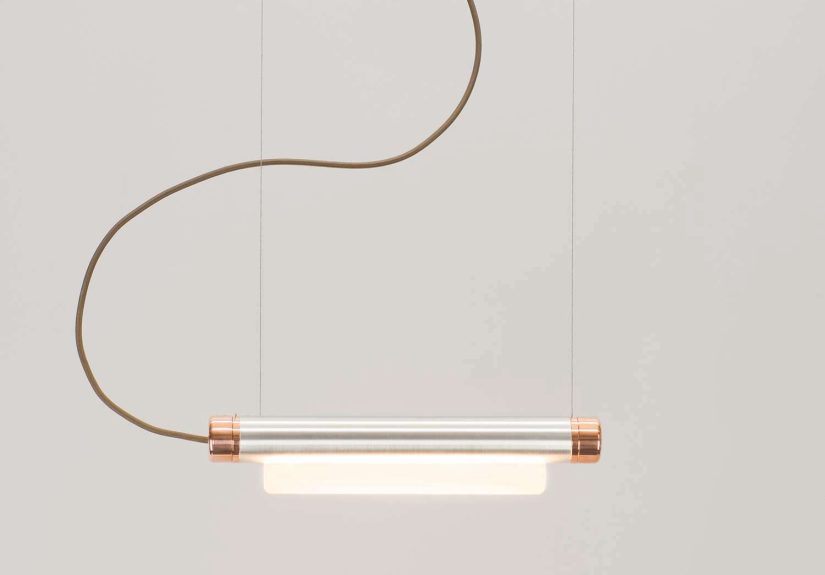
Pipeline 40 is a compact linear pendant from the Pipeline familya modular system built around clean aluminum “bar” segments and a
diffuser that spreads LED light evenly. The overall effect is a crisp line of illumination that looks like it’s suspended by
near-invisible cables. It’s modern without being cold, and simple without being boring (which is harder than it sounds).
Why it looks like it’s floating
The fixture hangs from very thin aircraft cables, so your eye reads the light bar first and the support system second. That’s the
magic trick: a strong horizontal line, visually “unanchored,” creating a sculptural presence without taking up visual space.
What “40” Actually Means (Spoiler: Not 40 Inches)
“Pipeline 40” refers to a segment length of about 40 cmroughly 16.5 inches wide. That detail matters
because many shoppers assume it’s a 40-inch fixture and then wonder why it looks more like an elegant lighting baton than a runway
for tiny airplanes.
- Pipeline 40 (approx.): ~16.5″ wide, ~3″ thick (varies slightly by spec).
- Longer runs: Pipeline systems often combine multiple segments (like 40 and 125) into longer linear compositions.
Translation: Pipeline 40 is ideal when you want a slim, refined line of lighteither as a single minimal statement or as one piece in
a longer, customized arrangement.
Design DNA: Minimalism with a Purpose
A lot of “minimal” lighting is basically a thin tube that looks cool… until you turn it on and it casts harsh glare like an interrogation
lamp. Pipeline 40 avoids that by using a diffuser designed to soften the LEDs while still pushing usable output.
Materials and vibe
Expect a modern, architectural look: metal body (typically aluminum) with an acrylic diffuser. Finishes vary by vendor/spec, but the overall
language stays consistentclean, linear, and intentionally understated.
Light Output: How Bright Is Pipeline 40, Really?
Pipeline 40 is not trying to be stadium lighting. It’s designed for refined, even illuminationgreat for layering light in a space and for
adding a polished ambient/task blend over surfaces.
Typical performance expectations
- Color rendering: high CRI options exist (commonly around the “90+” range), which helps food, skin tones, and materials look more natural.
- Color temperature: warm white (cozier) and neutral/cooler white options are commonly offered, depending on configuration.
- Brightness: outputs can vary by LED module and color temperaturethink “enough for a surface,” not “enough to replace every light in the room.”
Practical takeaway: treat Pipeline 40 as a high-quality line of light that works best when paired with other layersrecessed, wall washes,
or accent lightingespecially in larger rooms.
Where Pipeline 40 Works Best
Pipeline 40 shines (yes, we’re doing this) in spaces where you want visual clarity and clean geometry. It’s especially good when you’re trying
to avoid visual clutteropen-plan kitchens, minimal dining rooms, modern offices, boutique retail, and hospitality spaces with a “quiet luxury”
vibe.
Great placements
- Kitchen islands: as a sleek alternative to multiple pendants, especially if you prefer one crisp line over three glass bells.
- Dining tables: a modern complement to rectangular tables and benches.
- Workspaces: conference tables and desks where glare control and even distribution matter.
- Hallways or galleries: as part of a minimalist lighting scheme with layered ambient support.
How High Should You Hang It?
Height is where great lighting plans either become gorgeous… or become a daily reminder that you own a tape measure and still chose chaos.
For kitchen islands, a common guideline is to leave 30–36 inches between the bottom of the pendant and the countertop.
Quick rules that actually work
- Standard 8′ ceilings: aim for ~30–36″ above the counter for islands.
- Taller ceilings: you may go a bit higher to keep proportions balanced, while still protecting sightlines.
- Dining tables: start around the low 30s (inches) above the tabletop, then adjust based on fixture thickness and room scale.
Pipeline 40 is slim, so it’s forgiving. Still, always sanity-check sightlines: you should be able to see faces across the island/table without
a lighting bar slicing the conversation in half like a dramatic movie scene.
Planning Brightness Like a Grown-Up (Without Becoming One)
If you’re lighting a kitchen island for actual cooking (not just arranging lemons for social media), you want enough light on the work surface.
Lighting designers often think in illuminance (footcandles/lux), but you can keep it simple:
A practical approach
- Decide the job: ambience, task lighting, or both.
- Layer the light: use Pipeline 40 for a clean line of light, then add recessed or under-cabinet lighting for serious tasks.
- Use dimming: bright for prep, softer for dinner, lowest setting for “midnight snack stealth mode.”
Pipeline 40 often feels best when it’s not forced to do everything. If you want one fixture to replace all lighting layers, you may need a longer
run, multiple segments, or supplemental fixtures.
Color Temperature: Warm vs. Cool (and Why Your Marble Cares)
Color temperature (CCT) changes the entire mood of a space. Warm white feels inviting; cooler white feels crisp and alert. Neither is “better”
universallyyour finishes and daily habits decide.
Fast guidance
- 2700K–3000K: warm, cozy, flatteringgreat for dining, living spaces, and most homes.
- 3500K–4100K: cleaner, brighter feelpopular for modern kitchens, offices, and spaces where you want a more neutral look.
If your home has warm woods and creamy whites, warmer CCT tends to feel natural. If you’re all about crisp whites, concrete, stainless, and high-contrast
modern finishes, a more neutral option can make the space feel intentionally sharp instead of accidentally yellow.
CRI: The “Why Does My Food Look Sad?” Factor
CRI (Color Rendering Index) is a shorthand measure for how accurately a light source renders colors compared to a reference. For most interiors,
a CRI of 80+ is a common baseline; 90+ is often preferred in kitchens, dining areas, and anywhere color matters.
Pipeline 40 configurations are commonly offered with high-CRI performance, which is part of why it’s popular in design-forward spaces. High CRI
helps your tomatoes look like tomatoes, not like they’re auditioning for a bleak Scandinavian crime drama.
Dimming and Drivers: The Part People Skip (Then Regret)
Integrated LED fixtures don’t dim the same way old incandescent bulbs did. Some require specific dimmer types (ELV, MLV, 0–10V, or digital systems like
DALI). Pipeline systems are often low-voltage at the LED level, with a driver/power supply doing the heavy lifting.
How to avoid dimming drama
- Match the dimmer to the driver: don’t guess. Check the spec sheet for supported dimming methods.
- Plan for flicker-free performance: quality drivers + compatible dimmers = smoother low-end dimming.
- Ask about control systems: if you’re using smart controls, verify compatibility early (before drywall is patched).
If you’re renovating, this is the moment to be specific. It’s much easier to choose the right dimmer now than to conduct an experimental
dimmer swap program later.
Installation Notes That Save Your Sanity
Pipeline 40’s slim form is deceptively simple. Installation still involves aligning a perfectly straight horizontal line, setting cable lengths,
and getting canopy placement rightespecially if you’re installing multiple segments in a row.
Installer-friendly tips
- Center it on purpose: align to the island or table, not the ceiling box (which is often… creatively placed).
- Mind the canopy: confirm canopy size and ceiling junction box location early.
- Level matters: small cable adjustments can make a big visual differencebring patience.
- Consider glare: if seating is nearby, confirm the diffuser placement doesn’t create uncomfortable brightness at eye level.
Pipeline 40 vs. Other Linear Pendants
Plenty of linear pendants exist. Pipeline 40 stands out when you care about a truly minimal silhouette, a modular design language, and a clean,
evenly diffused line instead of a bulky bar with visible hardware.
Choose Pipeline 40 if you want:
- A slim architectural look that doesn’t dominate the room.
- Soft, even diffusion instead of harsh point-source glare.
- A design that can scale into a larger linear system if your project grows.
Consider other options if you need:
- Much higher lumen output from a single fixture.
- Directional task lighting with strong downlight punch.
- A decorative statement fixture with sculptural shades or dramatic glass.
Buying Checklist: What to Confirm Before You Click “Add to Cart”
- Exact length: confirm it’s ~16.5″ (Pipeline 40) and not a longer segment.
- Color temperature: pick warm vs neutral based on your finishes and lifestyle.
- CRI: aim high if this is over food, art, or anywhere color accuracy matters.
- Dimming method: verify ELV/MLV/0–10V/DALI compatibility with your controls.
- Drop length: check max cable length and whether custom drops are available.
- Ceiling conditions: sloped ceiling? Confirm it’s supported (or plan a solution).
- Layering plan: decide what other lights will support the space for true functionality.
Conclusion: A Small Line That Makes a Big Difference
The Pipeline 40 LED Linear Pendant Light is a masterclass in restraint. It doesn’t scream for attention; it earns it. In the right space, it reads
like a clean stroke of lightarchitectural, modern, and quietly luxurious. If you want something minimal but memorable (and you’re willing to plan
dimming and layering like a responsible adult for approximately 12 minutes), Pipeline 40 is a strong choice.
Real-World Experiences with the Pipeline 40 (The Stuff You Only Learn After Living with It)
If you ask homeowners, designers, and installers what it’s like to live with a minimalist linear pendant, you’ll hear a surprisingly consistent
set of “aha” momentsand Pipeline 40 shows up in a lot of them.
First: people tend to underestimate how much a thin line of light changes a room’s mood. The day it goes up, the space often feels
cleaner even if you didn’t move a single chair. That’s the minimalist effect: by reducing visual clutter overhead, everything below it looks more intentional.
Kitchen islands especially benefitsuddenly the island isn’t just a slab of counter; it’s the centerpiece.
Second: everyone becomes extremely passionate about height. The fixture is slim, but placement still matters. A common experience is
installing it at the “seems fine” height, living with it for a week, and then lowering it slightly because the countertop could use more presence and the
light feels better when it’s closer to the work zone. The good news: cable-suspended fixtures are usually adjustable. The better news: once you dial it in,
you stop thinking about it entirelywhich is basically the highest compliment you can pay to functional design.
Third: dimmer compatibility is the make-or-break detail. Many real projects go like this: the fixture looks perfect, the light quality is great,
and then someone slides the dimmer down and… the room starts doing a tiny strobe performance. The fix is rarely “the light is bad.” It’s usually “the dimmer and
driver are not best friends.” People who have the smoothest experiences are the ones who check the fixture’s supported dimming type, pick a compatible dimmer,
andif they’re renovatingmake that decision before the electrician is already packing up. The payoff is huge: a linear pendant like Pipeline 40 feels dramatically
more luxurious when it dims smoothly to a low, steady glow.
Fourth: cleaning is delightfully uneventful. Unlike chandeliers with 9,000 dangling crystals (beautiful, but also a part-time job), a clean
diffuser-and-metal bar is typically a quick wipe. Owners often mention they clean it less than expected because it doesn’t collect dust in the same obvious way
as bowl fixtures or shaded pendants. A soft microfiber cloth and a gentle cleaner usually keep it looking new without drama.
Fifth: the “I should have layered the lighting” realization shows up in open spaces. Pipeline 40 often provides a beautiful, even line of light,
but in larger kitchens or great rooms it may not replace downlights or under-cabinet lightingespecially for serious tasks. People who love the end result most
are the ones who treat it as part of a team: Pipeline 40 for the elegant overhead line, plus targeted layers for task zones and ambient balance. When everything’s
working together, the space feels bright when it needs to, soft when it should, and never accidentally clinical.
In short: the most common lived experience is that Pipeline 40 makes a room look more “designed” than expected, while also being easy to live withprovided you
give dimming and layering the attention they deserve. The fixture itself stays quietly excellent in the background, which is exactly what great lighting is
supposed to do.