Table of Contents >> Show >> Hide
If you’ve ever wanted to feel like a fearless seafood pro in your own kitchen, soft shell crabs are your moment.
They look a little intimidating (all those legs! those claws!), but once you know how to buy, clean, and cook them,
you’ll realize they’re basically the crunchy, buttery chicken nuggets of the sea only way fancier.
In this guide, we’ll walk through what soft shell crabs are, how to choose the best ones at the market, how to clean
them step by step, and the easiest ways to cook them at home. By the end, you’ll be ready to fry, sauté, or grill
them like you’ve been doing it for years.
What Exactly Are Soft Shell Crabs?
Soft shell crab isn’t a different species it’s a regular crab going through a very dramatic wardrobe change.
In the United States, soft shells are most commonly blue crabs that have just molted their hard exoskeleton.
When a crab outgrows its shell, it sheds it and emerges with a fresh, new shell that’s temporarily soft and delicate.
That brief soft stage is magic time for seafood lovers, because you can eat almost the whole crab: shell, claws, and all.
The only parts you remove are:
- The front “face” or mouthparts
- The feathery gills (also called “dead man’s fingers”)
- The small triangular “apron” on the underside
Once those are gone, the rest of the crab is edible and turns beautifully crisp when cooked.
When Are Soft Shell Crabs in Season?
Soft shell crabs are a seasonal delicacy. While the exact timing depends on the region, a good rule of thumb
in the U.S. is:
- Main season: From late spring through summer, typically starting around April or May and running into early fall.
- East Coast & Gulf: Many markets see the best soft shells from April through September, with a peak in early summer.
Outside of that window, you’ll mostly see frozen soft shell crabs, which can still be excellent if handled correctly.
How to Buy Soft Shell Crabs
Shopping for soft shell crabs is less about memorizing fancy seafood terminology and more about using your eyes and nose.
Here’s what to look for.
Fresh vs. Frozen Soft Shell Crabs
Ideally, you’ll buy fresh, never-frozen soft shell crabs. Many seafood shops carry them live during the season
or sell them freshly cleaned. If you live near the coast, ask for live crabs they’re often kept in tanks or chilled trays.
Live soft shells move very slowly and their shells are pliable and flexible to the touch.
Frozen soft shell crabs are cleaned and frozen shortly after molting. These are a great off-season option:
- Look for crabs that are individually wrapped or vacuum-sealed.
- Avoid packages with a lot of ice crystals or freezer burn.
- Check the date use the most recent pack you can find.
Signs of a Good Soft Shell Crab
Whether fresh or frozen, choose crabs that:
- Smell clean and mild, like the ocean not “fishy” or sour.
- Have a moist, shiny surface, not dried-out or slimy.
- Feel soft and flexible but not mushy.
- Show no dark, dried patches or strange discoloration.
Don’t be shy about asking your fishmonger when the crabs arrived and whether they’ve been previously frozen.
A reputable seafood market won’t mind questions seafood that’s traveled halfway around the world deserves a little interrogation.
How Many Crabs Per Person?
Soft shell crabs vary in size, but as a general guide:
- As a sandwich or main course: 1–2 crabs per person.
- On top of pasta, salad, or grits: 1 crab per person is usually enough.
- As an appetizer: ½–1 crab per person, depending on size.
How to Store and Handle Soft Shell Crabs
Soft shell crabs are perishable and need to stay cold and clean from the moment you bring them home.
This keeps both flavor and food safety on your side.
Short-Term Storage in the Refrigerator
If you’re cooking them the same day or within a couple of days:
- Place the crabs in a shallow container lined with paper towels.
- Cover loosely with plastic wrap or another layer of damp towels don’t seal them completely airtight.
- Keep them in the coldest part of your fridge (ideally 33–40°F / 0.5–4°C).
- Plan to cook fresh soft shells within 1–2 days (3–4 days at most if they’re already cleaned).
Just like other raw seafood, store them on the bottom shelf in a tray so juices can’t drip onto other foods.
Freezing Soft Shell Crabs
If you won’t cook them within a couple of days:
- Ask your fishmonger to clean them first, or clean them yourself.
- Pat them very dry, then wrap each crab tightly in plastic wrap.
- Place wrapped crabs in a freezer bag, press out excess air, and freeze.
- For best quality, use within 2–3 months.
To use, thaw overnight in the refrigerator on a rimmed tray, then pat dry and cook as you would fresh.
How to Clean Soft Shell Crabs (Step-by-Step)
Cleaning soft shell crabs sounds intense, but once you’ve done it once, it’s straightforward.
If you’re squeamish, you can absolutely ask your fishmonger to sell them to you “cleaned and dressed.”
If you’re ready to DIY, here’s how.
What You’ll Need
- Soft shell crabs (fresh or thawed)
- Sharp kitchen scissors
- Cutting board
- Cold running water
- Paper towels
1. Rinse the Crabs
Give each crab a quick rinse under cold running water to remove any sand or debris clinging to the shell.
Pat dry with paper towels and place on a cutting board, belly side down.
2. Remove the “Face”
Holding the crab firmly, use kitchen scissors to snip off about ½ inch from the front of the crab, just behind the eyes and mouthparts.
This removes the inedible mouth area and gives the crab a clean, flat front edge.
3. Remove the Gills (“Dead Man’s Fingers”)
Lift up the side of the top shell like a little flap. Underneath, you’ll see feathery, finger-like structures on each side
these are the gills. They’re usually light beige or gray. Gently pull them out with your fingers and discard.
They’re not poisonous, they just taste and feel unpleasant, which is reason enough to evict them.
4. Remove the Apron
Flip the crab over so the belly is facing up. You’ll see a small triangular or T-shaped flap this is the apron.
Pull it up and snip it off at the base with your scissors.
5. Final Rinse and Dry
Give the crab one more light rinse to remove any stray bits, then pat it very dry with paper towels.
Dry crabs brown and crisp better when cooked wet crabs steam and sputter.
How to Cook Soft Shell Crabs
Once cleaned, soft shell crabs cook very quickly. No matter which method you use, you’re aiming for:
- An internal temperature of at least 145°F (63°C) for food safety.
- A crisp, golden exterior and tender, juicy meat inside.
Method 1: Simple Sautéed Soft Shell Crabs
This is one of the easiest and most classic ways to cook soft shells just a hot pan, a bit of fat, and a squeeze of lemon.
- Dry and season: Pat the cleaned crabs dry and season lightly with salt and pepper. You can dust them in a little flour if you want extra crust, but it’s optional.
- Heat the pan: In a large skillet (cast iron works great), heat a mix of butter and oil over medium-high until foamy and hot but not smoking.
- Cook shell-side down first: Place crabs in the pan, shell-side down. Cook for about 3 minutes until the shell turns red and the underside is golden and crisp.
- Flip and finish: Carefully flip and cook another 2–3 minutes, until golden and fully cooked through.
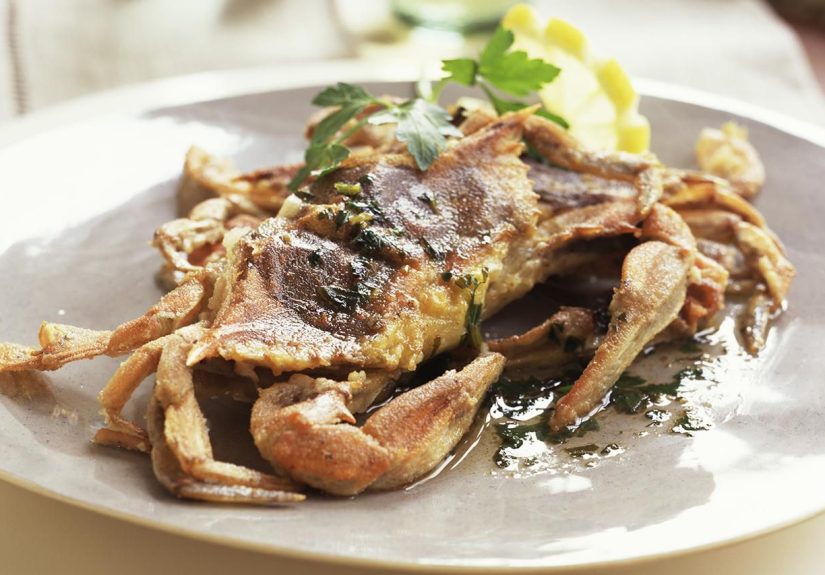
- Serve immediately: Transfer to a plate, squeeze lemon on top, and serve with a quick pan sauce if you like (lemon, butter, garlic, white wine, and parsley are all winners).
Pro tip: Soft shells can spatter and even “pop” a little while cooking, so use a splatter guard and don’t lean in too close.
Method 2: Crispy Fried Soft Shell Crabs
If you want that restaurant-style soft shell crab sandwich moment, frying is your best friend.
- Set up a breading station:
- Bowl 1: Seasoned flour or a mix of flour and cornmeal.
- Bowl 2: Beaten egg with a splash of milk or buttermilk.
- Dip and dredge: Dip each crab in the egg mixture, then dredge in the flour (or flour/cornmeal) until well coated. Shake off excess.
- Heat the oil: In a deep skillet, heat ½ inch of neutral oil (like canola) to about 350°F.
- Fry: Carefully lower crabs into the oil, legs first. Fry 2–3 minutes per side until golden brown and crisp.
- Drain and season: Transfer to a wire rack or paper towels and sprinkle with a little extra salt.
Slide that crispy crab into a toasted bun with lettuce, tomato, and remoulade, and you’ve basically made the world’s fanciest seafood burger.
Method 3: Grilled or Broiled Soft Shell Crabs
For a slightly lighter take, you can grill or broil soft shells:
- Brush cleaned crabs with olive oil and season with salt, pepper, and maybe a sprinkle of Old Bay or paprika.
- Grill over medium-high heat or broil on a lined pan for about 3–4 minutes per side.
- Finish with a squeeze of lemon and serve over salad, pasta, or roasted vegetables.
Serving Ideas
- Soft Shell Crab Sandwich: On toasted brioche with lettuce, tomato, and spicy mayo or remoulade.
- Over Pasta: Toss linguine with garlic, olive oil, lemon, and parsley, then top with a sautéed crab.
- On a Salad: Pile a crisp crab over mixed greens with a light vinaigrette.
- Brunch Style: Serve on top of cheesy grits or a waffle with hot sauce and a poached egg.
Common Questions About Soft Shell Crabs
Is It Really Safe to Eat the Shell?
Yes once cleaned properly, most of the crab is edible. You remove the mouthparts, gills, and apron,
but the soft shell, legs, and claws are meant to be eaten. That’s the whole point of soft shell crab maximum flavor, minimal work.
Are the Gills Poisonous?
You’ll sometimes hear people call the gills “dead man’s fingers” or “lungs,” which sounds spooky, but they’re not
actually poisonous. They just have an off taste and texture, so standard practice is to remove and discard them.
Can I Reheat Cooked Soft Shell Crabs?
You can, but they’re best eaten right after cooking. If you must reheat:
- Use a hot oven or air fryer (around 375°F) for a few minutes to re-crisp.
- Avoid microwaving, which makes the shell chewy and the coating soggy.
Real-World Experiences and Tips for Cooking Soft Shell Crabs
The first time many people cook soft shell crabs at home, there’s a moment of hesitation. You unwrap them,
they stare back at you with those tiny eyes, and you think, “Am I really about to do this?” The answer: yes and it’s worth it.
One of the biggest lessons home cooks learn quickly is how important dryness is. The difference between a restaurant-level
crispy crab and a sad, soggy one is almost always how well you dried the crab and how hot your pan or oil was. After cleaning,
take an extra minute to really press the crab between layers of paper towels. It feels fussy, but it pays off as soon as you take that first bite.
Another experience many cooks share: the soft shell “pop”. The first time your crab pops in the pan, it can be alarming,
especially if hot oil jumps at you like it has a personal vendetta. This is totally normal. As moisture inside the crab quickly turns to steam,
it can cause little bursts. A splatter guard, long tongs, and not filling the pan too crowded go a long way toward keeping things under control.
If you’re cooking for guests who’ve never had soft shell crab before, it helps to explain what they’re eating before it hits the table.
Some people are surprised that you eat the shell, legs, and claws. Framing it as “a whole crab that crisps up like the best tempura you’ve ever had”
usually gets folks excited rather than nervous. Serving it in familiar formats like a sandwich or over pasta also helps ease any psychological hurdle.
Many seasoned home cooks also develop strong opinions about breaded vs. unbreaded soft shells. Sautéed crabs without flour have a more
delicate, lightly crisp exterior and really highlight the sweet crab flavor. Breaded and fried versions are more indulgent and dramatic golden, crunchy,
and perfect for a weekend treat. Once you’ve made both, you’ll probably find yourself assigning each version to different moods: flourless for a quick weeknight dinner,
heavily breaded when you’re in full “treat yourself” mode.
On the buying side, people who cook soft shell crabs regularly learn to befriend a good fishmonger.
Ask when their soft shells usually arrive, which size they recommend for sandwiches vs. appetizers, and whether they’ll clean them for you.
Having that relationship means you’ll often get the best selection and freshest product plus, they may call you when a particularly good batch comes in.
Another small but useful trick from experienced cooks: prep a simple sauce before you start cooking.
Soft shell crabs cook in just a few minutes, and once they’re done, you want to eat them right away.
Making a quick lemon-butter sauce, remoulade, or spicy mayo in advance means you’re not scrambling at the stove while your perfectly cooked crabs sit and cool.
Finally, there’s the emotional side of cooking something that looks this “whole.”
For many people, preparing soft shell crabs is a reminder that food doesn’t magically appear as neat, boneless pieces in a package.
You’re working with a real animal, and that can actually deepen your appreciation for the meal.
Taking a moment to be intentional buying from responsible sources, handling the crabs carefully, and cooking them well
turns a simple dinner into a small ritual that’s both delicious and surprisingly meaningful.
By the time you’ve bought, cleaned, and cooked soft shell crabs a few times, the mystery disappears.
They become just another fun, seasonal ingredient you look forward to like the first tomatoes of summer or fresh corn on the cob.
Only in this case, your seasonal treat comes with claws and an extremely photogenic sandwich filling.
Conclusion
Soft shell crabs might seem a little intimidating at first glance, but once you understand what they are and how to handle them,
they’re surprisingly simple. Buy from a trusted market during peak season, store them cold, clean them with a few quick snips,
and cook them hot and fast until crisp and golden.
Whether you sauté them in butter, fry them until outrageously crunchy, or grill them for a lighter take, soft shell crabs deliver
big flavor with minimal effort. Try them once at home, and you may find yourself counting down the months until soft shell season
rolls around again.