Table of Contents >> Show >> Hide
- What Is the SIMPLE Organizing Method?
- Why SIMPLE Works When Other Organizing Plans Fizzle
- How to Do the SIMPLE Organizing Method (Step-by-Step)
- How I Tested SIMPLE in Real Life (Not an Instagram Life)
- Mistakes I Made (So You Don’t Have To)
- Who the SIMPLE Method Is Great For (And Who Might Want a Twist)
- A Quick SIMPLE Checklist (Print This in Your Brain)
- My Experience: 7 Days of SIMPLE (The Good, the Annoying, the Surprisingly Emotional)
- Final Thoughts
I love the idea of being organized. I love the Instagram-worthy pantry, the neatly folded towels, the fridge that looks like it gets quarterly performance reviews.
In real life, though? My “system” has historically been: pile it somewhere, promise I’ll deal with it later, then buy a basket as if baskets are tiny therapists.
So when I kept seeing people mention the SIMPLE organizing method, I was intrigued for a very specific reason:
it didn’t sound like it required a new personality. It sounded like a set of steps you could follow even when your brain is tired,
your time is limited, and your junk drawer is openly auditioning for a reality show.
I tried it, andsurpriseit actually worked. Not in a “my home is now a museum” way. More in a “things finally have places,
and I’m not playing hide-and-seek with my scissors” way. Here’s what the SIMPLE method is, why it’s effective, and exactly how I used it
(including the parts that got messy before they got better).
What Is the SIMPLE Organizing Method?
The SIMPLE method is a step-by-step decluttering and home organization system built around an easy acronym. The goal is to keep you moving,
so you don’t get stuck overthinking every item like it’s a philosophical puzzle.
The acronym breaks down like this:
- S Sort the items
- I Identify the keepers
- M Make homes for each item
- P Put things in containers
- L Label accordingly
- E Establish a routine
What I like about it is that it’s not just “declutter” (which can feel vague and emotionally loaded) or just “organize” (which can turn into
rearranging clutter into prettier clutter). It’s bothdone in a sequence that keeps you from bouncing around the room like a Roomba with commitment issues.
Why SIMPLE Works When Other Organizing Plans Fizzle
Most organizing fails for one of three reasons:
- You start too big (hello, “I’m going to organize the entire garage today”).
- You skip decisions (everything becomes “maybe,” and “maybe” becomes a permanent resident).
- You don’t build maintenance (the system works for a week, then slowly collapses under the weight of real life).
SIMPLE is basically a guardrail against those problems. It forces clear decisions (Identify the keepers),
creates functional storage (Make homes + containers + labels), andthis is the make-or-break step
it includes a maintenance plan (Establish a routine).
Also, clutter is sneaky. It’s not just “stuff.” It’s visual noise, decision fatigue, and the low-level stress of constantly managing piles.
A method that reduces choices and builds quick wins can make organizing feel less like punishment and more like progress.
How to Do the SIMPLE Organizing Method (Step-by-Step)
S Sort the Items
Sorting sounds obvious, but it’s the step people rushand then they wonder why everything still feels chaotic.
“Sort” means grouping like with like, so you can see what you actually have.
How I did it:
- Picked one small zone (not the entire room).
- Pulled everything out of that zone.
- Made quick categories on a clear surface (counter, table, floor with a towelno judgment).
Examples of easy categories:
- In a junk drawer: batteries, tools, pens, tape, random cords, “mystery items.”
- In a pantry: snacks, canned goods, baking, breakfast, sauces.
- In a bathroom: hair, skincare, first aid, backups, daily essentials.
Sorting first is powerful because it exposes duplicates (why do I own four tape measures?) and reveals the true size of your problem
(why do I own fourteen half-dead pens?). And once you see the pile, you can make smarter choices in the next step.
I Identify the Keepers
This is where decluttering happens, but the SIMPLE method frames it in a less dramatic way.
You’re not deciding what to “get rid of.” You’re deciding what earns a spot in your home.
My keeper rules (simple, not saintly):
- Use it or truly need it (not “might need it in a documentary survival scenario”).
- Like it enough to make space for it.
- Have a realistic home for it (we’ll assign that next).
Specific examples that made decisions easier:
- Expired coupons, dried-out markers, and mystery keys went straight to the trash.
- Random cords without a matching device went into a “cord quarantine” bag with a date. If unused in 30 days, donate/recycle.
- Duplicate kitchen gadgets: kept the best one, donated the rest (yes, even the “as seen on TV” avocado thingy).
If you struggle with this step, try the “easy yes” approach: keep the items you’d confidently replace if lost.
Anything that makes you hesitate can go into a small “maybe” boxbut only one. The box is a bridge, not a new storage category.
M Make Homes for Each Item
This is the step that turns “organized for five minutes” into “organized for months.”
Every keeper needs a clear homeone spot where it belongs, every time.
What a good “home” looks like:
- Close to where you use the item.
- Easy to put away with one hand.
- Not buried behind three other things.
I realized I’d been creating “homes” that were basically obstacle courses. For example: scissors were in a drawer under a pile of rubber bands
under a stack of takeout menus. That’s not a home; that’s a scavenger hunt.
Quick tip: If you’re constantly leaving something on the counter, that’s data. Your system is telling you where the home should be.
P Put Things in Containers
Containers aren’t the goal. They’re the support system. The SIMPLE method uses containers to keep categories from collapsing into chaos again.
The trick is to containerize after you declutter, not before (otherwise you just buy bins to store your indecision).
Where containers helped me the most:
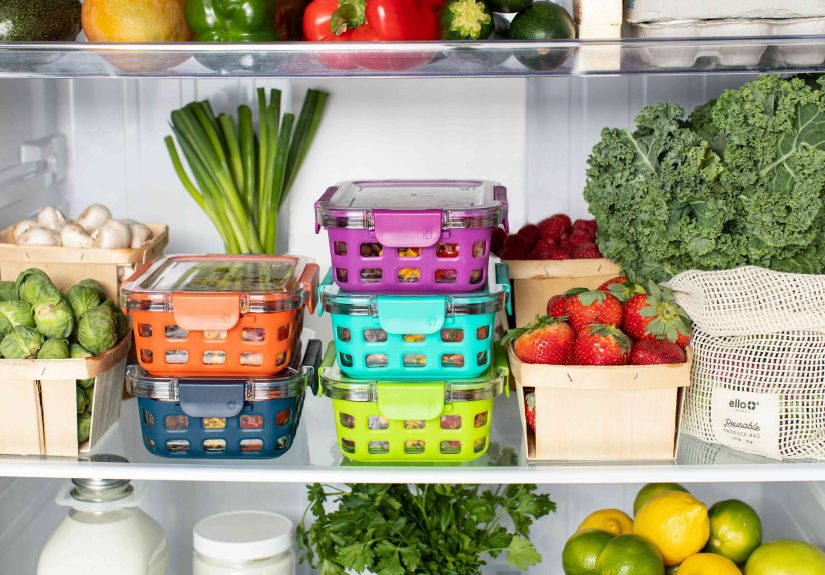
- Fridge: one bin for snacks, one for condiments, one for grab-and-go breakfast items.
- Junk drawer: a small tray for tools, a cup for pens, a tiny box for batteries.
- Bathroom: one bin for backups, one for daily skincare, one for first aid.
Pro move: choose containers that match the “person you are on your busiest day.”
If you hate lids, don’t buy lidded containers. If you won’t stack, don’t buy stack-only systems. Organizing that requires perfect behavior is basically fiction.
L Label Accordingly
Labeling feels extra… until it saves you five minutes a day.
Labels reduce guesswork, help everyone in the house put things back correctly, and stop “miscellaneous” from becoming a lifestyle.
My labeling rules:
- Use plain language: “Batteries,” not “Portable Power Solutions.”
- Label the category, not the dream: “Snacks,” not “Healthy Choices Only.”
- Make it visible: front of bins, top of boxes, outside of opaque containers.
If you have kids, roommates, or a partner, labels are basically the household version of road signs.
Without them, people will take creative liberties. With them, you’ll hear the sweet sound of someone putting something away correctly
without asking, “Where does this go?”
E Establish a Routine
This is the step that separates a one-time clean-up from a real home organization routine.
Without maintenance, your system will slowly drift back to “organized chaos” (which is still chaos, just with better PR).
Routines that actually felt realistic:
- Daily 3-minute reset: put away the obvious strays (mail, cups, shoes).
- Weekly 10-minute zone check: pick one small area (fridge shelf, one drawer, one bin) and do a quick tidy.
- One-in, one-out for problem categories: mugs, water bottles, throw pillows (don’t pretend you don’t have a category).
The “establish a routine” part is also where you personalize the method.
You don’t need a complex schedulejust a repeatable habit that keeps the system from breaking down.
How I Tested SIMPLE in Real Life (Not an Instagram Life)
I chose three zones that were driving me nuts:
the fridge, the junk drawer, and the “misc closet” (you know the one: half linens, half cleaning supplies, half items with no origin story).
Test Zone #1: The Fridge
Sorting turned into: condiments together, produce together, drinks together, snacks together.
Identifying the keepers meant tossing expired items and admitting that no one is ever going to eat that lonely jar of olives from 2023.
Containers helped stop the “everything slides to the back” effect. Labels made it obvious where things belong.
Routine: a 2-minute scan before grocery day.
Test Zone #2: The Junk Drawer
The SIMPLE method shines here because junk drawers aren’t evilthey’re just unmanaged categories.
Once I sorted, I realized the drawer wasn’t one problem. It was six small problems pretending to be one big one.
After assigning homes and using tiny containers, the drawer became usable againlike a tool, not a trap.
Test Zone #3: The Misc Closet
This was the hardest because it mixed “stuff we use” with “stuff we store” with “stuff we forgot we owned.”
The big win was making zones: cleaning supplies low and accessible, linens in one bin, backstock items in a clearly labeled container.
Routine: once a month, a quick check to keep it from re-growing like a hydra.
Mistakes I Made (So You Don’t Have To)
1) I tried to organize before decluttering
I caught myself wanting to buy containers first. That’s the shopping-cart version of procrastination.
SIMPLE works best when you identify keepers before you design storage.
2) I made “homes” that were too complicated
If putting something away takes more than one step (open a box, remove a lid, move another item, rotate a bin), I won’t do it when I’m tired.
Your system should work on your worst day, not your best day.
3) I labeled too specifically
Labels like “birthday candles” and “holiday candles” sounded nice, until I realized I don’t sort my life that way.
I changed it to “candles,” and peace returned.
Who the SIMPLE Method Is Great For (And Who Might Want a Twist)
It’s great if you…
- Get overwhelmed by big organizing projects.
- Need a repeatable process you can apply anywhere.
- Want a system that includes maintenance, not just a makeover.
- Live with other people and want the house to run on “clear rules,” not “telepathy.”
You may want a twist if you…
- Have very limited storage (you’ll need stricter keeper rules and smaller categories).
- Have lots of sentimental items (save those for last, and use a dedicated “memory box” limit).
- Struggle with focus (use a timer15 or 25 minutesand work in micro-zones).
The method is flexible: you can do SIMPLE in one drawer, one shelf, one binthen repeat.
That repeatability is the whole point.
A Quick SIMPLE Checklist (Print This in Your Brain)
- Sort: group like with like.
- Identify keepers: keep what you use/need/love.
- Make homes: assign one logical spot per category.
- Put in containers: support the categories.
- Label: remove guesswork for future-you.
- Establish a routine: tiny resets beat big rescues.
My Experience: 7 Days of SIMPLE (The Good, the Annoying, the Surprisingly Emotional)
I promised myself I’d test the SIMPLE organizing method like a normal person, not like a home makeover show with a budget and dramatic music.
That meant: short sessions, real mess, and absolutely no pretending I don’t own weird things (looking at you, single chopstick).
Day 1: I started with the junk drawer because it was contained and rude. The “Sort” step immediately made me feel bettermostly because it turned chaos
into categories, and my brain loves categories like a golden retriever loves tennis balls. “Identify the keepers” was easier than expected.
Once everything was grouped, the trash basically volunteered to leave. The biggest surprise was the “Make homes” step:
I realized I didn’t have a home for batteries, so batteries were living in six random places, forming a tiny battery diaspora.
Giving them one home felt… absurdly calming.
Day 2: The fridge. This was less “organizing” and more “confronting my past self’s grocery optimism.”
Sorting revealed duplicates and oddities (three mustards? why?), and identifying keepers meant tossing expired items without negotiating like a hostage situation.
Containers made a real difference, but I learned a key truth: bins don’t fix habits unless the bins are easy.
When I used a bin that was too small, it became a game of “balance the yogurt like a circus act.”
I swapped it for a better-fitting container and suddenly maintenance felt possible.
Day 3: I hit the misc closet and immediately regretted my confidence. This is where SIMPLE kept me from spiraling.
Sorting forced me to stop shuffling piles and actually see what I had. Identifying keepers was more emotional herebecause closets hold the stuff we ignore.
I found half-used cleaning products, linens I don’t like, and a random bag of “things to fix someday” (the lie we tell ourselves).
I made a “repair” box with a hard rule: if it isn’t repaired by the end of the month, it gets donated or trashed. Future-me can fight me later.
Days 4–5: Maintenance. This was the real test. I did a 3-minute reset each night: put obvious items back in their homes.
It was boring in the way brushing your teeth is boringmeaning it works because it’s small and repeatable.
The labels helped more than I expected. Instead of pausing to decide where something goes, I just… put it away.
The mental friction dropped, which made me more likely to follow through.
Day 6: The method started changing my behavior. Not because I became a new person, but because the system was easier than the mess.
When your home has “homes” for items, cleanup stops being a major project and becomes a series of tiny moves.
I also noticed fewer micro-annoyances: I wasn’t opening cabinets and feeling mildly attacked by piles.
I wasn’t re-buying items because I “couldn’t find” them. I wasn’t doing the daily scavenger hunt for scissors.
Day 7: The weirdest part? Pride. Not perfectionpride. The SIMPLE method didn’t make my home look staged.
It made it feel more functional, which is honestly better. The biggest takeaway was this:
organizing isn’t about having less stuff just to have less stuff. It’s about removing friction from your day.
When your space supports your routines, you waste less time, make fewer decisions, and feel more in control.
And if that comes with a junk drawer that no longer terrifies you, that’s just a bonus.
Final Thoughts
If you’ve tried organizing before and it didn’t stick, the SIMPLE method is worth a shot because it’s not just a cleanupit’s a repeatable system.
Start with one small zone, follow the steps in order, and don’t skip the routine. That last part is where the magic lives.
Your home doesn’t need to be perfect. It needs to be easier to live in.
And SIMPLE, thankfully, is exactly that: simple enough to do, structured enough to work, and flexible enough to fit real life.