Table of Contents >> Show >> Hide
- Who Is Dave Contra and Why Do These Comics Travel So Well?
- Why Dark Humor Comics With Unexpected Twists Work
- 28 Recent Works: What Makes Each One Click
- What Creators Can Learn From This Dark Comedy Formula
- The U.S. Research Lens Behind This Analysis
- Experience Add-On: on What This Kind of Comic Feels Like in Real Life
- Final Takeaway
Generated with GPT-5.2 Thinking
Dark humor comics are like espresso shots for the brain: tiny, bitter, weirdly delightful, and absolutely not for people who want a calm day.
In a sea of polished “relatable” content, artist Dave Contra has built a style that feels both simple and razor-sharpclean panels,
deadpan setups, and endings that take a hard left turn into irony, absurdity, or existential side-eye.
If you’ve ever laughed and then immediately asked yourself, “Wait… should I have laughed at that?” you already understand his appeal.
This kind of comic storytelling does not rely on loud punchlines. It relies on timing, contrast, and misdirection.
The result is dark comedy that lands fast, lingers longer, and invites re-reads because the first laugh and the second thought are rarely the same.
In this deep dive, we’ll look at why Contra’s twist-driven style works, unpack 28 recent works from his current run, and connect what we see in these
strips to broader insights from U.S.-based psychology, media, comics, and creator-economy research.
No spoilers-heavy breakdownsjust sharp analysis for readers, creators, and fans of webcomic storytelling.
Who Is Dave Contra and Why Do These Comics Travel So Well?
Contra’s rise has the classic “creative accident” origin story: a shutdown season, extra time, and a hobby that refused to stay small.
What began as a side project evolved into a recognizable comic voice with a loyal online audience and a repeatable format:
compact setup, emotional bait, then a twist that reframes the whole panel.
That structure is especially powerful on modern social platforms, where attention is earned in seconds.
Readers don’t need backstory, lore, or a binge guide. They need one strong visual premise and a punchline that rewards curiosity.
Contra’s work delivers that rhythm consistentlyand consistency is the hidden superpower of viral comic art.
Why Dark Humor Comics With Unexpected Twists Work
1) The “safe violation” effect
One of the strongest frameworks in humor research says we laugh when something feels wrong and acceptable at the same time.
Dark humor lives exactly in that zone: it pokes at fear, awkwardness, or social rules, but wraps the discomfort in distance and play.
Contra’s comics do this with precisionjust enough edge to surprise, not so much that the joke collapses into cruelty.
2) Incongruity plus fast resolution
Great comic twists are miniature magic tricks. Your brain predicts one ending; the final panel reveals another.
That “prediction error” creates a tiny cognitive jolt, and the laugh often comes from resolving that mismatch quickly.
In other words, the joke works because your mind has to do a fast U-turn.
3) Visual economy beats long setup
Dark comedy in webcomics thrives on compression. A few lines, one scene, one controlled reveal.
Contra’s panel economy gives readers the feeling of speed without sacrificing meaning.
It’s not just punchline-first humor; it’s design-first humor where framing, facial expression, and pacing do as much work as dialogue.
4) Re-share value is built into the format
A twist comic is easy to send to friends because it carries its own context.
You don’t need to explain ten episodes of lore. You drop the image and let the ending do the social work.
That’s why dark humor comics with unexpected twists spread fast in group chats, meme threads, and comment sections.
28 Recent Works: What Makes Each One Click
Below is a no-spoiler reading guide to 28 recent Dave Contra works. The goal is not to summarize every panel word-for-word,
but to identify the recurring mechanics: setup, emotional tension, and reversal.
These are the pieces discussed here:
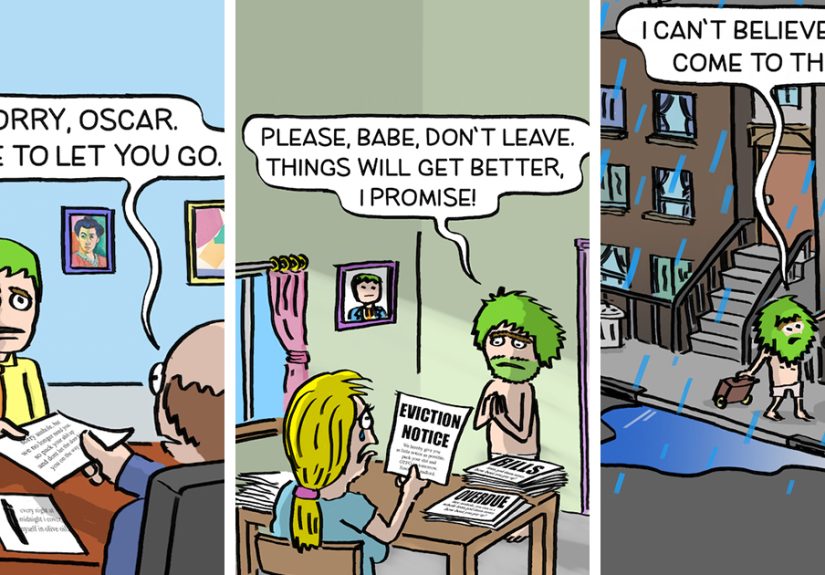
MAYUMI, IRÈNE, SHANNON, OSCARS, TAI LONG WAN, A LOVE STORY., JARED., A DOG’S LIFE., PACKAGE., A CORNER SHOP IN ITALY., THE LAND., ENNIS., KYLE., 1M., RICHARD., TRIP TO ITALY., SETH AND THE CLIFFS., MAURICE., FROG., KANGAROO., IAN., ROCKCLIMBER., MICHAEL., GRAYSON., GRAHAM., DUSTY., THE SINGER., THE ISLAND.
-
MAYUMI
A character-led strip where familiarity gets weaponized. The humor blooms from social politeness colliding with a quietly ruthless final beat.
-
IRÈNE
Soft opening, sharp landing. This one plays with tone contrastgentle visuals, then a morally awkward pivot that reframes every previous line.
-
SHANNON
Classic misdirection mechanics: you think it’s about one relationship dynamic; the ending reveals it’s about power, perception, and selective honesty.
-
OSCARS
A satire-flavored piece that taps status anxiety. The twist works because it exposes how recognition and absurdity often share the same stage.
-
TAI LONG WAN
Travel atmosphere meets existential wink. The comic turns scenic expectation into a punchline about what people actually carry into “escape.”
-
A LOVE STORY.
Romance setup, dark-comedy detour. The ending is less “gotcha” and more emotional trapdoorsweet language, bitter aftertaste, excellent timing.
-
JARED.
Identity-based naming strip with a social twist. Short, almost minimalist, but it lands through character assumption and sudden context inversion.
-
A DOG’S LIFE.
Cute premise, existential payload. Contra uses audience sympathy as setup, then flips perspective to expose who the joke is really about.
-
PACKAGE.
Logistics comedy with a paranoid edge. Everyday routine becomes a suspense tool, and the payoff turns convenience into comic unease.
-
A CORNER SHOP IN ITALY.
World-building in miniature. The scene feels cinematic, then undercuts itself with a mundane-but-dark observation that hits because it feels plausible.
-
THE LAND.
Big concept, tiny frame. This strip plays with ownership, ambition, and the illusion of controlthen punctures all three in one compact twist.
-
ENNIS.
A character study built on withheld information. You get just enough to trust the setup before the final turn quietly betrays that trust.
-
KYLE.
Another name-centered comic that uses expectation bias brilliantly. You think stereotype; the strip gives you irony with social commentary attached.
-
1M.
Numbers, ambition, vanity. The title signals scale, but the joke targets motive. Sharp satire on what people celebrate versus what they become.
-
RICHARD.
Dry character humor with a delayed sting. It reads straightforward at first, then suddenly reveals the emotional asymmetry hiding underneath.
-
TRIP TO ITALY.
Vacations usually promise joy; this comic asks what happens when reality packs itself into your suitcase anyway. Stylish and slyly bleak.
-
SETH AND THE CLIFFS.
Adventure framing plus fate humor. The joke structure leans on escalation and then subverts heroic expectations with cold, elegant absurdism.
-
MAURICE.
This one thrives on social performance. The punchline exposes the gap between what a character projects and what everyone else quietly sees.
-
FROG.
Creature comedy done right: visual innocence meets conceptual darkness. The strip uses anthropomorphic charm to soften a surprisingly sharp point.
-
KANGAROO.
Animal premise with human neurosis baked in. The twist feels playful first, unsettling secondthe hallmark of effective dark cartoon pacing.
-
IAN.
Lean dialogue, loaded implications. This piece demonstrates Contra’s control of silence: what’s not said becomes the actual punchline.
-
ROCKCLIMBER.
Goal-oriented scenario meets existential sabotage. The comic satirizes “grind mindset” culture in a way that is both funny and weirdly accurate.
-
MICHAEL.
Starts like a personality joke, ends like a social mirror. Great example of how Contra stacks ordinary details to prepare an abnormal finish.
-
GRAYSON.
Subtle cynicism wrapped in conversational flow. The reversal is small in size but big in implicationprecisely why it sticks.
-
GRAHAM.
A neat lesson in comedic misreading: you assume intent, then discover motive drift. Light on text, heavy on interpretive payoff.
-
DUSTY.
Nostalgia bait with a grim wink. The strip uses memory as setup and undercuts sentimental expectation with razor-clean irony.
-
THE SINGER.
Performance humor that punctures public image. The final turn critiques applause culture without preachingjust one controlled comedic snap.
-
THE ISLAND.
A location story that becomes a morality puzzle. The ending feels inevitable in hindsight, which is usually the sign of a well-built twist.
What Creators Can Learn From This Dark Comedy Formula
Use character names as narrative decoys
Contra frequently titles strips with first names. That trick feels intimate and neutral, which makes the later tonal turn hit harder.
It’s a clever way to hide structural intent in plain sight.
Write the ending first, then design backwards
Many weak comics die from setup overload. Twist comics improve when the final panel is defined early and each prior beat exists to support that reveal.
Less exposition, better control.
Keep darkness pointed, not random
Dark humor is strongest when it says something about status, fear, vanity, or hypocrisy.
Shock without insight gets old fast; uncomfortable truth with comic distance stays memorable.
Respect the ethical line
The best satirical comics “punch up” at systems, ego, or social rituals rather than mocking vulnerable people.
Readers are increasingly sensitive to tone, and long-term trust matters more than one viral post.
The U.S. Research Lens Behind This Analysis
This breakdown is informed by U.S.-based work on humor psychology, stress and laughter, media behavior, comic history, creator platforms, and copyright context.
In plain terms: the comic craft is artistic, but the audience response follows recognizable patterns.
Readers share what surprises them, remember what reframes a familiar fear, and return to creators who can repeat that effect without repeating the same joke.
Experience Add-On: on What This Kind of Comic Feels Like in Real Life
Spend a week reading one dark twist comic per day and something interesting happens: your humor tolerance doesn’t just increase, it becomes more
selective. At first, every reversal feels clever. Then your brain starts sorting.
You stop rewarding randomness and start rewarding structure. You begin noticing whether a strip earns its darkness or just borrows it.
That shiftfrom “ha, unexpected” to “ha, well-constructed”is one of the most valuable reader experiences in the modern comic ecosystem.
A lot of readers describe the same rhythm. Morning scroll: quick laugh. Afternoon memory: “why did that panel stick?” Evening discussion:
“was that joke mean, or was it honest?” Dark humor comics with unexpected twists are built for that delayed reaction.
The first response is amusement; the second response is interpretation. And that second response is where community formsin comments,
in DMs, in group chats where everyone reads the same panel differently and nobody is fully wrong.
For creators, the experience is almost inverse. The audience sees speed; the artist lives in iteration. A single clean twist may come from ten abandoned endings.
One dialogue bubble might be rewritten twenty times to sound natural and still hide the reveal.
That invisible labor creates the “it looks effortless” effect that readers love.
It also explains why consistency is so hard in webcomics: every post is a tiny story machine with almost no room for error.
There is also a practical emotional experience tied to this format. Dark comic creators often report a balancing act between honesty and responsibility.
If the joke is too soft, it disappears into noise. If it’s too harsh, it fractures trust.
The sweet spot is hard-earned: sharp enough to surprise, humane enough to invite repeat reading.
Contra-style comics show that dark humor does not require graphic content or cruelty.
It requires controlof implication, pacing, and perspective.
Readers feel that control immediately, even if they can’t name it. You can sense when a comic is steering you versus simply trying to shock you.
In one case you feel manipulated; in the other, you feel partnered with the joke.
The partnered feeling is why people save these strips, revisit them months later, and send them with captions like,
“This is exactly my week,” or “This is funny and terrible and somehow accurate.”
Another recurring experience: these comics can lower defensiveness around uncomfortable truths.
A blunt statement about ego, burnout, social performance, or fear might be ignored.
A well-built comic twist can smuggle that same insight past resistance.
You laugh first, then realize the panel quietly described your behavior, your friend group, your workplace, or your doom-scroll habits.
That’s not just entertainment; that’s narrative efficiency.
Finally, there’s the long-view experience for fans who follow an artist over time.
You begin seeing signature moves: how often they use silence, how they stage eye lines, where they place the emotional pivot, which themes recur.
The joy becomes dual-track. You enjoy each individual joke, and you also enjoy watching a creator refine a language.
With dark humor comics, that language is usually built from contradiction: cute and bleak, polite and brutal, tiny and philosophical.
When it works, it feels like a compact mirror held up to modern lifedistorted, yes, but recognizably ours.
Final Takeaway
“This Artist Creates Dark Humor Comics With Unexpected Twists And Here Are His 28 Recent Works” is more than a catchy headlineit captures a format that
defines today’s webcomic culture. Dave Contra’s recent run shows how twist comedy can stay fresh when it combines disciplined structure, ethical edge,
and visual economy. If you’re a fan, you get layered laughs. If you’re a creator, you get a masterclass in pacing and reversal.
And if you’re both, welcome to the best seat in the house.