Table of Contents >> Show >> Hide
- How This Fan-Based Ranking Works
- Top Fan Favorites: 15 Essential Japanese Romantic Movies
- Your Name (2016)
- Strobe Edge (2015)
- Sky of Love (Koizora) (2007)
- A Silent Voice (2016)
- Heavenly Forest (Tada, Kimi o Aishiteru) (2006)
- I Give My First Love to You (2009)
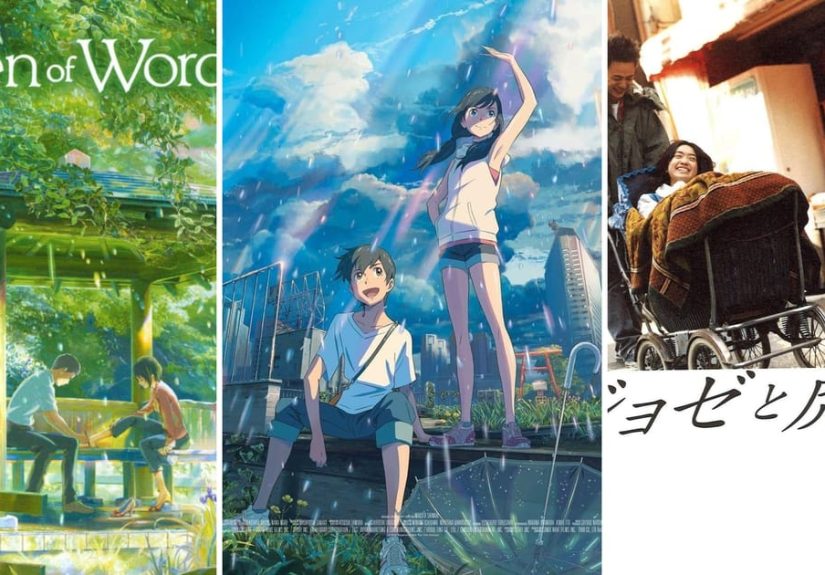
- Weathering With You (2019)
- Whisper of the Heart (1995)
- Josee, the Tiger and the Fish (2003 & 2020)
- The Garden of Words (2013)
- Be With You (2004)
- My Tomorrow, Your Yesterday (2016)
- Orange (2015)
- Love Letter (1995)
- From Me to You (Kimi ni Todoke) (2010)
- Beyond the Top 15: More Fan-Favorite Japanese Romance Films
- What Makes Japanese Romantic Movies Feel So Different?
- Where to Start If You’re New to Japanese Romance
- of Fan Experience: How to Make the Most of These Movies
If you’ve ever finished a Japanese romantic movie and just sat there staring
at the credits, wondering what exactly your tear ducts did to deserve that
workout, congratulations: you are in the right place. Japanese love stories
have a particular way of sneaking under your skin – mixing quiet glances,
everyday details, and absolutely devastating plot twists into something that
feels more like a memory than a movie.
This guide pulls together fan rankings and user ratings from sites like
Ranker, IMDb, Letterboxd, and language-learning platforms that spotlight
romance-heavy movies. Across these platforms, certain titles rise to the
top again and again – whether it’s a time-bending teen crush, a bittersweet
first love, or an adult relationship complicated by grief and regret.
Below, we’ll walk through the fan favorites, what makes them special, and
how you can get the most out of watching them.
How This Fan-Based Ranking Works
Instead of one critic sitting in a dark room making the rules, this list is
shaped by thousands of viewers voting with stars, hearts, and “add to
watchlist” buttons across multiple platforms. We looked at:
-
Fan-voted lists like Ranker’s “The 70 Best Japanese
Romance Movies,” where users upvote and downvote their favorites. -
User-curated IMDb and Letterboxd lists that collect
Japanese romance and teen romance films into personal “must-watch”
canons. -
Streaming and learning platforms (such as FluentU and
Lingopie) that use romantic movies as language-learning tools – a good
signal that fans actually finish and rewatch these titles.
The order below isn’t a rigid mathematical formula, but a
fan-weighted snapshot of what people keep loving, rewatching, and
recommending to their friends. Think of it as a conversation with a lot of
passionate movie nerds, condensed into one list.
Top Fan Favorites: 15 Essential Japanese Romantic Movies
Let’s start with the heavy hitters – the movies that consistently appear
near the top of fan rankings and “best of” lists. These are the titles most
likely to convert a casual viewer into someone who suddenly has a
Makoto-Shinkai-themed watchlist.
-
Your Name (2016)
The reigning champion on many fan lists, Your Name weaves body
swapping, comet disasters, and small-town life into one of the most
emotionally charged romances in modern animation. Two teens mysteriously
begin swapping bodies and slowly fall in love without ever properly
meeting. It’s a story about timing, fate, and the terrifying possibility
that the person who understands you best might slip away if you don’t
fight to find them. Visually stunning and emotionally precise, it’s
often the gateway drug into Japanese romantic cinema. -
Strobe Edge (2015)
Live-action fans adore Strobe Edge for how honestly it treats
unrequited love. Ninako falls for the popular Ren, who already has a
girlfriend. Instead of leaning on messy love triangles for cheap drama,
the movie digs into how you grow from a crush that might never become a
relationship – and how caring for someone doesn’t always mean ending up
together. Soft lighting, believable performances, and just enough angst
make it a staple of high school romance lists. -
Sky of Love (Koizora) (2007)
Fans call Sky of Love one of the ultimate tearjerker teen
romances. Based on a wildly popular mobile phone novel, it follows Mika
and Hiro through first love, betrayal, tragedy, and the kind of loss
that reshapes your entire life. It’s melodramatic, yes, but it’s also a
time capsule of mid-2000s Japanese youth culture and a prime example of
why Japanese romantic films are famous for bittersweet endings. -
A Silent Voice (2016)
While often shelved under “drama,” fans strongly associate
A Silent Voice with romance thanks to the evolving bond between
former bully Shoya and deaf classmate Shoko. Years after tormenting her
in elementary school, he sets out to make amends – and in the process
discovers a fragile, tentative kind of love. It’s a film about
redemption, disability, and communication, with romantic tension that
never feels forced or cliché. -
Heavenly Forest (Tada, Kimi o Aishiteru) (2006)
A shy photography student and a quirky classmate bond over shooting
photos in a magical forest. That premise alone would already be a
charming romance; then the film adds a time jump, a tragic illness, and
a gut-punch of a final reveal. Fans praise its quiet pacing, gorgeous
natural scenery, and the way it captures the feeling of realizing too
late that your “weirdo friend” was the love of your life. -
I Give My First Love to You (2009)
Takuma grows up knowing a heart condition will likely kill him before
age 20, and Mayu grows up loving him anyway. The movie explores what it
means to plan a future with someone who may not have one – and how love
can be both selfish and selfless at the same time. Fans gravitate to the
film’s earnestness and the way it examines adolescent love under extreme
pressure without completely abandoning moments of sweetness and humor. -
Weathering With You (2019)
Makoto Shinkai’s follow-up to Your Name centers on a runaway
boy and a “sunshine girl” who can temporarily stop the endless rain in
Tokyo. The fantasy hook is fun, but what keeps viewers coming back is
the love story: two teens trying to choose each other in a world that
keeps telling them their happiness is too expensive. Fans debate whether
Hodaka’s final choice is selfish or romantic – which is exactly why the
film sticks with you. -
Whisper of the Heart (1995)
This Studio Ghibli classic trades epic quests for something quieter:
middle schooler Shizuku discovering that the mysterious boy who always
borrows the same library books might be her creative rival and future
love. It’s a romance about potential – who you might become, and who you
might love, if you dare to take your own talents seriously. Fans treasure
it as one of the most grounded, realistic Ghibli films. -
Josee, the Tiger and the Fish (2003 & 2020)
Whether you watch the live-action original or the animated remake, this
story about a college student and a prickly, wheelchair-using young
woman is a fan favorite. Their relationship forces both characters to
confront their fears – of the sea, of independence, of being seen as
fragile or useless. It’s romantic, but also deeply concerned with
dignity and autonomy, which is why it resonates with modern audiences. -
The Garden of Words (2013)
Clocking in under an hour, this film is short, but fans talk about it
like a full-season drama. A teen boy who skips school to design shoes
keeps running into an older woman hiding from her own life in a rainy
park. Their intense, ambiguous bond skirts the edge of taboo while
staying emotionally grounded. The hyper-detailed animation – especially
of rain and greenery – turns their brief meetings into something almost
sacred. -
Be With You (2004)
A widower and his son are struggling when the mother they lost suddenly
“returns” during the rainy season – with no memories of them. Is it
magic, a dream, or something in between? Fans love how the movie balances
domestic tenderness with supernatural mystery, and how it shows romantic
love transforming into enduring family love without losing its spark. -
My Tomorrow, Your Yesterday (2016)
This mind-bending romance follows a boy and a girl whose timelines move
in opposite directions – his future is her past. Every date is both
first and last, and every sweet moment is haunted by the knowledge that
their paths are literally diverging. It’s a favorite among fans who like
their romance twisted with sci-fi concepts and emotional puzzles. -
Orange (2015)
Another time-bending tearjerker, Orange centers on a girl who
receives letters from her future self urging her to save a classmate
from a tragic fate. The romance is woven into a story about friendship,
depression, and the tiny choices that add up to life-or-death outcomes.
Fans appreciate its honest depiction of regret and the way it insists
that caring for someone means paying attention to their pain. -
Love Letter (1995)
A woman mails a letter to her deceased fiancé’s old address and
unexpectedly receives a reply. What follows is a delicate double portrait
of grief and first love, switching between past and present, snowy
Hokkaido and urban Kobe. Often considered a modern classic, it’s adored
by fans for its quiet emotional power and for that simple, iconic line:
“Ogenki desu ka?” – “How are you?” -
From Me to You (Kimi ni Todoke) (2010)
Based on the hit manga, this live-action adaptation follows Sawako, a
sweet girl whose resemblance to a horror-movie character makes everyone
think she’s cursed. When popular boy Kazehaya befriends her, the story
becomes a slow-burn romance about social anxiety, rumors, and learning
to believe that you’re worthy of love. Fans rank it high for its
wholesomeness and surprisingly sharp look at high school social hierarchies.
Beyond the Top 15: More Fan-Favorite Japanese Romance Films
Of course, fans don’t stop at 15 titles. When you combine the major fan
lists and user rankings, you get a sprawling universe of romances that span
decades, genres, and levels of emotional damage. Here are more films that
frequently show up in fan-curated rankings and watchlists:
- Blue Spring Ride (2014) – A second-chance high school romance filled with awkward reunions and unresolved feelings.
- The 100th Love with You (2017) – Time travel, music, and a desperate attempt to rewrite a tragic fate.
- Closest to Heaven (Kyo no Kira-kun) (2017) – A shy girl helps her popular classmate live fully despite a terminal illness.
- I Want to Eat Your Pancreas (2017/2018) – Sounds like horror, turns out to be one of the gentlest, saddest first-love stories of the last decade.
- 5 Centimeters per Second (2007) – A lyrical triptych about how distance, time, and hesitation quietly kill a relationship.
- From Up on Poppy Hill (2011) – Student activists, family secrets, and a nostalgic 1960s Yokohama setting under Ghibli’s banner.
- The Wind Rises (2013) – An engineer’s dream to build airplanes is intertwined with a fragile love story overshadowed by illness and war.
- Ride Your Wave (2019) – A surfer mourning her firefighter boyfriend finds that their love literally keeps following her around.
- Words Bubble Up Like Soda Pop (2021) – A shy haiku-loving boy and a masked influencer girl discover each other in a mall full of summer light.
- Love Like the Falling Petals (2022) – A budding photographer falls for a hairstylist whose rare illness accelerates her aging.
- Love Life (2022) – A couple’s relationship is shaken when a past tragedy resurfaces, forcing them to confront love, guilt, and responsibility.
- Ride or Die (2021) – Dark, messy, and controversial, but undeniably romantic in its portrait of toxic devotion between two women on the run.
- Heroine Disqualified (2015) – A meta rom-com about a girl convinced she’s the “side character” in her own love story.
- The Liar and His Lover (2013) – A moody composer and a cheerful teen singer navigate love, ego, and the music industry.
- My Little Monster (2018) & Say “I Love You” (2014) – Live-action takes on beloved shoujo series, each exploring how hard it is to say what you feel out loud.
- Love Exposure (2008) – Chaotic, provocative, four hours long, and still one of the most unique cult romances Japan has produced.
- Norwegian Wood (2010) – A moody, mature adaptation of Haruki Murakami’s novel about grief, mental illness, and complicated love.
- Initiation Love (2015) – A twisty ’80s-set romance that asks how much you really know about the person you love.
- April Story (1998) – A shy girl moves to Tokyo for collegeand possibly for the boy she likescaptured in gentle, hazy vignettes.
When you zoom out to include classics like Haru,
The Island Closest to Heaven, His Motorbike, Her Island,
and modern hits like Hanamizuki, Crying Out Love, In the Center
of the World, Little Forest, The Little House, and
Our Meal for Tomorrow, you easily pass the 70-title mark. Fans keep
these movies alive through rewatches, clips, fan edits, and endless “What
should I watch next?” threads.
What Makes Japanese Romantic Movies Feel So Different?
Talk to longtime fans and a pattern emerges: Japanese romances aren’t just
about whether the couple kisses in the last five minutes. They’re often
about how people change because of love – and what they’re willing
to risk or sacrifice.
-
Bittersweet and tragic endings are common. Many viewers
have noticed how often Japanese romances lean into illness, accidents, or
separations instead of neat happy-ever-afters. That taste for tragedy
makes the tender moments feel more precious and heightens emotional impact. -
Small gestures matter more than big speeches. A shared
umbrella, a repaired textbook, a bento left on a desk – these tiny acts
often carry more romantic weight than dramatic declarations. -
Friendship and family are always in the frame. Even
intensely romantic stories keep circling back to classmates, coworkers,
parents, and kids. The romance doesn’t exist in a vacuum; it’s part of a
larger social web. -
Genre blends are the norm. You’ll find romance hybridized
with fantasy, sci-fi, musical numbers, sports, or even horror. That makes
these films appealing even if you don’t usually think of yourself as a
“rom-com person.”
Where to Start If You’re New to Japanese Romance
If this list feels overwhelming, here’s a simple path:
-
Begin with Your Name and A Silent Voice
to see how anime handles romance with spectacle and emotional complexity. -
Move to live-action hits like Sky of Love,
Strobe Edge, and Heavenly Forest for
classic high school and college-age stories. -
Add one or two “grown-up” romances like Be With You or
Norwegian Wood when you want something slower and more
reflective. -
Finally, explore niche favorites like Love Exposure,
Initiation Love, or Ride or Die to see
how far the genre can stretch.
However you approach it, the joy of fan-ranked lists is that they don’t
dictate taste – they just give you a roadmap. You might fall in love with
the top-ranked movies, or you might discover that your personal favorite is
some quiet mid-ranking film about a girl, a bicycle, and a rainy afternoon.
of Fan Experience: How to Make the Most of These Movies
Watching Japanese romantic movies isn’t just about pressing “play” and
letting the tears fall where they may. Over time, fans develop little rituals
and strategies that make the experience richer – and honestly, more fun.
First, there’s the “emotional safety check.” Before
starting anything with a reputation for tragedy – say,
I Give My First Love to You or I Want to Eat Your Pancreas
– many viewers will quietly scan a few spoiler-free comments to confirm what
kind of sadness they’re signing up for. Is it cathartic and healing, or is
it soul-crushing with no light at the end? Knowing that helps you choose the
right movie for your mood instead of accidentally pairing a brutal tearjerker
with an already rough day.
Second, a lot of fans treat these films as time capsules of
everyday Japan. Beyond the romances, you get glimpses of school
uniforms, train etiquette, seasonal festivals, tiny apartments, and
neighborhood coffee shops. Watching with that in mind turns even a simple
hallway scene into a mini cultural lesson. Viewers learning Japanese often
pause to copy down phrases characters use for confession, apology, or
affection – especially in movies frequently recommended by language-learning
sites, where dialogue tends to be natural and everyday.
Third, there’s the group-watch factor. Many of these
movies work beautifully as shared experiences. One friend might be there for
the fashion, another for the cinematography, another purely for the drama.
Doing a “double feature” – for example, watching Your Name followed
by Weathering With You, or pairing Strobe Edge with another
live-action shoujo adaptation – often leads to late-night debates about
which characters made the right choices and whether you’d do the same thing
in their shoes.
Another popular habit is keeping a feelings journal or ranking
list of your own. After each movie, fans jot down a quick mini
review: favorite scene, favorite line, and how many tissues they destroyed.
Over time, that personal record becomes more valuable than any external
ranking. You’ll notice patterns – maybe you gravitate toward stories with
time travel, or you prefer grounded campus romances over high-concept
fantasy. That self-knowledge makes your future watch choices a lot more
satisfying.
Finally, fans often talk about how Japanese romances can be surprisingly
good for emotional maintenance. Because they take heartbreak
seriously and don’t always rush to fix it, these films give you a safe place
to process your own stuff. It’s easier to cry over fictional characters
than, say, your actual breakup – but the emotional release still helps. And
unlike real life, you can pause, rewind, and revisit the moments of kindness,
bravery, and connection that remind you why love is still worth the risk.
So when you look at a fan-ranked list boasting “the 70 best Japanese romantic
movies,” don’t see it as homework. See it as a buffet. Start with the obvious
classics, nibble at a few lesser-known titles, and pay attention to which
stories stay with you afterward. That lingering feeling – the way a single
line or image sneaks back into your head on a random Tuesday – is the real
reason these movies keep climbing fan lists year after year.
With that, you’ve got everything you need: a map of fan favorites, a sense
of what makes Japanese romance unique, and a handful of viewing strategies
to make each film hit a little deeper. Grab some snacks, charge your
headphones, and let these movies break your heart in the best possible way.