Table of Contents >> Show >> Hide
- What COVID-19 Is (and Why It Still Acts Like a Shape-Shifter)
- How Long After Exposure Do Symptoms Start?
- COVID-19 Symptoms: From “Meh” to “Oh No”
- Testing & Diagnosis: Don’t GuessTest
- COVID-19 Treatment: The Right Tool for the Right Situation
- 1) Mild COVID-19 (most cases): Home care that actually helps
- 2) If you’re high-risk: Ask about antivirals early
- Option A: Nirmatrelvir/ritonavir (Paxlovid)
- Option B: Remdesivir (Veklury), 3-day IV course
- Option C: Molnupiravir (Lagevrio) as an alternative in select adults
- What about monoclonal antibodies?
- 3) When symptoms worsen: What hospital care may include
- Treatments to be skeptical about
- Isolation & Protecting Others (Without Becoming a Hermit Forever)
- Long COVID: When “I’m Better” Isn’t Actually Better
- When to Call a Clinician: A Simple Decision Shortcut
- Bottom Line
- Experiences That People Commonly Report (Real-World, Not One-Size-Fits-All)
- The “It’s Just a Cold…Until It Isn’t” Week
- The “I Slept 11 Hours and I’m Still Tired” Phase
- The “Am I Short of Breath or Just Anxious?” Moment
- The Paxlovid Experience: “Metal Mouth” and the Interaction Checklist
- Rebound: The Unwanted Encore
- The “Aftermath” Experience: When Recovery Takes Longer Than the Infection
COVID-19 is the houseguest who said they were “just stopping by,” then somehow learned your Wi-Fi password, ate your leftovers, and rearranged your immune system’s furniture.
The good news: we know far more now than we did in 2020what symptoms tend to show up, who’s more likely to get seriously ill, and which treatments actually help (spoiler: not the “miracle” stuff your cousin’s group chat keeps forwarding).
This guide breaks down COVID-19 symptoms and treatment options in plain, standard American Englishplus how to decide when to rest at home, when to call a clinician, and when to seek urgent care.
It’s educational content, not personal medical advice. If you’re high-risk, pregnant, immunocompromised, or your symptoms feel scary, loop in a healthcare professional.
What COVID-19 Is (and Why It Still Acts Like a Shape-Shifter)
COVID-19 is caused by the coronavirus SARS-CoV-2. Like other respiratory viruses, it spreads mainly through the air when an infected person breathes, talks, coughs, or sneezesespecially indoors with poor ventilation.
Over time, the virus has evolved into new variants and subvariants. That doesn’t mean it’s “brand new” every year; it means your body sometimes needs an updated playbook (immunity from vaccines or past infection can fade, and variants can partially dodge it).
Most infections are mild to moderate, but COVID-19 can still cause severe disease, hospitalization, and complicationsespecially in older adults and people with certain medical conditions.
That’s why recognizing symptoms early and understanding treatment timing matters: several of the most effective antiviral options work best when started within the first few days of illness.
How Long After Exposure Do Symptoms Start?
Symptoms can appear anywhere from about 2 to 14 days after exposure, with many people noticing symptoms around day 4 or 5. You can spread the virus even if you feel fine, which is why outbreaks love crowded indoor events and “it’s just allergies” season.
Why symptoms vary so much
- Your immune system (age, conditions, medications that suppress immunity)
- Virus factors (variant/subvariant, how much virus you were exposed to)
- Timing (early vs. later in the illnesssome people worsen around days 5–10)
COVID-19 Symptoms: From “Meh” to “Oh No”
COVID-19 symptoms overlap heavily with flu, RSV, the common cold, and “I stayed up too late doomscrolling.” The only way to know for sure is testing.
Still, patterns helpespecially when deciding whether to isolate, seek care, or ask about antiviral treatment.
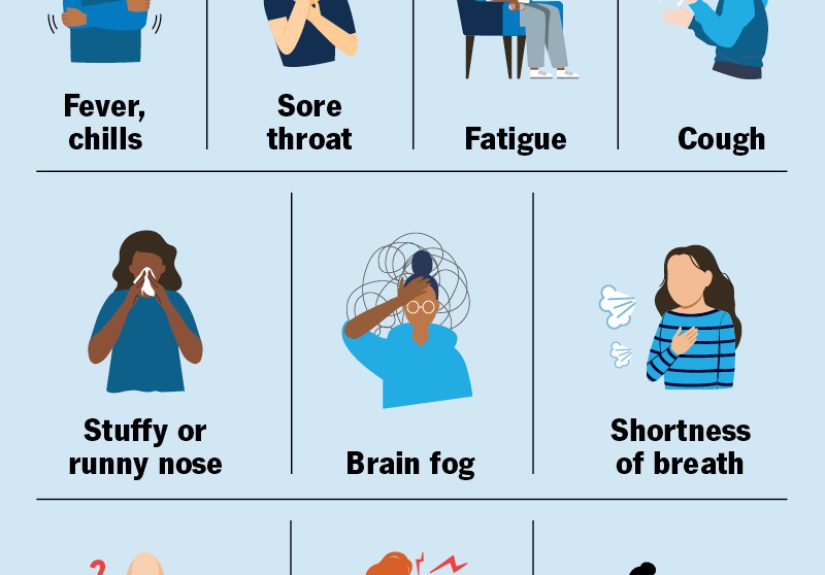
Common symptoms
- Fever or chills
- Cough (often dry, sometimes productive)
- Sore throat
- Congestion or runny nose
- Fatigue (the “I could nap inside a nap” feeling)
- Muscle or body aches
- Headache
- Shortness of breath or trouble breathing (more concerning if new or worsening)
- Loss of taste or smell (less common than early-pandemic, but still happens)
- Nausea, vomiting, diarrhea (yes, COVID can be rude in multiple body systems)
Symptoms that deserve extra attention
Contact a clinician promptly (same day if possible) if you have COVID-19 symptoms and you’re at higher risk for severe diseasebecause treatment windows can be short.
Higher-risk groups include older adults, people with multiple underlying conditions, and those who are pregnant or recently pregnant.
Emergency warning signs (don’t “wait it out”)
If someone has any of the following, seek emergency medical care:
- Trouble breathing
- Persistent pain or pressure in the chest
- New confusion
- Inability to wake or stay awake
- Pale, gray, or blue-colored skin, lips, or nail beds (depending on skin tone)
Kids: what’s different?
Many children have mild symptoms. But watch for dehydration, breathing trouble, and unusual sleepiness.
Also, rarely, some children develop MIS-C (multisystem inflammatory syndrome in children), typically weeks after infection, with symptoms like persistent fever plus significant abdominal pain, rash, bloodshot eyes, or signs of serious illness.
If a child looks very illespecially with breathing trouble, chest pain, confusion/unusual behavior, severe abdominal pain, or trouble staying awakeseek emergency care.
Testing & Diagnosis: Don’t GuessTest
A rapid antigen test can quickly tell you if you’re likely infectious right now, while a PCR (or other lab-based NAAT) can be more sensitive, especially early.
If you test negative but symptoms are suspicious (or you were clearly exposed), repeat testing can helpespecially over the next 24–48 hours.
Why testing still matters even if you “feel fine-ish”
- It guides isolation and helps protect higher-risk people around you.
- It can unlock treatment options (many antivirals must start early).
- It helps distinguish COVID from flu/RSV, which may have different treatments and risk profiles.
COVID-19 Treatment: The Right Tool for the Right Situation
COVID treatment isn’t one-size-fits-all. Think of it like a menu:
some people only need comfort care at home, while others benefit from prescription antivirals, and severe cases need hospital-level support.
The biggest treatment mistake is timingwaiting too long to ask about therapies that only work early.
1) Mild COVID-19 (most cases): Home care that actually helps
If symptoms are mild and you’re not high-risk, focus on supportive care:
- Rest (your body is running an internal software update)
- Fluids (water, soup, electrolyte drinksaim for pale yellow urine)
- Fever/pain relief (follow label directions; ask a clinician if you have liver/kidney issues or take blood thinners)
- Cough & congestion relief (humidifier, warm tea/honey if appropriate, saline spray)
- Monitor symptoms (especially breathing, chest pain, and hydration)
Also: antibiotics do not treat viruses. They’re only used if a clinician suspects a bacterial infection (like bacterial pneumonia) on top of COVID-19.
2) If you’re high-risk: Ask about antivirals early
For people at increased risk of severe disease, clinicians may prescribe antiviral treatment to reduce the risk of hospitalization and death.
These medications work best when started within the first 5–7 days of symptoms (depending on the drug), so don’t wait until you feel dramatically worse.
Preferred outpatient antiviral options (typical U.S. approach)
Option A: Nirmatrelvir/ritonavir (Paxlovid)
Paxlovid is an oral antiviral taken for five days. It’s commonly the first choice for eligible high-risk outpatients because it can substantially lower the risk of severe outcomes when started early.
The catch: it has important drug interactions and isn’t right for everyone (for example, some kidney/liver conditions require dose changes or avoidance).
- Timing: typically within 5 days of symptom onset
- Common side effects: altered/metallic taste, GI upset
- Biggest “gotcha”: medication interactionsyour clinician/pharmacist should screen carefully
You may also hear about “COVID rebound” (symptoms or a positive test returning after improvement). It can happen with or without antivirals. If it happens, follow current public-health guidance and contact a clinician if symptoms worsendon’t self-prescribe an extra course.
Option B: Remdesivir (Veklury), 3-day IV course
Remdesivir is an antiviral given intravenously. For non-hospitalized high-risk patients, it may be given once daily for three days, ideally started within about 7 days of symptom onset.
This option can be useful if Paxlovid isn’t appropriate due to interactions or contraindications.
Option C: Molnupiravir (Lagevrio) as an alternative in select adults
Molnupiravir is generally considered when preferred options aren’t available or appropriate.
It’s typically for adults, and it comes with important considerations for pregnancy (clinicians will advise on eligibility and precautions).
What about monoclonal antibodies?
Neutralizing monoclonal antibodies have been used at various times during the pandemic, but effectiveness can drop when new variants emerge.
Availability and recommendations shift based on which products remain active against circulating variants and what’s authorized.
If you’re immunocompromised, ask your specialist about current optionsbecause this is the group most likely to need variant-aware strategies.
3) When symptoms worsen: What hospital care may include
Severe COVID-19 is more than a bad coldit can involve pneumonia, low oxygen levels, widespread inflammation, and strain on multiple organs.
In the hospital, treatment is based on how sick someone is (especially oxygen needs).
Typical components of inpatient care
- Oxygen support (from nasal cannula to high-flow oxygen, noninvasive ventilation, or mechanical ventilation in critical illness)
- Corticosteroids (often used when patients require supplemental oxygen)
- Antivirals (in selected hospitalized patients, depending on timing and disease stage)
- Immune-modulating medications in specific cases (for example, for patients with rapidly worsening oxygen needs and signs of high inflammation, clinicians may use agents such as IL-6 inhibitors or JAK inhibitors based on guidelines and patient factors)
- Blood clot prevention (COVID-19 can increase clot risk; clinicians evaluate the need for anticoagulation)
- Supportive care (fluids, fever control, nutrition, management of coexisting conditions)
Treatments to be skeptical about
COVID-19 misinformation has had an impressive lifespan (like a cicada, but with worse vibes).
Major infectious-disease guidelines recommend against using unproven therapies such as ivermectin for treating COVID-19 outside of clinical trials.
If something sounds like “one weird trick doctors hate,” it probably belongs in the trash, not your medicine cabinet.
Isolation & Protecting Others (Without Becoming a Hermit Forever)
Public guidance has evolved from strict calendars to more practical, symptom-based approaches.
In general, if you’re sick with a respiratory virus: stay home and away from others, and return to normal activities when symptoms are improving for at least 24 hours and any fever has resolved without fever-reducing medication.
After you resume activities, extra precautions (like masking and improving ventilation) for several days help reduce spreadespecially around people at higher risk.
Always follow local rules for schools, workplaces, and healthcare settings, which may be stricter.
Long COVID: When “I’m Better” Isn’t Actually Better
Long COVID is a chronic condition that can occur after SARS-CoV-2 infection and is present for at least three months.
Symptoms vary widely and can improve, worsen, or come and gomaking it feel like your body subscribed you to a surprise “symptom-of-the-month club.”
Common Long COVID symptoms
- Fatigue that interferes with daily life
- Shortness of breath
- Brain fog (trouble concentrating or remembering)
- Sleep problems
- Headache, muscle aches, joint pain
- Loss of taste/smell or lingering changes
- Mood changes (anxiety/depression can be part of the picture)
How Long COVID is managed
There isn’t a single magic pill. Clinical guidance generally focuses on improving function and quality of life:
identify the most disruptive symptoms, manage underlying conditions, and build a practical rehabilitation plan (sometimes involving pulmonary rehab, physical therapy, or cognitive strategies).
If you suspect Long COVID, start with primary care; they can help coordinate referrals and rule out other causes.
When to Call a Clinician: A Simple Decision Shortcut
- Call urgently (same day) if you test positive and you’re high-risk (age 65+, multiple medical conditions, immunocompromised, pregnant/recently pregnant), because antivirals are time-sensitive.
- Call soon if symptoms are worsening, you have persistent high fever, dehydration, or new shortness of breath.
- Seek emergency care for trouble breathing, chest pain/pressure, confusion, inability to wake/stay awake, or bluish/gray/pale lips or nail beds.
Bottom Line
COVID-19 can range from mild to severe. The most important “treatment trick” is not a trick at all: act early.
Test when symptoms start, isolate to protect others, and if you’re high-risk, ask about antiviral treatment right away.
For most people, supportive care and time do the job. For those at higher risk, timely antivirals can meaningfully reduce the chance of severe outcomes.
And if your body keeps acting weird for months afterward, don’t accept “that’s just life now” as the final answerLong COVID evaluation and symptom-focused care can help.
Experiences That People Commonly Report (Real-World, Not One-Size-Fits-All)
What does COVID-19 feel like in real life? The honest answer is: it dependswildly. But there are common storylines clinicians hear again and again.
Here are a few experience patterns that help make the symptoms-and-treatment journey feel less like wandering through a medical escape room with no hints.
The “It’s Just a Cold…Until It Isn’t” Week
Many people describe day 1 as a scratchy throat or a vague “off” feelinglike your body is buffering.
By day 2, congestion, cough, and fatigue may show up. Some people power through (because bills don’t pay themselves), then realize their stamina has left the group chat.
The big takeaway from this experience pattern is that early symptoms can be deceptively mild, and that’s exactly when testing helps mostbecause if you qualify for antivirals, the clock is ticking.
The “I Slept 11 Hours and I’m Still Tired” Phase
Fatigue is one of the most common complaints, and it’s not always proportional to your other symptoms.
People often say they can handle the sore throat, but the exhaustion feels like wearing a lead hoodie.
The best home-care experiences tend to come from folks who treat rest like a prescription: they hydrate, simplify meals, and stop trying to “win” recovery with willpower.
(Your immune system is doing enough CrossFit for everybody.)
The “Am I Short of Breath or Just Anxious?” Moment
COVID can trigger anxietyespecially if you’ve read enough headlines to know oxygen levels matter.
People frequently describe a spiral: they notice breathing feels “weird,” then worry makes breathing feel even weirder.
Practical experiences that help: sitting upright, slow breathing, staying hydrated, andcruciallyknowing red flags.
If you have new or worsening shortness of breath, chest pain, confusion, or trouble staying awake, don’t self-soothe with internet advice. Get evaluated.
The Paxlovid Experience: “Metal Mouth” and the Interaction Checklist
Among high-risk patients who start Paxlovid promptly, a surprisingly common “side quest” is the taste changepeople describe it as metallic, bitter, or like licking a coin that’s been to the gym.
Annoying? Yes. Dangerous? Usually not. Temporary? Typically, yes.
The more important part of the Paxlovid experience is what happens before the first dose: medication interaction screening.
Patients who have the smoothest course are the ones who tell clinicians everything they take, including supplements.
In other words: bring receipts, not vibes.
Rebound: The Unwanted Encore
Some people report feeling better, testing negative, and mentally throwing a “welcome back to society” partythen symptoms return a few days later and the test flips positive again.
This can happen with or without antivirals.
The lived experience lesson is mostly logistical: plan for flexibility, keep a few masks around, and don’t schedule your most important in-person event the day after you feel better.
If rebound symptoms are mild, many people ride it out with supportive care. If symptoms worsen or you’re high-risk, check in with a clinician.
The “Aftermath” Experience: When Recovery Takes Longer Than the Infection
Plenty of people bounce back quickly. Others notice lingering fatigue, brain fog, or exercise intolerance.
A common experience is frustration: “My test is negativewhy do I still feel like I’m running on 60% battery?”
For some, pacing helpsalternating activity with rest, gradually rebuilding stamina, and avoiding the boom-and-bust cycle (overdo it one day, crash for three).
People who do best often treat recovery like physical therapy: small wins, consistent routines, and medical follow-up when symptoms persist beyond the expected timeline.
If there’s one universal “experience-based” truth, it’s this: COVID recovery is not a moral contest.
Resting is not weakness. Asking for care is not overreacting.
And reading your tenth “biohack” thread at 2 a.m. is definitely not a substitute for evidence-based treatment.