Table of Contents >> Show >> Hide
- First, Why the Scene Works So Well
- The Big Illusion: Two Lifts, One Story
- The Noose That Isn’t a Noose (At Least Not All the Way)
- The Wrist Ties That Could Instantly Become Not-Ties
- The Jump: Why Stunt Doubles Still Matter in 2019
- Those Falls at the End: Selling Impact Without Actual Injury
- Chucky Helps Sell the Forklift Scene (Even When You’re Not Looking at Him)
- Wait… Isn’t Using a Forklift Like That Totally Unsafe?
- How the Scene Was Shot: The Likely Beat-by-Beat Production Strategy
- Lessons Filmmakers Can Steal (Safely) From This Set-Piece
- Bonus: of “Forklift Scene” Experiences You’ll Recognize (Even If You’ve Never Made a Movie)
- Conclusion: Movie Magic Is Mostly Math, Magnets, and Teamwork
- SEO Tags
There are horror scenes that make you jump, and then there are horror scenes that make you quietly whisper,
“Wait… how did they do that without, you know, accidentally inventing a lawsuit?” The forklift climax in the
2019 Child’s Play remake is firmly in the second category. It’s tense, it’s simple, it’s viciously effective
and it looks uncomfortably real because the filmmakers worked very hard to make it feel real without
making it dangerous in real life.
If you’ve seen the movie, you know the moment: in the Zed-Mart warehouse, Karen (Aubrey Plaza) is in a noose,
and a forklift starts lifting. Meanwhile, Andy is sprinting against time and panic, trying to cut her down while
Chucky turns the situation into a sick little “family bonding” exercise. It’s a great set-piece because it weaponizes
something mundanewarehouse equipmentinto pure dread. And behind the camera, it’s a master class in stunt design,
rigging, timing, and “let’s build three safety backups before we even think about rolling.”
First, Why the Scene Works So Well
On paper, a forklift isn’t scary. It’s basically a loud electric hippo that moves pallets and occasionally your
coworker’s patience. But the scene turns that everyday machine into a ticking clock. A forklift lift is slow, steady,
and relentlessexactly the opposite of a flashy slasher moment. That pace is the point: the camera doesn’t need
to sprint when the audience’s brain is already doing it.
The filmmakers also picked a threat that’s visually readable. You don’t need to understand voodoo or advanced AI
to understand “rope tightens, person rises, bad outcome incoming.” It’s universal, immediate, and nightmare-efficient.
Then they add the emotional hook: this isn’t just a kill scene, it’s a rescue scene. That shift matters because
rescue scenes make viewers lean forward and start mentally solving problemsright when the movie wants you most vulnerable.
The Big Illusion: Two Lifts, One Story
Why they didn’t just fake it on a green screen
Here’s the blunt truth about height in movies: it usually looks more believable when you actually put someone in the air
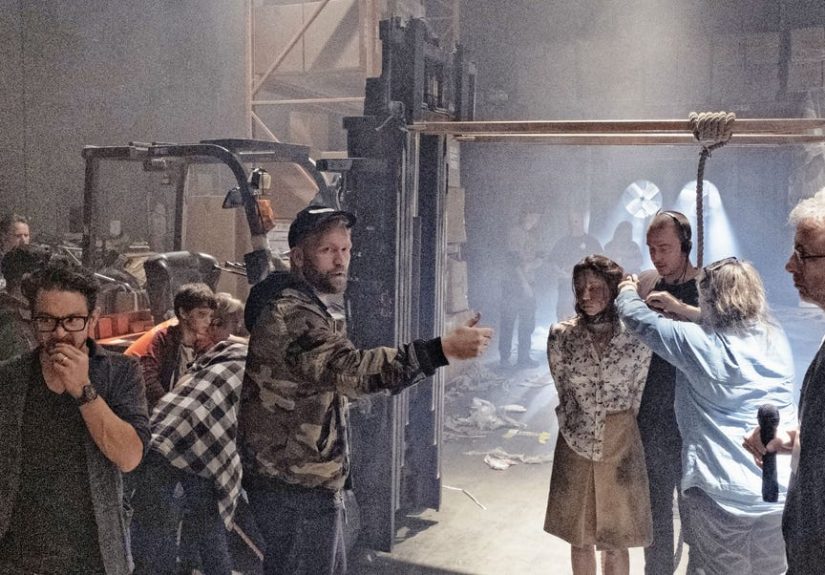
(safely) instead of pretending they’re in the air (digitally). The forklift scene leaned into that realism. The stunt team
had Karen (or a stunt double for certain beats) lifted using a harness system and an electric winch while the forklift
performed the “visible” hoist with the rope.
The timing problem that can ruin everything
The trick is that the audience sees a rope going up on a forklift fork and assumes the rope is doing the lifting.
But the real lift is controlled by a separate rig so the performer isn’t relying on a knot, a machine bump, or a tiny
shift in forklift speed. That means the stunt coordinator’s job becomes a choreography problem: the winch lift and the forklift
“story lift” must match perfectly. If the rope rises faster than the performer, the illusion breaks. If the performer rises
faster than the rope, it looks like invisible ghosts joined the crew.
According to behind-the-scenes accounts, the sequence took multiple days to filmbecause you’re not just getting coverage,
you’re getting coverage while coordinating two moving systems, multiple performers, and a scene that can’t afford sloppy timing.
Horror may love chaos, but stunts run on precision.
The Noose That Isn’t a Noose (At Least Not All the Way)
The scariest part of the scene is the noosebecause it’s the one element your body reacts to before your brain finishes
the sentence. To sell the danger, the noose needs to look like it’s applying pressure. But the production also needed
the performer to be safe even if something drifted off plan.
The “breakaway” engineering trick
The solution used is wonderfully practical: the noose was designed to separate if needed. Specifically, it was cut behind the
neck area and held together with magnets. That way, it could look continuous on camera, still create the impression of tension,
and yet “fail open” if there was a sudden pull, a rigger slip, or a forklift motion that wasn’t supposed to happen.
Why magnets are a stunt coordinator’s best friend
Magnets show up in stunt work because they do something humans love: they hold under normal conditions and release under abnormal
conditionslike a safety valve for physical setups. And because the “danger” in this scene is a tightening loop, the fail-safe needs
to work immediately, not after a debate, a button press, or a prayer.
The Wrist Ties That Could Instantly Become Not-Ties
There’s another issue: Karen’s hands are restrained behind her back. That looks awful (in the best horror way), but it creates a problem
for safety communication. If a performer is in the air and something feels wrong, they need the ability to react fastphysically and as a signal.
Hidden safety signals, built into the costume
The stunt setup reportedly used magnetic closures for the wrist restraints as well. That gave the performer the ability to break free and grab
the rope if necessary, and it also gave the crew a visual warning. If the “tied hands” came apart unexpectedly, it wasn’t a plot twistit was the
performer saying, “We have a problem. Lower me now.”
That’s the difference between movie danger and real danger: movie danger is the story. Real danger is the part the crew designs out of existence
using smart, boring, beautiful redundancy.
The Jump: Why Stunt Doubles Still Matter in 2019
The scene also includes a risky beat where Andy jumps toward the rope. Even if the jump looks small on screen, it’s the type of move where tiny
miscalculations become big regretslike “oops, I kicked the lead actor in the face” levels of regret.
Protecting performers means protecting the movie
For shots where the jump posed a real collision risk, a stunt double stepped in. That’s not a knock on the actors; it’s professionalism. A stunt
performer is trained to repeat controlled impacts, hit marks, and take falls safely. The goal isn’t bravadoit’s repeatability. Film crews don’t want
“the one take where it almost worked.” They want “the take we can do again if the focus puller sneezes.”
Those Falls at the End: Selling Impact Without Actual Injury
Horror climaxes love a good slam to the ground. Unfortunately, spines do not share that enthusiasm. So when the forklift sequence ends with bodies
hitting the floor, the “ow” you feel as a viewer is created by camera placement, padding, and trained falling technique.
Low angles and dense foam: the unglamorous heroes
A classic trick is to put cameras low so falls look longer and heavier. Meanwhile, off-camera (and sometimes disguised in the set), dense foam pads
absorb impact. Stunt performers also use martial arts-based falling methods to distribute force and protect joints. The result is a fall that looks brutal
while being as controlled as a theme-park rideexcept with more screaming and fewer churros.
Chucky Helps Sell the Forklift Scene (Even When You’re Not Looking at Him)
The forklift moment hits harder because the movie’s overall approach leans heavily into tactile effects. The production used multiple “hero” Chucky dolls
reports vary from about six to sevencapable of facial motion and performance beats that don’t feel like a weightless cartoon. In other words: when the
camera cuts away from the forklift to Chucky’s reaction, the threat feels present in the space, not pasted in later.
Puppetry plus digital polish (the best of both worlds)
Behind the scenes, different versions of the doll and different control setups were used depending on the shotsometimes with multiple puppeteers
controlling different parts of the puppet. In some shots, digital enhancement was used to sharpen expressions or help with movement that’s difficult to
achieve practically. That hybrid approach is increasingly common: practical effects provide weight, texture, and lighting realism; digital work provides
precision and cleanup.
That combination matters for the forklift sequence because it’s not just “a person is being lifted.” It’s “a person is being lifted while a small,
expressive nightmare is in control.” The more real the nightmare feels, the less the scene needs to shout for your attention.
Wait… Isn’t Using a Forklift Like That Totally Unsafe?
In real workplaces, yesforklifts aren’t supposed to become DIY elevators or “human stress-test machines.” Safety guidance from U.S. authorities emphasizes
that lifting or elevating people with forklifts is tightly restricted, requires proper platforms, and generally should not be done by simply raising someone
on the forks or improvising a lift.
The movie gets away with it because the forklift is playing a role, not doing the real lifting. On set, the visible forklift action is carefully controlled,
while the performer’s safety depends on a separate rig engineered for human load and emergency release. It’s the difference between “don’t do this at work”
and “do this with stunt professionals, specialized rigging, and multiple fail-safes while a safety team watches like hawks.”
How the Scene Was Shot: The Likely Beat-by-Beat Production Strategy
If you break the sequence down as a production puzzle, it looks something like this:
- Wide shots establish the forklift, the rope, and the rising dangeroften using the safest configuration possible while still reading as real height.
- Medium shots focus on Karen’s face and neck area, where the breakaway noose can be controlled and monitored between takes.
- Cutaways to Andy’s hands and cutting tool intensify urgency without requiring dangerous continuous lifting.
- Reaction shots from Chucky (practical puppet, enhanced as needed) keep the villain “present” without forcing risky staging.
- Stunt inserts (jump beats, falls, specific impacts) are handled with doubles, pads, and choreography designed for repeatability.
The editing then does what editing does best: it makes separate safe moments feel like one continuous unsafe moment. That’s not cheating. That’s cinema.
Lessons Filmmakers Can Steal (Safely) From This Set-Piece
1) Build the illusion around human safety, not the other way around
The forklift is the prop that sells the idea. The harness and winch system is what keeps everyone alive. That’s the correct priority order.
2) Give performers “escape hatches” that are invisible on camera
Breakaway magnets for the noose and wrist restraints are a great example: they preserve the look, preserve the tension, and still respect that bodies are real.
3) Shoot “danger” in layers
Wide shots for geography, close-ups for emotion, inserts for urgency, doubles for risky beats, and pads for impacts. When you layer it correctly, the audience
doesn’t notice the seamsthey just feel the stakes.
4) Practical effects don’t have to win a purity contest
The production’s approach to Chucky shows a modern sweet spot: use practical builds for texture and presence, and let digital tools enhance what needs enhancing.
Viewers rarely complain about invisible CGI that makes something feel more real; they complain about visible CGI that makes something feel weightless.
Bonus: of “Forklift Scene” Experiences You’ll Recognize (Even If You’ve Never Made a Movie)
What makes the forklift scene so stickyso “I can’t stop thinking about that” memorableis that it hijacks experiences a lot of people already have in their bones.
Maybe you’ve worked retail and know the weird limbo of the stockroom: bright lights up front, shadowy corners in back, and a constant soundtrack of wheels,
beeps, and boxes that sound like they’re falling even when they’re not. A warehouse at night isn’t supernatural; it’s just unfamiliar enough that your brain
starts filling in blanks with worst-case scenarios.
And forklifts come with their own built-in mood. Even the electric ones have that heavy, humming presencethe sense that physics is in charge now. If you’ve ever
watched a skilled operator thread a forklift through a narrow aisle, you know it looks casual until you realize how much mass is moving inches from shelving,
products, and occasionally someone’s shins. That’s why the movie’s choice feels so cruelly plausible: it’s not a haunted castle device. It’s a “this exists
behind the customer service desk” device.
The scene also mirrors a real human experience: the panic of problem-solving under time pressure. Andy isn’t fighting a monster in open space; he’s dealing with
a taskcut the ropewhile something else tries to stop him. That’s the same stress pattern you feel when you’re trying to fix something urgent with the wrong
tool, or when you’re in a situation where every second turns into a loud thought: “Faster, faster, faster.” Horror doesn’t always need elaborate mythology. Sometimes
it just needs a recognizable kind of pressure.
On the filmmaking side, the forklift sequence also resembles what crews call “high-attention days”the days where everyone on set is quietly locked in because the
scene involves controlled risk. Even if you’re not in the stunt department, you can feel when a set shifts into that mode: fewer jokes, more checklists, more people
watching the same point from different angles. It’s not fear; it’s respect for the fact that a stunt is a live system with moving parts.
Finally, there’s a strangely modern feeling baked into this whole moment: technology turning ordinary spaces into threat zones. In the 2019 remake, Chucky isn’t a
voodoo problemhe’s a “smart” product gone wrong. That makes the forklift scene land differently, because it feels like a nightmare built from modern convenience:
big-box stores, automated devices, AI-ish behavior, and machines that do exactly what they’re told, even when what they’re told is monstrous. If you’ve ever watched a
device glitch and thought, “Cool, so this is how it starts,” then congratulations: the forklift scene already has your number.
Conclusion: Movie Magic Is Mostly Math, Magnets, and Teamwork
The forklift scene in Child’s Play looks terrifying because it’s built on a simple visual idealift + noose + timeand executed with careful engineering:
a harness and winch for real safety, breakaway components for emergencies, stunt doubles for collision-risk moments, padding and technique for falls, and a production
philosophy that values practical presence (especially for Chucky) with digital tools used as enhancement, not a crutch.
In other words, the scene works because it respects the audience’s instincts while respecting the performers’ bodies. That’s the real behind-the-scenes secret:
the best horror is fearless on screen and unbelievably cautious off screen. As it should be.