Table of Contents >> Show >> Hide
- Why “Caught on Camera” Scandals Hit So Hard
- Famous Celebrity Scandals Caught on Camera
- How Cameras Turn a Moment into a Full-Blown Scandal
- Why We Can’t Look Away from Celebrity Meltdowns
- Fans, Ethics, and the Age of Always-On Cameras
- What Celebrities (and the Rest of Us) Can Learn
- Experiences and Reflections on “Celebrity Scandals Caught on Camera”
Once upon a time, a celebrity scandal needed a tabloid headline, a “source close to the star,” and a very grainy photo. Now? All it takes is one security camera, one bored paparazzo, or one fan with a smartphone and decent Wi-Fi. Suddenly, a private meltdown becomes a global talking point before the publicist has even woken up.
From elevator brawls to award-show slaps, some of the most infamous celebrity scandals didn’t just make headlines they were literally caught on camera. These viral clips changed careers, reshaped public images, and reminded everyone that fame plus HD video is a risky combo.
Why “Caught on Camera” Scandals Hit So Hard
A traditional scandal leaves a little room for spin. Maybe the quote was “taken out of context.” Maybe the witness misremembered. But once something is recorded, replayed, slowed down, and meme-ified, it feels like there’s nowhere for a star to hide.
- Video feels like “proof.” Viewers often treat footage as the whole truth, even though we’re only seeing one angle and a tiny slice of time.
- The internet never forgets. What would have been a week-long story in 1995 can now be resurrected in seconds whenever someone posts a clip on social media.
- Public opinion forms instantly. Before any official statement appears, the quote-tweets and TikTok breakdowns have already written the first draft of the narrative.
Let’s look at some high-profile celebrity scandals caught on camera and how a few seconds of footage turned into lasting reputation drama.
Famous Celebrity Scandals Caught on Camera
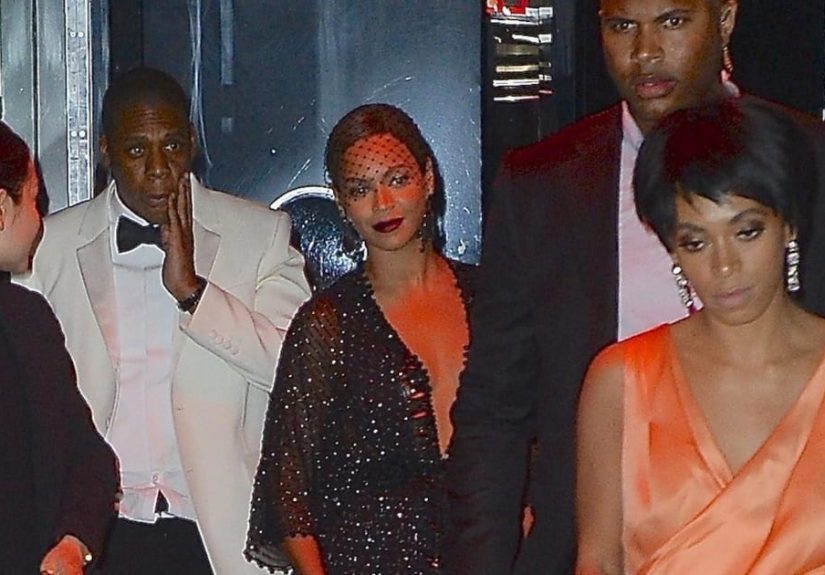
1. The Elevator Fight: Solange and Jay-Z
In 2014, security footage from a Met Gala after-party elevator leaked, showing Solange Knowles physically confronting her brother-in-law, Jay-Z, while Beyoncé stood by in a now-iconic calm silence. There was no audio, just grainy black-and-white video of kicks, lunges, and a bodyguard trying very hard to keep his job.
The clip sparked a tidal wave of questions: Was this about infidelity rumors? Creative tension? Something else entirely? The Knowles-Carter family never fully explained, but Beyoncé’s later work, including Lemonade, nodded to marital betrayal and healing, reinforcing fan theories that the elevator moment was the eruption of a bigger issue behind the scenes.
Why it mattered: The video punctured the carefully curated image of an untouchable power couple and proved even billionaires have messy family arguments they just have them in elevators with security cameras.
2. “The Slap Heard Around the World”: Will Smith and Chris Rock
During the 2022 Academy Awards, millions watched live as Will Smith walked onstage and slapped comedian Chris Rock after a joke about Jada Pinkett Smith’s hair. It was one of those moments where viewers couldn’t tell if it was a bit until the uncensored international feed and social clips confirmed it was absolutely not scripted.
The fallout was immediate and intense. Smith later resigned from the Academy and received a 10-year ban from Academy events. He issued multiple public apologies, including in interviews, on social media, and even through his music, where he’s continued to reference the incident and its emotional aftermath.
Why it mattered: This was a rare case where a global, polished live event completely lost control in real time. The clip became a symbol of how quickly emotions, egos, and history can combust under pressure especially when the cameras are rolling.
3. “Do You Know My Name?”: Reese Witherspoon’s Arrest Dash-Cam
In 2013, dash-cam footage from a traffic stop in Atlanta captured actor Reese Witherspoon arguing with a police officer after her husband was pulled over on suspicion of DUI. In the video, Witherspoon appears frustrated and pulls out the classic celebrity line: “Do you know my name? You’re about to find out who I am.”
Once the footage hit the internet, the public reaction was swift: America’s cinematic sweetheart suddenly had a very un-Elle-Woods moment. To her credit, Witherspoon later gave a straightforward apology, calling her behavior “embarrassing” and out of character. Owning the misstep helped the story fade faster than it might have otherwise.
Why it mattered: It became a case study in how quickly a “relatable” celebrity can slide into “entitled” territory and how a sincere apology can help repair that damage.
4. Michael Richards’ Onstage Rant
Michael Richards, best known as Kramer from Seinfeld, saw his career implode after a 2006 stand-up set where he responded to hecklers with a racist tirade. An audience member recorded the outburst on a cellphone, and the clip soon made its way to TMZ and national news outlets.
Richards later appeared via satellite on The Late Show with David Letterman to apologize, but the video of the incident lived on, continuing to shape public perception of him as he later reflected on the incident in interviews and a memoir about his life and career.
Why it mattered: The incident showed how powerful amateur footage could be, long before TikTok and Instagram Reels. A single clip from a small venue reshaped the legacy of a star from one of TV’s most beloved sitcoms.
5. Alec Baldwin vs. the Paparazzi
Actor Alec Baldwin has had multiple tense encounters with photographers, some of which were captured on video and widely shared. In one incident outside his New York home, footage shows him shouting at paparazzi to stay away from his wife and child, escalating into a chase and heated verbal confrontation, including a slur he later apologized for.
Why it mattered: These clips fueled an ongoing narrative about Baldwin’s temper and raised questions about how far celebrities can or should go when pushing back against invasive photographers, especially when family members are present.
How Cameras Turn a Moment into a Full-Blown Scandal
Not every on-camera incident becomes a reputation-ending crisis. Some fade quickly; others shadow a celebrity for years. A few factors tend to decide the outcome:
1. The Severity of the Behavior
There’s a big difference between a snippy remark caught on a hot mic and a violent outburst on live TV. Physical aggression, racist or hateful language, or clear abuse of power usually triggers a much harsher and longer-lasting reaction than garden-variety rudeness.
2. The Timing and Context
Was the moment live, and did millions watch it unfold in real time? Or did it surface years later in a blurry clip? Did it confirm long-running rumors or contradict a carefully maintained wholesome image? Context can determine whether the scandal becomes a footnote or a defining chapter.
3. The Response After the Fact
Public reaction doesn’t just hinge on what we see in the video; it also depends on what happens next.
- Defensive or dismissive responses can make things worse, making the behavior look like a pattern instead of a one-off mistake.
- Clear, direct apologies and visible changes in behavior can soften the long-term impact.
- Silence sometimes works in low-stakes situations, but in major scandals, it often leaves a vacuum filled by speculation and memes.
4. The Power of the Replay Button
In the digital age, scandal footage doesn’t just air once. It gets clipped, remixed, captioned, and analyzed. Commentary videos break down each frame. Twitter threads assign meaning to every eye twitch. The repetition cements the moment in cultural memory sometimes more deeply than an entire body of work.
Why We Can’t Look Away from Celebrity Meltdowns
There’s a reason clips of celebrity misbehavior rack up millions of views while more thoughtful interviews struggle to trend.
- They make celebrities feel “human.” Watching someone rich and famous lose their cool in a parking lot or onstage reminds viewers that even A-listers have bad nights.
- They’re ready-made drama. No writers’ room, no special effects just raw emotion, conflict, and consequences.
- They create instant community. Everyone who sees the clip becomes part of a giant, informal group chat, sharing reactions, jokes, and hot takes.
That said, our appetite for scandal can sometimes cross into something darker: enjoying someone’s humiliation or forgetting that the people on camera are, in fact, people.
Fans, Ethics, and the Age of Always-On Cameras
With cameras everywhere, the line between accountability and voyeurism is getting blurrier. A few questions are worth asking whenever a new “caught on camera” scandal surfaces:
- Is sharing this clip exposing wrongdoing or just amplifying a private low point?
- Would this be news if the person weren’t famous?
- Are we interested in justice, or are we just bored and scrolling?
It’s perfectly reasonable to hold public figures accountable especially when their behavior harms others. But there’s a difference between legitimate scrutiny and piling on for entertainment. The same phone that can document abuse or discrimination can also turn a momentary lapse into a digital scar that never fully fades.
What Celebrities (and the Rest of Us) Can Learn
The age of camera-ready scandal has a few clear lessons, and not just for people with a star on the Hollywood Walk of Fame.
1. Assume You’re on Camera
In public spaces, there’s a decent chance someone is recording whether it’s security systems, street cameras, or another person’s phone. That’s not paranoia; it’s reality. For celebrities, it’s multiplied by fans, paparazzi, and media outlets hungry for the next viral moment.
2. Crisis Plans Matter
Most major stars now have some form of crisis-management strategy. That often includes:
- Having a clear point person for public statements.
- Responding quickly, but not impulsively.
- Avoiding half-apologies (“sorry if you were offended”) that only inflame the situation.
For regular people, the stakes are lower, but the logic holds: what you say and do on camera can have real consequences for work, relationships, and reputation.
3. Redemption Is Possible But Not Guaranteed
Some celebrities manage to rebuild their image after a scandal, especially when they demonstrate genuine change, take responsibility, and give the public time to see new sides of them. Others never fully recover, especially when their actions tap into deeper social issues like racism, abuse, or misuse of power.
The camera may capture the mistake, but what happens after that is still, to some degree, in a celebrity’s hands.
Experiences and Reflections on “Celebrity Scandals Caught on Camera”
Even if you’ve never set foot on a red carpet, chances are you’ve “been there” emotionally with at least one of these scandals. Not onstage at the Oscars, of course but sitting on your couch, phone in hand, watching the clip for the fifth time and texting a friend, “Wait, are we sure this wasn’t staged?”
For many viewers, the first reaction is pure shock. The Solange–Jay-Z elevator video felt like stumbling into a private family argument you were never meant to see. The Will Smith slap froze people mid-snack, trying to figure out whether the broadcast had just glitched or if they really saw a global icon lose his composure live on television. That jolt is part of why these videos spread so quickly: they feel like breaking the fourth wall of celebrity culture.
Then the second wave hits: analysis. Suddenly everyone turns into a body-language expert and amateur PR strategist. Social feeds fill up with slow-motion replays, “here’s what really happened” threads, and side-by-side reaction videos. Some people focus on jokes and memes, while others dive into the serious angles mental health, racism, sexism, power dynamics, or the ethics of filming someone in crisis.
Fans of the celebrities involved often experience something more complicated: disappointment tangled with loyalty. You might adore an actor’s work and still wince at their behavior in a leaked clip. You might replay Reese Witherspoon’s dash-cam moment and think, “Yikes, that’s bad,” while also feeling grateful she didn’t double down and instead took responsibility. Navigating that tension between who we want our favorites to be and who they are in unguarded moments is a modern fan experience that didn’t exist in the same way before the smartphone era.
There’s also a quieter, more personal impact. Watching celebrity scandals caught on camera can make people reflect on their own worst moments and think, “What if someone had been filming me that night?” Most of us have said things we regret, especially when tired, stressed, or provoked we just didn’t do it with a camera rolling and millions waiting to judge. That doesn’t excuse harmful behavior, but it does add a layer of empathy that sometimes gets lost in the rush to make jokes.
On the flip side, some people see these videos as cautionary tales. A viral meltdown can reinforce the importance of setting boundaries, getting help, or stepping away before emotions boil over. It’s not unusual to hear someone say, half-joking, “I’m not about to go full celebrity scandal in this meeting,” because we’ve all seen exactly what “full celebrity scandal” looks like.
There’s also the simple reality that these clips are entertaining. That’s uncomfortable to admit, but it’s true. They’re dramatic, emotional, and unpredictable all the ingredients of binge-worthy content. The ethical challenge is recognizing when we’ve crossed the line from staying informed to enjoying someone’s humiliation too much.
In the end, “celebrity scandals caught on camera” say as much about us as they do about the stars. They reveal what we’re curious about, what we’re quick to forgive, and what we refuse to overlook. They show how technology amplifies both justice and cruelty. And they remind us that while we can’t control whether cameras are rolling, we can control how we react whether we pile on, pause to think, or use the moment as a mirror for our own behavior.
Hollywood may never stop producing scandals, and cameras certainly aren’t going away. But if we can watch these viral moments with a little more context, a little more empathy, and a little less glee at someone else’s downfall, we might just learn something useful from the chaos.