Table of Contents >> Show >> Hide
- What Counts as an “Origami Book”?
- Supplies You’ll Need (Beginner-Friendly)
- Origami Basics You’ll Use in Every Tutorial
- Tutorial 1: The Classic One-Sheet 8-Page Mini Book (Beginner Favorite)
- Tutorial 2: The Accordion (Concertina) Origami Book
- Tutorial 3: The Split-Page “Mix-and-Match” Accordion Book
- Common Mistakes (and How to Fix Them)
- How to Make Your Origami Book Look “Finished”
- Conclusion
- Beginner Experiences: What It Feels Like to Learn Origami Bookmaking (500+ Words)
If you’ve ever folded a paper airplane and thought, “Nice. Now I want to fold an entire library,”
you’re in the right place. An origami book is one of the most satisfying beginner projects in paper folding:
it’s practical (you can actually use it), customizable (art journal? joke book? secret snack-rating log?), and
it teaches the kind of folding precision that makes every future origami project look cleaner.
In this guide, you’ll learn how to make a few beginner-friendly paper booksstarting with the famous
one-sheet mini book (aka the “magic” fold) and moving into an
accordion (concertina) book that feels fancy even when you make it from printer paper.
You’ll also get paper tips, troubleshooting fixes, and decorating ideas that won’t turn your book into a lumpy burrito.
What Counts as an “Origami Book”?
Traditional origami is paper folding without cutting or glue, but in real life (and in classrooms, museums, and art studios),
paper-folded books often bend the rules a little. You’ll see three common “origami book” styles:
- One-sheet mini book: Folded from a single sheet, usually with one small cut (or a careful tear) to form pages.
- Accordion (concertina) book: A long strip folded back-and-forth into panels that open like an accordion.
- Folded booklet / no-staple book: Variations that create a booklet shape through clever folds and tucks.
The good news: every version teaches the same core skillsaccurate alignment, crisp creases, and patience (the kind you’ll be
proud of five folds in, and slightly question at fold twelve).
Supplies You’ll Need (Beginner-Friendly)
Paper options
- Printer paper (8.5″ x 11″): Best for practicing and for one-sheet mini books.
- Origami paper: Great for decorative covers or smaller mini books (usually square sheets).
- Cardstock: Ideal for coverssturdy, but don’t use it for tight folds unless it’s thin.
- Watercolor or mixed-media paper: Beautiful for accordion sketchbooks; choose lighter weights for easier folds.
Tools (optional, but helpful)
- Ruler (for measuring and guiding folds)
- Bone folder (or the back of a spoon) for sharp creases
- Scissors or a craft knife (only for the one-sheet mini book cut)
- Glue stick or double-sided tape (optional for attaching covers)
- Markers, pens, stickers (because you deserve joy)
Quick paper tip: grain direction (your secret weapon)
If you’re using thicker paper (especially for accordion books), folding is easier and cleaner when you fold
with the grainthe direction paper fibers naturally align during manufacturing. Folding with the grain helps reduce
cracking and makes the book less “springy” when it’s opened. If you can’t find grain info on packaging,
do a simple test: gently bend the paper both directionsone direction will curl more easily (that’s usually “with the grain”).
Origami Basics You’ll Use in Every Tutorial
You don’t need to memorize a dictionary of folds to make an origami book, but these basics will make your pages look crisp:
1) Valley fold vs. mountain fold
- Valley fold: The paper dips inward (like a valley).
- Mountain fold: The paper rises outward (like a ridge).
2) The “align first, crease last” rule
Before you press down a crease, line up edges and corners. Hold the alignment, then crease from the center outward.
This reduces crooked pages (and the urge to declare paper folding “a scam”).
3) Pressing matters
A sharp crease is the difference between a book that opens smoothly and one that fights you like a tiny paper alligator.
Use a bone folder, spoon-back, or even a clean fingernail to press firmly along folds.
Tutorial 1: The Classic One-Sheet 8-Page Mini Book (Beginner Favorite)
This is the famous “magic” mini book made from a single sheet of paper. It’s perfect for:
mini journals, vocabulary lists, quick comics, party favors, or a “Top 10 Things My Cat Judges Me For” collection.
What you need
- 1 sheet of printer paper (8.5″ x 11″)
- Scissors (or a careful tear along a crease)
- Pen/marker
Steps
- Fold lengthwise (“hot dog” style). Fold the paper in half the long way, crease well, then unfold.
- Fold widthwise (“hamburger” style). Fold the paper in half the short way and keep it folded.
-
Fold again to create quarters. While still folded hamburger-style, fold it in half again (so you have a smaller rectangle),
crease, and unfold back to the hamburger fold. - Open the sheet fully. You should now see an 8-panel grid (8 rectangles).
-
Cut the center slit. Fold the paper hamburger-style again. Find the center crease and cut along that crease
from the fold toward the middle, stopping at the center point (you’re making a slit that spans two middle panels).
If using kids in a classroom, an adult should handle cutting. -
Make the “plus sign” pop. Keep the paper folded hamburger-style and gently push the ends toward each other.
The slit opens into a diamond/plus shape in the center. -
Collapse into a booklet. Continue pushing until the pages form a small booklet shape.
Then fold/stack the pages neatly and press all edges. -
Choose your cover. Pick the outside page as the cover. Write a title, add doodles, or label it like a real book.
(Optional: color-code the spine so you can “shelve” multiple mini books.)
Beginner tip: page planning
Before decorating, lightly number pages in pencil. The one-sheet fold rearranges panels in a way that can feel like a magic trick
(which is fun, unless your “Table of Contents” ends up on the back cover).
Quick ideas for your first mini book
- Micro gratitude journal: 1 good thing per page
- Study flip notes: term on one side, definition on the next
- Mini comic: one scene per page
- Recipe “cheat sheet”: ingredients on one page, steps on the next
Tutorial 2: The Accordion (Concertina) Origami Book
Accordion books are a favorite in art education and museum activities because they’re simple, dramatic when opened,
and easy to customize. They can be read page-by-page or unfolded into one long storytelling runway.
Think of it as a book that can also be a paper snake (with better posture).
What you need
- 1 long strip of paper (or 2–3 sheets taped end-to-end on the back)
- Cardstock for covers (2 pieces)
- Glue stick or double-sided tape (optional but recommended)
- Ruler + bone folder (helpful)
Pick a size (easy math edition)
Choose a panel size you likefor example, 3″ x 4″ panels for a tiny sketchbook, or 4″ x 6″ panels for bigger drawings.
Mark repeating panel widths along your strip like a gentle little barcode.
Steps
-
Make your strip. Use one long sheet, or tape sheets together from behind (so the front stays neat).
If you’re working with thicker paper, consider grain direction for cleaner folds. - Measure and mark panels. Use a ruler to mark equal sections (an even number of panels is easiest for tidy covers).
-
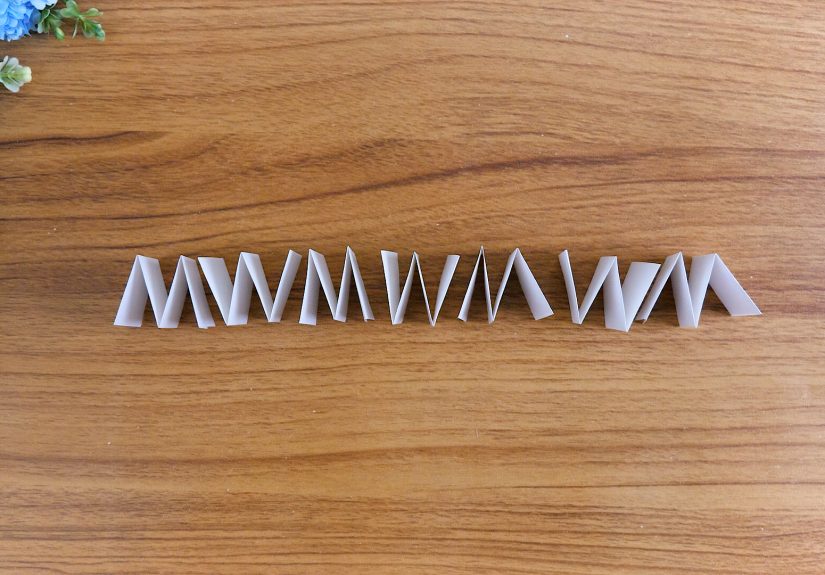
Fold like a fan. Fold back-and-forth along your marks to form an accordion. Crease firmly each time.
Pro tip: fold one direction first (all valley folds), then reverse alternating folds to sharpen. - Press everything flat. Stack the accordion and press along the folds again for crisp edges.
-
Add covers. Cut two cardstock rectangles slightly bigger than a panel (about 1/8″ to 1/4″ border looks polished).
Glue the first and last panels to the inside of the covers. - Optional closure. Add a ribbon, elastic band, or a simple paper belly band to keep it closed in your bag.
Design ideas for accordion books
- Travel timeline: each panel = a moment (ticket stub, doodle, note)
- Storyboarding: each panel = a scene (great for short films or comics)
- Panorama art: one continuous landscape across all panels
- Study map: unfold and see your entire unit summary at once
Tutorial 3: The Split-Page “Mix-and-Match” Accordion Book
Want a book that feels interactive without getting complicated? Make an accordion book, then split each panel into
horizontal “flaps” so you can mix partslike creating silly characters, outfits, creatures, or mashups of art styles.
It’s part book, part paper remix machine.
What you need
- Your finished accordion book (from Tutorial 2)
- Ruler + pencil
- Scissors or craft knife (adult supervision recommended)
Steps
- Mark 2–3 horizontal sections on each panel (for example: head / body / legs).
- Cut slits on the fold side only (so panels stay attached at the spine fold). Each panel becomes multiple flaps.
- Draw in categories. Keep consistency: all “heads” on top flaps, all “bodies” in the middle, etc.
- Mix and match. Flip flaps independently to create new combinations. Congratulationsyou made analog generative art.
Common Mistakes (and How to Fix Them)
My pages don’t line up
This usually comes from creasing before alignment. Next time, pinch corners/edges into place first,
then crease from the center outward. For a current book, trim edges slightly to “square” it up,
or embrace the handmade look and call it “artisan.”
My folds look cracked (especially on thicker paper)
Use thinner paper for pages and reserve cardstock for covers. If you must fold thick paper,
score lightly with a blunt tool and fold with the grain when possible. Press creases slowly and firmly.
The accordion book keeps springing open
Reinforce creases with a bone folder and press the finished book under a heavy textbook for a few minutes.
Add a belly band, ribbon, or elastic closure for travel.
How to Make Your Origami Book Look “Finished”
- Edge ink: lightly color edges with marker for a polished border
- Cover label: title + date + “Volume 1” (because you’re clearly making a series now)
- Page numbers: tiny numbers keep mini books readable
- Pockets: glue a small folded triangle inside the cover to hold notes or stickers
- Theme constraints: limit yourself to 2 colors + 1 pattern for a cohesive look
Conclusion
Making an origami book is one of the quickest ways to level up your paper-folding skills while ending up with something useful.
Start with the one-sheet mini book when you want instant gratification, then graduate to an
accordion (concertina) book when you want more space for sketches, stories, study notes, or creative experiments.
Keep your folds crisp, your panels consistent, and your expectations friendlypaper crafts reward patience, but they also reward
playful improvisation (especially when a “mistake” becomes an unexpected pocket).
Beginner Experiences: What It Feels Like to Learn Origami Bookmaking (500+ Words)
Beginners often assume an origami book will feel like a single “Aha!” momentfold, fold, boom: book. In reality, it’s more like a short
comedy series with recurring characters: the Slightly Crooked Fold, the Mysterious Page Order, and the Corner That Refuses to Match Its Twin.
The good news is that these are normal parts of learning, and they’re actually useful feedback. Paper is honest. It doesn’t flatter you,
but it also doesn’t hold grudges. You can always unfold, smooth things out, and try again.
With the one-sheet mini book, the most common beginner experience is surpriseespecially the first time the paper “pops” into a booklet.
People tend to hover at the slit step like they’re defusing a tiny bomb. Then the structure suddenly collapses into pages, and the reaction is
usually some version of: “Wait… that’s it? That’s a BOOK.” That moment is a great confidence boost because it proves a point:
you don’t need fancy tools to build something clever. A standard sheet of printer paper can become a usable object with a little geometry and
a few firm creases.
The next beginner milestone is control. Your first mini book might be functional but a bit chaoticpages slightly uneven, cover on the “wrong”
side, and a spine that looks like it survived a mild windstorm. Then, on your second or third attempt, you’ll notice what changes everything:
slowing down by five seconds to align corners, creasing with more pressure, and pressing the finished booklet flat before decorating.
Those small habits are what make your book look intentional instead of accidental. And once you see that improvement so quickly, it’s easy to
get hooked. Many people end up making a stack of mini books “just in case,” like paper folding has turned them into a tiny stationary squirrel.
Accordion books create a different kind of beginner joy: the dramatic reveal. When you unfold your first concertina book across a table
(or the floorno judgment), it feels bigger than it is. Beginners often describe the experience as satisfying because each fold is repetitive
and calming, but the final result is bold and flexible. It’s also forgiving: if one panel is a little off, the overall structure still works,
and the handmade vibe can be part of the charm. In group settings, accordion books tend to spark instant creativitypeople start imagining
panoramas, timelines, “before and after” transformations, and comic strips that use the long format in a way regular notebooks can’t.
Another common beginner experience is realizing that “paper choice” is not boringit’s power. Thin paper folds beautifully but can bleed through
if you use markers. Thicker paper holds paint better but needs more careful creasing. Once beginners try two paper types side-by-side, they start
matching materials to purpose: printer paper for quick drafts, mixed-media paper for art, and cardstock for covers. That’s when origami bookmaking
stops being a one-off craft and starts feeling like a skill you can apply to journaling, study habits, gifts, and creative play.
Finally, beginners often notice something unexpected: folding books can be genuinely relaxing. The repeated motion, the focus on alignment, and the
clean “click” of a sharp crease can feel like a small reset for your brain. And because a finished origami book invites you to fill it,
the project doesn’t end when folding endsit becomes a container for your next idea. In other words: you’re not just making a book.
You’re making a place for creativity to land.