Table of Contents >> Show >> Hide
- Why This Recipe Works
- Three-Herb Chicken and Mushrooms
- What to Serve With Three-Herb Chicken and Mushrooms
- Smart Swaps and Variations
- Troubleshooting (Because Chicken Has Opinions)
- Storage and Reheating
- Nutrition Notes (Real-Life, Not Math Class)
- 500+ Words of Real-Life Kitchen Experiences With This Recipe
- Conclusion
If you’ve ever stared into your fridge and thought, “I have chicken, I have mushrooms, and I have… hope,”
this is your dinner. This Three-Herb Chicken and Mushrooms situation is the kind of
one-skillet magic that tastes like you planned aheadeven if you absolutely did not.
The concept is simple: sear chicken until it’s golden and confident, let mushrooms get deeply browned (not
pale and soggy), then build a glossy pan sauce that tastes like it should come with a restaurant check
presenter. The “three herbs” are the classic trio: rosemary, thyme, and
parsley. Together they bring woodsy depth, bright lift, and a fresh finish that keeps the
dish from feeling heavy.
Why This Recipe Works
1) Three herbs, three jobs
- Rosemary brings piney, savory intensityuse it with a light hand so it doesn’t steal the show.
- Thyme adds a gentle, earthy warmth that makes chicken and mushrooms taste “complete.”
- Parsley is the fresh, clean note that wakes everything up at the end.
2) Mushrooms + fond = flavor insurance
Mushrooms are mostly water, which means they can’t brown until that water cooks off. The trick is giving
them space and patience. Once browned, they soak up the pan sauce like delicious little spongeswithout
turning the dish into soup.
3) A pan sauce that tastes “fancy,” made from normal things
Deglazing (adding liquid to a hot pan to dissolve the browned bits) turns the crusty leftovers on the
skillet into a silky sauce. It’s basically recycling, but for flavor.
Three-Herb Chicken and Mushrooms
Recipe Overview
- Time: 45–60 minutes
- Servings: 4
- Skill level: Weeknight-friendly with “weekend energy” results
- Best pan: 12-inch cast iron or stainless-steel skillet (oven-safe helps)
Ingredients
- 4 bone-in, skin-on chicken thighs (or a mix of thighs and drumsticks)
- 1 1/2 teaspoons kosher salt, divided (plus more to taste)
- 1 teaspoon black pepper
- 1 tablespoon fresh rosemary, finely chopped
- 1 tablespoon fresh thyme leaves
- 2 tablespoons olive oil
- 12 ounces cremini mushrooms, halved or sliced (button mushrooms work too)
- 1 small shallot (or 1/2 small onion), finely chopped
- 3 cloves garlic, minced
- 1 tablespoon all-purpose flour (optional, for a lightly thickened sauce)
- 1/2 cup dry white wine (or extra broth + 1 teaspoon lemon juice)
- 3/4 cup chicken broth
- 1 tablespoon Dijon mustard
- 2 tablespoons unsalted butter (optional, for a glossy finish)
- 2–3 tablespoons fresh Italian parsley, chopped (add at the end)
- Optional: lemon zest or a squeeze of lemon juice to brighten
Step-by-Step Instructions
1) Prep like a pro (even if you’re not)
- Preheat the oven to 400°F.
- Pat the chicken dry with paper towels. (Dry skin = crisp skin. Wet skin = sadness.)
- Season chicken all over with 1 teaspoon salt, pepper, rosemary, and thyme.
2) Sear the chicken for crispy skin and serious flavor
- Heat olive oil in a large oven-safe skillet over medium-high heat.
- Place chicken skin-side down and cook 6–8 minutes until deeply golden. Don’t move it aroundlet it earn that crust.
- Flip chicken and cook 2 minutes on the second side.
- Transfer skillet to the oven and roast 12–18 minutes, depending on size, until chicken reaches a safe internal temperature of 165°F.
- Move chicken to a plate and rest 5–10 minutes. (Resting keeps it juicy and gives you time to build the sauce.)
3) Brown the mushrooms (this is where the “wow” starts)
- Carefully pour off excess fat if needed, leaving about 1–2 tablespoons in the pan.
- Add mushrooms in an even layer. Cook without stirring for 2–3 minutes so they can brown instead of steam.
- Stir and continue cooking until they’re golden and their moisture has cooked off, about 6–8 minutes.
- Add shallot and cook 1–2 minutes. Add garlic and cook 30 seconds, just until fragrant.
4) Build the three-herb pan sauce
- If using flour, sprinkle it over the mushrooms and stir for 30–60 seconds to cook out the raw taste.
- Add wine and scrape up browned bits from the pan (that’s flavor gold). Simmer 1–2 minutes.
- Add chicken broth and Dijon. Simmer 3–5 minutes until slightly reduced.
- Optional but recommended: turn off heat and swirl in butter for a glossy, restaurant-style finish.
- Stir in parsley (and optional lemon). Taste and adjust salt and pepper.
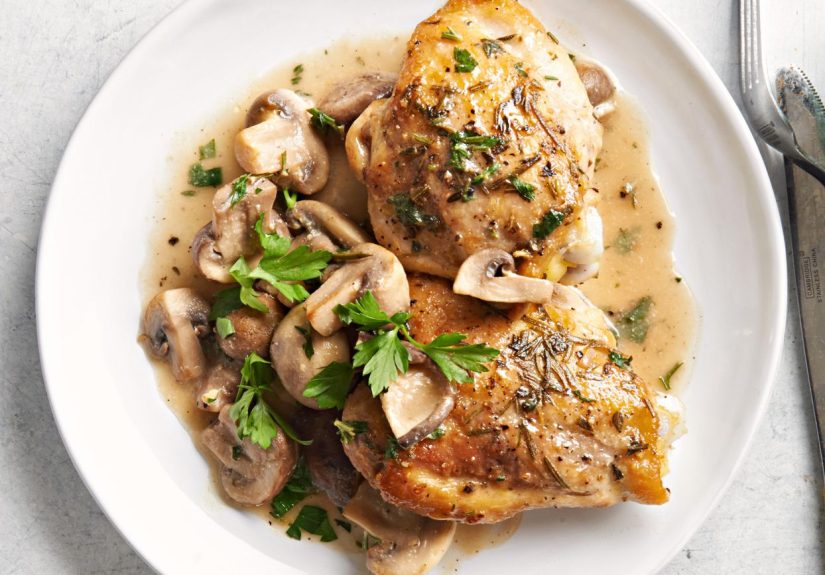
- Return chicken (and any juices) to the skillet. Spoon mushrooms and sauce over the top.
What to Serve With Three-Herb Chicken and Mushrooms
This dish has a silky, savory sauce, so give it something that can catch every last drop. A few strong options:
- Buttered egg noodles (the ultimate sauce vacuum)
- Mashed potatoes or cauliflower mash
- Polenta for cozy, creamy comfort
- Rice (white, brown, or wild)
- Crusty bread (because you deserve nice things)
- Simple green salad with lemony vinaigrette to balance the richness
Smart Swaps and Variations
Make it creamy
After the broth reduces, stir in 1/4 to 1/3 cup heavy cream. Keep the simmer gentle so it stays smooth.
Make it alcohol-free
Replace wine with more broth and add 1 teaspoon lemon juice or a small splash of vinegar for brightness.
Use chicken breasts (without drying them out)
Sear breasts, then finish in the oven and pull them a little early (around 160°F) and let carryover heat bring them to 165°F.
Slice after resting and spoon sauce over the top.
Herb alternatives (still a “three-herb” vibe)
- Oregano for a more Mediterranean feel
- Tarragon for a slightly anise-y, French-style twist
- Chives for a mild oniony finish
Troubleshooting (Because Chicken Has Opinions)
“My mushrooms got watery.”
They were crowded or stirred too soon. Next time: spread them out and let them sit untouched for a couple minutes to brown.
Also, avoid salting them early if they’re already releasing a lot of water.
“My sauce tastes flat.”
Add a squeeze of lemon, a pinch more salt, or a tiny spoon of Dijon. Acid + salt = instant flavor upgrade.
“My chicken isn’t crispy.”
Make sure the skin is dry, the pan is hot, and you’re not flipping too early. Crispy skin needs uninterrupted time to brown.
Storage and Reheating
- Refrigerate: Store leftovers in an airtight container and use within 3–4 days.
- Freeze: Freeze for best quality within 2–3 months (sauce may loosen slightly when thawed; it’s still tasty).
- Reheat: Warm gently on the stove over low heat with a splash of broth to loosen the sauce. Avoid blasting it on high heat, which can dry out the chicken.
Nutrition Notes (Real-Life, Not Math Class)
This meal brings high-quality protein from chicken, savory depth from mushrooms, and a sauce that can be kept light (broth + herbs)
or made richer (butter and/or cream). If you want to lighten it, skip the butter finish and use extra herbs and lemon for brightness.
500+ Words of Real-Life Kitchen Experiences With This Recipe
The first time I made a “three-herb chicken and mushrooms” style skillet dinner, I thought the herbs would do all the heavy lifting.
Spoiler: the pan does a lot of the heavy lifting too. I used fresh rosemary, thyme, and parsley because that’s what the recipe
called for, but I didn’t yet understand the bigger story: you’re building layers. Herbs are the headline; browning is the plot.
My earliest attempt featured mushrooms that looked… enthusiastic, but pale. They were cooked, sure, but not browned. The flavor was fine,
yet it didn’t have that “how is this so good?” thing. That’s when I learned the most important mushroom lesson: if the pan is crowded,
mushrooms don’t brownthey steam. It’s not a moral failing. It’s physics. Once I started spreading them out in one layer and leaving them
alone for a couple minutes, they finally turned golden and nutty, and the whole dish tasted like it had been practicing.
Another lesson came from chicken skin. I used to treat searing like a quick hello: “Hi chicken, nice to meet you,” flip, done. But crispy
skin needs commitment. Now I pat the chicken dry like it’s about to take a passport photo, season it, and place it skin-side down in hot oil
without poking it every thirty seconds. The skin releases naturally once it’s browned. If it’s sticking, it’s basically saying, “Not yet.”
And yes, listening to chicken is a weird hobby, but it’s a delicious one.
The herbs taught me something too. Rosemary is powerfullike the friend who shows up to game night with a fog machine. If you chop it too
coarsely or use too much, it can dominate. Thyme is more forgiving and quietly does its job. Parsley is the finisher that makes everything
taste fresher than it has any right to on a Tuesday. Over time, I started splitting the herbs: rosemary and thyme early (so they infuse the
chicken and the fat), parsley at the end (so it stays bright and green). That one change made the dish taste cleaner and more balanced.
Then there’s the pan sauce momentthe part that makes you feel like you could host a cooking show, even if your audience is a confused pet.
The trick is scraping up the browned bits after searing. The first time I did it properly, I used wine, and the pan went from “dirty” to
“destined for greatness” in about thirty seconds. If you don’t cook with wine, broth works, but I like to add a little lemon juice or vinegar
for that same bright lift. Dijon mustard is another favorite move: it adds tang, helps the sauce feel cohesive, and makes people ask what your
“secret ingredient” is. (You can wink mysteriously, or you can just say “mustard.” Either is valid.)
Finally, I learned to respect resting time. Pulling chicken off the heat and letting it rest for a few minutes keeps it juicy and makes the
whole dish calmer, like it’s had a chance to collect itself. Plus, resting gives you time to finish the sauce without rushing. Now, when I
serve this, I always spoon mushrooms over the chicken like I’m tucking it in with a cozy blanketbecause after all that sizzling and simmering,
the chicken has earned a little comfort.
If you’re new to skillet dinners, this is one of the best places to start. It’s forgiving, it’s flavorful, and it teaches you real technique
without feeling like homework. And if you mess up a step, the sauce is usually delicious enough to smooth over the drama. Honestly, if pan sauce
ran for office, I’d vote for it.
Conclusion
This Three-Herb Chicken and Mushrooms recipe is the perfect mix of practical and impressive: crisp chicken, deeply browned mushrooms,
and a pan sauce that tastes like it took hours (it didn’t). Once you learn the rhythmsear, roast, brown, deglazeyou’ll have a go-to dinner that
works for weeknights, guests, and anytime you want your kitchen to smell like you know what you’re doing.