Table of Contents >> Show >> Hide
- Why Cats Get “Weird” in the First Place
- 40 Weird Cat Moments (And What They Usually Mean)
- The Greatest Hits Explained: 10 Behaviors That Look Broken but Usually Aren’t
- 1) Zoomies (FRAPs): the sudden sprinting update
- 2) Chattering at birds: excitement with a side of frustration
- 3) The flehmen face: “I need to process this smell in 4D”
- 4) Kneading: comfort behavior with bonus scent-marking
- 5) Headbutting (bunting): your cat’s version of a hug
- 6) Knocking things off tables: science, boredom, and a tiny villain arc
- 7) Box obsession and hiding: security is a feature, not a bug
- 8) Night meowing/yowling: the crepuscular lifestyle clash
- 9) Plastic licking and pica: the line between “weird” and “dangerous”
- 10) Bringing “gifts”: you’ve been adopted by a hunter
- When “Weird” Might Mean “Call the Vet”
- How to Encourage the Fun Weirdness and Reduce the Chaotic Weirdness
- FAQ: Because Yes, Your Cat Is Still Weird
- Conclusion
- Extra: of Real-Life “What’s Wrong With Your Cat?” Moments
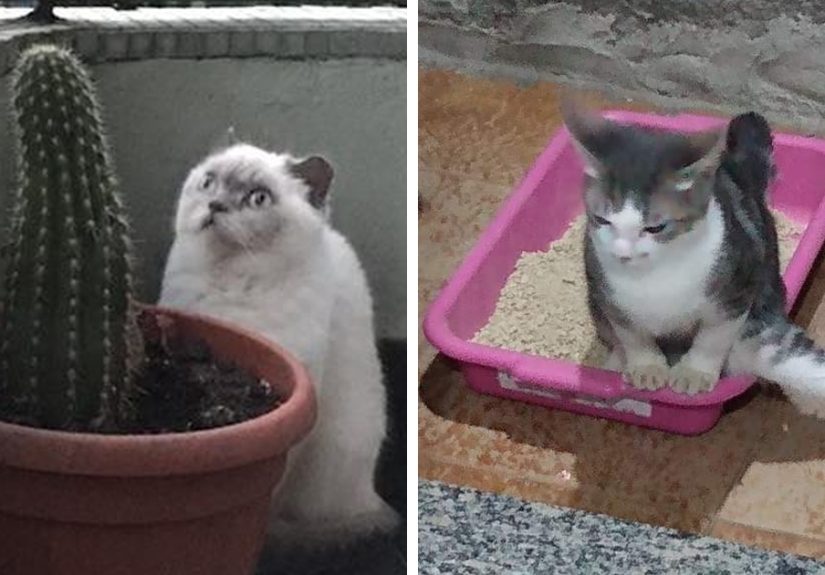
Somewhere on the internet, a photo exists of a cat sitting like a startled Victorian child in a soup bowl. Somewhere else, a cat is mid-zoomie, eyes wide, tail puffed, running a NASCAR lap around a coffee table that definitely did not sign a consent form. And somewhere in your home right now, your cat is doing something that makes you whisper, “Are you… okay?”
That’s the vibe behind Bored Panda’s roundup of cats acting so bizarre they look like they’ve temporarily misplaced the user manual. The photos are hilariousbecause cats are hilariousbut the best part is this: most “weird cat behavior” isn’t random. It’s usually instinct, communication, enrichment needs, or a very dramatic opinion about how you arranged the living room.
This article breaks down the most common “What’s wrong with your cat?” moments, what they usually mean, what you can do about them, and when “LOL” should turn into “let’s call the vet.”
Why Cats Get “Weird” in the First Place
They’re tiny predators running on ancient software
Cats aren’t small dogs. They’re solo hunters with a built-in schedule that favors dawn and dusk. Their brains are wired to stalk, chase, pounce, hide, climb, and patrol territory. When that energy and those instincts don’t have an outlet, they spill out as “weird.”
They communicate with bodies, not speeches
Humans love explaining. Cats prefer interpretive dance. A tail flick, a slow blink, a sudden flop, a headbutt, or a perfectly timed knock of your pen onto the floor can all be messages. Sometimes the message is “I love you.” Sometimes it’s “play with me.” Sometimes it’s “your water bowl is offensive.”
They self-soothe in ways that look unhinged
Kneading, face-rubbing, purring in stressful situations, hiding in boxescats often calm themselves using behaviors that started in kittenhood. To you it looks like a glitch. To them it’s emotional regulation with paws.
40 Weird Cat Moments (And What They Usually Mean)
Note: These are common explanations, not a diagnosis. If a behavior is new, intense, or paired with signs like appetite changes, litter box changes, vomiting, limping, or lethargy, treat it as a clue worth checking out.
- Hallway zoomies at 11:47 p.m.: A burst of pent-up energyoften normal, especially for indoor cats who need more play.
- Chattering at birds like a tiny typewriter: High prey drive + excitement (and maybe frustration) when prey is out of reach.
- The “stinky face” after sniffing something: Flehmen responseyour cat is “tasting” scent signals with a special organ.
- Kneading your stomach like dough: Comfort behavior from kittenhood; sometimes also scent-marking with paw glands.
- Headbutting you (bunting): Social bonding and scent-sharing; your cat is basically stamping you as “safe.”
- Slow blinking while staring into your soul: A relaxed, friendly signalcat language for “we’re good.”
- Loaf mode (paws tucked): Resting posture; often means calm (unless tense body/eyes say otherwise).
- “Frog legs” sploot: Stretching, cooling off, or just embracing full gremlin comfort.
- Sitting in the sink like it’s a throne: Cool surface, cozy shape, and prime “I see everything” positioning.
- Obsessed with cardboard boxes: Security + hiding + temperature comfort; boxes can reduce stress.
- Attacking invisible enemies: Practice hunting, play, or chasing tiny dust motes (seriously).
- Ambushing your feet under a blanket: Prey-play triggered by movement; redirect to toys to save your toes.
- Knocking items off tables with eye contact: Curiosity, play, attention-seeking, or testing gravity (again).
- Staring at a wall like it owes rent: Hearing something you can’t, watching light/shadowsor boredom.
- “Talking” to a toy mouse: Excitement, frustration, or a victory announcement to the household.
- Bringing you a “gift” (toy or… worse): Hunting instinct + social sharing; sometimes a play invitation.
- Burying food (or scratching near the bowl): Instinct to hide leftovers; sometimes dissatisfaction with placement.
- Racing away after using the litter box: Post-poop adrenaline is real; also a vulnerable moment, so they bolt.
- Licking plastic bags like they’re dessert: Texture/smell attraction; can become risky if it turns into chewing.
- Eating non-food items (fabric, string, plastic): Possible picaneeds vet attention because blockages are dangerous.
- Chewing houseplants: Curiosity or seeking fiber; also a hazard because many plants are toxic.
- Demanding faucet water: Preference for moving water (freshness cue); consider a pet fountain.
- Spilling the water bowl on purpose: Play, boredom, or dislike of bowl depth/whisker contact.
- Hanging halfway off furniture: Normal cat physics: “If my ribs fit, I sits.”
- Sleeping belly-up, legs everywhere: Often a sign of comfort and safety (and maximum chaos).
- Rolling on the floor when you walk in: Greeting, play request, or “behold my belly (look only).”
- Grooming you like you’re a kitten: Social bonding (allogrooming). You’re in the family group.
- Shoving their butt in your face: Weird compliment; a trust gesture in cat social behavior.
- Sudden bite during petting: Overstimulationyour cat hit their “too much” threshold.
- Litter box zoomies (the “litter rocket”): Relief, adrenaline, or “I must run because I can.”
- Night yowling like a haunted violin: Boredom, attention, hunger, or medical issuesespecially in seniors.
- Sitting on your keyboard mid-email: Warmth + attention + “stop ignoring me, human.”
- Stealing your seat the second you stand: Warmth, scent, and peak cat opportunism.
- Chirping/trilling at you: Friendly greeting sound; some cats use it like a conversational “hey.”
- Tail quivering near you or a wall: Excitement or marking behavior; context matters.
- Kneading + drooling combo: Deep relaxation for some catsgross, but flattering.
- Chasing their tail like it’s a criminal: Play, kitten energy, or boredom; persistent chasing can signal stress.
- The sideways “Halloween cat” hop: Playful arousalyour cat is acting tough for fun.
- Choosing the laundry basket as a bed: Soft walls + familiar scent + “I’m helping.”
The Greatest Hits Explained: 10 Behaviors That Look Broken but Usually Aren’t
1) Zoomies (FRAPs): the sudden sprinting update
Cat zoomies are common bursts of frenetic activityrunning, darting, leaping, and performing turns that would humble an Olympic gymnast. It’s often a pressure-release valve for unused energy, especially in indoor cats. If zoomies are constant, triggered by stress, or paired with distress, it’s worth discussing with a vet.
Try this: Two 10–15 minute play sessions daily using wand toys or “chase” games, and end with a small meal or treat to mimic a hunt-eat-groom-sleep rhythm.
2) Chattering at birds: excitement with a side of frustration
That rapid jaw clicking when your cat watches birds through a window is commonly linked to prey drive. Some experts also suggest frustration plays a role when the “hunt” is blocked by glass. It’s normaland also a hint your cat enjoys hunting-style play.
Try this: Add window perches, bird feeders outside (at a safe distance), and interactive play that ends with a “catch.”
3) The flehmen face: “I need to process this smell in 4D”
When your cat opens their mouth after sniffing something, they may be using the vomeronasal organ (Jacobson’s organ) to analyze chemical signals. It’s a voluntary “scent decoding” response, not a sign of nausea by default.
When to worry: If open-mouth behavior is paired with drooling, pawing at the mouth, bad breath, or appetite changes, consider dental pain or nausea.
4) Kneading: comfort behavior with bonus scent-marking
Kneading (“making biscuits”) often traces back to nursing kittens stimulating milk flow. Adult cats may knead when they feel safe, relaxed, and content. Some cats also knead to mark territory using scent glands in their paws.
Try this: Put a soft blanket on your lap as a “kneading zone” and trim nails regularly to protect your skin and furniture.
5) Headbutting (bunting): your cat’s version of a hug
Headbutting is commonly a social behavior tied to bonding and pheromone communication. Your cat may be mixing their scent with yours and reinforcing familiaritylike saying, “You’re part of my safe place.”
When to worry: Don’t confuse bunting with head pressing (pushing the head against a wall and staying there), which can be a medical emergency.
6) Knocking things off tables: science, boredom, and a tiny villain arc
Cats explore with paws. They also learn fast: if tapping a pen off the desk makes you react, you’ve accidentally trained the behavior. Sometimes it’s play; sometimes it’s attention; sometimes it’s just Tuesday.
Try this: Increase enrichment, rotate toys, use puzzle feeders, and remove “breakable trophies” from favorite knocking zones. Avoid yellingbig reactions can be the reward.
7) Box obsession and hiding: security is a feature, not a bug
Boxes give cats a protected space with limited sightlines, which can reduce stress and help them feel in control. That’s why hiding is often a coping tool during changes (new people, new pets, loud holidays).
Try this: Provide at least one hiding spot per cat, plus vertical spaces (cat trees, shelves) for safe observation.
8) Night meowing/yowling: the crepuscular lifestyle clash
Cats tend to be most active at dawn and dusk, which can collide with human sleep. Night vocalization can be attention-seeking, hunger-based, boredom-based, or stress-based. In older cats, increased nighttime noise can also be linked to pain, thyroid issues, high blood pressure, or cognitive dysfunction.
Try this: Big play session in the evening, feed after play, keep a consistent schedule, and consider automatic feeders to break the “meow = breakfast” association.
9) Plastic licking and pica: the line between “weird” and “dangerous”
Licking or chewing plastic can be sensory-driven or self-soothing, but swallowing non-food items can lead to intestinal blockages. If your cat eats plastic, string, hair ties, or fabric, treat it as urgent.
Try this: Remove tempting items, add safe chew alternatives (vet-approved), increase enrichment, and ask your vet about underlying GI issues, stress, or compulsive behavior.
10) Bringing “gifts”: you’ve been adopted by a hunter
Whether it’s a toy mouse or a real one, gift-giving can reflect hunting instincts and social behavior. Some cats bring prey to a safe area or to trusted “family,” and some do it to initiate play.
Try this: Increase interactive hunting play indoors and consider a collar-mounted bell (if your cat goes outside) to reduce wildlife impactwhile still keeping your cat stimulated at home.
When “Weird” Might Mean “Call the Vet”
Many quirky behaviors are normal, but sudden change is the big red flag. Reach out to a veterinarian if you notice:
- New or escalating night yowling (especially in a senior cat)
- Hiding more than usual, especially with reduced appetite
- Eating non-food items, vomiting, or signs of abdominal pain
- Aggression or biting that’s new or out of character
- Excessive vocalization paired with weight loss, thirst, or restlessness
- Head pressing (not headbutting) or disorientation
Your “weird cat” might just be boredor they might be trying to tell you something hurts. Treat behavior as information.
How to Encourage the Fun Weirdness and Reduce the Chaotic Weirdness
Build a better indoor ecosystem
- Play like prey: Short, daily sessions that include stalking, chasing, and pouncing.
- Go vertical: Cat trees, shelves, and window perches reduce stress and increase territory options.
- Feed with a mission: Puzzle feeders and scatter feeding tap into hunting instincts.
- Offer safe hiding: Boxes, covered beds, or quiet corners help anxious cats decompress.
- Respect the “stop” signals: Prevent petting bites by pausing when tail flicking or skin twitching starts.
- Keep routines predictable: Many “problem” behaviors fade when schedule becomes reliable.
FAQ: Because Yes, Your Cat Is Still Weird
Is it normal for my cat to be “random”?
Often, yes. What looks random is frequently a response to energy, sensory input, or routine. Cats can hear and smell things you can’t, and they’re wired for short, intense bursts of activity.
Why does my cat act weird only at night?
Many cats are naturally more active around dawn and dusk. Nighttime weirdness can also be learned behavior if meowing or antics reliably lead to food, play, or attention.
Why does my cat knead and then bite?
Some cats get overstimulated when emotions run highcomfort, excitement, or arousal. If kneading escalates into biting, redirect with a toy or give your cat space.
What’s the fastest way to calm down a chaotic cat?
Use structured play (wand toys), then feed a small meal. That “hunt and eat” sequence often flips the switch from chaos to nap mode.
Conclusion
Bored Panda’s “What’s wrong with your cat?” style photo roundups are funny because they’re painfully relatable: cats do bizarre things with total confidence. But a lot of that weirdness is normal feline lifehunting instincts, scent communication, self-soothing habits, and a daily commitment to being dramatic.
The goal isn’t to make cats less weird. The goal is to make their weirdness healthier: more play, more climbing, more hiding spots, better routines, and quick attention when behavior changes suddenly. That way, you get the laughs and the peace of mindplus fewer casualties in the “things your cat knocked off the shelf” category.
Extra: of Real-Life “What’s Wrong With Your Cat?” Moments
Every cat person has a highlight reel. Not the glamorous kindmore like “evidence for the jury.” Like the time your cat tried to sit inside a salad bowl, realized physics still exists, and then pretended it was a planned art installation. Or the day you bought an expensive cat bed and your cat chose the shipping box, because nothing says “luxury” like corrugated cardboard and your crushed dreams.
Then there’s the sacred 3 a.m. ceremony. You’re asleep. The house is quiet. Suddenly: thump-thump-thump across the hallway, followed by a perfectly timed yowl that sounds like your cat is auditioning for a ghost movie. You stumble out to investigate and find… nothing. No intruder. No disaster. Just your cat standing proudly next to a toy, like they personally saved the household from an invisible crime.
Some cats develop oddly specific hobbies. One cat becomes a faucet sommelierstill water is “stale,” apparently. Another becomes a keyboard consultant, lying across your laptop whenever you attempt productivity. (They’re not trying to sabotage you. They’re trying to keep your hands free for petting. Same thing, in their mind.) And of course, there’s the cat who waits until you’re on a video call to leap into the background like a furry special effect.
Food weirdness deserves its own category. Plenty of cats will “bury” their food by scratching the floor near the bowl, as if they’re saving leftovers for later… in the same way humans “save leftovers” by putting fries in a drawer. Others insist on eating with one paw like a tiny, judgmental raccoon. And some cats will sprint from the litter box at top speed afterward, as if they just committed a crime and must flee the scene immediately. (In fairness, they may be outrunning the smell. We’ve all been there.)
My personal favorite is the dramatic flop. You walk toward the kitchen and your cat collapses in front of you like an actor in a soap opera, belly up, paws curled, eyes half-closedclearly the victim of your neglect. You stop to pet them and suddenly the belly becomes a trap, the paws become handcuffs, and you remember the first rule of cat ownership: the tummy is often a decoy. Not always. But often enough to keep life interesting.
In the end, these moments are the whole deal. Cats are strange, funny, emotionally complex little creatures. Their weirdness is part communication, part instinct, part personalityand part “because I felt like it.” And honestly? The world would be less fun without it.