Table of Contents >> Show >> Hide
- What Makes a “Crisp” a Crisp?
- The Core Formula: Fruit + Flavor + Thickener + Topping
- The Topping: Crunch Engineering (Without a Lab Coat)
- The Best Fruit Crisp Recipe (Base Recipe You Can Adapt)
- Seasonal Variations (Pick Your Adventure)
- How to Avoid a Soggy Topping
- Serving Ideas That Make It Feel Like a Celebration
- Make-Ahead, Storage, and Freezing
- Troubleshooting: When Your Crisp Gets Dramatic
- FAQ
- of “Real-Life” Fruit Crisp Experience (The Kind You’ll Recognize)
If pie is a tuxedo, a fruit crisp is your favorite hoodie: comforting, forgiving, and somehow always appropriate. You don’t need fancy lattice skills, you don’t need to blind-bake anything, and you definitely don’t need to pretend you “meant” to make it look rustic. A good fruit crisp recipe is the dessert equivalent of a friend who shows up with snacks and zero judgment.
This guide gives you a reliable, make-it-anytime base recipe, plus the “why it works” details that keep your topping crunchy and your fruit juicy (but not soupy). You’ll also get seasonal variations, make-ahead strategies, and a troubleshooting section for when your crisp decides to test your character.
What Makes a “Crisp” a Crisp?
In modern American baking, “crisp” and “crumble” are basically cousins who borrow each other’s clothes. Traditionally, the crisp is the one that usually includes oats in the topping, while crumble may skip the oats and lean more flour-forward. In practice, many recipes blur the lineand nobody at the table is going to file a complaint as long as it’s buttery and browned.
The Core Formula: Fruit + Flavor + Thickener + Topping
A fruit crisp recipe is a simple structure with endless wiggle room. Once you understand the roles each part plays, you can swap fruits, adjust sweetness, and improvise confidently.
1) Fruit: Fresh, Frozen, or Even “I Only Have Canned”
Fresh fruit gives bright flavor and a cleaner texture. Frozen fruit is a weeknight superpoweroften picked at peak ripeness and ready when you are. Just bake it long enough for the filling to bubble (that bubbling matters more than your timer).
Canned pie filling can also work in a pinch. It’s sweeter and already thickened, so you’ll usually reduce added sugar and skip (or minimize) extra thickener. It’s not “cheating”it’s “resourceful,” which sounds like an admirable personality trait.
2) Flavor: Sweet, Tart, and a Little Bit of “Wow”
Most fruit wants a squeeze of citrus (lemon for apples/berries, orange for strawberry-rhubarb), a pinch of salt, and optional warm spices. Cinnamon is the popular kid, but nutmeg, ginger, cardamom, or vanilla can make the filling taste like it has a better résumé.
3) Thickener: The Difference Between “Saucy” and “Soup”
Fruit releases juice as it bakes. Thickeners capture those juices so the filling turns glossy and spoonable instead of puddling across the plate. The most common options:
- Cornstarch: Neutral flavor, strong thickening power, great for berries and juicy fruits.
- Tapioca starch: Also effective and typically glossy; helpful when you want a clear, gel-like set.
- All-purpose flour: Works, but it can dull flavor and turn fillings cloudy if overusedbest with less-juicy fruits.
The practical rule: the juicier the fruit, the more thickener you need. Farmer’s market berries can be especially juicy, and frozen fruit often releases extra liquid as it bakes. Start with a sensible base amount, then adjust next time based on your results.
The Topping: Crunch Engineering (Without a Lab Coat)
The topping is where a crisp earns its name. You want it crumbly, buttery, and crispnot sandy, not cakey, and not “soft cereal.”
Use Cold Butter (Yes, Really)
Cold butter creates little pockets that melt in the oven, helping the topping brown and crisp. Cut it in until you have pea-size pieces and clumps. Those clumps become the crunchy nuggets everyone fights over.
Don’t Rush the Bake
A moderate oven temperature gives the fruit time to break down into saucy goodness while the topping turns golden. Too hot and the topping can brown before the fruit has fully cooked; too low and you’ll wait forever while questioning your life choices.
Let It Rest
When your crisp comes out of the oven, the filling is still finishing its thickening work. Resting 15–20 minutes helps the juices settle so you get slices/spoonfuls that hold together (instead of a delicious fruit flood).
The Best Fruit Crisp Recipe (Base Recipe You Can Adapt)
This is a flexible, classic fruit crisp recipe designed for an 8×8-inch baking dish (or similar). Use it for berries, peaches, apples, pears, plums, or a mix.
Ingredients
- Fruit filling
- 5 to 6 cups fruit (about 2 to 2 1/2 pounds)
- 1/3 to 1/2 cup granulated sugar (less for very sweet fruit, more for tart fruit)
- 2 tablespoons cornstarch (see notes below for other thickeners)
- 1 tablespoon lemon juice (or orange juice for certain fruits)
- 1 teaspoon vanilla extract (optional but excellent)
- 1/4 teaspoon fine salt
- 1 to 2 teaspoons cinnamon (optional; great for apples/pears)
- Crisp topping
- 1 cup old-fashioned oats
- 1/2 cup all-purpose flour
- 1/2 cup packed brown sugar
- 1/4 teaspoon fine salt
- 1/2 teaspoon cinnamon (optional)
- 6 tablespoons unsalted butter, cold and cubed
- 1/2 cup chopped nuts (optional: pecans or walnuts)
Instructions
- Heat the oven: Preheat to 375°F. Butter an 8×8-inch baking dish (or lightly grease it).
- Mix the filling: In a large bowl, toss fruit with sugar, cornstarch, citrus juice, salt, and any optional flavorings (vanilla/spices). Spread evenly in the dish.
- Make the topping: In a bowl, mix oats, flour, brown sugar, salt, cinnamon, and nuts (if using). Add cold butter and cut it in with your fingers or a pastry cutter until clumps form and no dry flour pockets remain.
- Assemble: Sprinkle topping evenly over the fruit. Aim for some larger clumps (good crunch) and some smaller crumbs (even coverage).
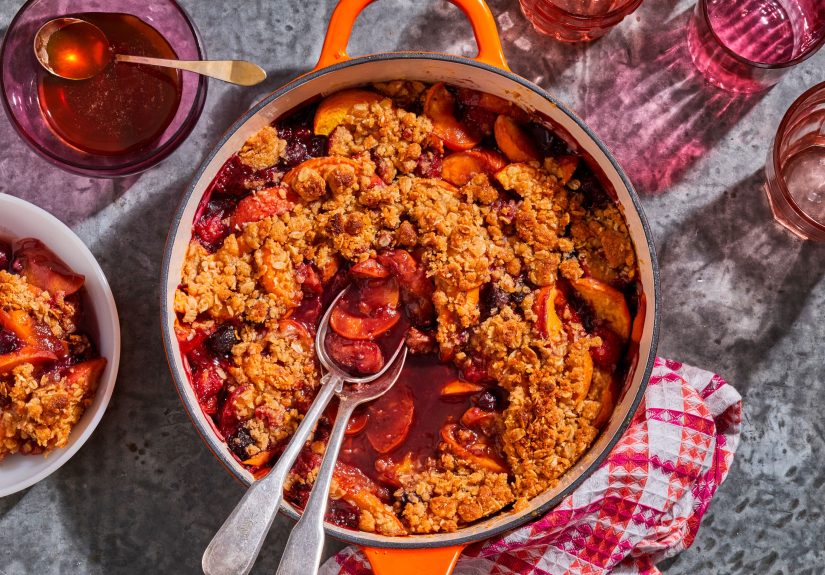
- Bake: Bake 35–50 minutes, until the topping is deep golden and the filling is actively bubbling at the edges (and ideally in the center too).
- Rest: Let stand 15–20 minutes before serving. (This is where the filling thickens and behaves.)
Thickener Notes (Quick Swaps)
- If using tapioca starch, start with a similar amount to cornstarch and adjust as needed for very juicy fruit.
- If using flour, you generally need more than cornstarch to get the same thickening effect, and it’s best with less-juicy fruits like apples or blueberries.
Seasonal Variations (Pick Your Adventure)
Berry Crisp (Blueberry, Mixed Berry, Blackberry)
Berries are juicy and can turn runny if under-thickened or under-baked. Stick with cornstarch or tapioca, add a little lemon juice, and bake until you see real bubbling. Mixed berry crisps love a pinch of cinnamon or a tiny bit of cardamomjust enough to feel fancy.
Peach or Nectarine Crisp
Stone fruit brings perfume-like aroma and lots of juice. Add a pinch of salt, a squeeze of lemon, and consider nuts in the topping (pecans are especially good here). If your peaches are super ripe, don’t be shy with thickener and bake long enough for the center to bubble.
Apple or Pear Crisp
Apples and pears are less watery than berries, so the filling is easier to control. Use cinnamon plus a hint of nutmeg, and choose apples that hold shape (think tart/crisp varieties). Pears love ginger and vanilla like they were written into the same rom-com.
Strawberry-Rhubarb Crisp
This one hits sweet-tart perfection. Rhubarb can be sharp, so taste your fruit and adjust sugar. Orange zest or orange juice can add a bright “sunny day” note, and cornstarch keeps the filling from turning into a ruby-red puddle.
“Pantry Crisp” Using Canned Filling
If you’re using canned apple or peach pie filling, reduce the sugar in your fruit layer (often to zero) and add thickener only if needed. The topping still does all the heavy lifting in terms of textureso keep that butter cold and bake until golden.
How to Avoid a Soggy Topping
- Don’t assemble too far ahead: If the topping sits on juicy fruit too long before baking, it can absorb moisture and soften.
- Keep butter cold: Cold butter helps the topping bake up crisp, not greasy.
- Bake at a moderate temp: 350–375°F is a sweet spot for cooking fruit thoroughly before the topping over-browns.
- Wait for bubbling: Bubbling is a visual cue that the filling has reached the heat needed to thicken properly.
- Rest after baking: Crisp needs a short nap to set up. Dessert with boundaries is healthy.
Serving Ideas That Make It Feel Like a Celebration
- Vanilla ice cream: The hot-cold contrast is basically dessert therapy.
- Whipped cream: Light, classic, and it makes you look like you planned everything.
- Greek yogurt: If you want to call it breakfast, I’m not stopping you.
- Salted caramel drizzle: Especially good with apple or pear crisps.
Make-Ahead, Storage, and Freezing
Fruit crisp is a rare dessert that actually likes being practical.
Make-Ahead (Best Method)
Bake the crisp, cool completely, then cover tightly and refrigerate. Reheat at 350°F until warmed through and the topping re-crisps. This method keeps the topping from absorbing moisture before it ever hits the oven.
Freeze the Topping (Meal-Prep MVP)
You can make a big batch of crisp topping and freeze it. Because it’s crumbly, you can sprinkle it straight from frozen onto fruit and bake as usual. It’s like having dessert “on deck” without committing to anything emotionally.
Freeze a Fully Assembled Crisp
You can freeze assembled crisp in a freezer-safe dish. When baking from frozen, start covered with foil to warm the center, then uncover to brown and crisp the topping. Bake until you see/hear bubbling and the top is golden.
Troubleshooting: When Your Crisp Gets Dramatic
“My filling is runny.”
- You may need more thickener next time (especially with berries or very ripe fruit).
- It might be under-bakedwait for bubbling, not just browning.
- Let it rest longer before serving.
“My topping is browned but the fruit seems undercooked.”
- Your oven may be running hot or your dish may be shallow.
- Next time, bake at a moderate temp and use foil if the topping browns earlythen remove foil near the end to crisp.
“My topping is soft.”
- Don’t assemble too early.
- Use cold butter and make sure clumps form.
- Reheat uncovered to re-crisp.
FAQ
Can I make this gluten-free?
Yes. Use a measure-for-measure gluten-free flour in the topping. For the filling, cornstarch or tapioca works well as a gluten-free thickener.
Can I reduce the sugar?
Definitely. Taste your fruit first. If it’s peak-season sweet, you can reduce sugar and lean on vanilla, citrus zest, or spices for “dessert flavor” without piling on sweetness.
What fruit combination is most foolproof?
Apples (or apples + pears) are very forgiving. Mixed berries are also great, but they demand enough thickener and a full bake until bubbling.
of “Real-Life” Fruit Crisp Experience (The Kind You’ll Recognize)
Fruit crisp has a funny way of becoming your dessertthe one people casually request because you made it once and now you’re apparently the Crisp Person. It starts innocently: you’ve got fruit that’s ripe right now (or frozen fruit that’s been judging you from the freezer), and you want something warm that feels like effort without actually requiring effort. That’s crisp. Crisp is what you bake when you want the house to smell like comfort and the sink to stay mostly empty.
The first “experience lesson” most people learn is that crisp isn’t done when it’s merely golden. It’s done when it’s bubblinglike, confidently bubbling. The bubbles are your dessert’s way of saying, “The thickener is activated, I have structure, I can be trusted.” Skip that stage and you’ll still get something tasty, but it’ll eat like fruity hot sauce. Again: delicious, but chaotic.
The second lesson is topping psychology. Everyone thinks they want an even blanket of crumbsuntil they taste a crisp with big buttery clumps. Those clumps are the reason people “just need a little more” and somehow take the corner piece with extra topping. Once you realize clumps are a feature, not a mistake, your topping game changes. You stop over-mixing. You stop worrying. You start sprinkling with confidence like a dessert wizard.
Then there’s the potluck effect. Fruit crisp travels well, serves a crowd, and doesn’t melt into tragedy the way a frosted cake can. It also has built-in flexibility: if you show up with apple crisp in October, you look seasonal and charming. If you show up with berry crisp in July, you look like you own a picnic blanket and a very clean straw hat. If you show up with a “whatever was on sale” crisp, you look practicaland that’s secretly the highest compliment in cooking.
Crisp also teaches you how to taste fruit like a grown-up. You start noticing how some strawberries are perfume-sweet and others are tart. You learn that peaches can be juicy enough to require backup thickener. You discover that a pinch of salt doesn’t make dessert saltyit makes fruit taste more like fruit, as if someone turned the volume up on flavor.
And finally, crisp has that magical ability to be both dessert and breakfast without changing a single ingredient. The only difference is what you put on top: ice cream says “dessert,” yogurt says “I’m making good choices,” and whipped cream says “I contain multitudes.” Fruit crisp doesn’t judge. It just shows up warm, crunchy, and ready to make your day betterone buttery spoonful at a time.