Table of Contents >> Show >> Hide
- What “MEM” Means (and Why It Matters for a Towel Bar)
- Meet the MEM Towel Bar: The Details That Make It Feel “Luxury”
- Sizes and Model Options: Picking the Right MEM Towel Bar
- How to Choose the “Right” MEM Towel Bar for Your Bathroom
- Placement: Where the MEM Towel Bar Actually Works Best
- Installation Tips: Make It Look Like a Pro Did It (Even If You Didn’t)
- Design Pairings: How MEM Plays with Tile, Countertops, and Lighting
- Care and Maintenance: Keep It Looking Expensive (Because It Is)
- Is the Dornbracht MEM Towel Bar Worth It?
- FAQ
- Closing Thoughts
- Experiences: Living with a Dornbracht MEM Towel Bar (The Extra-Real )
A towel bar is a humble thing. It holds a towel. It quietly exists. It’s basically the “supporting actor” of the bathroom.
And then Dornbracht showed up and said, “What if the supporting actor had impeccable tailoring, German engineering, and the confidence
to stand in front of marble without apologizing?”
The Dornbracht MEM towel bar lives in that rare zone where a bathroom accessory is both practical and
unmistakably intentional. It’s minimalist without feeling cold, premium without shouting, andmost importantlybuilt for the kind
of daily wear-and-tear that turns lesser hardware into a wobbly regret.
What “MEM” Means (and Why It Matters for a Towel Bar)
Dornbracht’s MEM design language is all about clarity, reduction, and balancea calm, pared-back aesthetic that still feels
tactile and architectural. The broader MEM collection is often described as “reduced to the essentials,” with an emphasis on an
organic, almost spring-like relationship to water and space. That mindset carries over into the accessories: clean lines,
precise geometry, and a refusal to add decorative fluff “just because.”
Translation: the towel bar doesn’t try to be cute. It tries to be right. If your bathroom is modern, transitional,
or even quietly classic with updated finishes, MEM tends to look like it belongsbecause it’s designed to harmonize rather than dominate.
Meet the MEM Towel Bar: The Details That Make It Feel “Luxury”
1) The silhouette: slim, crisp, and architectural
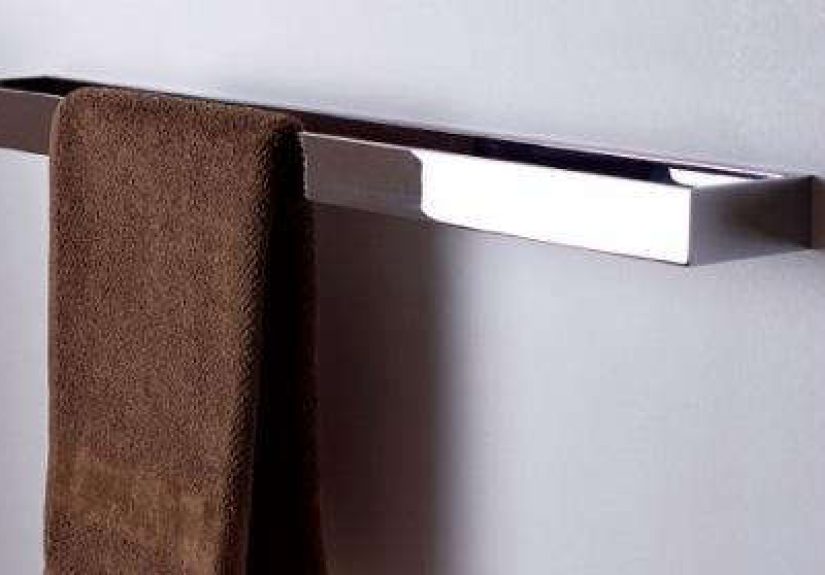
MEM towel bars are rectangular and restrainedmore “gallery plinth” than “ornate scrollwork.” The edges look deliberate, the surfaces
read as refined, and the whole piece feels like it was drawn with a ruler (the expensive kind).
2) Solid, wall-mounted construction (the wobble test)
Many MEM towel bars are listed as wall-mounted with robust metal construction, commonly specified as brass by retailers.
In real bathrooms, that matters because a towel bar is rarely used only for towels. People lean on it. Kids swing from it. Someone
inevitably yanks it while rushing out the door. Quality hardware survives the chaos without slowly rotating into sadness.
3) Finish options: from classic chrome to “quiet flex” metals
Dornbracht is known for offering a wide surface palette across MEMthink polished chrome, platinum tones, darker modern finishes,
and warmer statement metals (including gold-family finishes). This is where MEM gets sneaky: the form stays calm, but the finish
can make the entire room feel warmer, cooler, brighter, or moodier.
If you’re building a cohesive look, a MEM towel bar is easiest to justify when it’s part of a matched set: faucet, shower trim,
and accessories reading like a single design sentence instead of three different dialects.
Sizes and Model Options: Picking the Right MEM Towel Bar
MEM towel bars typically come in a few practical lengths. Retail listings and spec data commonly show three “everyday” sizes that
cover most bathrooms:
-
12-inch class (great for hand towels or tight spaces): examples list about 11-3/4″ width with
a 2-1/2″ projection and 1-3/8″ height. -
18-inch class (a sweet spot for many guest baths): examples list about 17-3/4″ width with
a 3-1/8″ projection and 1-3/8″ height. -
24-inch class (the “real towel” towel bar): examples list about 23-5/8″ width with
a 3-1/8″ projection and 1-3/8″ height.
A quick real-world rule: if you regularly use plush bath sheets (the towels that could double as blankets), the 24-inch class is
usually the least annoying. If you’re outfitting a powder room where towels are more decorative than functional, the 12-inch class
keeps things tidy.
How to Choose the “Right” MEM Towel Bar for Your Bathroom
Match the room’s behavior, not just its style
A primary bath is a working environment. Towels get swapped, damp towels need airflow, and multiple people may be operating in the
same square footage. Guest baths and powder rooms are more about appearance, convenience, and not making visitors do geometry to find a towel.
- Primary bath: go longer (often 24″) and place for easy reach from shower or tub.
- Guest bath: 18″ often balances function and space efficiency.
- Powder room: 12″ (or a ring) keeps it elegant and uncluttered.
Pick the finish like you’re choosing jewelry
Chrome is timeless and brightexcellent in smaller bathrooms because it reflects light and feels clean. Darker finishes can add
contrast and mood, especially against light tile. Platinum-family or brushed finishes tend to look more “designed” and hide
fingerprints and water spotting better than high-polish surfaces.
Consider the “set effect”
A luxury towel bar can look out of place if everything else is builder-basic. If you’re investing in MEM, it often makes sense
to at least coordinate the paper holder, hook, or ring so the room reads consistent. Bathrooms are small; mismatches are loud.
Placement: Where the MEM Towel Bar Actually Works Best
Standard height (and why it’s not a law)
Many home-improvement guides cite a typical towel bar height around 48 inches from the floor. That’s a solid starting
point for most adults, but you’ll want to adjust based on who uses the room and where the towel needs to land without dragging.
- Adult bathrooms: often ~44–48″ to the center of the bar, depending on towel size and wall layout.
- Kids’ bathrooms: commonly lower (roughly mid-30s to low-40s inches) so small humans can reach without climbing.
- Hand towel near a vanity: many guides recommend ~18–22″ above the countertop, so it’s reachable but not brushing the cabinet.
Near shower or tub: the “no dripping across the room” principle
The most functional placement is within arm’s reach of where you exit the shower or step out of a tub. If you can grab a towel
without turning your bathroom floor into a slip-and-slide, you’ve done it right.
Over the toilet: possible, but think it through
Sometimes the only wall space is above the toilet. It can work, but measure clearance so the towel hangs freely without touching
the tank or becoming an awkward backboard for your elbows.
Installation Tips: Make It Look Like a Pro Did It (Even If You Didn’t)
A premium towel bar deserves a premium install. The goal is not just “attached to wall,” but straight, secure, and aligned.
Here’s the practical checklist:
- Find studs if you can. A stud-backed mount is the gold standard for rigidity. If studs aren’t available, use high-quality anchors rated for the load.
- Level it twice. Once before drilling, once before final tightening. Bathrooms love optical illusions (tile lines are notorious liars).
- Measure center-to-center spacing. Many towel bars mount on two points; precise spacing prevents stress and misalignment.
- Protect the finish. Use a soft cloth while tightening to avoid tool marksespecially on darker or brushed finishes.
- Final test: gentle pull, then a firm pull. If it moves now, it’ll move forever.
If you’re unsure about anchors, take five minutes to learn proper drywall anchoring (or hire a pro for a clean install). A luxury bar
that’s even slightly crooked will haunt you every time you brush your teeth.
Design Pairings: How MEM Plays with Tile, Countertops, and Lighting
Minimalist bathrooms
MEM is basically at home here. Pair it with large-format porcelain, microcement, or simple subway tile for a calm, modern feel.
Chrome keeps it crisp; darker finishes add graphic contrast.
Warm modern (wood + stone)
If your bathroom has walnut, oak, travertine, or warmer quartz, consider a brushed or champagne/gold-family finish for accessories.
The MEM form stays quiet while the finish adds richnesslike wearing a simple outfit with a great watch.
Hotel vibe
MEM accessories can deliver that “boutique hotel” polish when combined with consistent finishes across the room and well-placed lighting.
One tip: emphasize symmetrymatching towel bars or hooks on both sides of a vanity can make even a small bath feel intentional.
Care and Maintenance: Keep It Looking Expensive (Because It Is)
Most towel bars fail aesthetically for one of two reasons: harsh cleaners or mineral deposits. With MEM, the safest approach is simple:
wipe regularly with a soft cloth, use mild soap if needed, and avoid abrasive pads and aggressive acids. If you have hard water,
drying the bar occasionally keeps spotting downespecially on high-polish finishes.
For specialty finishes, treat them like nice cookware: gentle maintenance beats “deep cleaning” panic once a month.
A little consistency goes a long way.
Is the Dornbracht MEM Towel Bar Worth It?
The honest answer: it depends on what you value. If you just need “a bar that holds a towel,” there are cheaper options everywhere.
But if you care about precision, finish quality, and design cohesionand you’ve already invested
in nicer fixtures or tileMEM can be one of those upgrades that quietly elevates the whole room.
Think of it this way: bathrooms are high-frequency spaces. You touch the hardware every day. The things you touch most are where
quality is easiest to feel. A well-made towel bar isn’t flashy, but it becomes part of the daily “this house is put together” experience.
FAQ
Will it hold a heavy bath towel (or bath sheet)?
A properly installed MEM towel bar is designed for real-world use. For thick towels, the longer sizes typically feel more comfortable
because towels can hang without bunching.
Can I customize the look?
Dornbracht is known for offering extensive finish options, and the brand also highlights customization possibilitiesranging from surface
variants to dimensional adjustments and even special color implementations for certain series. If your project is highly specific, it’s
worth asking about customization before ordering.
Should I install into studs?
If possible, yes. Stud mounting generally gives the most rigid result. If studs don’t line up with your ideal placement, use quality anchors
and follow best practices for drywall installation so the bar stays tight long-term.
Closing Thoughts
The Dornbracht MEM towel bar is the kind of product that doesn’t beg for attentionbut it earns it anyway.
It’s for people who notice details, who like rooms to feel intentional, and who believe the daily routine deserves hardware that
behaves beautifully for years. If your bathroom is already leaning modern, minimal, or quietly luxurious, MEM is an easy “yes.”
If your bathroom is still in its “builder beige” era, MEM might be the push that starts your upgrade dominoes. (Fair warning:
one premium accessory can lead to… several premium decisions.)
Experiences: Living with a Dornbracht MEM Towel Bar (The Extra-Real )
Let’s talk about the part nobody puts in the product description: what it’s actually like to live with a towel bar that costs more
than some people’s entire “bathroom accessories aisle” cart.
First, the feel. A high-end towel bar tends to be noticeably more rigid once installedless flex, less rattle,
less “is this slowly coming loose or am I imagining it?” paranoia. With MEM, that rigidity pairs with a shape that feels precise:
edges are crisp, the profile is clean, and the bar reads as a deliberate design element rather than an afterthought. In a well-designed
bathroom, that subtlety is the point. You don’t want the accessory screaming; you want it quietly agreeing with everything else.
Second, the daily routine. The most common “ah, okay, I get it” moment happens when you’re half-awake, reach for a towel,
and everything is exactly where it should beno wobble, no snagging, no towel bunching because the bar is too short or the projection is
too shallow. The 24-inch class, in particular, tends to feel like the “real adult choice” for full-size towels. It gives towels enough
breathing room to dry more evenly, which is not glamorous, but it is deeply practical (and slightly less laundry-adjacent stress).
Third, the finish reality. People often choose a finish based on photos, then discover the day-to-day behavior later.
Polished chrome is bright, crisp, and forgiving in busy bathrooms because it bounces light and looks clean quickly after a wipe-down.
Darker finishes can look incredibly modern, but they may show mineral spots more obviously in hard-water areas unless you dry them
occasionally. Brushed finishes tend to be the “I want it to look great without babysitting it” optionstill elegant, but less
high-maintenance in the visual sense.
Fourth, the installation story (because there is always a story). A premium towel bar is less tolerant of “close enough.”
If it’s even slightly off-level, you’ll notice. If you use weak anchors, you’ll feel it. If you don’t measure center-to-center correctly,
you’ll invent new words. The upside is that once it’s installed correctly, it tends to stay put. The effort is front-loaded; the satisfaction
is long-term.
Finally, the unexpected side effect: MEM can raise your standards. You install one beautifully made piece of hardware,
and suddenly the older, wobbly towel ring across the room looks like it came free with a hotel shampoo bottle. This is not a flaw in MEM.
This is just your bathroom developing taste.