Table of Contents >> Show >> Hide
- What you’ll find in this guide
- The Remodelista “Simply Red” vibe in plain English
- Why Uruguay makes minimalist vacation houses look extra good
- Red done right: color as architecture, not decoration
- Materials that survive salt air, sand, and real humans
- Layout moves that make a small house feel like a resort
- Decorating without clutter (and without feeling empty)
- Outdoor rooms: the secret “extra square footage”
- Steal-the-look checklist: how to bring “Simply Red” home
- Common mistakes to avoid (so your red house stays “wow,” not “whoa”)
- FAQ: Simply Red vacation house design
- Experiences inspired by “Simply Red”: living with a bold house in a calm landscape (about )
- Wrap-up: why “Simply Red” sticks with you
Some vacation houses try too hard. They’re stuffed with “coastal” signs, seashell lamps, and enough throw pillows to qualify as a small mountain range.
The Remodelista-style antidote is simpler: one bold idea, executed with restraint, and supported by smart, durable choices that work in real life.
“Simply Red” is that kind of projecta Uruguay getaway that leans into a single unforgettable move (a red exterior) and then lets
the architecture, light, and landscape do the rest.
In this deep dive, we’ll unpack what makes a red vacation house feel modern instead of cartoonish, why Uruguay is a perfect setting for pared-back design,
and how you can borrow the best partswhether you live near the ocean, a lake, or a landlocked neighborhood where the biggest wave is your neighbor’s
sprinkler.
The Remodelista “Simply Red” vibe in plain English
Remodelista features tend to celebrate homes that feel intentional, calm, and slightly mischievouslike the building is whispering,
“Yes, I’m beautiful, but I also know where the broom is kept.” The “Simply Red” concept fits that mindset:
one strong exterior color that reads as confident, paired with interiors that don’t fight for attention.
If you’ve ever walked into a space and immediately felt your shoulders drop, you already understand the goal.
The “Simply Red” approach isn’t about being fancy. It’s about creating a house that supports vacation life:
sunlight, bare feet, good food, messy hair, and the kind of quiet that makes you remember you have a brain.
Why a single big idea works better than ten medium ones
Vacation homes often get “decorated” as a substitute for planning. But when the architecture has a clear conceptlike a saturated red facadeeverything else
can get calmer. You don’t need a gallery wall, a themed bathroom, and seven different wood stains doing jazz hands in the kitchen.
One headline move is enough. Let the rest be supportive cast, not competing leads.
Why Uruguay makes minimalist vacation houses look extra good
Uruguay is a design-friendly backdrop for a few practical reasons: it has strong light, big skies, and coastal landscapes that look “composed” even when no one
has touched a thing. A simple building with a clear silhouette holds its own in that environment.
The climate and lifestyle cues matter too. Coastal living encourages materials that can handle sand and wind, and floor plans that prioritize indoor-outdoor flow.
Even if your “coast” is a weekend trip away, you can borrow the logic: easy circulation, low-maintenance surfaces, and spaces that invite you outside.
The real luxury is not having to baby the house
The best vacation homes aren’t museums. They’re durable, forgiving, and functionalso you can spend your time living instead of worrying about whether a wet towel
is “allowed” to exist. Uruguay’s beach-and-countryside rhythm rewards that kind of practicality: rinse off, come in, open a window, repeat.
Red done right: color as architecture, not decoration
Let’s talk about the star of the show: the red exterior. When people hear “red house,” they may imagine a barn, a fast-food logo, or something that looks like it
should come with fries. But when red is used as a clean, matte, architectural statementespecially on a simple formit reads as modern and artful.
What makes “Simply Red” feel sophisticated
- One red, one finish: A unified exterior color looks intentional. Patchy accents can look like indecision.
- Matte over glossy: Gloss can feel loud; matte feels like pigment, not paint.
- Simple geometry: The cleaner the shape, the stronger the color can be without chaos.
- Neutral companions: Pair red with natural materialswood, stone, concreteand crisp neutrals.
Pick the right red: tomato is a personality, oxblood is a mood
Not all reds behave the same. Bright reds read playful and energetic; deeper, earthier reds feel grounded and timeless.
If you want the “architectural” effect, look for reds with a touch of brown, clay, or iron in themtones that feel like they could have existed
before the invention of the selfie ring light.
Also: test your red in full sun and shade. Exterior color is basically a mood ring for weather. What looks “rich” at noon can look “why is the house yelling?”
at sunset. Samples are cheaper than regret.
Materials that survive salt air, sand, and real humans
A vacation house in a coastal setting is basically a durability obstacle course. The design has to handle:
wet swimsuits, sandy feet, wind-blown grit, sunscreen handprints, and the occasional heroic attempt to carry everything in one trip.
“Simply Red” works because it leans toward materials that look better with a little life.
Exterior and structural choices that make sense
- Plaster/stucco-like finishes: They can read matte and monolithic, perfect for bold color.
- Concrete or cement-based elements: Great for heat, wind, and low-fuss maintenance.
- Hardwood or thermally modified wood accents: Warmth without preciousness.
- Powder-coated metal: Clean lines, strong performance, minimal drama.
Interior surfaces that don’t punish you for having fun
Think “wipeable, sweepable, and forgiving.” Concrete floors, large-format tile, sealed wood, washable paint, and slipcovers all belong in the vacation-home hall
of fame. If a surface requires a special ritual, it’s probably not the right one for a place where people eat watermelon over a couch.
Texture matters too. When you’re keeping the palette calm, texture replaces clutter: limewash walls, natural linens, woven shades, raw wood, honed stone.
That’s how minimalist spaces feel warm instead of sterile.
Layout moves that make a small house feel like a resort
Great vacation-house planning is basically hospitality design in disguise: you want flow, ease, and small “luxury” moments that don’t require staff.
The “Simply Red” vibe suggests a few smart layout moves that translate anywhere.
1) A strong indoor-outdoor connection
Big openingssliding doors, wide windows, or simple glass panelsmake the landscape feel like part of the house. The key isn’t just size; it’s alignment.
If the main living space opens to the best view, breezes, or shaded area, the house feels bigger than its square footage.
2) A “dirty entry” that doesn’t look like a mudroom
Vacation houses need a place for sand, towels, hats, and wet stuff. The trick is to make it feel like design, not like a storage unit:
wall hooks in a tidy row, a bench, a durable floor, and a rinse spot nearby if possible.
3) Bedrooms that prioritize sleep, not stuff
In a getaway house, a bedroom can be almost monk-like and still feel luxurious. A good mattress, blackout-ready shades, quiet lighting,
and cross ventilation beat decorative pillows every day of the week (and twice on Sunday, because vacation Sundays are emotionally complicated).
Decorating without clutter (and without feeling empty)
The secret to “Simply Red” interiors is restraint paired with confidence. You don’t fill every corner. You choose a few elements that carry weight:
a great table, honest materials, and objects that look like they belong to a real personnot a store display trying to upsell you on “artisanal vibes.”
A calm palette that lets the red stay outside (mostly)
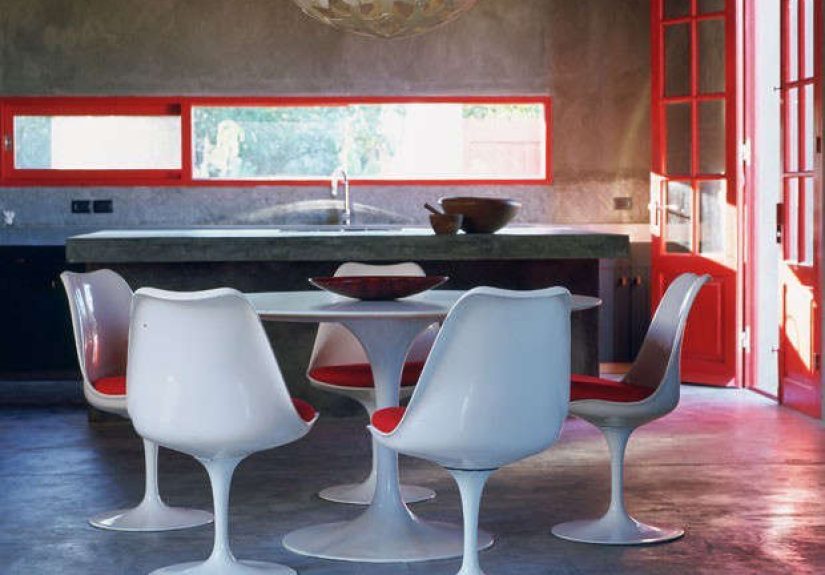
One reason bold exteriors succeed is because the interior doesn’t try to compete. Inside, aim for whites, warm neutrals, and natural toneslinen, sand, pale wood,
soft gray, and the occasional darker grounding note (black metal, charcoal tile, or stained wood).
If you want a wink of red indoors, keep it subtle: a single piece of art, a clay vessel, a striped towel. Think “echo,” not “encore.”
Furniture that earns its place
- Low, comfortable seating: Vacation posture is basically “melting,” so plan accordingly.
- A dining table that can handle chaos: The table is where vacations happencoffee, cards, late dinners, and that one friend who insists on board games.
- Built-ins or simple storage: Fewer freestanding pieces = less visual noise.
- Lighting that feels warm at night: Use multiple low lights instead of one overhead spotlight that makes everyone look like a suspect.
Outdoor rooms: the secret “extra square footage”
In Uruguay, outdoor living isn’t a bonusit’s the point. The “Simply Red” approach treats exterior space as functional, not decorative:
shade, seating, a place to eat, and maybe a fire feature for cooler evenings.
Make the outdoors usable in three conditions
- Bright sun: Add shade (pergola, overhang, umbrella, or slatted screen).
- Wind: Use windbreaks (walls, hedges, fencing, or strategic planting).
- After dark: Layer lighting (path lights, wall sconces, lanterns, and one good “task” light near the grill or outdoor table).
The red exterior can also play a role outdoors: it becomes a backdrop for green plantings and neutral furniture, making everything look composed in photos
without needing an influencer-style “setup.” The house does the styling for you. You just exist in the vicinity.
Steal-the-look checklist: how to bring “Simply Red” home
You don’t need a Uruguayan coastline to borrow the best design moves. Here’s a practical checklist you can use for a remodel, a new build,
or even a “make my weekend place less chaotic” refresh.
Exterior (the big move)
- Choose a red with earthy undertones (think clay/oxide rather than neon).
- Commit to one finish and one red family across the exterior.
- Keep trim minimal; let the red read as a clean plane.
- Pair with natural materials: wood, stone, concrete, black metal.
Interior (supporting cast)
- Use warm neutrals and texture: linen, woven shades, raw wood.
- Limit decor to a few meaningful pieces; avoid “theme” items.
- Pick durable floors and washable surfaces.
- Layer lighting: table lamps, sconces, and soft ambient options.
Vacation-life function (the part that makes it livable)
- Add hooks, a bench, and a rinse-friendly entry zone.
- Create outdoor seating that works with sun, wind, and night.
- Prioritize cross ventilation and operable windows.
- Invest in the essentials: mattresses, towels, and a great dining table.
Common mistakes to avoid (so your red house stays “wow,” not “whoa”)
1) Using red as a panic button
If the architecture is messy, red won’t “save it.” Bold color amplifies what’s already there. Simplify forms, align openings, and reduce visual clutter first.
2) Bringing the exterior color indoors everywhere
A red exterior is a headline. Let the inside be the calm article that explains the headline. Too much red indoors can feel relentlessespecially in strong sunlight.
3) Choosing precious finishes in a vacation context
If a material can’t handle damp towels, sandy feet, or spilled coffee, it doesn’t belong in a house designed for relaxation.
Durable can still be beautifuloften more beautifulbecause it encourages actual living.
4) Forgetting nighttime
A minimalist house can look stunning in daylight and depressing at night if lighting is an afterthought.
Add warm pools of light and avoid relying on one bright overhead fixture.
FAQ: Simply Red vacation house design
Is a red exterior hard to resell?
Any bold exterior can narrow the buyer pool, but it can also make a house unforgettablein a good wayif the architecture is strong and the red is sophisticated.
If resale is a concern, choose a deeper, earthier red and pair it with timeless materials.
What interior colors work best with a red exterior?
Warm whites, soft neutrals, pale woods, natural textiles, and restrained black or charcoal accents.
The goal is to let the exterior be expressive while the interior stays calm and restorative.
How do you keep a minimalist vacation house from feeling cold?
Use texture and warmth: linen, wool throws, woven shades, warm-toned wood, and layered lighting.
Minimalism isn’t “empty”; it’s “edited.”
What’s the easiest “Simply Red” upgrade if you can’t repaint the exterior?
Focus on the same principles: reduce visual clutter outside, simplify landscaping lines, add a bold-but-contained color moment (like a single door or gate),
and keep interiors calm with natural textures and durable finishes.
Experiences inspired by “Simply Red”: living with a bold house in a calm landscape (about )
Imagine arriving at a vacation house that’s red in the way a good ceramic mug is rednot shouty, not glossy, just deeply pigmented and confident. The first thing
you notice is how easy it is to find. No frantic “Is that our driveway?” debate. The house is basically its own landmark. You pull in, step out, and the building
does something quietly impressive: it looks even better against real sky than it did on your screen.
The second thing you notice is what isn’t happening. There’s no visual clutter begging for attention. No hyper-styled porch vignette that feels like it
was staged by a committee. The entrance works. There’s a place to drop bags. Hooks that actually hold things. A bench that invites you to take off shoes without
doing that awkward one-foot balancing act that turns vacations into slapstick.
Inside, the air feels lighterpartly because windows are doing their job, and partly because the room isn’t filled with stuff. The palette is calm. The textures
are honest. You can tell the house expects sand, sun, and a little chaos, and it isn’t offended by any of it. Someone opens a door and the line between inside and
outside softens. Suddenly, the patio is part of the living room, and the living room feels like it belongs to the landscape.
Later, the house reveals its best party trick: it supports lazy, excellent routines. Morning coffee tastes better when you can take it outside without rearranging
furniture or dodging fragile decor. Breakfast happens at a table that can handle citrus juice, crumbs, and laughter. After the beach (or hike, or napchoose your
adventure), it’s easy to rinse off, hang towels, and move on with your day. The house doesn’t demand that you behave like a guest; it lets you behave like a person.
As the sun drops, the red exterior shifts. In bright daylight it felt crisp and graphic; now it looks warmer, almost earthylike it’s borrowing color from sunset.
The lighting is soft and layered, so the interior glows instead of glaring. You can sit with a book and not feel like you’re under interrogation. Outside, a small
pool of light makes the path safe. Another light makes dinner doable. A lantern makes everything feel more forgiving.
The most memorable part isn’t the red itselfthough it’s hard to forget. It’s the way the whole place feels intentional without feeling fussy. A bold exterior can
be a flex, sure. But in the “Simply Red” spirit, it’s also a promise: the house will be distinctive, easy, durable, and calm where it counts. You go to bed with
salt still in your hair (metaphorically or literally), and the house doesn’t care. That’s the dream.