Table of Contents >> Show >> Hide
- The iPhone Is a Great Phone First and a Game Machine Second
- Touch Controls Are Clever, but They Are Still Touch Controls
- Raw Power Does Not Equal a Better Gaming Experience
- Apple Can Import AAA Games, but It Cannot Import Console Culture
- The Premium iPhone Gaming Dream Is Also Expensive
- Cloud Gaming Helps, but It Also Proves the Point
- So What Is the iPhone Actually Best At?
- Conclusion: The iPhone Is a Brilliant Gaming Device, but Not the Best Games Console
- A Personal Experience: Trying to Use the iPhone Like a Real Console
- SEO Tags
Note: Publish-ready body content only. No source markup or extra code explanations included.
Every few years, the iPhone gets another dramatic promotion in the gaming conversation. The chip is faster. The graphics look shinier. A few famous AAA titles show up. Suddenly, someone somewhere declares that the future has arrived, the console is doomed, and your phone is now apparently a portable PlayStation wearing skinny jeans.
It is a fun idea. It is also wrong.
The iPhone is an excellent gaming device in the same way a luxury SUV can technically drive onto a beach: impressive, flexible, and occasionally very cool, but still not the tool that was built for that exact job. Apple has absolutely pushed mobile gaming forward. Modern iPhones can run surprisingly ambitious games, support controllers, and even handle cloud gaming. That is real progress. But progress is not the same thing as replacement.
If you care about iPhone gaming, mobile gaming performance, and the dream of a true console experience on a phone, here is the uncomfortable truth: the iPhone will never be the best games console because it is trying to be too many things at once. A console exists to serve games. An iPhone exists to serve your entire life, including the parts that rudely interrupt your boss fight.
The iPhone Is a Great Phone First and a Game Machine Second
This is the core problem, and it never goes away. A dedicated console wakes up every morning with one mission: run games well. That is its entire personality. It does not need to answer texts, preserve battery for maps, juggle a dozen background tasks, or remind you that your package is out for delivery while you are trying to dodge a giant undead farmer with a chainsaw.
The iPhone, by design, is a general-purpose device. That makes it brilliant in daily life and compromised in gaming. Even when Apple ships faster silicon and talks up console-style graphics, the phone is still balancing heat, battery, screen size, app switching, calls, notifications, storage, and all the other little realities that consoles do not have to babysit.
That is why the “best games console” claim always sounds a little like calling a Swiss Army knife the best chef’s knife. Respect the versatility. Do not confuse it with specialization.
A Console’s Biggest Advantage Is Focus
Consoles are purpose-built ecosystems. They prioritize comfort, sustained performance, controller-first design, and predictable hardware targets for developers. The iPhone does not. It cannot. Its hardware has to stay thin, portable, camera-friendly, and battery-conscious. It has to be a social tool, a work tool, a payment tool, a navigation tool, and occasionally a flashlight when you drop a sock behind the dryer.
Gaming on the iPhone can be impressive. Gaming as the iPhone’s first and most important job? That is where the fantasy falls apart.
Touch Controls Are Clever, but They Are Still Touch Controls
The fastest way to understand why the iPhone will never be the best games console is to play an action game that actually demands precision. Racing? Sort of fine. Turn-based strategy? Totally manageable. Puzzle games? The phone feels born for them. But a serious action title, shooter, or melee game on glass still feels like trying to fence while wearing oven mitts.
Touchscreens are fantastic for games designed around touch. They are much less fantastic when they are pretending to be a controller. Virtual sticks slide. Buttons block the action. Fingers cover the display at the worst possible moment. Your thumbs become both input method and enemy combatants.
That is why so many “console-quality” iPhone conversations eventually end with the same sentence: “It’s much better with a controller.” Which is true. It is also the giveaway.
If It Needs a Separate Controller to Feel Right, It Is Not the Best Console
The moment you need to clip on hardware, pair Bluetooth accessories, or prop your phone up on a stand to get a proper experience, you have not proved the iPhone is the best console. You have proved the iPhone is borrowing the strengths of actual gaming hardware.
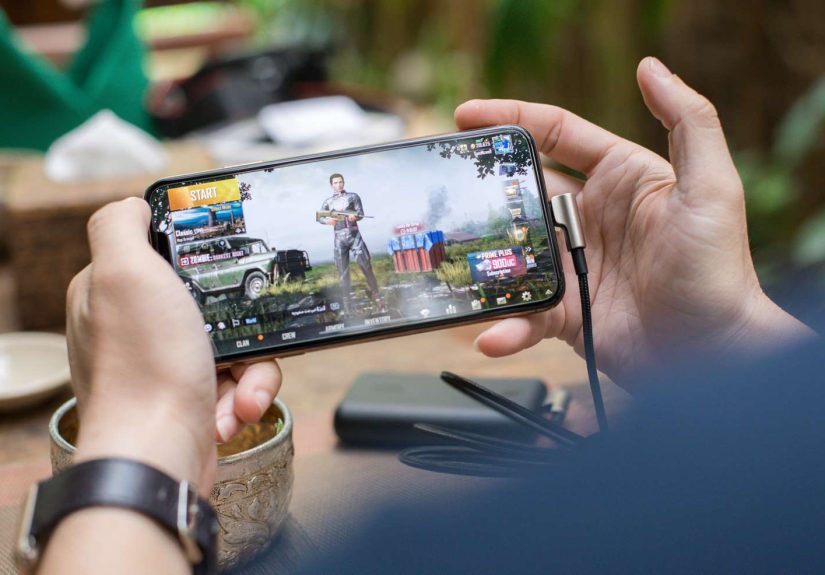
And yes, controller support helps a lot. It makes difficult games more playable and more familiar. But it also creates friction. You now need another device charged, nearby, and compatible. You need to carry it, connect it, and hope the setup feels stable. A real handheld console is already designed around that physical reality. The iPhone is improvising.
Improvisation can be charming in jazz. It is less charming when your character dies because your controller forgot how Bluetooth works for three heroic seconds.
Raw Power Does Not Equal a Better Gaming Experience
Apple deserves credit here: modern iPhones are powerful. Very powerful. The arrival of big-name titles such as Resident Evil Village, Resident Evil 4, Death Stranding Director’s Cut, and Assassin’s Creed Mirage proved that the iPhone can run games that once seemed hilariously out of place on a phone. That is a legitimate milestone.
But performance on paper is not the same as comfort in the hand.
A games console is judged by the full playing experience: sustained performance, thermals, battery endurance, ergonomics, and control reliability. The iPhone can ace the benchmark and still lose the evening. Long sessions generate heat. Demanding games chew through battery. Thin hardware gets uncomfortable faster than purpose-built gaming devices. And once the battery starts dropping in dramatic fashion, your “portable console” becomes a phone you are suddenly weirdly afraid to use for anything else.
That is a problem consoles do not have. Nobody pauses a session on a home console because they need to save enough battery to call their dentist tomorrow morning.
Phones Are Built for Bursts; Consoles Are Built for Sessions
This difference matters more than people admit. The iPhone shines in quick play: ten minutes here, fifteen there, one more round while waiting for coffee. But a best-in-class console is built for deep sessions. It invites you to settle in. It wants to be held for a long time. It expects commitment.
The iPhone still feels like a device you are borrowing from the rest of your life for gaming, not a device that was made to host gaming as the main event.
Apple Can Import AAA Games, but It Cannot Import Console Culture
One of the most overlooked reasons the iPhone will never be the best games console is that gaming is not only about hardware. It is about expectation, culture, ownership, pricing, habits, and what players believe a platform is for.
On consoles, players expect premium experiences, controller-first design, clear storefront categories, and a shared understanding that big games belong there. On phones, the dominant culture is different. Mobile players are used to free-to-play models, daily rewards, timers, gems, coins, starter packs, and the ancient dark art known as “tap here to buy a bundle you never meant to buy.”
That business environment shapes what succeeds. Even when premium games arrive on iPhone, they land in a storefront ecosystem that still revolves heavily around convenience, discoverability tricks, subscriptions, and in-app purchase logic. Apple’s App Store is extremely polished, but it is not the same thing as a console marketplace built around traditional gaming habits.
The Storefront Still Feels Like a Phone Storefront
Even great iPhone games live beside productivity apps, food delivery, dating apps, weather tools, meditation apps, and that random app you downloaded in 2019 to scan one receipt and never opened again. A console storefront says, “Welcome, gamer.” The App Store says, “Welcome, human with many unfinished errands.”
That atmosphere matters. Consoles create identity. Phones create utility. Identity is sticky. Utility is busy.
The Premium iPhone Gaming Dream Is Also Expensive
Another awkward fact: a lot of the iPhone’s most impressive recent gaming bragging rights apply only to newer, more powerful models. That means the so-called future of gaming on iPhone often arrives with a premium price tag and a compatibility asterisk.
So now the pitch sounds like this: buy a very expensive phone, then buy or attach a controller, then download a large game, then manage storage, then hope the performance feels great on your specific device and in your preferred session length. At that point, the iPhone is not replacing a console. It is becoming a strangely expensive route to approximating one.
Dedicated consoles win here because their value proposition is simple. You buy a game system to play games. With the iPhone, gaming is a premium feature layered onto an already premium life-management machine. That is powerful, but it is not efficient.
Compatibility Limits Hurt the “Best Console” Argument
A platform cannot call itself the best games console when many of its showcase experiences are gated behind only the newest devices. Consoles thrive on stable targets. Developers know the hardware. Players know the expectations. On the iPhone, premium gaming still feels selective, not universal.
That weakens trust. And trust, in gaming, is everything.
Cloud Gaming Helps, but It Also Proves the Point
Supporters of the iPhone-as-console idea often point to cloud gaming. Fair enough. Services like Xbox Cloud Gaming make high-end games accessible through a browser, and that certainly expands what the iPhone can do. But cloud gaming on a phone is less a checkmate than a polite workaround wearing a tuxedo.
You are still relying on internet quality, latency, service availability, regional support, browser behavior, and often an external controller for the best results. That is useful. It is not magical. It turns the iPhone into a window rather than a console.
And windows are lovely, but no one confuses a window with a house.
Streaming Does Not Turn a Phone Into a Native Gaming Platform
Cloud gaming is evidence that the iPhone is a flexible access point. It is not proof that the iPhone itself is the best gaming destination. In fact, the better cloud gaming becomes, the clearer the truth gets: the iPhone is often most effective when it acts as a bridge to gaming ecosystems built somewhere else.
So What Is the iPhone Actually Best At?
Here is the twist: the iPhone is not failing at gaming. It is succeeding on its own terms.
It is one of the best devices in the world for spontaneous play, smart touch-native design, short-session fun, social games, puzzle games, card games, idle games, excellent indies, and those weirdly compelling titles that make you miss your bus stop because you just had to finish one more round.
It is also a very good sidekick for bigger gaming ecosystems. Remote play, cloud gaming, controller support, and strong chips make the iPhone a fantastic companion device. It can be a backup gaming screen, a portable indie machine, a surprise AAA curiosity, and a genuinely enjoyable place to play when the game fits the form.
That is not a small compliment. It is just a different compliment.
Conclusion: The iPhone Is a Brilliant Gaming Device, but Not the Best Games Console
The iPhone will never be the best games console because the best console is not just the most powerful gadget in your pocket. It is the device that removes the most friction between player and play.
And the iPhone, for all its strengths, is built on friction you cannot fully eliminate: touch-first compromises, heat, battery anxiety, accessory dependence, premium hardware gating, app-store economics, and the simple fact that your phone is always doing a dozen other jobs at once.
Apple has pushed mobile gaming into impressive territory. It has made the iPhone more capable, more ambitious, and far more interesting as a gaming machine than it used to be. But capability is not destiny. The iPhone can flirt with console territory forever and still never become the place where gaming feels most at home.
In other words, the iPhone is a fantastic place to play games. It is just not the throne room of gaming. It is the very stylish waiting room outside it.
A Personal Experience: Trying to Use the iPhone Like a Real Console
For a while, I really wanted the dream to be true. I wanted to believe that the iPhone in my pocket could replace a dedicated gaming machine, or at least embarrass one at family gatherings. It had the horsepower, the bright display, the fancy silicon, and all the marketing language needed to convince me that I was carrying a tiny miracle slab with delusions of grandeur.
At first, the experiment was thrilling. Booting up a visually impressive game on a phone still feels like a small magic trick. Your brain has not fully adjusted to the absurdity of seeing something that looks console-grade running on the same device you use to check the weather and ignore group chats. For the first twenty minutes, it is easy to think, “That’s it. We live in the future now.”
Then reality begins stretching in the doorway like a cat that pays no rent.
The screen, while excellent, starts feeling smaller than your ambition. The controls become a negotiation instead of an instinct. If you are using touch controls, your thumbs turn into large, overconfident stage actors who insist on standing directly in front of the best scenery. If you switch to a controller, the game improves immediately, which is both satisfying and hilariously revealing. The phone was not transformed into the best console. It was rescued by one.
Then there is the psychological weirdness of gaming on your primary phone. On a console, you commit. On a phone, you hover. You are always aware that this device has other responsibilities. A low battery is no longer just a gaming inconvenience; it is a life inconvenience. You begin making tiny calculations. “Should I keep playing this level, or should I preserve enough battery to get a ride home later?” That is not exactly the mindset of someone lounging in pure entertainment bliss.
I also noticed something more subtle: the phone never fully disappears in your hands the way a dedicated console does. Great gaming hardware has a way of becoming invisible. It fades into the experience. The iPhone keeps reminding you that it is an iPhone. A notification banner. A heat spike. An accidental swipe. A moment where you realize the game is gorgeous, but your grip is not. It never stops being a phone performing a very impressive side hustle.
And yet, I kept coming back to it, which says something important. The iPhone is fun. More than fun, actually. It is genuinely remarkable as a flexible gaming device. I loved using it for quick sessions, clever indie games, and the occasional “I can’t believe this runs here” showcase moment. I just stopped expecting it to feel like a true gaming home.
That was the big lesson. The iPhone is at its best when you let it be what it is: a brilliant all-purpose device with serious gaming talent, not a dedicated console in disguise. The second I stopped asking it to be the king of consoles, I enjoyed it more. It became a fantastic bonus machine instead of a slightly awkward pretender to the throne.
And honestly, that is a pretty good role. Not every talented actor needs to play the lead. Sometimes the scene-stealer is the one who walks in, says something brilliant, and leaves before anyone asks it to run a four-hour campaign with 12% battery remaining.