Table of Contents >> Show >> Hide
Garlic is one of those wonderfully low-drama garden crops that makes you feel far more organized than you actually are. You tuck a clove into the soil in fall, cover it with mulch, go inside for snacks, and months later you harvest full heads of garlic like some kind of backyard wizard. It is efficient, practical, and just smug enough to be satisfying.
If you want bigger bulbs, better flavor, and a simpler growing season, fall is the best time to plant garlic. The cool weather helps cloves establish roots before winter, and that head start often leads to stronger plants and better bulb development the following summer. In other words, garlic likes to get settled before the ground turns into a frozen brick.
This guide breaks the process into six simple steps, along with practical tips on choosing seed garlic, preparing the bed, spacing cloves correctly, and protecting your planting through winter. Whether you are growing a few heads in a raised bed or planning a longer row for kitchen use, these steps will help you plant garlic in fall the right way.
Why Fall Is the Best Time to Plant Garlic
Fall planting works so well because garlic needs a period of cold to develop properly. When you plant in autumn, the cloves have time to form roots before the soil freezes deeply. Then, when temperatures warm in spring, the plants are already established and ready to push strong leaf growth, which is exactly what helps build large bulbs later on.
Spring planting is possible, but it is usually less ideal for home gardeners who want large, reliable harvests. Fall-planted garlic generally produces better bulb size, especially when cloves are set out several weeks before the ground freezes hard. Gardeners in colder regions often lean toward hardneck garlic because it is more winter hardy, while many gardeners in milder areas also grow softneck garlic for its longer storage life and braidable tops.
So yes, planting garlic in fall is a little like meal-prepping for next summer. Your future self will be thrilled.
What You Need Before You Start
Before you grab a trowel and start poking holes at random, gather a few basics:
- Seed garlic: Buy from a reputable garden center, seed supplier, or local grower. Avoid grocery store garlic because it may be poorly adapted to your climate, treated for storage, or carry disease.
- A sunny planting site: Garlic grows best in full sun.
- Loose, well-drained soil: Heavy, soggy soil is not garlic’s love language.
- Compost or aged organic matter: This improves drainage, texture, and fertility.
- Mulch: Straw, shredded leaves, or clean dried grass help protect cloves over winter.
- Basic labels: Optional, but helpful if you are trying more than one variety and do not want spring to become a memory test.
It also helps to know your climate. In many areas, the sweet spot is about four to six weeks before the ground freezes, or around one to two weeks after the first killing frost. The exact calendar date varies, but the principle stays the same: plant early enough for roots, not so early that you get a lot of tender top growth before winter.
How to Plant Garlic in Fall in 6 Easy Steps
Step 1: Choose the Right Garlic for Your Garden
Not all garlic is created equal. For fall planting, start with healthy, firm seed garlic bulbs. Pick the largest, cleanest bulbs you can find because larger cloves usually grow into larger bulbs. Tiny cloves can still grow, but they tend to produce smaller heads. Garlic is very fair that way.
You will usually choose between hardneck garlic and softneck garlic. Hardneck types are often favored in colder climates because they are tougher through winter and typically produce fewer but larger cloves. They also send up a flower stalk called a scape in late spring. Softneck garlic usually stores longer and is the type most people braid, but it may be less cold hardy depending on the variety and region.
If you live in a place with real winter, not just a chilly attitude, hardneck is often a smart place to start. If you want garlic that stores for months and months, a softneck variety may be the better fit.
Step 2: Pick the Right Planting Time
Timing matters because garlic needs enough time to root before winter dormancy. In many U.S. gardens, that means planting from late September through November, depending on your region. A good rule is to plant about four to six weeks before the ground freezes hard. Some gardeners also use the first killing frost as a cue, planting shortly after it arrives.
Here is the easy version: if your soil is still workable, the weather is cooling down, and winter is clearly on the horizon, you are probably in the zone. The goal is root growth, not a flush of tall green leaves before snow. A little shoot growth is not the end of the world, but you do not want the bed acting like it is April.
For example, a gardener in Minnesota may plant earlier than someone in Maryland or Oregon. The exact date changes, but the fall-garlic logic stays the same.
Step 3: Prepare a Sunny, Well-Drained Bed
Garlic likes full sun and loose soil that drains well. If your bed stays wet after rain, fix that before planting or choose another location. Raised beds are especially helpful in heavier soils because they improve drainage and warm a little faster in spring.
Work compost or other well-aged organic matter into the top several inches of soil. Garlic grows best when the soil is friable, fertile, and easy for bulbs to expand in. Dense, compacted ground can lead to smaller bulbs and more frustration. If your soil is a sticky clay brick every time it rains, garlic will not thank you for the character-building exercise.
Weed the bed thoroughly before planting. Young garlic does not love competition, and it is easier to start clean than to wrestle weeds later. If you have a soil test, even better. Garlic generally prefers slightly acidic to neutral soil and benefits from moderate fertility, especially nitrogen later in the growing cycle.
Step 4: Break Apart the Bulbs and Keep Only the Best Cloves
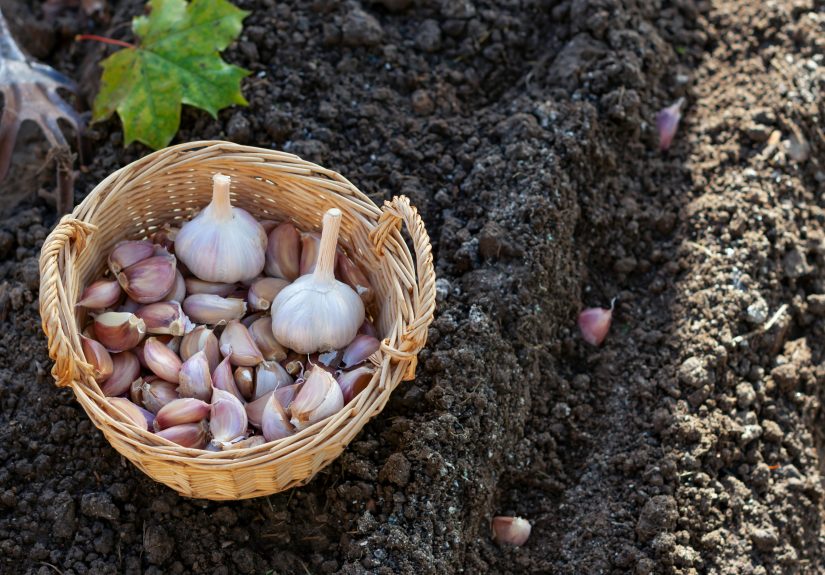
Wait until just before planting to break bulbs into individual cloves. Leave the papery skins on; they protect the clove. Discard any cloves that are damaged, moldy, mushy, or unusually small. You are not running a rescue program for sad planting material.
Use the biggest outer cloves for planting and send the little interior ones to the kitchen. This is one of the simplest ways to improve next summer’s bulb size. Every clove becomes one whole new bulb, so think of each clove as a tiny investment with a very flavorful return.
If you are saving garlic from your own harvest, set aside your best-shaped, healthiest bulbs specifically for planting. Over time, many gardeners improve their results by replanting from strong local stock that has already performed well in their conditions.
Step 5: Plant Each Clove the Right Way
This is the part where orientation matters. Plant each clove with the pointed end up and the basal plate down. The pointed end is where the sprout emerges, while the flat end is where roots form. If you accidentally plant some sideways, garlic may still figure it out, but do not make the whole bed take an obstacle course if you can help it.
For depth, most home gardeners plant garlic about 2 to 3 inches deep, though some plant a little deeper in colder climates or lighter soils. Another useful way to think about it is that the point of the clove should end up roughly 2 to 4 inches below the soil surface.
For spacing, a reliable home-garden range is 4 to 6 inches between cloves and about 6 to 12 inches between rows, depending on your layout. Tighter spacing can work, but it often leads to smaller bulbs unless fertility and water are excellent. If you have room, give garlic some elbow space. Or clove space, technically.
After planting, smooth the soil surface and water lightly if the ground is dry.
Step 6: Mulch for Winter Protection
Once planted, cover the bed with a generous layer of mulch. Straw, shredded leaves, or dried grass are common choices. A layer around 3 to 4 inches thick is often recommended, though some gardeners go a bit heavier in colder, windier places.
Mulch helps regulate soil temperature, reduce freeze-thaw cycles, prevent frost heaving, conserve moisture, and suppress weeds. That is a surprisingly strong resume for a pile of straw. In really exposed areas, gardeners sometimes add branches over the mulch to keep it from blowing away.
In spring, you can pull mulch back a bit to help the soil warm or leave some in place to continue suppressing weeds and holding moisture. There is no need to overcomplicate it. The main goal is protecting the planting through winter and making life easier when growth resumes.
Common Mistakes to Avoid
Even though garlic is beginner-friendly, there are a few classic mistakes that can quietly shrink your harvest.
Planting grocery store garlic is a big one. It might sprout, but it may not be well adapted to your climate, and some bulbs are poor choices for planting material. Starting with seed garlic is simply a better bet.
Planting too early can also cause trouble. If cloves push too much leaf growth before winter, cold weather can damage that tender top growth. On the other hand, planting too late may not give cloves enough time to root well before the soil freezes.
Crowding the cloves is another common issue. People see one tidy little bed and think, “Surely I can fit twice as much garlic in here.” Garlic sees that decision and responds with small bulbs. Generously spaced cloves usually repay your restraint.
Skipping mulch can make winter tougher, especially in cold climates where repeated freeze-thaw cycles may heave cloves toward the surface. And finally, ignoring weeds and moisture later on can reduce yield. Garlic is low-maintenance, not no-maintenance.
What Happens After Planting?
After the cloves are planted and mulched, your job becomes pleasantly boring for a while. Through fall and winter, roots develop below ground. In spring, shoots appear or resume stronger growth. At that point, keep the bed weeded and water when needed, especially as bulbs begin sizing up in late spring.
If you are growing hardneck garlic, you will likely see scapes form before harvest. These curling flower stalks are usually removed so the plant can direct more energy into the bulb. As a bonus, scapes are edible and delicious in pesto, stir-fries, and scrambled eggs. Garlic really likes to overachieve.
By early to midsummer, you will watch the lower leaves begin to brown. Harvest timing varies by region and variety, but many gardeners dig garlic when several lower leaves have dried while a number of upper leaves are still green. Then the bulbs are cured in a dry, airy place before storage. Properly grown and cured garlic can last for months, especially softneck types.
Garlic-Grower Experiences and Lessons from the Bed
One of the most common experiences gardeners share about fall garlic planting is how deceptively simple it feels at the start. You break apart a few bulbs, poke some cloves into the dirt, throw mulch on top, and honestly wonder whether this can possibly turn into a meaningful harvest. It feels too easy. Many first-time growers expect something fussier, more delicate, or at least more dramatic. Garlic responds by being quietly competent.
Another familiar experience is learning that location matters more than enthusiasm. Gardeners often remember the year they planted garlic in a damp corner because it was “the only space left,” only to end up with smaller bulbs or patchier growth. Then they move the next planting to a sunnier, looser bed, add compost, space the cloves better, and suddenly the crop looks like it hired a professional manager. Garlic does not ask for much, but it definitely notices where you put it.
Many people also discover that clove size is not a trivial detail. The temptation to plant every last clove from every bulb is real. It feels thrifty. It feels noble. But the bigger outer cloves nearly always perform better, and most gardeners learn sooner or later that planting the best and eating the rest is the smarter strategy. Garlic rewards selective optimism.
Mulch is another thing that tends to convert skeptics. At first, a thick layer of straw can look excessive, almost theatrical. Then winter arrives, spring weeds stay manageable, and the bed holds moisture better. Suddenly that mulch no longer seems dramatic. It seems brilliant. Gardeners in colder climates often talk about how much more even their spring emergence looks when mulch prevents those constant freeze-thaw swings.
There is also a very specific joy in seeing the first green shoots in spring. After months of cold weather and an empty-looking bed, those shoots feel like proof that the plan worked. It is one of the quieter thrills in vegetable gardening. No fireworks, no confetti, just tidy green blades pushing up through last fall’s decision-making.
And then there is harvest season, when gardeners learn that patience matters all the way to the finish line. Dig too early and bulbs are undersized. Wait too long and wrappers split. Most garlic growers have at least one story about harvesting a little too soon the first time, or a little too late the second time, before finally figuring out the rhythm. That learning curve is part of the experience. Garlic is forgiving, but it still teaches.
Perhaps the best part of growing garlic is how it changes the way people think about the garden calendar. Fall stops being the end of the season and starts feeling like the beginning of next year’s success. Planting garlic becomes one of those grounding rituals that closes out the gardening year on a hopeful note. You are not just putting cloves in the ground. You are planting future pasta sauce, future roasted vegetables, future bragging rights, and probably a future conversation where you casually say, “Oh, this? It’s from my garlic bed.”
Conclusion
If you want an easy, high-reward crop, garlic deserves a permanent spot in your fall garden routine. Choose quality seed garlic, plant at the right time, give it sun and loose soil, set each clove pointy-side up, mulch well, and let winter do part of the work. That is really the magic of it. Garlic does not need constant pampering. It just needs a smart start.
Follow these six easy steps, and by next summer you will be digging up full heads of homegrown garlic with the kind of satisfaction usually reserved for people who assemble furniture correctly on the first try.