Table of Contents >> Show >> Hide
Fall gardens have a funny problem: just when summer’s divas finally stop demanding applause, the landscape can start looking a little tired. That is exactly when heirloom mums stroll in like they own the season. Not the stiff, overstuffed porch mums that show up for a few weeks and then quietly retire to the compost pile. I’m talking about old-fashioned chrysanthemums with character, history, and enough late-season charm to make your asters sit up straight.
Heirloom mums are the opposite of disposable. Many are hardy garden or Korean mum types that return year after year when planted well, and others are collector-worthy legacy cultivars grown for their unforgettable flower forms. They bloom when butterflies are still cruising, bees are making one last serious grocery run, and the rest of the border is deciding whether to keep going or call it a season. In other words, heirloom chrysanthemums are the gardeners’ version of overtime heroes.
If you have only known mums as grocery-store decorations parked beside hay bales and pumpkins, you are in for a pleasant surprise. The best heirloom mums are nuanced, loose, graceful, and a lot more garden-friendly than the tight little domes sold for instant color. Their flowers can be daisy-like, quilled, reflexed, or softly double. Their colors go far beyond basic fall orange, too, landing in shell pink, silvery rose, warm apricot, wine purple, straw yellow, and smoky bronze. Some even improve after a light frost, which is more than most humans can say.
Why heirloom mums are worth growing
The biggest difference between heirloom mums and typical florist mums is purpose. Florist mums are often bred and sold as seasonal décor. Heirloom and hardy garden mums are grown to live in the landscape, mingle with perennials, and reward patience. Give them full sun, decent drainage, and enough room to breathe, and they can become one of the most reliable performers in the fall garden.
They also play beautifully with the rest of autumn’s cast. Plant them near asters, salvias, sedums, Japanese anemones, goldenrods, and ornamental grasses, and your border suddenly looks intentional instead of like summer forgot to clean up after itself. Many heirloom mums also attract pollinators, especially the open-centered daisy forms that provide easier access to nectar and pollen.
One practical note before we get to the stars of the show: if you want mums to behave like real perennials, plant them in spring whenever possible. That gives them time to settle in, build roots, and prepare for winter. Through spring and early summer, pinch the growing tips once the shoots reach about 6 to 8 inches tall, then repeat once or twice before late June or early July. That simple routine keeps plants bushier, fuller, and much less likely to flop like a dramatic Victorian heroine.
1. Clara Curtis
If heirloom mums had a hall of fame, ‘Clara Curtis’ would have a permanent plaque near the entrance. This old Korean mum is cherished for its large, daisy-like flowers in soft pink to lavender tones. The bloom color feels light and airy rather than heavy, which makes it especially valuable in fall when so many flowers lean into bronze, rust, and pumpkin shades. Think of it as the garden’s way of wearing a pink scarf after Labor Day and getting away with it.
What makes ‘Clara Curtis’ especially useful is its easygoing nature. It is hardy, reliable, and well suited to sunny borders where you want something that does not need endless fussing. In a mixed perennial bed, it pairs beautifully with blue asters, dusky sedums, and ornamental grasses that catch the afternoon light. It is also a smart pick for gardeners who want late color without that stiff, mounded “parking-lot mum” look.
Use it where the flowers can spill a little into neighboring plants. The overall effect is relaxed and romantic, more cottage garden than front-porch prop. If you see it sold under the name ‘Country Girl’, that is part of the same old gardening soap opera; many gardeners recognize them as the same beloved pass-along style mum.
2. Hillside Sheffield Pink
‘Hillside Sheffield Pink’, sometimes also sold as ‘Sheffield Pink’ or ‘Single Apricot’, is one of the great fall garden plants, mum or otherwise. Its single flowers open in soft apricot pink with golden centers, and the color shifts beautifully depending on light, temperature, and bloom age. On some days it looks peachy. On others it reads shell pink. In every case, it looks expensive.
This is the mum for gardeners who want their borders to look painterly rather than loud. The flowers hover over medium green foliage in a way that feels loose and natural, and butterflies appreciate the accessible centers. It blooms from late summer into frost, so it earns its keep over a long stretch instead of showing up for one fast cameo.
In design terms, ‘Hillside Sheffield Pink’ is incredibly versatile. It looks terrific with purple fountain grass, blue mistflower, Russian sage, and white Japanese anemones. It also softens the hard edges of more saturated fall colors. If your autumn border feels like it is one pumpkin away from becoming a Halloween display, this mum can restore a bit of elegance.
3. Mary Stoker
‘Mary Stoker’ is the mum for people who appreciate subtlety but still want a plant that can stop traffic. Its single flowers begin in straw yellow and gradually develop warm pink tones as they age, creating a two-tone effect that looks almost hand-painted. It is one of those flowers that makes gardeners lean in and say, “Wait, what color is that exactly?” The answer is basically: yes.
Because it forms a sizeable clump over time, ‘Mary Stoker’ works beautifully in perennial borders where you want a soft mass of color rather than a few lonely stems. It looks especially good with coppery grasses, blue asters, and seed heads that remain standing in autumn. The shifting tones make it a surprisingly easy mixer, because it can bridge yellow, blush, peach, and soft rose all at once.
This cultivar is also a reminder that heirloom mums do not need giant, formal blooms to be memorable. Sometimes the real magic is in flower color that keeps changing as the season deepens. If your taste runs more “quietly spectacular” than “look at me from space,” ‘Mary Stoker’ deserves a serious audition.
4. Emperor of China
‘Emperor of China’ sounds dramatic, and for once the plant actually lives up to the name. This tall, upright heirloom mum produces burgundy buds that open into silvery-pink flowers, often very late in the season. The buds alone are worth noticing, but the real show happens when the quilled double blooms open and the cool weather starts to intensify the whole performance.
One of its most charming tricks is the foliage: after the first frost, the leaves can take on reddish tones that create a beautiful contrast with the flowers. That means the plant keeps contributing visually even when many perennials are already fading into the background. In a fall border, it can function almost like a built-in color echo, tying together burgundy foliage, pink flowers, and bronze seed heads nearby.
This is a taller cultivar, so plan accordingly. It often benefits from staking or an early summer cutback if you want a shorter, sturdier habit. Place it toward the back or middle of the border where it can rise behind asters, salvias, and sedums. If your garden style leans cottage, romantic, or a little bit maximalist, ‘Emperor of China’ will fit right in.
5. Ryan’s Pink
‘Ryan’s Pink’ has one of those irresistible pass-along-plant stories that makes heirloom gardening feel personal. This cultivar was collected and introduced by garden designer Ryan Gainey, and it has become a favorite among gardeners who love old-fashioned mums with serious presence. It can reach around 3 feet tall, making it ideal for the back of the border where it can rise above lower companions and carry color into the heart of fall.
The flowers are soft pink, generous, and deeply useful in mixed plantings. Pink is often underrated in autumn, but that is exactly why it works so well. It cuts through the usual parade of rust and gold and makes neighboring flowers look fresher. Pair it with deep blue asters, dark-leaved heucheras, or airy ornamental grasses for a combination that feels layered rather than predictable.
Because of its size, ‘Ryan’s Pink’ is best treated as a structural perennial rather than a cute little accent. Give it elbow room, rich but well-drained soil, and enough sun to flower well. Once established, it brings that rare combination of nostalgia and backbone, which is honestly what most good fall borders need.
6. Ryan’s Apricot
If ‘Ryan’s Pink’ is charming, ‘Ryan’s Apricot’ is charming with better lighting. This cultivar carries soft apricot-tinted flowers that look particularly beautiful in the low-angle light of September and October. The color is warm without being brassy, and it complements everything autumn is already doing in the landscape.
Apricot is one of the easiest flower colors to design with in fall because it harmonizes with yellow, copper, burgundy, tan, and muted pink. That means ‘Ryan’s Apricot’ can bridge different planting styles. It looks right at home in cottage gardens, cutting beds, and looser naturalistic borders. Set it near goldenrod, Panicum grasses, and wine-colored foliage, and you get a palette that feels rich without becoming muddy.
Like other old-fashioned garden mums, it does best with spring planting and a little seasonal grooming. But the effort pays off. This is not a flat, one-note orange mum trying too hard to look festive. It is a more refined version of fall color, the sort of plant that makes people think you really know what you are doing, even if you are still googling “when exactly do I stop pinching mums?” every June.
7. Lili Gallon
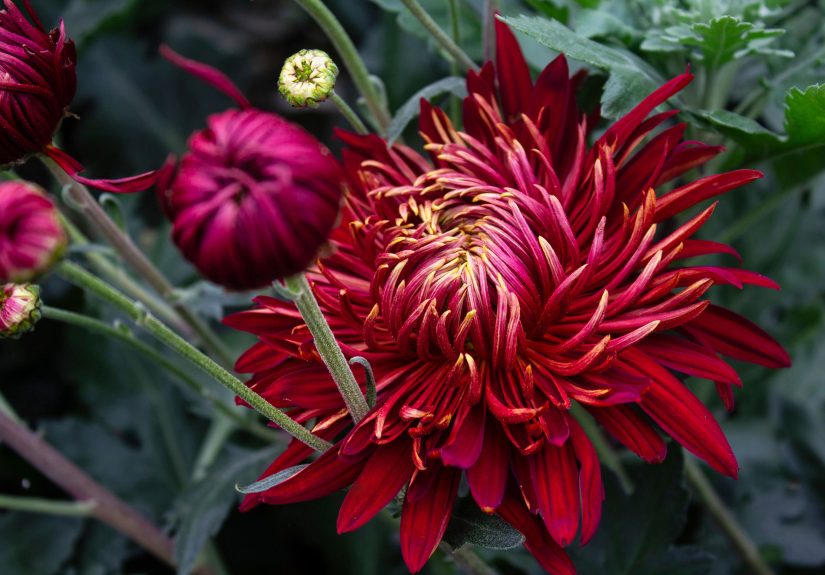
Not every heirloom mum belongs in the category of easy, carefree perennial border plant. Some are worth growing because they are so gloriously different that they make the whole garden feel more interesting. ‘Lili Gallon’ is one of those mums. This old French cultivar produces large reflexing blooms in deep wine to purple tones, with curled petals that reveal silvery reverses. Translation: it looks fabulous.
This is a fantastic choice for gardeners who want a collector’s mum in a sunny border, cutting bed, or protected fall display. The bloom form is more sculptural than the open daisy types, so it brings a completely different visual texture to the garden. Instead of casual charm, you get drama, shape, and a slightly theatrical finish. Every border needs at least one plant that behaves like it knows it is beautiful.
Because ‘Lili Gallon’ is better suited to gardeners willing to stake, cut, or even disbud for stronger blooms, it is not the same kind of “plant it and forget it” mum as ‘Clara Curtis’ or ‘Mary Stoker.’ But if you love heirloom chrysanthemums as art as much as flowers, this cultivar earns its place. Think of it as the gateway mum that can lead directly to a mild but entirely enjoyable chrysanthemum obsession.
How to keep heirloom mums happy in the garden
Most heirloom mums want the same basic things: full sun, well-drained soil, steady moisture while growing, and enough airflow to avoid disease trouble. Avoid soggy sites, because shallow-rooted mums dislike sitting in wet winter soil. If your soil is heavy, improve it with organic matter before planting.
Water deeply during dry periods rather than sprinkling lightly every day. Keep foliage as dry as practical, especially at night, to reduce leaf disease problems. In spring, divide crowded clumps every few years to maintain vigor. Once winter arrives, resist the urge to cut dormant stems to the ground immediately. Leaving old growth in place until spring can help protect the crown, and a light mulch layer after the ground cools can improve winter survival.
One more oddly useful detail: since mums are short-day plants, artificial light can interfere with flowering. If a plant is tucked too close to a porch light, driveway light, or all-night security lamp, it may delay blooming. So yes, your mum can, in fact, be photobombed by your house.
What it’s really like to grow heirloom mums in a fall garden
Growing heirloom mums changes the rhythm of the garden in a way that is hard to appreciate until you have lived with them for a season. In spring, they do not look like much. You see fresh shoots pushing up from the base, and honestly, they are easy to overlook while peonies, irises, and roses are busy showing off. Then summer comes, and the plants quietly bulk up. You pinch them back, maybe once, maybe twice, and for a while they just sit there looking respectable but not exactly thrilling.
Then September begins to tilt toward October, and the whole story changes. Buds start to color. The air cools. Morning light gets lower and somehow kinder. Suddenly the mums that were behaving like background plants step forward and take control of the border. The open daisy forms begin pulling in bees and late butterflies. Taller stems start weaving through ornamental grasses. Colors deepen by the week. A plant like ‘Mary Stoker’ shifts tones as the flowers age, while ‘Emperor of China’ looks more dramatic every time the temperature drops.
There is also a very specific pleasure in the way heirloom mums soften fall. A lot of autumn gardening can become visually loud fast: bright pumpkins, orange annuals, red maples, yellowing perennials, maybe one scarecrow too many. Heirloom mums bring nuance. Apricot, shell pink, straw yellow, silver, lavender, and wine are more layered than the standard orange mum palette. They make a garden feel curated rather than seasonal by default.
Another wonderful part of the experience is how shareable these plants are. Old-fashioned mums have a pass-along spirit. Once clumps get established, division in spring is easy, and suddenly you are handing pieces to neighbors, trading them with gardening friends, or moving them around your own beds to test new combinations. They become part of the personal history of the garden, not just one more thing bought in a plastic pot on a weekend errand run.
And then there is the emotional side of it. By late fall, many gardeners are already half-looking toward winter, a little tired, maybe not entirely ready to let the growing season go. Heirloom mums stretch that final act. They keep the garden alive longer. They give you a reason to step outside with coffee on a chilly morning and inspect which buds opened overnight. They catch dew, hold frost beautifully, and look surprisingly fresh even when so many other plants are giving up. In that sense, heirloom mums do more than add color. They add time. And in the garden, that is one of the best gifts any plant can give.
Final thoughts
If your fall garden has been relying on the same old dome-shaped mums and a prayer, heirloom chrysanthemums are the upgrade you did not know you needed. They offer real perennial value, richer flower forms, more elegant colors, better pollinator appeal, and a sense of garden history that mass-market mums simply do not have. Some are easy border workhorses. Others are collector-level beauties. Together, they prove that fall color can be sophisticated, generous, and just a little addictive.
Start with one if you must. Start with three if you have good sense. But do not be surprised if next autumn you find yourself reorganizing entire beds so another heirloom mum can move in. Gardens have been known to make people do far stranger things.