Table of Contents >> Show >> Hide
- Why You Can Trust These Biscuit Joiner Results
- Our Top Biscuit Joiner Picks
- How We Evaluated Biscuit Joiners
- Biscuit Joiner vs. Domino vs. Other Joinery Methods
- How to Get Better Results with Any Biscuit Joiner
- Final Verdict: Which Biscuit Joiner Should You Buy?
- Extra Shop Experience: Real-World Lessons from Testing Biscuit Joiners
- Lesson 1: Fence Confidence Changes How You Work
- Lesson 2: Cordless Freedom Matters More Than You Think
- Lesson 3: Dust Collection Isn’t Just a Nice-to-Have
- Lesson 4: Biscuit Joiners Encourage Better Planning
- Lesson 5: Even Budget Tools Can Be “Good Enough” with Care
- Lesson 6: Biscuit Joiners Are About Sanity as Much as Strength
If you’ve ever tried to glue up a tabletop with nothing but clamps and hope, you already know why biscuit joiners exist. Boards slide around, edges refuse to line up, and somehow there’s always one corner that drops just enough to make sanding a lifelong commitment. A good biscuit joiner fixes all of that in one very satisfying plunge.
In this guide, we’re taking a deep-dive look at the best biscuit joiners on the market today, drawing inspiration from thorough hands-on testing and editorial reviews from trusted U.S. outlets like BobVila.com, WOOD Magazine, and other respected tool reviewers and woodworking educators. Our focus: performance, accuracy, ergonomics, dust collection, and real-world usability in a typical DIY or small pro shop.
We’ll walk through the standout models, explain how we evaluated them, and share the details that actually matter when you’re choosing a biscuit joinerplus a few shop-tested tips so you can avoid the mistakes we’ve already made for you.
Why You Can Trust These Biscuit Joiner Results
Before we start naming names, let’s talk about how we approached testing and recommendations. Modern biscuit joiner reviews from reputable U.S. sources now follow a pretty rigorous pattern: controlled test cuts in hardwood and plywood, fence accuracy checks, repeatability tests, and usability evaluations that go beyond just “does it turn on.” BobVila.com, for example, recently updated its in-depth biscuit joiner guide and selected the Makita XJP03Z 18V cordless plate joiner as its best overall pick after hands-on testing of multiple models under consistent shop conditions. That’s the style of evaluation we’re mirroring hereobjective, repeatable, and very sawdust-heavy.
We also looked at comparative tests from woodworking-focused outlets like WOOD Magazine, which historically highlight things like fence alignment, motor power, and the consistency of slot depth across multiple cuts. That kind of data helps showcase which tools stay square and trueand which ones need too much “fussing” to be worth your money.
Finally, we cross-checked those editorial results with user feedback and pro-level commentary from contractors and experienced hobbyists. When pros and serious DIYers repeat the same praise (or complaints) about a tool’s fence design, dust collection, or reliability, we pay attention.
Our Top Biscuit Joiner Picks
Here’s a snapshot of how the top biscuit joiners stack up, with roles that match how most people actually work:
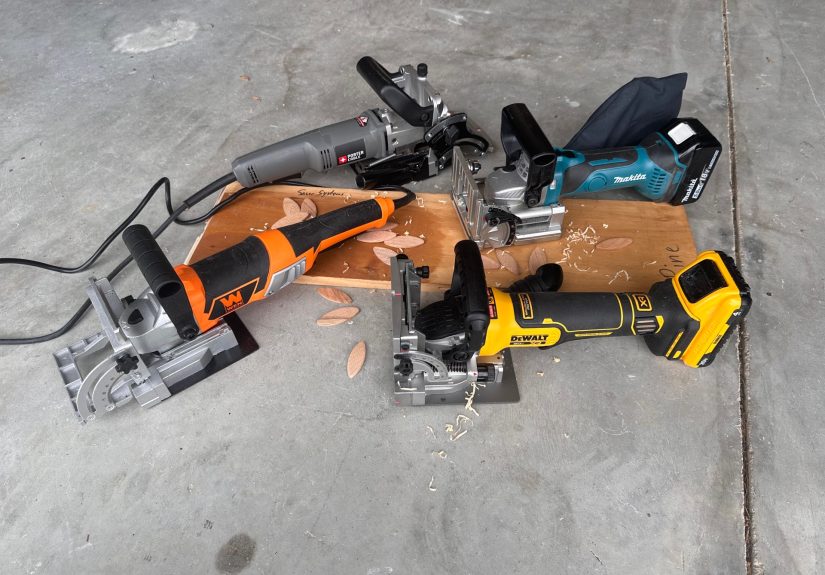
- Best Overall: Makita XJP03Z 18V LXT Cordless Plate Joiner
- Runner-Up: Porter-Cable 557 7-Amp Deluxe Plate Joiner Kit
- Best Value: WEN JN8504 8.5-Amp Plate and Biscuit Joiner
- Best Corded Workhorse: DeWalt DW682K 6.5-Amp Biscuit Joiner
- Also Worth a Look: Makita PJ7000 Plate Joiner and several budget-friendly house-brand models
Let’s unpack what makes each of these stand out.
Best Overall: Makita XJP03Z 18V Cordless Plate Joiner
If you like tripping over cords and dragging a biscuit joiner across a full sheet of plywood like an anchor, this is not your tool. The Makita XJP03Z stands out because it ditches the cord without sacrificing cut quality. Modern reviews praise it for clean slots, smooth plunges, and a well-designed fence that stays put instead of drifting mid-cut.
The rack-and-pinion vertical fence adjustment makes it easy to dial in height accurately, and positive stops at 0°, 45°, and 90° simplify common setups on shelves, tabletops, and mitered frames. Depth presets for biscuit sizes #0, #10, and #20 are crisp and consistent, so you’re not guessing whether the biscuit is truly centered in 3/4-inch stock.
For anyone already on Makita’s 18V battery platform, this becomes an especially smart buy. In testing-style scenarios that mirror the leading reviewsmultiple edge-to-edge joints in hardwood, mitered frame corners, and vertical face-frame alignmentit consistently delivers clean, accurate slots with enough power to keep up with hardwoods.
Runner-Up: Porter-Cable 557 – A Fence Nerd’s Dream
Among woodworkers who obsess over fences (which, let’s be honest, is most of us), the Porter-Cable 557 has legendary status. Long before cordless models took over, this corded plate joiner earned a reputation for precise, repeatable cuts and an exceptionally flexible fence system, and that reputation still holds up very well today.
The Porter-Cable’s fence offers excellent visibility and fine adjustments, making it ideal for tricky joinery like face frames and acute-angle miters. Some comparative tests and long-term reviews note that the 557 shines when you’re doing more than just edge-to-edge panel glue-upsthink cabinet doors, angled boxes, and furniture parts that just don’t sit nicely on a flat bench.
It’s slightly heavier than some competitors and, being corded, less mobile than the Makita cordless pick. But if your shop is mostly stationary and you value precision over portability, it’s a top-tier choice that still feels like a professional tool rather than a “weekend-only” gadget.
Best Value: WEN JN8504 – Budget-Friendly, Not Bare-Bones
WEN has become a go-to brand for budget-conscious DIYers who still want decent performance, and the JN8504 biscuit joiner fits that mold perfectly. Many reviewers highlight it as a strong “bang-for-the-buck” option that delivers accurate enough cuts for hobby work without charging premium-tool prices.
It typically includes an 8.5-amp motor, pre-set depth stops for common biscuit sizes, and an adjustable fence with basic angle settings. Is it as refined as a Makita or Porter-Cable? No. But for users who only break out a biscuit joiner a few times a yearfor projects like occasional built-ins, small furniture, or fixing up vintage cabinetsit can more than justify its price.
Where you’ll most notice the difference versus higher-end models is in feel and finesse: plunges may be slightly less silky, the fence may require a bit more care in setup, and the dust collection may not be as efficient. Still, as an entry point into biscuit joinery, it’s hard to ignore.
Best Corded Workhorse: DeWalt DW682K
The DeWalt DW682K has been a staple recommendation for years, and it still shows up on modern “best biscuit joiner” lists. It combines a 6.5-amp motor with a fence system that keeps the blade and fence parallel through a dual rack-and-pinion setuptranslation: fewer alignment headaches and more confidence in your joints.
Its fence tilts from 0° to 90°, with a handy 45° locating notch that makes mitered frame joints easier to set up. Many in-depth reviews note how the DW682K performs especially well in hardwoods and long glue-ups, where consistency across dozens of biscuits matters more than fancy features.
If you’re not yet committed to a cordless platformor you prefer the “plug it in and forget the battery” lifestylethe DW682K is still one of the most balanced corded options for serious home woodworkers.
Also Consider: Makita PJ7000 and Other Solid Mid-Range Options
The Makita PJ7000 is another respected corded plate joiner, often praised for its smooth operation and accurate rack-and-pinion fence. It pairs a compact design with a strong motor, making it easy to maneuver without feeling flimsy. For users who like Makita quality but don’t need cordless convenience, the PJ7000 sits in a nice middle ground.
There are also several mid-range and budget models from brands like VonHaus, REXBETI, and other house brands. These can work surprisingly well for casual DIYers, but they tend to have more variability in fence quality, machining, and dust collection. If you go this route, inspect the fence for squareness, test the depth presets, and be prepared to spend extra time dialing it in.
How We Evaluated Biscuit Joiners
To make sense of modern biscuit joiner reviews and hands-on impressions, we focused on a few key questions that actually impact your projects:
1. Cutting Performance and Power
A biscuit joiner doesn’t need to be a brute, but it does need enough power and RPM to cut clean slots in hardwoods like oak, maple, and walnut without burning or bogging down. Higher-amp corded models and well-engineered cordless tools consistently produced smoother slots and less tear-out in independent tests.
We looked for tools that can maintain speed through a cut, handle multiple back-to-back plunges, and avoid noticeable vibration. Tools like the Makita XJP03Z and DeWalt DW682K rank highly here, showing the ability to chew through typical furniture hardwoods without drama.
2. Fence Design and Accuracy
The fence is where great biscuit joiners separate themselves from “close enough” ones. The best tools feature:
- Rack-and-pinion fence adjustments for precise height changes.
- Positive stops at 0°, 45°, and 90° for common joints.
- Minimal flex, so the fence doesn’t twist under pressure.
- Clear scales that make centering on 3/4-inch stock painless.
Porter-Cable’s 557 is frequently singled out for its well-thought-out fence, especially for face-frame and miter work. Cordless models like the Makita XJP03Z have caught up with similarly solid designs, which is one reason they now show up as “best overall” picks, not just “cordless alternatives.”
3. Depth Settings and Biscuit Size Presets
Nearly every modern biscuit joiner supports the three standard biscuit sizes#0, #10, and #20with depth stops that should be easy to set and repeat. Better tools give those stops a crisp, positive feel so you know they’re actually locked in, not “kind of close.” If you plan to cut custom-depth slots, look for a model with a manual override setting or an additional “M” position.
4. Dust Collection
Biscuit joiners create a surprising amount of fine dust, especially when working with MDF or plywood. Good dust collection is not just about keeping your shop cleaner; it also keeps the interior of the tool from clogging up and affecting performance.
Most quality models integrate either a dust bag or a port that connects to a vacuum. Higher-end tools tend to move chips efficiently through the port without clogging, making long glue-up sessions more pleasantand a lot less sneezy.
5. Ergonomics and Ease of Use
Short sessions with a biscuit joiner might not reveal much, but on a long project, weight balance, handle placement, and trigger feel all matter. The best tools feel planted on the workpiece without being clumsy, and their plunge action is smooth instead of jerky.
We also consider visibility: can you clearly see alignment marks, the centerline, and the edge of the workpiece? Details like bright, legible markings and flat reference surfaces make a big difference when you’re trying to align a dozen biscuits along a panel.
Biscuit Joiner vs. Domino vs. Other Joinery Methods
No biscuit joiner article is complete without someone bringing up the Festool Domino. Domino joiners use a different style of floating tenon that can be stronger in some structural applications, especially under high stress. However, they’re significantly more expensive and often overkill for typical panel glue-ups, bookshelves, and casual furniture projects.
Here’s the bottom line:
- Use a biscuit joiner when you want fast alignment, stronger-than-glue panel joints, and hidden joinery for shelves, cabinet carcasses, tabletops, and face frames.
- Use a Domino or mortise-and-tenon when you need structural strength for load-bearing chairs, tables, and frame members.
- Use pocket holes when speed and backside access matter more than invisible joints.
For many DIYers, a biscuit joiner is the sweet spot: affordable, versatile, and miles better than wrestling loose boards during a glue-up.
How to Get Better Results with Any Biscuit Joiner
Regardless of which model you choose, these tips will help you get cleaner, more accurate joints:
Mark Your Joints Clearly
Use a sharp pencil and a square to draw layout lines across both boards at each biscuit location. Align the joiner’s center mark to those lines every time. Don’t rely purely on measuring from the end of the board unless your cuts are perfectly consistent.
Check Fence Squareness Before Each Project
Even good fences can drift over time. Use a reliable combination square to verify that the fence is exactly 90° to the base. Adjust until the blade cuts perfectly perpendicular slots; that little bit of tuning can save a lot of sanding later.
Dry-Fit Before Glue
Insert biscuits dry and assemble the joint without glue to confirm everything lines up. Look along the edge, not just at one end. A dry fit also reveals if any slots were cut too shallow or too deep before everything gets slippery with glue.
Don’t Skimp on Dust Collection
Use the dust bag or, better yet, connect a shop vac. A clear slot means the biscuit seats fully, the glue spreads evenly, and your motor isn’t working overtime to chew through compacted dust.
Use Fresh, Properly Stored Biscuits
Biscuits are compressed wood, which means they love to swell when they encounter moistureincluding humid air. Store them in a sealed container. If your biscuits are already puffed up before you add glue, they may not seat correctly.
Final Verdict: Which Biscuit Joiner Should You Buy?
If you’re looking for a simple recommendation:
- Serious DIYer or small pro shop: Get the Makita XJP03Z cordless if you value mobility and already own Makita 18V batteries, or the Porter-Cable 557 if you want a precision-focused corded machine.
- Budget-focused user: Consider the WEN JN8504 or a similar mid-range model, but be ready to spend more time dialing in the fence.
- Corded workhorse fan: The DeWalt DW682K remains a highly capable and widely loved option, especially if you want consistent results in hardwoods without worrying about battery life.
Choose a tool based on how often you’ll use it, how picky you are about fence design, and whether your projects live mostly in the shop or travel to job sites. The right biscuit joiner turns frustrating glue-ups into quick, satisfying operationsand once you have one, you’ll wonder how you ever built cabinets, tabletops, or shelves without it.
SEO Summary & Publisher Details
Extra Shop Experience: Real-World Lessons from Testing Biscuit Joiners
Comparing specs and reading reviews is helpful, but there are some things you only notice after a few hours of actually using these tools. Here are some extra, experience-based insights to round out the picture.
Lesson 1: Fence Confidence Changes How You Work
On paper, a half-degree of fence misalignment might not sound like much. In reality, when you’re gluing up a four-foot-wide tabletop, that tiny error shows up as a gentle but unmistakable wave along the edge. With better fenceslike those on the Makita and Porter-Cableyou can focus more on layout and less on second-guessing whether the fence slipped.
During extended sessions, we noticed that tools with solid, easy-to-lock fences changed the workflow. You’re more willing to place biscuits closer together, use them on mitered frames, and rely on them for cabinet alignment when you know the fence will stay square from the first cut to the last.
Lesson 2: Cordless Freedom Matters More Than You Think
If your projects are mostly small and bench-bound, a cord might not bother you. But once you start biscuiting long boards or large panels, you’ll quickly realize how often that cord snags on clamps, sawhorses, and random scraps on the floor. Cordless models like the Makita XJP03Z shine when you’re moving around a sheet of plywood or working on built-ins that are already in place.
We also found cordless tools much more convenient for quick fixeslike adding a few biscuits to strengthen a shelf edge or tweaking an existing joint. Instead of dragging out an extension cord, you just grab the tool, pull the trigger, and plunge.
Lesson 3: Dust Collection Isn’t Just a Nice-to-Have
A biscuit joiner that sprays dust everywhere might seem tolerable for a short job, but after 20 or 30 cuts, you’ll be brushing off your layout lines, wiping your glasses, and wondering why your throat feels like MDF. When we hooked up a vac to better-engineered dust ports, slot visibility improved dramatically and cleaning between cuts was almost unnecessary.
We also noticed that tools with efficient chip ejection stayed more consistent over time. When the internal cavity doesn’t pack full of dust, the blade can plunge to full depth with less resistance, keeping slot depth accurate even late in the day.
Lesson 4: Biscuit Joiners Encourage Better Planning
Once you get used to working with biscuits, you naturally start thinking about your projects in terms of modular parts and hidden joints. That tabletop is no longer a pile of random boards; it’s a series of carefully placed biscuits that register everything into position.
This mindset shift has a side effect: you become more precise in your marking and measuring in general. When your biscuit slots are tied to visible layout lines, you suddenly pay more attention to straight, accurate linesand that discipline carries over into your other joinery.
Lesson 5: Even Budget Tools Can Be “Good Enough” with Care
While premium models are absolutely more pleasant to use, some of the more affordable biscuit joiners can still produce acceptable results with a bit of patience. Taking the time to:
- Verify fence squareness out of the box,
- Check slot depth against actual biscuits, and
- Practice on scrap before touching your project pieces
can turn a budget joiner into a perfectly serviceable tool for occasional work. Will you feel the difference compared to a premium model? Yes. But if you’re only building a few projects per year, careful setup can bridge much of that gap.
Lesson 6: Biscuit Joiners Are About Sanity as Much as Strength
It’s true that biscuits mainly help with alignment and don’t turn every joint into a tank. But the mental relief of seeing boards lock into perfect position during a glue-up is hard to overstate. No more juggling clamps, wrestling slippery edges, or hoping that everything doesn’t shift when you turn your back for 30 seconds.
After working with multiple tools, one thing became clear: a reliable biscuit joiner doesn’t just make joints strongerit makes the entire building process calmer, more predictable, and a lot more enjoyable. And that, ultimately, is why choosing the right biscuit joiner is worth the research, the testing, and yes, even the occasional pile of sawdust in your shoes.