Table of Contents >> Show >> Hide
- Quick Jump
- 1) Pick a “quiet” color palette
- 2) Choose clean lines (and stop fighting your furniture)
- 3) Make negative space your secret weapon
- 4) Hide the visual noise with smart storage
- 5) Go “warm minimalism” with texture, not clutter
- 6) Curate decor like a museum (but friendlier)
- 7) Simplify your surfaces with a 5-minute reset
- 8) Build a capsule-ish wardrobe (no beige oath required)
- 9) Upgrade lighting for instant minimalist vibes
- 10) Create a “minimalist” digital aesthetic
- 11) Shop less with two painfully effective rules
- Wrap-Up: Minimalist Aesthetic, Minus the Drama
- Bonus: of Minimalist Aesthetic “Field Notes” (What Actually Happened)
“Minimalist aesthetic” sounds like you need a white sofa, a single sad plant, and the emotional range of an empty room.
Good news: you don’t. Minimalism isn’t about living in a furniture showroomit’s about editing what you
already have so your space (and style) feels calm, intentional, and surprisingly easy to keep tidy.
Below are 11 simple, realistic ways to get that clean, pared-back lookwithout turning your home into a sterile cube
or donating your entire personality to the nearest thrift store.
1) Pick a “quiet” color palette
Minimalist spaces feel calm partly because the colors aren’t yelling over each other. Start with a tight base palette:
whites, creams, soft grays, warm taupes, muted browns, and gentle blacks. Then add one or two supporting shades (think:
olive, clay, navy, or a dusty blue).
Easy formula
- 60% base neutral (walls, big rug, sofa)
- 30% supporting neutrals (wood tones, textiles)
- 10% accent (art, a throw, one vase that looks expensive)
The trick is depth, not sameness. If everything is the same flat white, your room won’t look minimalistit’ll look like
it’s waiting for a dentist appointment.
2) Choose clean lines (and stop fighting your furniture)
The minimalist aesthetic loves simple shapes: straight edges, gentle curves, and unfussy silhouettes.
This doesn’t mean you need to buy new everything. It means your next “big piece” should be calm and streamlined.
What to look for
- Legs that lift furniture off the floor (it looks lighter)
- Simple hardware (or none) on cabinets and dressers
- Low-profile, structured couches instead of overstuffed chaos
- One consistent style direction (Scandi, mid-century, modern, Japandipick a lane)
If your space feels visually busy, it’s often because your furniture styles are arguing. Minimalism is basically
“group project harmony,” but for chairs.
3) Make negative space your secret weapon
“Negative space” is design-speak for letting things breathe. Minimalist rooms aren’t emptythey’re
spacious on purpose. That breathing room makes everything you keep look more intentional (and a little more expensive).
Try these quick edits
- Pull one extra chair out of the living room (store it elsewhere)
- Give art breathing roomone big piece often beats a crowded gallery wall
- Leave at least one surface empty (nightstand, entry console, or coffee table)
If you want your home to look minimalist fast, create one “resting place” for the eye in every room. Yes, even the kitchen.
Especially the kitchen.
4) Hide the visual noise with smart storage
Minimalist aesthetic is 50% design and 50% where did all the stuff go? A space can be full of practical items
and still look minimalistif you reduce what’s on display.
Minimalist storage that actually works
- Closed storage: cabinets, credenzas, baskets with lids, drawer organizers
- Uniform containers: matching bins or clear boxes so your storage looks “quiet”
- One home for each category: cords, mail, skincare, tools, coffee supplies
Bonus move: if open shelving makes your brain itch, treat it like a displaykeep only a few items and make the rest disappear
behind cabinet doors (or baskets). Minimalism loves a magic trick.
5) Go “warm minimalism” with texture, not clutter
The modern minimalist look isn’t icy anymore. “Warm minimalism” keeps the clean lines but adds cozy texture:
linen, wool, wood, stone, ceramic, woven shades, and soft rugs. You get depth without visual chaos.
How to warm it up in 10 minutes
- Swap a shiny pillow for linen or boucle
- Add one natural element: wood tray, ceramic bowl, or a simple branch in a vase
- Choose warm bulbs (or a dimmer) so your room doesn’t feel like an office hallway
Minimalism isn’t “no stuff.” It’s “right stuff.” Texture lets your space feel rich without being loud.
6) Curate decor like a museum (but friendlier)
In a minimalist home, decor isn’t scattered everywhere. It’s curated. The goal: a few pieces with enough presence
that they don’t need backup dancers.
Rules that keep you from over-decorating
- One statement per surface: one vase, one lamp, one stack of booksnot a flea market reunion
- Odd numbers look intentional (3 objects beats 4 in most cases)
- Repeat materials: if you have black hardware, echo a tiny black detail elsewhere
A minimalist aesthetic loves a focal point: one large art piece, a sculptural lamp, or a beautiful rug.
Let that star shine.
7) Simplify your surfaces with a 5-minute reset
Countertops, nightstands, and desks can destroy a minimalist vibe faster than you can say “I’ll deal with it later.”
The fix isn’t perfectionit’s a habit.
The 5-minute minimalist reset
- Set a timer for 5 minutes.
- Return anything that already has a home (keys, charger, lip balm colony).
- Trash/recycle obvious junk.
- Put the “no-home” items in one small bin and handle it tomorrow.
Do this once a day and your space stays photo-ready-ish. Not influencer-perfectjust calm and livable.
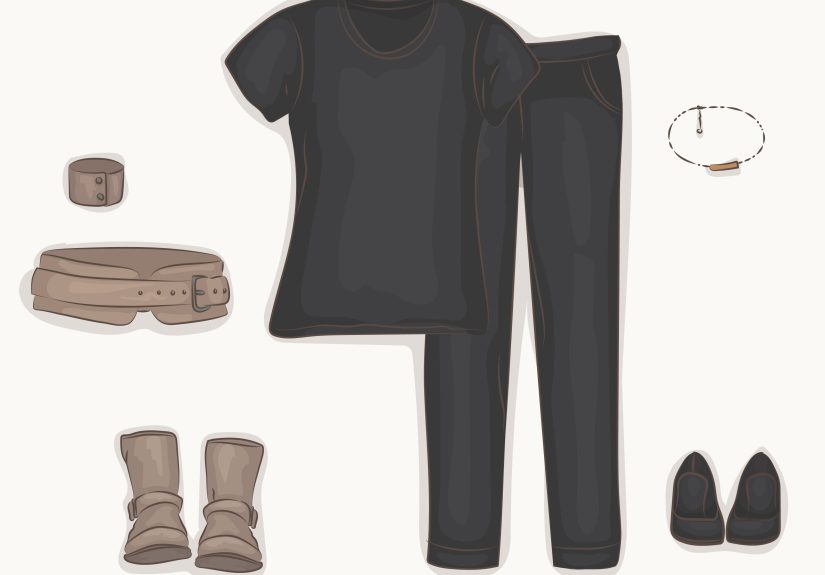
8) Build a capsule-ish wardrobe (no beige oath required)
Minimalist aesthetic isn’t only home decorit’s style, too. A closet that looks minimalist usually has two qualities:
cohesive colors and repeatable outfit formulas.
Start with “outfit math”
- Pick 2–3 base colors (black, navy, gray, cream, olive)
- Add 1 accent you genuinely wear (not one you aspire to be “the kind of person” who wears)
- Choose 2 shoe styles you can live in
Two closet edits that work even if you hate decluttering
- Reverse hanger method: turn hangers backward; flip them when you wear an item. The unworn pieces reveal themselves.
- 90/90 rule: if you haven’t used it in 90 days and won’t in the next 90, it’s probably not a “core wardrobe” item.
Minimalist fashion is basically: fewer pieces, better fit, more re-wears. Also: fewer “panic purchases” that seemed fun at 1:00 a.m.
9) Upgrade lighting for instant minimalist vibes
Lighting is the cheat code. You can have a pretty simple room, but if the lighting is harsh or mismatched, the whole space feels messy.
Minimalist interiors usually emphasize natural light and clean, functional fixtures.
Easy lighting upgrades
- Add one warm table lamp (softens everything)
- Use consistent bulb temperature across a room
- Pick one “statement” fixture (pendant, floor lamp) and keep the rest quiet
- If possible, add a dimmeror use smart bulbs for adjustable ambiance
If your room feels cold, don’t add clutteradd warm light.
10) Create a “minimalist” digital aesthetic
Your home can look minimalist while your phone looks like a carnival. If you want the minimalist aesthetic to feel real,
clean up the screens you stare at all day.
Digital minimalism you can do in one sitting
- Delete apps you don’t use (or hide them off the home screen)
- Turn off non-essential notifications (yes, the shopping app will survive)
- Use one simple wallpaper and fewer widgets
- Make one folder: “Daily” (only the apps you actually want to open)
The aesthetic bonus: fewer icons = calmer vibe. The life bonus: fewer interruptions = more peace.
It’s minimalism with receipts.
11) Shop less with two painfully effective rules
The minimalist aesthetic is hard to maintain if your home is a constant delivery address for “just one more little thing.”
The easiest way to look minimalist is to stop bringing in visual noise.
Two rules that curb clutter fast
- One-in, one-out: for anything that “lives” in your home (mugs, sweaters, throw pillows), remove one when you add one.
-
The waiting rule: pause before buying. Try “30 hours for $30+” (or 24 hours for anything non-essential). If you still want it,
you’re choosing itrather than impulse-adopting it.
Minimalist aesthetic tip: if you buy fewer things, you don’t need a heroic organizing system. You just need… less stuff.
Annoyingly effective, I know.
Wrap-Up: Minimalist Aesthetic, Minus the Drama
A minimalist aesthetic isn’t about deprivationit’s about clarity. When your colors are calm, your storage is smart,
and your daily habits don’t feed clutter, your space starts to feel “put together” in a way that’s both stylish and
genuinely relaxing.
If you want the fastest wins: tighten your color palette, clear one surface per room, and hide the small stuff.
Then add texture so the whole thing feels warm, not weird.
Bonus: of Minimalist Aesthetic “Field Notes” (What Actually Happened)
I tried a minimalist aesthetic reset once with the confidence of someone who’d watched three “declutter your life” videos and
now believed I could become a serene Scandinavian person by sunset. Spoiler: I did not become Scandinavian. But I did learn what
makes minimalism stick (and what makes you rage-clean for 20 minutes and then quit).
The first thing I did was pick a palette. Not a strict “everything must be white” rule, but a quiet basecream, warm gray, black,
and wood. Immediately, it got easier to decide what belonged. Anything neon or overly busy suddenly looked like it came from a
different universe. The palette wasn’t a style prison; it was a filter. That’s when I realized minimalist aesthetic is mostly
decision-making made simple. Fewer choices means less second-guessing, and less second-guessing means fewer random purchases that
turn into clutter trophies.
Next came the surfaces. I used the five-minute reset and aimed at one “hot zone” per day: the kitchen counter, then the nightstand,
then the entry table. The funniest part? Most of the mess wasn’t “important stuff.” It was migrationobjects that had moved from their
homes because I was tired, busy, or pretending future-me would enjoy sorting mail like a hobby. A small lidded basket fixed it. The
minimalist aesthetic isn’t about never having clutter; it’s about having a designated place for the in-between moments of life.
The closet experiment was humbling. I tried the reverse hanger method for a short stretch and found myself wearing the same handful of
favorites again and againlike my wardrobe had its own playlist stuck on repeat. That discovery was oddly freeing. Instead of shopping,
I upgraded one or two basics (the pieces I truly lived in) and let go of the “maybe someday” clothes. The minimalist aesthetic in fashion
looks effortless because it’s built on repeatable formulas: clean jeans, a simple top, a structured layer, good shoes. It’s not boring.
It’s reliable.
My biggest surprise was how much warmth matters. When I removed visual noise, the room looked cleanerbut it also looked a little… stern.
Adding a linen throw, a textured rug, and warm lighting instantly made the space feel inviting again. That’s the sweet spot: clean lines
plus cozy texture. Minimalist aesthetic, but human.
Final lesson: minimalism isn’t one big purge. It’s a series of small choices that you can actually repeat. If a rule makes you miserable,
it won’t last. But a palette you like, a daily reset you can handle, and a “pause before you buy” habit? Those stickand they quietly
transform your space without turning your life into a 48-hour donation marathon.