Table of Contents >> Show >> Hide
- What Makes a Makes a Home “Cottage-Style”?
- 16 Cottage-Style Homes with Cozy Charm
- 1) The Picket-Fence Welcome Cottage
- 2) The Slate-Blue Modern Cottage
- 3) The Chimney-First Cottage
- 4) The Dormer-Detail Cottage
- 5) The Courtyard Brick Cottage
- 6) The Coastal Shingle Cottage
- 7) The English-Inspired Arched-Entry Cottage
- 8) The Stone-and-Vine Cottage
- 9) The Storybook (Slightly Whimsical) Cottage
- 10) The Cape Cod Cottage (Compact and Classic)
- 11) The Craftsman-Cottage Bungalow
- 12) The Farmhouse-Meets-Cottage Hybrid
- 13) The Spanish Cottage (Warm, Textured, and Sunny)
- 14) The Scandinavian-Modern Cottage
- 15) The Built-In-Loving Cottage
- 16) The Tiny “Lives-Large” Guest Cottage
- How to Add Cottage Charm Without Renovating Your Whole House
- Common Cottage Mistakes (How to Avoid “Theme Park Cottage”)
- of Real-Life Experiences: What Cozy Cottage Living Actually Feels Like
- Conclusion
Cottage-style homes are the architectural equivalent of a warm mug in both hands: comforting, inviting, and suspiciously good at making you forget your to-do list.
They’re typically smaller than many other house styles, but they punch way above their square footage with charm, coziness, and “come on in” curb appeal.
Whether you love traditional English cottage vibes, a coastal cottage look, or a modern cottage style that feels fresh (not fussy), the common thread is simple:
cottage homes prioritize comfort over showing off.
In this guide, we’ll break down what makes cottage-style homes feel so welcoming, then tour 16 cozy takes on the lookeach with specific ideas you can borrow.
And because real life is the ultimate design test, you’ll also get a 500-word “what it actually feels like” section at the end (spoiler: you will start caring about lighting).
What Makes a Makes a Home “Cottage-Style”?
Cottage style isn’t one rigid blueprint. It’s more like a greatest-hits album of cozy architecture and lived-in designmodest scale, friendly proportions,
and details that feel handcrafted, collected, and loved. Classic cottage exteriors often feature steep gable roofs, prominent chimneys, dormer windows,
arched entryways, casement windows, and welcoming porches. Landscaping matters, too: picket fences, trellises, climbing vines, and flower-filled paths
help the house feel like it’s part of a garden story instead of a standalone object plopped on a lot.
Inside, cottage interiors lean into warmth and personality. Think layered textiles, vintage finds, built-ins that use every inch wisely, and a strong
“hearth energy” (fireplaces and wood stoves have main-character vibes in this style). Modern cottage style keeps the nostalgia but adds cleaner lines,
calmer palettes, and a more current flowlike cottage charm with better Wi-Fi.
Quick Cottage Charm Checklist
- Human-scale proportions: cozy rooms, not cavernous echoes.
- Character details: dormers, trim, shutters, beadboard, paneling, or visible beams.
- Natural materials: wood, stone, brick, honed finishes, aged metals.
- Layered comfort: patterns, soft seating, warm lighting, and a little “collected clutter” (the curated kind).
- Garden-first curb appeal: paths, blooms, and entrances that feel welcoming.
16 Cottage-Style Homes with Cozy Charm
1) The Picket-Fence Welcome Cottage
If cottage style had a handshake, it would be a cute gate. A picket fence and a simple front gate instantly create a “threshold moment”you’re not just
entering a yard; you’re entering a vibe. Pair it with potted plants flanking the gate and a brick or stone path that feels gently worn-in.
- Steal this idea: a swing gate + two matching planters for instant storybook curb appeal.
- Why it works: a defined entry makes a small home feel intentional and special.
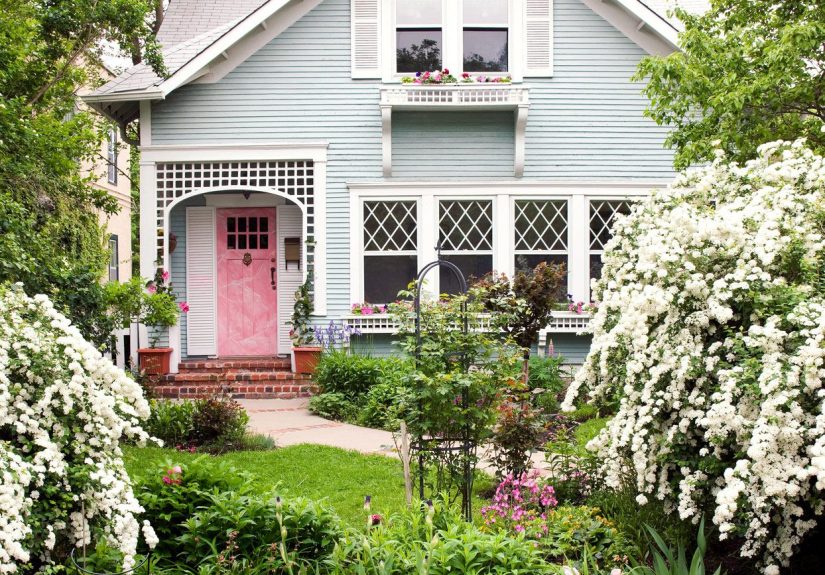
2) The Slate-Blue Modern Cottage
A modern cottage style exterior often starts with a crisp color schemeone calm body color (slate, gray-blue, soft olive) and clean white trim.
Add a bright front door to keep things playful, not sterile. The look says “cozy” without leaning too precious.
- Steal this idea: paint the door a high-contrast color (deep green, warm red, or sunny ochre).
- Why it works: the palette is tidy; the charm comes from the details.
3) The Chimney-First Cottage
Prominent chimneys are a classic cottage signature for a reason: they signal warmth before you even step inside.
A stout brick chimney, especially paired with smaller windows and a compact footprint, makes the home feel anchored and snug.
- Steal this idea: if you don’t have a fireplace, mimic the look with a substantial exterior masonry feature or a faux-chimney bump-out.
- Why it works: “hearth cues” are basically comfort marketing (and yes, it works on us).
4) The Dormer-Detail Cottage
Dormer windows bring charm and function: they break up the roofline and add light upstairs. Even small dormers can make a cottage feel more picturesque,
especially on a simple gable roof.
- Steal this idea: dress dormers with trim that matches the main windows for a cohesive, classic look.
- Why it works: roofline variety adds “old-house character,” even to newer builds.
5) The Courtyard Brick Cottage
A brick cottage with a courtyard layout feels intimate, protected, and social at the same time. Courtyards are perfect for outdoor living without needing
a giant backyardthink cozy fire pit moments and string lights that make dinner feel like a movie scene.
- Steal this idea: define a small courtyard with low hedges, gravel, or brick paversno huge renovation required.
- Why it works: cottages thrive when outdoor space feels like an extra room.
6) The Coastal Shingle Cottage
Coastal cottage style leans into weathered textures: shingles, soft whites, sandy neutrals, and breezy fabrics. Keep the exterior simple, then add
“cozy signals” like window boxes, lantern-style lights, and a porch that begs for morning coffee.
- Steal this idea: swap modern sconces for classic lantern lighting to instantly soften the facade.
- Why it works: the materials feel timeless, even as decor trends come and go.
7) The English-Inspired Arched-Entry Cottage
Arched doorways (outside or in) are a cottage hallmarkromantic, slightly whimsical, and surprisingly versatile.
An arched front entry, especially with an old-world door color, makes the house feel like it’s been there forever (in a good way).
- Steal this idea: add an arched trellis over a straight walkway gate for a budget-friendly “English cottage” nod.
- Why it works: curves soften the geometry and make everything feel more welcoming.
8) The Stone-and-Vine Cottage
Stone exteriors and climbing greenery are a cottage power couple. If you can’t do full stone, consider stone accents (foundation veneer, entry surround)
plus trellises that support vines. The goal is “grown-in charm,” not “brand-new showroom.”
- Steal this idea: add a trellis panel near the entry and train climbing plants for natural texture.
- Why it works: cottage style loves anything that blurs the line between home and garden.
9) The Storybook (Slightly Whimsical) Cottage
Storybook cottages lean into playful shapespitched roofs, quirky windows, and charming trim details. The trick is restraint:
pick one “storybook” feature (arched door, scalloped shingles, or a cute awning) and keep the rest grounded.
- Steal this idea: a scalloped shingle detail on a dormer or porch roof adds whimsy without going full theme-park.
- Why it works: one magical detail feels intentional; ten feel like a costume.
10) The Cape Cod Cottage (Compact and Classic)
Cape Cod cottages are all about simple symmetry, tidy lines, and practical coziness. The charm often comes from proportion:
modest windows, a centered door, and a roofline that feels protective rather than towering.
- Steal this idea: add shutters (properly sized!) and a simple portico or small stoop.
- Why it works: straightforward forms let texture and detail do the heavy lifting.
11) The Craftsman-Cottage Bungalow
A bungalow can read cottage instantly when it features warm wood details, a welcoming porch, and handcrafted touches.
Add window boxes, a stone path, and earthy colors, and you’ve got cozy charm without needing a fairy godmother.
- Steal this idea: emphasize porch posts and trim with a contrasting paint color (nothing too harsh).
- Why it works: Craftsman detailing naturally aligns with cottage warmth and craftsmanship.
12) The Farmhouse-Meets-Cottage Hybrid
Cottage style and farmhouse style often get compared, but cottage leans more romantic and layered.
Blend the two by keeping farmhouse simplicity (clean lines, practical layout) and adding cottage softness (patterns, antiques, warm lighting).
- Steal this idea: swap stark black hardware for aged brass or antique bronze to warm up the look.
- Why it works: it keeps the space livable while dialing up charm.
13) The Spanish Cottage (Warm, Textured, and Sunny)
A Spanish cottage often includes stucco walls, arched openings, and warm earth tones. It still fits the cottage spirit because it’s cozy,
tactile, and human-scaleespecially when paired with a small courtyard or patio.
- Steal this idea: add terracotta pots and a simple iron or wood gate to reinforce the style.
- Why it works: texture + warmth reads “cozy” in any climate.
14) The Scandinavian-Modern Cottage
Picture simple lines, pale woods, and a calm palettethen add cozy textiles and soft lighting. This version of a cozy cottage
is less floral and more “clean and cuddly.” (Yes, those can coexist.)
- Steal this idea: use woven textiles, natural wood, and warm bulbs to avoid a cold, minimal vibe.
- Why it works: the simplicity keeps the space airy; the materials keep it inviting.
15) The Built-In-Loving Cottage
Cottages are famous for using every inch. Built-insespecially bunk alcoves, niches, and shelvescreate function and character at once.
An alcove bunk room is peak cottage: efficient, charming, and basically a nap magnet.
- Steal this idea: add a shallow wall niche with shelves in a hallway or bathroom for instant cottage detail.
- Why it works: built-ins feel custom, and custom always feels cozy.
16) The Tiny “Lives-Large” Guest Cottage
Tiny cottages prove that cozy isn’t about sizeit’s about choices. A small footprint becomes a feature when you lean into it:
smart storage, a strong focal point (like a fireplace), and a mix of vintage and practical pieces that keep it warm and personal.
In very small cottages, scaled-down appliances and thoughtful shelving can make the space work beautifully.
- Steal this idea: restore or add open shelving and fill it with meaningful objects (not random clutter that mysteriously multiplies).
- Why it works: tiny spaces feel best when they’re intentional, not over-furnished.
How to Add Cottage Charm Without Renovating Your Whole House
Not everyone can add dormers on a Tuesday afternoon (tragic, honestly). But cottage charm is surprisingly “add-on friendly.”
Focus on a few high-impact moves that feel authentic and lived-in.
- Upgrade your entry: paint the door, add a classic light fixture, and bring in planters.
- Soften the hard lines: arched mirrors, curved furniture, or a trellis do wonders.
- Layer textiles: curtains, rugs, throws, and pillows make rooms feel finished (and warm).
- Mix old and new: one antique piece can add more character than ten matching store-bought accessories.
- Warm the metals: aged brass, copper, and antique bronze feel cottage-ready.
- Let the house collect a little: a few books, pottery, and art make it feel lived in, not staged.
Common Cottage Mistakes (How to Avoid “Theme Park Cottage”)
Cottage style is charming. Costume cottage is… a different genre. Here’s how to keep it cozy and real:
- Don’t overdo “cute”: choose one whimsical detail, then calm down (respectfully).
- Avoid matching everything: cottage style likes a collected look, not a showroom set.
- Skip harsh lighting: if your bulbs feel like an interrogation, swap them immediately.
- Watch the clutter line: “curated” is charming; “where is the counter?” is not.
of Real-Life Experiences: What Cozy Cottage Living Actually Feels Like
Cottage-style homes don’t just look cozythey change how you use your space. People often describe a cottage as a house that gently “nudges” you into
slower, more intentional habits. For one, you become weirdly loyal to your entryway. When your home is compact, the front door area matters:
shoes need a plan, coats need a hook, and suddenly you’re the kind of person who has opinions about a bench. (You’ll say things like, “We needed a place
to sit while putting on boots,” as if boots are a daily event. They might become one.)
Another common experience is how quickly you start prioritizing comfort over perfection. Cottage interiors tend to reward soft seating, warm textures,
and lighting that makes everyone look like they slept eight hours. Homeowners often notice that a single cozy cornerone chair, one lamp, one small table
gets more daily use than a formal room designed “for guests.” You’ll also start paying attention to sound. Rugs and curtains don’t just look good;
they soften echoes and make the house feel calm. It’s the difference between “cozy conversation” and “why are we yelling, we’re three feet apart.”
Kitchens in cottage-style homes often become the emotional headquarters. Warm lighting, natural materials, and a little curated clutter make the room feel
lived-in rather than clinical. People report they cook more oftennot necessarily elaborate meals, but small comforting things. A pot simmering,
bread warming, tea steeping. The space invites “stay awhile” energy. And because cottage homes emphasize function, clever storage becomes a tiny thrill.
A shelf that fits perfectly. A basket that corrals chaos. A niche that holds what you actually use. It’s not glamorous, but it’s deeply satisfying.
Many cottage homeowners also mention how the house changes their relationship with the outdoors. Even a small yard can feel like an extension of the home
when the entry is framed by plants, a trellis, or a path. You notice seasons more. You fuss with flowers. You suddenly understand why people get excited
about window boxes. The house becomes a companion to the garden, not a separate object. And finally: you’ll almost certainly become a lighting person.
Not in a scary waymore like, “We need a sconce here,” and “This corner needs a softer bulb,” and “Why does this overhead light feel so aggressive?”
Cottage living tends to make you chase warm, layered light, because it’s one of the fastest ways to make a home feel welcoming every single day.
Conclusion
Cottage-style homes win hearts because they’re designed for real life: comfort, warmth, and details that feel personal.
Whether you’re drawn to a classic picket-fence cottage, a coastal cottage retreat, or a modern cottage style refresh, the best version is always the one
that feels inviting the moment you walk in. Start with one or two high-impact changesan entry upgrade, warmer lighting, a little more textureand let
the charm build naturally over time. That’s the cottage way.