Table of Contents >> Show >> Hide
- Reality Check: Two-Headed Sharks Are Real“Two-Headed Attacks” Aren’t
- So… What Exactly Are We Ranking?
- Ranking #1: The Real-World Likelihood of a “Two-Headed Shark Attack”
- Viral miscaptioning (Most likely)
- Two-headed specimen found after death
- Two-headed embryo documented in research
- Small live juvenile briefly survives (but isn’t a threat)
- A bite incident wrongly attributed to a “two-headed shark”
- A genuine two-headed shark large enough to bite a human (Effectively least likely)
- Ranking #2: What Shark Bites Actually Look Like in Credible Records
- Ranking #3: The “2-Headed Shark Attack” Movie Universe (Camp Factor Included)
- Ranking #4: Best (and Worst) Opinions People Have About “2-Headed Shark Attacks”
- Practical Beach Smarts (Because Real Sharks Are Real)
- Experience Add-On (): Real-World and Pop-Culture “Been-There” Perspectives
- Conclusion: My Final Ranking and Opinion
Let’s get the awkward part out of the way first: in real life, a “2-headed shark attack” is basically a unicorn riding a scooter. Two-headed sharks are a real biological phenomenon (rare, fascinating, and usually tiny), but documented human attacks by a two-headed shark? That’s where reality politely clears its throat, checks the data, and exits the room.
So what are we ranking here? A mix of (1) real-world likelihood and risk, (2) how shark bites actually show up in credible records, and (3) the pop-culture side of the phrase “2-Headed Shark Attack” (hello, campy creature-feature cinema). Along the way, I’ll add opinions you can argue about in the comments like nature intended.
Reality Check: Two-Headed Sharks Are Real“Two-Headed Attacks” Aren’t
What “two-headed” means in shark science
A two-headed shark is typically the result of a rare developmental anomaly often described as bicephaly (two heads) or “axial bifurcation” (the embryo starts to split like identical twins but doesn’t finish the job). This can produce a single body with two heads that may share organs to varying degrees. It’s not a “new species,” not a superhero origin story, and definitely not evidence that the ocean is “mutating.”
Why you mostly hear about embryos and fetuses
Most verified two-headed shark cases are embryos or fetuses found during research, fisheries work, or examination of pregnant sharks. That matters for one big reason: survival. Two heads can create major challenges for swimming efficiency, feeding coordination, and predator avoidance. In other words, nature is not a forgiving editor.
The best-known U.S.-linked headline case is a two-headed bull shark specimen confirmed by researchers after it was found in the Gulf of Mexico in 2011. It’s famous because it’s medically interestingnot because it terrorized tourists.
So… What Exactly Are We Ranking?
When people search “2-Headed Shark Attack Rankings And Opinions,” they usually want one of two things:
- Myth vs. reality: “Could this happen? How dangerous is it?”
- Pop culture: The 2-Headed Shark Attack movie and its multi-headed sequels, ranked by watchability.
Good news: we can do bothwithout pretending the ocean is producing boss-level sharks as a side hustle.
Ranking #1: The Real-World Likelihood of a “Two-Headed Shark Attack”
Here’s the “probability ladder,” from most likely to “please put the conspiracy board down” least likely.
-
Viral miscaptioning (Most likely)
A normal shark bite happens (rare but real), a photo circulates, and someone slaps “two-headed shark” on it for clicks. The internet is undefeated in the sport of being confidently wrong.
-
Two-headed specimen found after death
This is the most common way the public “meets” bicephalic animals: as a preserved specimen, a museum collection feature, or a documented oddity discovered during scientific or fishing activity.
-
Two-headed embryo documented in research
This is the scientifically valuable scenario. Researchers can learn about development, anatomy, and how rare anomalies present in elasmobranchs (sharks and rays).
-
Small live juvenile briefly survives (but isn’t a threat)
Even if a two-headed shark survives to a small, free-swimming stage, “attack risk” is not the headline. It’s usually small, vulnerable, and dealing with the biological equivalent of learning to ride a bike on hard mode.
-
A bite incident wrongly attributed to a “two-headed shark”
In real shark bite records, identifying the exact species can be tricky. Add panic, fast-moving water, and a brief encounter, and misidentifications become understandable. But two-headed identification? That’s a stretch.
-
A genuine two-headed shark large enough to bite a human (Effectively least likely)
You’d need a two-headed shark to survive long enough to reach a size that could seriously injure a persondespite the survival disadvantages of the condition. That’s why credible databases track real shark incidents, but you won’t find a special category for “bicephalic attacker.”
Ranking #2: What Shark Bites Actually Look Like in Credible Records
If we’re ranking shark “attack” risk, the most responsible place to start is not a movie posterit’s a scientific database. The International Shark Attack File (ISAF), housed at the Florida Museum of Natural History, investigates reports worldwide and classifies incidents (such as unprovoked vs. provoked bites). That structure matters because it separates sensational storytelling from usable reality.
What the numbers say (and why “calm years” still feel scary)
In ISAF’s 2024 worldwide summary, the organization investigated dozens of alleged interactions and confirmed a smaller number as unprovoked bites. Even in a relatively low year, the stories can feel intense because each incident is personal, sudden, and widely shared. Meanwhile, the data stays stubbornly consistent: shark bites are rare compared with how many people enter the ocean.
Who’s usually involved: the “frequent flyers” of shark bite headlines
NOAA and ISAF both emphasize a key point that gets lost in late-night “shark week” hype: only a small subset of shark species have been implicated in attacks on humans, and humans are not part of sharks’ normal diets. When bites do happen, they’re often attributed to factors like mistaken identity, proximity to prey, and human activity patterns (surfing zones, murky water, dawn/dusk).
Another important nuance: even when a shark is involved, identifying the exact species can be difficult. ISAF notes that the species list is skewed toward sharks that are easier to identify, while other incidents are harder to classify with confidence. Translation: be cautious with neat “Top 10 shark species” lists that pretend every incident comes with a name tag and a business card.
My practical risk ranking (based on patterns, not panic)
- Most common “high-exposure” group: surfers and board riders (more time in water, often in surf zones).
- Next: waders and swimmers in shallow water near baitfish activity.
- Situational spikes: people near fishing activity, murky water, or areas with active feeding.
- Lowest typical risk: short, mid-day, clear-water swims away from bait and fishing zones (still not “zero,” but lower).
Notice what’s missing? “Two-headed sharks.” Not because they’re being covered up by Big Ocean, but because real risk comes from real, living, normally built sharks behaving like normal predators in a big, complex environment.
Ranking #3: The “2-Headed Shark Attack” Movie Universe (Camp Factor Included)
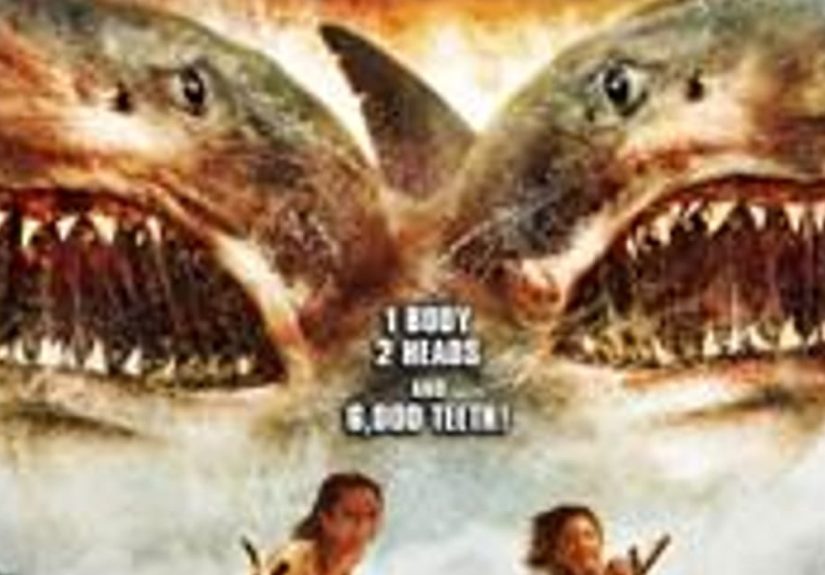
Now for the fun part: if your search term is really about the title 2-Headed Shark Attack, you’re in creature-feature territory. This is a U.S.-made, made-for-TV style thriller from The Asylum (the studio famous for high-concept, low-budget monster chaos), and it spawned increasingly absurd sequels featuring more heads, more mayhem, and more reasons to text your friends, “We’re watching this ironically. I think.”
My watchability ranking (opinionated, but fair)
-
#1: 2-Headed Shark Attack (2012) Best “entry-level” chaos
The original gets points for establishing the vibe: stranded humans, escalating danger, and a creature concept that doesn’t require a biology degreejust popcorn. It’s the purest form of the premise, and it knows what it is.
-
#2: 3-Headed Shark Attack (2015) Bigger concept, louder energy
Sequels often try to “go bigger,” and this one does. If you like your shark fiction with extra spectacle and a “how did we get here?” storyline engine, this is a solid second watch.
-
#3: 5-Headed Shark Attack (2017) Peak absurdity (compliment)
Once you hit five heads, realism has left the building, bought a souvenir, and moved to another country. If you’re here for maximal camp, this is where the franchise becomes a party trick.
-
#4: 6-Headed Shark Attack (2018) For committed completists
By six heads, you’re not “watching a movie” so much as “participating in a cultural experiment.” If your friend group loves yelling at the screen, this can be perfect.
Important disclaimer: these films are fiction. They are not based on documented marine biology, and they should not be used as a wildlife safety guide unless your goal is to become a cautionary tale.
Ranking #4: Best (and Worst) Opinions People Have About “2-Headed Shark Attacks”
Best opinion: “This is a movie phrase, not a medical category”
Correct. In real science reporting, two-headed sharks are discussed as rare developmental anomaliesoften documented in embryosnot as an “attack class.” If someone is using “two-headed” to suggest the ocean is suddenly producing super-predators, that’s storytelling, not evidence.
Worst opinion: “Two heads means twice the aggression”
That’s not how animal behavior works, and it’s especially not how rare congenital anomalies work. Two heads can mean competing coordination, altered swimming efficiency, and reduced survivalnot “double rage mode.”
Most common misunderstanding: “Sharks hunt humans”
NOAA puts it plainly: humans aren’t part of sharks’ typical diets, and only a small number of species have been implicated in attacks. Most sharks are doing normal shark thingsfeeding on fish and invertebratesand would prefer you stop acting like a confused seal silhouette at dawn.
Practical Beach Smarts (Because Real Sharks Are Real)
If you want the best “anti-attack” strategy, you don’t need a harpoon or a dramatic soundtrack. You need boring, repeatable habitsthe kind that never go viral because they work quietly.
- Avoid swimming at dawn/dusk when visibility is low and many predators are more active.
- Skip murky water and areas with active fishing or lots of baitfish.
- Swim in groups and stay aware of your surroundings.
- Don’t wear flashy jewelry that can resemble fish scales in the light.
- Follow local guidance (lifeguards, beach alerts, posted warnings).
Notice again: nothing here depends on whether a shark has one head, two heads, or an entire hydra situation from a late-night script meeting. The basics work because they reduce the chances of a normal shark confusing you for normal prey.
Experience Add-On (): Real-World and Pop-Culture “Been-There” Perspectives
Ask ten people what “2-Headed Shark Attack” makes them feel, and you’ll get ten wildly different answersbecause the phrase lives in two universes at once: the careful universe of science and the snackable universe of entertainment.
In the science universe, the experience is usually quiet. Picture a researcher in a lab or a collection facility, leaning over a specimen tray with the kind of focus you’d expect from someone restoring a priceless painting. The mood isn’t “monster movie.” It’s curiosity mixed with respect. The two-headed condition isn’t a punchline; it’s a clue. It raises questions about development: How early did the embryo begin to split? Which organs are duplicated? How would movement have worked if it had survived? The most intense part isn’t fearit’s the seriousness of documenting something rare correctly, because rare things are easy to misreport and hard to verify later.
In a museum context, the experience flips. A visitor sees an X-ray or preserved specimen and has the same reaction humans have had since the dawn of weird: a step back, widened eyes, then a half-laugh that says, “Is that real?” It’s not the kind of wonder that needs danger. It’s the kind that needs perspective. A guideor a sign written by someone who’s gently tiredexplains that anomalies happen in nature, that most animals with severe anomalies don’t survive long, and that this isn’t a preview of “what sharks are becoming.” It’s a rare developmental detour, not a destination.
Then there’s the beachgoer experience, where “two-headed shark” functions as a rumor more than a reality. Someone’s cousin’s coworker “saw a video,” and now the group chat is spiraling. You can almost watch the story evolve in real time: it starts as “there was a shark,” turns into “it was huge,” and ends as “it had two heads” because the human brain loves upgrading fear into mythology. Lifeguards and local experts deal with this the way you deal with any rolling wave of nonsense: calm tone, clear advice, and the steady repetition of basicsconditions, visibility, baitfish, and the simple truth that shark bites are rare but not impossible.
Finally, the movie-night experience is a different animal entirely. Someone hits play on 2-Headed Shark Attack with a grin that says, “This is going to be ridiculous,” and five minutes in, they’re proven correct. The room becomes a running commentary booth. People start ranking scenes, predicting decisions, and cheering for logic to make a surprise cameo. It’s communal, silly, and weirdly comfortingbecause fictional sharks follow the rules of story, not the rules of the sea. In that universe, you don’t need probability. You need popcorn, a friend who laughs easily, and the willingness to say, “Okay, sure, why not?” when the premise adds another head.
Conclusion: My Final Ranking and Opinion
If we’re ranking “2-headed shark attacks” in the real world, the honest answer is: they rank at the bottom because they essentially don’t exist as a documented category. Two-headed sharks are real, rare, and scientifically interestingbut overwhelmingly reported as embryos or preserved specimens, not as active predators interacting with humans.
If we’re ranking the phrase in pop culture, then 2-Headed Shark Attack is a fun starting point in a series that escalates into glorious absurdity. Just keep the universes separate: use ISAF and NOAA for real safety and real statistics, and use multi-headed shark movies for laughs, group chats, and the ancient art of yelling, “DON’T GO IN THE WATER!” at your TV.