Table of Contents >> Show >> Hide
- Before You Pick a Divider: A Quick Reality Check (So You Don’t Hate It Later)
- 23 Clever Room Divider Ideas (That Actually Work in Real Homes)
- 1) Ceiling-Track Curtains (Studio Apartment MVP)
- 2) Tension-Rod Curtain Divider (No-Drill, No-Drama)
- 3) A Classic Folding Screen (Instant “Separate But Make It Fashion”)
- 4) Shoji-Style Screen (Soft Light, Calm Vibes)
- 5) Open Bookcase Divider (Storage + Separation, the Power Couple)
- 6) Cube Storage Unit as a Divider (Organized, Even If You’re Not)
- 7) A Wardrobe Wall (Closet as a Room Divider)
- 8) Float Your Sofa as the Divider (The Layout Trick Designers Love)
- 9) Console Table Behind the Sofa (Soft Boundary, Big Payoff)
- 10) A Room Divider Headboard (Bedroom Boundary Without Building a Wall)
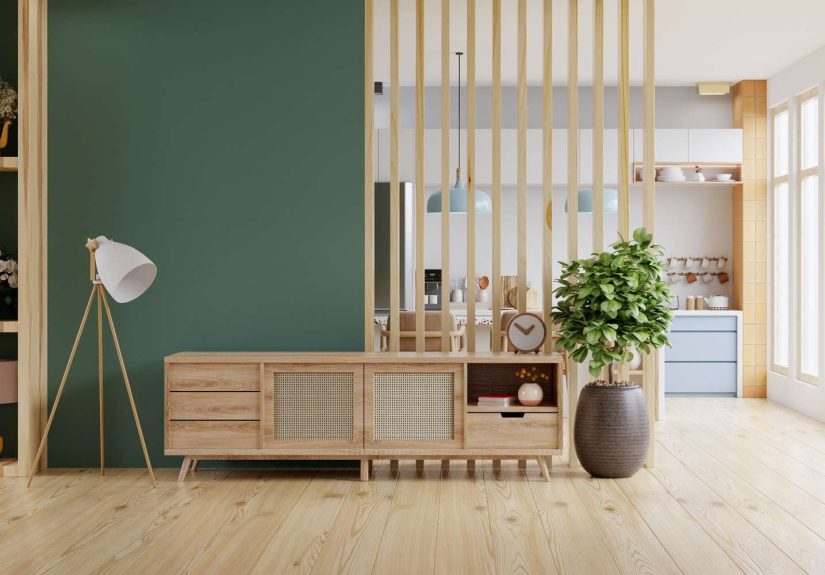
- 11) Slatted Wood Wall (Modern, Airy, and Weirdly Satisfying)
- 12) Half Wall (Pony Wall) with a Ledge
- 13) Glass-and-Metal Partition (Industrial Light, Not Industrial Stress)
- 14) Sliding Barn Door (A Divider That Makes an Entrance)
- 15) Accordion or Folding Panel Door (Compact and Clever)
- 16) Repurposed Bifold Doors as a Screen (Upcycle With Main Character Energy)
- 17) Vintage Windows (Or Faux Window Frames) as a Divider
- 18) French Doors as a Room Divider (Classic, Bright, and Slightly Dramatic)
- 19) A Tall Plant Lineup (Nature’s Soft Wall)
- 20) Hanging Plants or a “Green Curtain”
- 21) Macramé or Textile Hanging (Boho, Soft, and Surprisingly Useful)
- 22) Beaded (or Chain-Style) Curtain (Retro, Fun, and a Little Sassy)
- 23) A Rolling Garment Rack Divider (Closet + Divider = Genius)
- How to Choose the Best Room Divider for Your Space
- Conclusion
- Experience Notes: What I’ve Learned After Trying (and Moving) Way Too Many Room Dividers
Open floor plans are greatuntil you’re trying to take a Zoom call three feet away from your bed while your roommate loudly “meal-preps” something that smells like a science project. A room divider is the design equivalent of putting on sunglasses indoors: technically unnecessary, but instantly makes your life feel more put together.
The best part? You don’t need to build a wall (or apologize to your landlord). With the right room divider ideas, you can carve out privacy, define zones, soften noise, and add serious styleoften with renter-friendly or DIY solutions. Below are 23 clever options, from “I can do this in an hour” to “I own a level now and I’m not afraid to use it.”
Before You Pick a Divider: A Quick Reality Check (So You Don’t Hate It Later)
1) Decide what kind of separation you actually need
- Visual separation: You want zones to feel distinct (most dividers do this well).
- Privacy: You want less “I can see you eating cereal in silence” (choose something opaque).
- Sound control: Room dividers help a bit, but real sound blocking needs mass + sealing. Manage expectations.
2) Protect light and airflow
In small spaces, natural light is basically emotional support. Open shelving, slats, glass, and curtains you can pull back are your best friends.
3) Make it earn its keep
The smartest space divider is multifunctional: storage, display, a backdrop, a pinboard, even a door. If it only “stands there,” it better be stunning.
23 Clever Room Divider Ideas (That Actually Work in Real Homes)
1) Ceiling-Track Curtains (Studio Apartment MVP)
Install a ceiling-mounted track and hang full-length drapes to create a “room-within-a-room.” It’s soft, flexible, and you can open it up when you want the space to breathe. Bonus: it hides clutter fastlike a magician’s cape, but for laundry.
2) Tension-Rod Curtain Divider (No-Drill, No-Drama)
If drilling is forbidden (or you just don’t trust yourself), use a heavy-duty tension rod between two walls or inside a wide opening. Pair with blackout curtains for privacy, or sheers for a light-filtering separation.
3) A Classic Folding Screen (Instant “Separate But Make It Fashion”)
Folding screens are the easiest privacy screen: unfold, reposition, pretend you planned this layout all along. Pick lacquer for glam, rattan for coastal, or a patterned print for “I have a personality and it is bold.”
4) Shoji-Style Screen (Soft Light, Calm Vibes)
A shoji-inspired screen gives you separation without turning your room into a cave. It’s perfect for creating a sleeping nook, a meditation corner, or a “please don’t look at my treadmill” zone.
5) Open Bookcase Divider (Storage + Separation, the Power Couple)
An open bookcase splits space while keeping it airy. Style one side for the living area and the other for your work zone. Keep some cubbies empty so the divider doesn’t feel like a brick wall made of novels and regret.
6) Cube Storage Unit as a Divider (Organized, Even If You’re Not)
Those square-cubby units are practically designed to be room dividers. Add baskets to hide chaos, leave a few cubes open for decor, and suddenly your studio has “zones” and “intentionality.” Look at you, thriving.
7) A Wardrobe Wall (Closet as a Room Divider)
Need serious separation? A tall wardrobe or modular closet system can act like a temporary wallespecially between a bed and living area. Just plan access: you don’t want to open doors into furniture like it’s a low-budget escape room.
8) Float Your Sofa as the Divider (The Layout Trick Designers Love)
Instead of pushing your couch against a wall, “float” it to divide living and dining (or living and sleeping). Add a rug to reinforce the zone. It feels grown-up, like you own matching towels.
9) Console Table Behind the Sofa (Soft Boundary, Big Payoff)
A narrow console table creates a subtle partition, gives you a landing zone for lamps, plants, and keys, and makes the back of your sofa look finished. Add baskets underneath for extra storage.
10) A Room Divider Headboard (Bedroom Boundary Without Building a Wall)
In a studio, a headboard that extends wider (or taller) than the bed creates a visual “bedroom.” Try a freestanding upholstered panel, a slatted backdrop, or a low built-in that doubles as a shelf.
11) Slatted Wood Wall (Modern, Airy, and Weirdly Satisfying)
Vertical wood slats (a.k.a. battens) define zones while letting light through. It’s a favorite for open-concept living because it feels architectural without fully closing anything off. Paint it to match walls or go natural for warmth.
12) Half Wall (Pony Wall) with a Ledge
A half wall gives structure without shutting down the room. Add a wide cap ledge and you’ve got a place for drinks, books, or plantsaka a “feature” that also prevents your living room from merging into your desk like a sad spreadsheet puddle.
13) Glass-and-Metal Partition (Industrial Light, Not Industrial Stress)
Think black-framed glass panels: you get separation and a defined office nook without losing light. If budget is a concern, look for partial partitions or a single panel used strategically near a desk or entryway.
14) Sliding Barn Door (A Divider That Makes an Entrance)
Barn doors aren’t just for farmhouse fans. A simple sliding door can hide a laundry area, create a bedroom zone, or close off a home office. Choose a sleek panel if rustic isn’t your thing.
15) Accordion or Folding Panel Door (Compact and Clever)
Folding panel doors give you “open when you want, closed when you need.” They’re great for splitting a multi-use roomlike a guest room that’s also your officewithout committing to a permanent wall.
16) Repurposed Bifold Doors as a Screen (Upcycle With Main Character Energy)
Old bifold doors can become a gorgeous divider with hinges, paint, and maybe a little sanding therapy. They’re sturdier than fabric screens and can look vintage, modern, or delightfully weird depending on your finish.
17) Vintage Windows (Or Faux Window Frames) as a Divider
Salvaged window frames create separation while keeping sightlines openperfect for adding “character” without blocking light. Use multiple panels hinged together, or mount one large frame as a partial partition.
18) French Doors as a Room Divider (Classic, Bright, and Slightly Dramatic)
If you want the option to close off a space but keep it airy, French doors are a timeless solution. They work especially well for home offices: visible enough to feel connected, closed enough to signal “I’m working, not ignoring you.”
19) A Tall Plant Lineup (Nature’s Soft Wall)
Use large plants (real or convincing faux) to create a green boundary. Think tall planters in a row, a cluster of floor plants, or a mix of heights. It’s a room divider that also improves the vibe, like a spabut with more Wi-Fi.
20) Hanging Plants or a “Green Curtain”
Suspend planters from the ceiling or a mounted rail to form a living divider. This works best as a visual boundary rather than full privacy, but the effect is lush and sculpturalespecially when paired with warm lighting.
21) Macramé or Textile Hanging (Boho, Soft, and Surprisingly Useful)
A woven hanging adds texture and a clear boundary without making a space feel cramped. It’s great in rentals and perfect when you want separation that’s more “suggestion” than “fortress.”
22) Beaded (or Chain-Style) Curtain (Retro, Fun, and a Little Sassy)
Beads aren’t for everyoneand that’s exactly why they’re great. They define a doorway, add movement, and give you a playful divider that doesn’t kill light. Warning: pets may treat it like a haunted obstacle course.
23) A Rolling Garment Rack Divider (Closet + Divider = Genius)
A clothing rack on wheels creates a flexible boundary and adds storage where you need it. Make it prettier with matching hangers and a fabric panel on one side. It’s especially handy in studios or shared bedrooms where closet space is basically a myth.
How to Choose the Best Room Divider for Your Space
- For renters: prioritize tension rods, folding screens, bookcases, and rolling options.
- For privacy: go with opaque curtains, solid panels, wardrobes, or doors.
- For light: use slats, glass, open shelving, or sheer curtains.
- For small rooms: multifunction winsstorage dividers beat “just a screen.”
Conclusion
The right room divider can make a studio feel like a one-bedroom, a messy corner disappear like it owes you money, and an open floor plan behave like it has boundaries and manners. Whether you choose curtains, shelves, screens, slats, or plants, the goal is the same: create zones that match how you actually live. And if your divider also looks good on camera? Congratulationsyou’ve achieved modern adulthood.
Experience Notes: What I’ve Learned After Trying (and Moving) Way Too Many Room Dividers
I used to think room dividers were purely decorativelike throw pillows, but taller. Then I lived in a space where my “office” was a chair wedged between a bed and a kitchen, and suddenly separation became a spiritual need. The first divider I tried was a folding screen. It looked amazing for approximately 48 hours, until I realized I had placed it exactly where I needed to walk every day. Lesson one: the best space divider is the one that doesn’t turn your home into a daily agility test.
Next came the curtain divider phase. Curtain dividers are wildly underratedmostly because they feel too simple to be “designer.” But the moment you hang floor-length drapes, your space goes from “everything is happening in one room” to “I have zones.” It’s also the fastest way to hide clutter when guests show up early. I once shoved an entire pile of laundry behind a curtain and greeted my friend with the confidence of someone who definitely folds socks for fun. Lesson two: curtains are the unofficial PR team for your home.
Open shelving as a room divider is my favorite in theory and my most complicated in practice. Styling both sides of a bookcase divider is a commitment. One side will look like a magazine spread; the other will become a museum exhibit titled Objects I Couldn’t Find a Place For. If you’re going to do a bookcase divider, plan for hidden storagebins, baskets, closed insertsso you can keep the “pretty side” pretty without forcing yourself to become a minimalist overnight. Lesson three: visible storage requires emotional readiness.
Slatted wood dividers? Gorgeous. Also: measure twice, especially if you’re working around baseboards, outlets, or the kind of floors that are charmingly uneven in the way only older buildings can be. I learned this after building a slat frame that was perfectly square in a room that was… not. The result wasn’t terrible, but it did give off “handmade with love and mild confusion.” Lesson four: your room is probably not as level as you think it is.
Plants as dividers are the easiest to love and the easiest to underestimate. A row of tall plants can define a boundary without feeling heavy, and it makes the room feel calmer instantly. The downside is that plants have opinions. If you pick fussy ones, you’ll spend your mornings negotiating humidity levels like a tiny indoor weather reporter. If you pick sturdy ones, you’ll feel like a botanical genius. Lesson five: choose plants that match your schedule, not your fantasy self.
The most surprisingly practical divider I’ve used is a rolling garment rack. It sounds like a backstage costume situation, but in a small apartment it’s a flexible privacy screen, a closet extension, and a layout tool all at once. Add a curtain panel or hang matching clothes and it looks intentional. Also, wheels are magic. Once you can move your divider easily, you stop treating your layout like a permanent life decision. Lesson six: flexibility beats perfection.
Finally, if you’re dividing a space for work, don’t forget the non-visual stuff. A divider helps, but your brain also needs signals: a different lamp, a rug, a chair that isn’t your bed, and maybe a tiny ritual (yes, even just closing the curtain) that says “now we work.” Otherwise you’ll sit down to answer emails and accidentally take a nap. Lesson seven: the best room divider also divides your habits.