Table of Contents >> Show >> Hide
- Before You Cover Your Deck: 6 Quick Reality Checks (That Save Money)
- 24 Covered Deck Ideas to Shade Your Outdoor Space
- 1) A roofline extension that looks original to the house
- 2) A simple shed-style (lean-to) roof cover
- 3) A gable roof cover for height and drama
- 4) A hip-roof pavilion that stands on its own
- 5) A pergola that frames the space with dappled shade
- 6) An attached pergola to blend indoor and outdoor
- 7) A pergola with a retractable canopy
- 8) A louvered pergola for adjustable sun and airflow
- 9) A pergola topped with polycarbonate panels
- 10) Corrugated panels for budget-friendly coverage
- 11) A standing-seam or metal roof for crisp, modern protection
- 12) A screened-in deck for bug-free shade
- 13) A three-season room when you want comfort without full indoor commitment
- 14) A glassy sunroom-style cover for maximum light
- 15) A loggia-style covered deck with columns and “house energy”
- 16) A gazebo for a cozy, defined retreat
- 17) A shade sail for modern lines and flexible coverage
- 18) A retractable awning for instant shade (and a quick exit)
- 19) A cable-and-canopy system for a “soft roof” effect
- 20) A pop-up canopy for renters, parties, and “try before you build”
- 21) Cantilever umbrellas to cover seating without a center pole
- 22) Outdoor curtains for shade, privacy, and a little drama
- 23) Roll-down solar shades for glare control
- 24) Lattice or slat privacy walls that double as vertical shade
- Quick Matching Guide: Which Cover Fits Your Life?
- Materials and Maintenance Notes (So Your Cover Doesn’t Turn Into a Weekend Hobby)
- 500+ Words: Real-World Experiences and Lessons From Covered Deck Projects
- Conclusion
Your deck has big “main character energy”… right up until July shows up like a giant laser pointer aimed directly at your forehead.
If you’ve ever tried to enjoy iced tea on a sun-baked deck (and ended up marinating like a chicken breast), you already know:
shade isn’t a luxuryit’s the difference between “outdoor oasis” and “accidental sauna.”
The good news? There are a ton of ways to cover a deckfrom full-on roof extensions that feel like an outdoor living room
to flexible options like retractable canopies and shade sails. The trick is matching the cover style to your goals:
Do you want rain protection, bug control, privacy, or just relief from the blazing afternoon sun?
Before You Cover Your Deck: 6 Quick Reality Checks (That Save Money)
1) Shade versus shelter: not the same thing
A pergola with open rafters gives gorgeous, dappled lightbut it won’t keep you dry in a downpour.
If you want true all-weather protection, think solid roofing, polycarbonate panels, or a fully enclosed screen/three-season setup.
2) Sun direction matters more than your Pinterest board
West-facing decks get roasted in late afternoon. South-facing decks get steady sun most of the day.
Morning sun tends to be gentler, but glare can still be a factor. Pro move: plan shade based on the hours you actually use the deck.
(Nobody needs a perfect cover at 7 a.m. if you only hang out there at 6 p.m.)
3) Attached covers must handle water and flashing correctly
If your cover ties into the house, the connection details (ledger, flashing, drainage) matter a lot.
Done right, it’s durable. Done wrong, it’s a future “why is my wall soft?” mystery.
4) Structural loads are not vibes
Snow load, wind load, and roof weight vary by region. A “light” cover in one climate can be a structural issue in another.
When in doubtespecially for large roofs, heavy timber, or enclosed roomstalk to a qualified pro and check local requirements.
5) Ventilation keeps “shade” from turning into “stuffy”
A covered deck feels cooler when air can move. Ceiling fans, higher ceilings, vented roofs, and open sides help.
If you’re enclosing the space, plan airflow early so it stays comfortable.
6) Lighting and heat extend your season
Shade makes a deck usable at noon. Lighting makes it usable after dinner. A heater or fireplace makes it usable when nights cool off.
Even simple string lights can turn a plain cover into an evening hangout spot.
24 Covered Deck Ideas to Shade Your Outdoor Space
1) A roofline extension that looks original to the house
Extending the existing roofline over the deck is the “seamless upgrade” option. It offers the most rain protection,
can be finished with matching shingles, and makes the deck feel like a true outdoor room. Add soffit lighting and a fan,
and suddenly your deck is competing with your living room.
2) A simple shed-style (lean-to) roof cover
A single-slope roof is clean, efficient, and easier to frame than more complex designs. It sheds water well and can be dressed up
with tongue-and-groove ceiling boards, skylight-style panels, or a stained wood finish for warmth.
3) A gable roof cover for height and drama
Want a covered deck that feels airy instead of low and flat? A gable roof adds headroom, better ventilation,
and architectural impact. It’s a strong choice for larger decks where you don’t want the cover to feel heavy.
4) A hip-roof pavilion that stands on its own
A freestanding pavilion is a great fix when attaching to the house is complicated (or you want a separate destination space).
You can place it over a dining zone, outdoor kitchen, or lounge area and keep the main deck partially open.
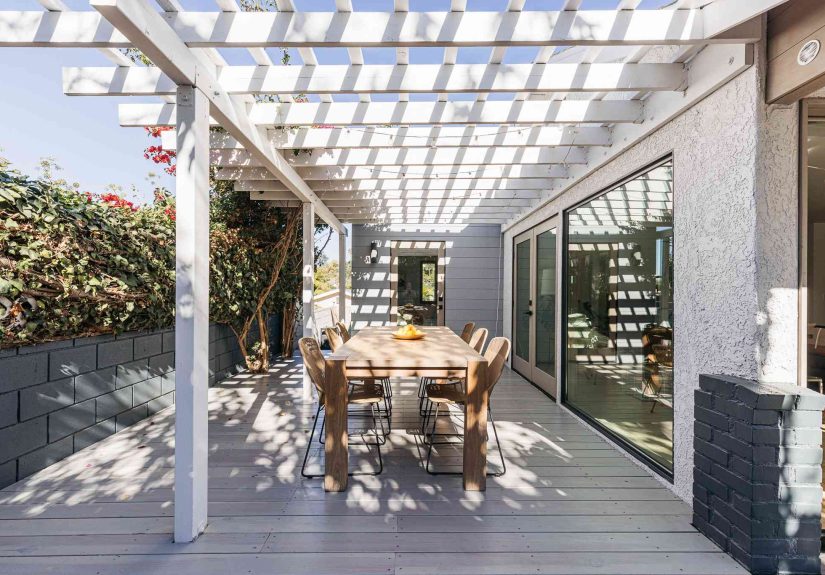
5) A pergola that frames the space with dappled shade
The classic pergola is part shade solution, part outdoor architecture. It defines “rooms” on a deck and looks good in almost any style
farmhouse, modern, coastal, you name it. Boost shade by tightening rafter spacing or adding purlins on top.
6) An attached pergola to blend indoor and outdoor
An attached pergola connects the deck to the home visually and functionally. If you’re trying to make the deck feel like a natural
extension of the kitchen or living room, this is a strong moveespecially when you add a canopy or side shades.
7) A pergola with a retractable canopy
This is “shade on demand.” Open it for stars and sunshine, close it when the sun gets intense.
Retractable systems can be fabric panels on tracks, sliding canopies, or integrated shade kits.
It’s the flexibility sweet spot between “open pergola” and “solid roof.”
8) A louvered pergola for adjustable sun and airflow
Louvered pergolas let you tilt slats to control light and ventilation. Some are manual; some are motorized.
If you love the idea of tuning your shade like a dimmer switch, this option is hard to beatespecially in hot climates.
9) A pergola topped with polycarbonate panels
If you like bright shade (not cave-like darkness), polycarbonate panels can block harmful rays while letting in visible light.
It’s a practical choice for people who want to keep the deck feeling open and daytime-friendly.
10) Corrugated panels for budget-friendly coverage
Corrugated roofing panelsoften polycarbonate or similar materialsare popular for DIY covers because they’re lightweight and quick to install.
Done neatly with proper framing and trim, they look intentional and keep the deck dry without the price tag of a full roof build.
11) A standing-seam or metal roof for crisp, modern protection
Metal roofing is durable and sheds rain well. It can look sleek and modern or rustic depending on the structure underneath.
If you want a “set it and forget it” roof, metal can be a strong long-term play (especially with proper insulation or ceiling finish).
12) A screened-in deck for bug-free shade
If mosquitoes treat your ankles like an all-you-can-eat buffet, screening is the ultimate quality-of-life upgrade.
A screened deck still feels outdoors, but it’s far more usable in humid regions and during buggy seasons.
13) A three-season room when you want comfort without full indoor commitment
Three-season rooms add windows or panels for wind/rain protection while keeping a breezy vibe.
It’s ideal if you want to extend the deck season but don’t need full HVAC like a true home addition.
14) A glassy sunroom-style cover for maximum light
A sunroom approach is for people who love daylight but want shelter from weather and bugs.
It’s more investment, but it can turn a deck into a near-year-round hangoutperfect for reading, plants, and lazy weekend mornings.
15) A loggia-style covered deck with columns and “house energy”
A loggia is a permanent, architectural cover that feels built-in and upscalethink columns, arches (optional),
and a long, shaded run along the house. If you want “vacation villa” vibes, this is your lane.
16) A gazebo for a cozy, defined retreat
Gazebos provide solid roof coverage and create an instant destination on your deck.
They’re great for dining, hot tubs, or a lounge corner that feels separate from the rest of the yard.
17) A shade sail for modern lines and flexible coverage
Shade sails are one of the fastest ways to add serious shade with a light, modern look.
They work especially well for irregular deck shapes or when you want to cover just part of the space.
Choose quality fabric rated for UV exposure and tension it properly for a clean, taut finish.
18) A retractable awning for instant shade (and a quick exit)
A retractable awning mounts to the house and rolls out when you need itthen disappears when you don’t.
It’s great for smaller decks or patios where you want shade without posts, beams, and a full construction project.
19) A cable-and-canopy system for a “soft roof” effect
Think of this like curtains for your ceiling: fabric panels slide on cables or tracks, so you can open and close coverage.
It’s a smart choice for pergolas or simple frames where you want adjustable shade without heavy materials.
20) A pop-up canopy for renters, parties, and “try before you build”
Pop-up canopies aren’t glamorous, but they’re incredibly useful. They’re also a great way to test how much shade you really want,
where you want it, and whether you prefer full coverage or partial.
21) Cantilever umbrellas to cover seating without a center pole
Cantilever umbrellas swing out over seating or dining areas, keeping the base off to the side.
They’re surprisingly effective when you position them based on the sun’s pathand they’re easy to move when your shade needs change.
22) Outdoor curtains for shade, privacy, and a little drama
Curtains aren’t just prettythey’re functional side shade that blocks low-angle sun.
They also make a covered deck feel like a cabana (minus the resort fees).
Use outdoor-rated fabric and hardware built to handle wind and weather.
23) Roll-down solar shades for glare control
When the sun is low, overhead covers alone won’t save you. Roll-down shades on the sides of a pergola or roof cover
reduce glare, keep the space cooler, and offer privacy without fully closing things in.
24) Lattice or slat privacy walls that double as vertical shade
Vertical screens block harsh side sun and add a design feature at the same time. Pair slats or lattice with planters,
climbing vines, or even a built-in bench to make the deck feel finishedlike it was always meant to be a “room.”
Quick Matching Guide: Which Cover Fits Your Life?
If you want real rain protection: roof extension, shed roof, gable roof, pavilion, gazebo, or polycarbonate/metal roofing.
If you want flexible shade: retractable canopy pergola, louvered pergola, shade sail, retractable awning, cable canopies.
If you want fewer bugs and more comfort: screened-in deck or a three-season room approach.
If you want a “high style, low commitment” boost: cantilever umbrellas, curtains, roll-down shades, privacy walls.
Materials and Maintenance Notes (So Your Cover Doesn’t Turn Into a Weekend Hobby)
Wood (like cedar or redwood) looks warm and classic but needs periodic sealing or staining.
Aluminum and steel are durable and often lower maintenance, with a cleaner modern look.
Composite products can reduce upkeep while still offering a “wood-like” vibe.
For roof panels, consider how much light you want: solid roofing gives the most shelter; translucent panels brighten the space.
Whatever you choose, build for water management. Shade is great, but a cover that traps water against the house or pools on top
is basically a slow-motion problem. A little planning (slope, gutters, flashing, drainage) makes a huge difference long term.
500+ Words: Real-World Experiences and Lessons From Covered Deck Projects
Homeowners often start with one simple goal“I just want some shade”and end up discovering that outdoor comfort is a whole ecosystem.
The most common surprise is how the sun moves. A cover that looks perfect at noon can feel totally ineffective at 5 p.m. when the sun is
blasting in from the side. That’s why many successful covered deck setups combine an overhead solution (roof, pergola, sail)
with a side solution (curtains, roll-down shades, privacy slats). The pairing is what makes the space consistently usable.
Another frequent “didn’t see that coming” moment: airflow. People assume any cover automatically makes the deck cooler.
Often it doesbut not always. A low, solid roof can trap warm air like a lid on a pot, especially on still summer days.
Covered decks that feel best tend to incorporate ventilation: higher ceilings, open sides, ceiling fans, and designs that allow heat to rise
and escape. Even a basic outdoor ceiling fan can change the vibe from “sticky” to “actually relaxing” in minutes.
There’s also the furniture reality check. Under a partial cover (like a pergola or sail), cushions and rugs may still get sun and weather exposure.
People who are happiest long-term usually plan “zones”: a fully protected spot for upholstered seating and electronics, and a more open zone
where sun exposure is okay. If you’re adding a dining table, consider glare. A beautiful outdoor meal becomes less charming when one person
has direct sun in their eyes the whole time, like they’re being interrogated by the sky.
Bug control shows up in experience stories over and over. In many regions, the difference between “we never use the deck”
and “we live out here” is screening. A screened-in deck can feel like a major step, but people who choose it often talk about how it changes
their routines: morning coffee becomes automatic, dinners drift outdoors, and kids can play without constant swatting.
Even without full screening, curtains and roll-down shades can help create a calmer, more sheltered feelingespecially when wind picks up.
Maintenance is the last big lesson. A cover that looks amazing on day one can become annoying if it requires constant attention.
Cheap fabric that fades quickly, hardware that rusts, or systems that flap in the wind can turn “shade” into “why did we do this?”
The best experience reports usually come from people who picked outdoor-rated materials, planned for drainage,
and sized the cover to the way they really live. In other words: they designed for Tuesday night, not just for the photos.
Finally, there’s the “finish” factor. A covered deck feels complete when it includes lighting, a fan, and a few deliberate details
not necessarily expensive ones. String lights, warm-toned ceiling boards, a simple privacy wall, or a couple of planters can make a cover feel
intentional rather than temporary. The most loved covered decks aren’t always the biggest or priciest. They’re the ones that make people
think, “Let’s stay out here a little longer.”
Conclusion
Covered deck ideas aren’t one-size-fits-all. The right solution depends on whether you’re fighting heat, glare, rain, bugs, or all of the above.
Start by deciding how you want the deck to feelopen and breezy, cozy and enclosed, flexible and adjustable, or fully sheltered like an outdoor room.
Then build your shade plan around real life: sun direction, ventilation, and how you actually use the space. Your future self (the one not melting
in a lawn chair) will be very grateful.