Table of Contents >> Show >> Hide
- 25 Moments That Changed Everything
- 1. The Great Migration remade Harlem
- 2. World War I changed Black expectations
- 3. Claude McKay’s “If We Must Die” gave the era its backbone in 1919
- 4. The Brownies’ Book began speaking to Black children in 1920
- 5. Shuffle Along exploded onto Broadway in 1921
- 6. Harlem’s literary magazines created a home base for new voices
- 7. Jessie Redmon Fauset helped build the movement from the editorial desk
- 8. Jean Toomer published Cane in 1923
- 9. The 1924 Civic Club dinner made the literary world pay attention
- 10. Alain Locke reframed the era with “The New Negro”
- 11. The New Negro anthology arrived in 1925
- 12. The 135th Street Branch opened its special Black history collection in 1925
- 13. Arturo Schomburg’s collection was added in 1926
- 14. The Opportunity literary contests created breakout stars
- 15. Langston Hughes published “The Weary Blues” and then The Weary Blues
- 16. Zora Neale Hurston arrived in New York and shook up the room
- 17. Countee Cullen made lyric poetry feel newly powerful
- 18. Fire!! burst onto the scene in 1926
- 19. Aaron Douglas gave the Renaissance a visual language
- 20. Augusta Savage proved the Renaissance could sculpt institutions, not just statues
- 21. The Cotton Club turned Harlem jazz into a national obsession
- 22. Duke Ellington’s rise linked Harlem nightlife to lasting musical innovation
- 23. The Savoy Ballroom opened in 1927 and changed social space itself
- 24. Novels by Nella Larsen and Claude McKay complicated Black identity
- 25. The Great Depression changed the movement, but not its legacy
- Why These Moments Still Matter
- Experiences That Help Us Feel the Harlem Renaissance
- Conclusion
- SEO Tags
The Harlem Renaissance did not arrive quietly. It did not tap politely on America’s door and ask to be let in. It kicked the door open wearing good shoes, carrying a stack of poems, and humming a jazz riff that refused to be ignored. Centered in Harlem in the 1920s and early 1930s, this cultural movement transformed American literature, music, theater, and visual art. More importantly, it reshaped how Black life could be seen, written, sung, painted, and celebrated.
Although Harlem became the symbolic capital of the movement, the Harlem Renaissance was bigger than one neighborhood. It grew out of migration, political change, racial violence, artistic ambition, and a new insistence that Black Americans could define themselves on their own terms. Below are 25 crucial moments that helped build, energize, and ultimately define the Harlem Renaissance.
25 Moments That Changed Everything
1. The Great Migration remade Harlem
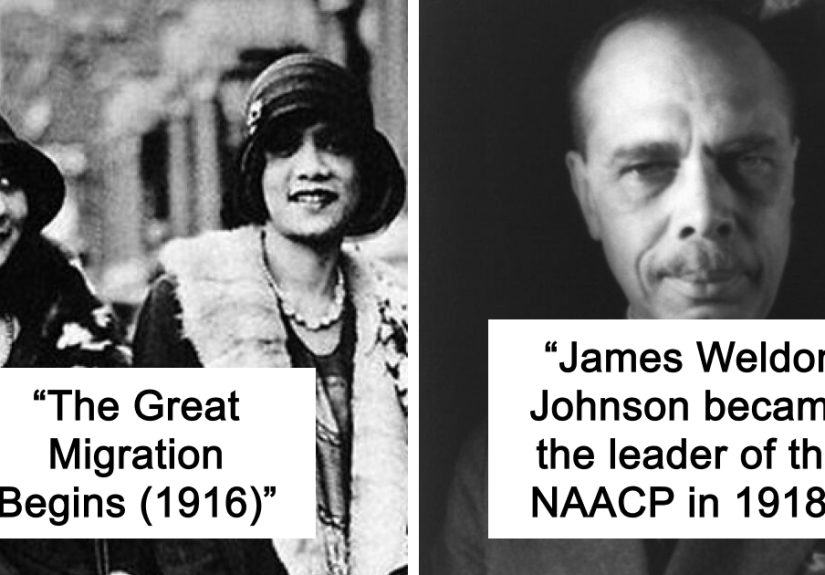
Before the movement had a name, it had momentum. During the Great Migration, hundreds of thousands of Black Americans left the South for Northern cities, and Harlem became one of the most important destinations. That population shift packed the neighborhood with energy, talent, political conversation, churches, businesses, and ambition. No migration, no Harlem as cultural capital. It was the human foundation of everything that followed.
2. World War I changed Black expectations
Black soldiers returned from World War I having served a country that still denied them full citizenship. That contradiction sharpened demands for dignity and rights. The postwar period helped produce a new mood: less apology, more assertion. The Harlem Renaissance would become one of the clearest artistic expressions of that mood, turning frustration into literature, music, and intellectual fire.
3. Claude McKay’s “If We Must Die” gave the era its backbone in 1919
Written in the violent aftermath of Red Summer, Claude McKay’s sonnet did not whisper. It challenged racist terror with disciplined, defiant language. The poem became a rallying cry and showed that Black writers could meet political crisis with artistic brilliance. It also proved that poetry could punch. Elegantly, even. In a tuxedo, if necessary.
4. The Brownies’ Book began speaking to Black children in 1920
Edited by W. E. B. Du Bois, Jessie Redmon Fauset, and Augustus Granville Dill, The Brownies’ Book gave Black children stories, images, and ideals that affirmed their worth. That mattered enormously. A movement that aimed to redefine Black identity could not leave young readers behind. This magazine helped make cultural pride a family affair, not just a salon conversation for adults.
5. Shuffle Along exploded onto Broadway in 1921
When Eubie Blake and Noble Sissle’s Shuffle Along became a hit, it changed theater history. Written, produced, and performed by African Americans, the musical proved Black performers and creators could draw major audiences and shape mainstream entertainment. It also launched careers and widened possibilities for Black stage work. Broadway did not suddenly become fair, but it did become impossible to ignore Black talent.
6. Harlem’s literary magazines created a home base for new voices
Little magazines and journals such as The Crisis, Opportunity, and later Fire!! gave writers space to experiment, argue, and publish. These outlets were more than magazines. They were engines. They turned isolated talent into a visible movement and allowed Black writers to reach readers without waiting for the white literary establishment to hand over a key.
7. Jessie Redmon Fauset helped build the movement from the editorial desk
Movements need stars, but they also need editors with sharp pencils and sharper instincts. As literary editor of The Crisis, Jessie Redmon Fauset championed emerging writers and helped shape the movement’s literary identity. She nurtured voices, set standards, and created opportunities. In other words, she did the glamorous work of making genius meet deadlines.
8. Jean Toomer published Cane in 1923
Cane was not a safe, tidy, “everyone will understand this immediately” kind of book. It blended poetry, fiction, and drama into a striking modernist work about Black life in the rural South and urban North. Its experimental form showed that Black literature did not have to choose between political substance and artistic innovation. It could be daring, layered, and wildly original.
9. The 1924 Civic Club dinner made the literary world pay attention
One famous dinner helped connect Black writers with white publishers, editors, and patrons. That gathering is often treated as a turning point in the literary phase of the Harlem Renaissance because it opened doors that had long been bolted shut. It also helped spark the idea for a major publication on Harlem as the center of a new Black cultural movement.
10. Alain Locke reframed the era with “The New Negro”
Locke’s idea of the “New Negro” captured the spirit of a generation that rejected old racist caricatures and demanded self-definition. He argued that Black identity should be expressed with dignity, complexity, and artistic confidence. The phrase became shorthand for a broader cultural awakening. Suddenly, Black modernity had a manifesto, and it wore spectacles.
11. The New Negro anthology arrived in 1925
Locke’s anthology was one of the movement’s landmark books. It gathered fiction, poetry, essays, and art by leading Black creators and gave the Harlem Renaissance an intellectual center of gravity. The book did not just describe a movement. It announced one. For many readers, this was the moment the Renaissance became unmistakably real.
12. The 135th Street Branch opened its special Black history collection in 1925
The Division of Negro Literature, History, and Prints at the 135th Street Branch Library became a vital institutional anchor for Harlem’s creative life. Writers, scholars, and readers needed more than inspiration. They needed archives, books, and a place to think. The library became one of the movement’s great engines of memory and study.
13. Arturo Schomburg’s collection was added in 1926
When Schomburg’s extraordinary personal collection joined that library division, the significance was enormous. Black history, art, and intellectual achievement were being preserved on a scale that matched the community’s hunger for knowledge. The acquisition helped turn Harlem into not just a place of performance, but a place of research, preservation, and cultural authority.
14. The Opportunity literary contests created breakout stars
Opportunity, the journal of the National Urban League, used prizes and awards to spotlight new talent. These contests helped writers such as Langston Hughes, Zora Neale Hurston, and Countee Cullen gain recognition. Awards are not everything, but in a segregated literary marketplace they could function like a loudspeaker. And this one worked.
15. Langston Hughes published “The Weary Blues” and then The Weary Blues
Hughes captured the pulse of Harlem by bringing blues rhythms and ordinary Black speech into poetry with dazzling skill. His poem “The Weary Blues” won major attention, and his 1926 collection cemented his place as one of the movement’s defining voices. Hughes insisted that Black life in all its beauty, humor, struggle, and music belonged at the center of American literature.
16. Zora Neale Hurston arrived in New York and shook up the room
Hurston reached Harlem in 1925 and quickly became one of the Renaissance’s most dynamic figures. She brought folklore, wit, anthropological curiosity, and fearless personality into the movement. Hurston expanded what Black literature could sound like by taking Southern speech, folk tradition, and Black interior life seriously as sources of art rather than material to be polished into bland respectability.
17. Countee Cullen made lyric poetry feel newly powerful
With books such as Color in 1925, Cullen demonstrated that Harlem Renaissance poetry could be formal, elegant, and emotionally charged without losing its racial urgency. His work reminded readers that Black artistry did not have to fit one style. The movement contained jazz rhythms and sonnets, sermons and satire, urgency and polish. That range was part of its genius.
18. Fire!! burst onto the scene in 1926
The magazine Fire!!, created by younger Harlem writers and artists, tried to push the movement into riskier territory. Though only one issue appeared, its importance far exceeded its shelf life. It challenged polite conventions, embraced experimental work, and showed that the Renaissance included generational debate. Movements are healthiest when everybody is not politely agreeing over tea.
19. Aaron Douglas gave the Renaissance a visual language
Aaron Douglas became one of the era’s defining visual artists by fusing African-inspired imagery, modernist design, and bold silhouettes. His illustrations and paintings helped make Black history and Black modernity look monumental. He did not merely decorate the movement. He gave it an instantly recognizable visual grammar, one that still shapes how many people imagine the Harlem Renaissance today.
20. Augusta Savage proved the Renaissance could sculpt institutions, not just statues
Augusta Savage was a gifted sculptor, but her influence went well beyond her own art. She mentored younger artists, advocated for Black creators, and later directed the Harlem Community Art Center. Savage helped make the visual arts less isolated and more communal. She built ladders for others while climbing her own, which is a rare and heroic skill.
21. The Cotton Club turned Harlem jazz into a national obsession
The Cotton Club was one of the most famous venues associated with the era, and its contradictions were impossible to miss. It showcased Black performers while catering largely to white audiences. Still, it helped broadcast Harlem’s music far beyond New York. The club made jazz central to American popular culture even as it exposed the ugly racial limitations of that success.
22. Duke Ellington’s rise linked Harlem nightlife to lasting musical innovation
Ellington’s work, especially through major Harlem venues, elevated jazz from entertainment to high art without draining it of swagger. His compositions and arrangements demonstrated the sophistication of Black musical creativity to audiences who could no longer pretend jazz was a passing fad. He made elegance swing, which is harder than it sounds.
23. The Savoy Ballroom opened in 1927 and changed social space itself
The Savoy was famous not just for music and dancing, but for being integrated. In a deeply segregated America, that mattered. It became a living symbol of Harlem’s nightlife, style, and social experimentation. The Savoy showed that the Harlem Renaissance was not only in books or galleries. It lived in bodies moving, bands battling, and communities making joy under pressure.
24. Novels by Nella Larsen and Claude McKay complicated Black identity
Works like McKay’s Home to Harlem and Larsen’s Quicksand and Passing pushed the movement into more psychologically complex territory. These books dealt with class, colorism, sexuality, migration, performance, and belonging. They proved the Harlem Renaissance was not just a celebration. It was also an inquiry, sometimes a messy one, into who Black Americans could be in modern life.
25. The Great Depression changed the movement, but not its legacy
By the early 1930s, economic collapse, changing cultural markets, and the end of Prohibition altered Harlem’s artistic ecosystem. The classic phase of the Renaissance faded, but its influence did not. It laid groundwork for later Black arts movements, civil rights thought, and a lasting redefinition of American culture. The party changed rooms, but the music never really stopped.
Why These Moments Still Matter
The Harlem Renaissance mattered because it changed who got to represent Black life in America. It created space for self-definition in a nation that had long relied on distortion and exclusion. It also broke open artistic boundaries. Poetry borrowed from blues. Painting borrowed from African forms and modernism. Theater borrowed from everyday speech and lived struggle. Nothing stayed in its lane, which is often how real creativity works.
Just as important, the movement made a lasting argument: Black culture was not a side note to American culture. It was central to it. That argument still matters, because every generation ends up rediscovering it and, somehow, acting surprised all over again.
Experiences That Help Us Feel the Harlem Renaissance
To understand the Harlem Renaissance, it helps to move beyond dates and titles and imagine the experiences wrapped around them. Picture a young family arriving in Harlem after leaving the South. The streets are crowded, rents are high, work is uncertain, and racism has not magically disappeared just because the train headed north. But there is also something new in the air: possibility. On one block, someone is arguing politics outside a newspaper office. On another, a pianist is making a cheap upright sound like a revelation. A bookstore window displays Black authors. A child sees a magazine that looks like it was made with them in mind. That kind of recognition can change a life.
Now imagine being a young writer in Harlem in the mid-1920s. Maybe you are brilliant, maybe you are broke, and maybe you are both, which was practically a job requirement. You carry poems in your coat pocket and hope an editor at The Crisis or Opportunity might notice your work. You spend evenings at gatherings where people argue about art, race, Africa, politics, and whether jazz belongs in “serious” literature. Someone reads a sonnet. Someone else says sonnets are too polite for the moment. Another person insists that folk speech is poetry already. It is chaotic, ambitious, and alive.
For performers and musicians, the experience was equally complicated. A singer could draw applause in a famous club and still walk into humiliation outside it. A band could electrify audiences while management enforced ugly racial rules. Success was real, but so were the barriers. That tension helps explain why the art of the Harlem Renaissance feels so layered. It is joyful without being naive, stylish without being shallow, and proud without pretending the world was fair.
For visual artists, the experience often involved creating beauty while fighting for access. Many worked without the institutional support routinely offered to white artists. Yet they built networks, shared studio space, mentored one another, and insisted that Black subjects belonged on canvas, in sculpture, and in public culture. The experience of making art in Harlem was not simply personal expression. It was also a cultural claim: we are here, we have history, and we will not be painted out of it.
And for ordinary residents, the Harlem Renaissance was something you could hear from an apartment window, feel in a church service, debate at a dinner table, or encounter in a library reading room. It was not only an elite movement, despite the myths. It lived in neighborhoods, newspapers, cabarets, classrooms, beauty shops, rented rooms, and packed sidewalks. The experience of the Harlem Renaissance was the experience of a community discovering that its art could be both mirror and megaphone.
Conclusion
The Harlem Renaissance was never just one thing. It was a literary boom, a music revolution, a visual arts breakthrough, a political mood, and a public declaration of Black creativity all at once. Its crucial moments were not random highlights. Together, they formed a chain reaction that changed American culture for good. If the movement still feels alive today, that is because it taught the nation a lesson it keeps needing to relearn: when Black artists define themselves, American art gets bigger, smarter, richer, and far more interesting.