Table of Contents >> Show >> Hide
- First, What “Collapsing Trachea” Actually Means (In Plain English)
- Way #1: The Vet Exam + History (The “Pattern Recognition” Diagnosis)
- Way #2: ImagingX-Rays First, Then Fluoroscopy for the “Moving Target”
- Way #3: Airway Endoscopy (Tracheoscopy/Bronchoscopy) and Advanced Workup
- What “Diagnosis” Should Include (Not Just a Yes/No)
- How to Prep for the Vet Visit (So the Appointment Is Actually Useful)
- Real-World Experiences: What Chihuahua Owners (and Clinics) Commonly Notice
- Conclusion
If you share your home with a Chihuahua, you already know they come with two features by default:
a huge personality… and a surprisingly strong opinion about breathing quietly.
So when that signature “goose-honk” cough shows up, it’s easy to panic (or to assume your dog is auditioning for a tiny-horn section).
One common culprit in toy breeds is tracheal collapsea condition where the windpipe (trachea) narrows dynamically, especially during excitement,
exercise, pulling on a collar, or hot/humid weather.
The tricky part? Tracheal collapse can look like other problems: kennel cough, chronic bronchitis, heart disease, airway irritation from smoke/perfume,
even something as simple as “I inhaled a crumb and now I must cough theatrically for 20 minutes.” That’s why a real diagnosis matters.
Below are three veterinarian-used ways to confirm (or rule out) a collapsing trachea in Chihuahuasplus what each test can and can’t tell you.
Quick note: This article is educational and not a substitute for veterinary care. If your Chihuahua is struggling to breathe, turns blue/gray at the gums, collapses, or can’t settle, treat it as an emergency.
First, What “Collapsing Trachea” Actually Means (In Plain English)
A healthy trachea is supported by cartilage ringsthink of them like the sturdy ribs of a vacuum hose.
With tracheal collapse, those rings lose rigidity and the top membrane can sag inward, narrowing the airway.
The narrowing may be worse during inhalation (often more cervical/neck trachea) or during exhalation (often more intrathoracic/chest trachea).
Many dogs also have some degree of bronchial collapse or chronic lower-airway inflammation, which can complicate the picture.
Common Chihuahua Clues
- Dry, honking cough that flares with excitement, pulling, heat, or after drinking
- Noisy breathing (wheezes/raspy sounds) or episodes of “reverse sneezing” mixed in
- Exercise intoleranceyour dog taps out early like, “Nope, I’m done. Carry me.”
- Gagging/retching that looks like “trying to cough up something”
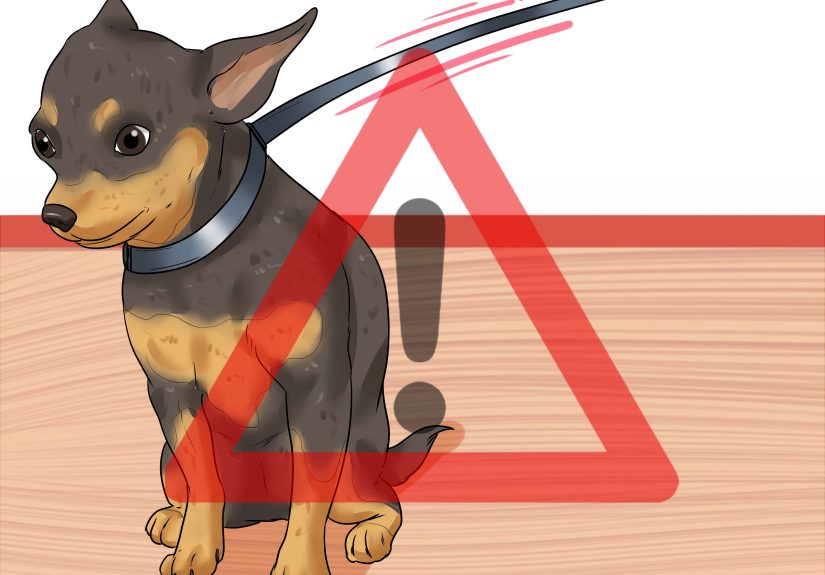
- Worse with collar pressure (a big reason harnesses are often recommended)
Now, let’s get to the three ways vets diagnose tracheal collapsefrom simplest to most definitive.
Way #1: The Vet Exam + History (The “Pattern Recognition” Diagnosis)
Diagnosis often starts before any machine turns on. A veterinarian gathers a focused history and performs a physical exam to decide:
“Does this cough pattern fit tracheal collapseor are we chasing something else?”
What your vet is listening and looking for
- Cough character: dry and honking versus wet/productive
- Triggers: excitement, leash pulling, heat/humidity, eating/drinking
- Duration: intermittent episodes versus daily chronic cough
- Breathing effort: more trouble breathing in vs. out
- Heart and lung sounds: murmurs, crackles, wheezes
- Body condition: extra weight can worsen airway effort
The gentle “tracheal pinch” (yes, it’s a thing)
During the exam, some dogs with suspected tracheal collapse will cough when very light pressure is applied to the trachea.
This doesn’t “prove” collapse by itself (some dogs cough for other reasons), but it’s a useful clueespecially when it matches the classic history.
Why this step matters (even if imaging is planned)
Tracheal collapse rarely exists in a vacuum. Your vet is also screening for common look-alikes:
upper-airway irritation, infectious tracheobronchitis, dental disease with post-nasal drip,
heart enlargement, chronic bronchitis, airway parasites in certain regions, and even exposure-related cough (smoke, aerosols, dusty litter, etc.).
Best-owner move: show your vet a video
Chihuahuas are masters of timingmeaning they may cough all night at home, then sit angelically at the clinic like,
“Cough? Never heard of her.” A short phone video of an episode (especially one showing posture, breathing effort, and the sound) can be gold.
Bottom line: the exam and history build suspicion and prioritize next tests, but most dogs still need imaging or airway visualization to confirm.
Way #2: ImagingX-Rays First, Then Fluoroscopy for the “Moving Target”
Tracheal collapse is dynamicmeaning it can worsen during certain phases of breathing, coughing, or excitement.
That’s why standard chest X-rays can be helpful but sometimes miss it.
Imaging is still a cornerstone because it can also reveal “bonus problems” (heart changes, lung patterns, pneumonia, bronchitis) that affect treatment choices.
2A) Radiographs (X-rays): the practical first-line test
Most clinics can take neck and chest radiographs quickly. Your vet may request different views (and sometimes both inspiratory and expiratory timing),
because a single snapshot might catch the trachea at a moment when it looks fairly normal.
X-rays can help your vet:
- See obvious tracheal narrowing in the neck or chest
- Check for heart enlargement or signs of heart failure
- Look for lung patterns consistent with bronchitis or pneumonia
- Rule out certain structural issues and masses
Limitations: X-rays may not detect collapse if it isn’t happening at that exact moment. A Chihuahua can have classic symptoms and a “meh” X-ray.
2B) Fluoroscopy: the “movie” that catches collapse in real time
If X-rays are inconclusiveor your dog’s signs are significantyour vet may recommend fluoroscopy,
which is essentially a moving X-ray that can show the trachea during inhalation, exhalation, and sometimes during a cough.
Because it captures motion, fluoroscopy can be excellent for identifying where collapse happens and how severe it looks while the dog is actually breathing.
What fluoroscopy can do especially well:
- Identify location (cervical vs. thoracic trachea; sometimes bronchial involvement)
- Show dynamic severity across different breathing phases
- Help guide next steps (medical management vs. referral; whether endoscopy is warranted)
In some specialty settings, fluoroscopy is performed with the dog awake or lightly restrained, because heavy sedation can alter airway tone and coughing.
Your veterinarian will choose what’s safest and most informative for your Chihuahua.
Limitations: fluoroscopy shows motion and narrowing, but it doesn’t show the inside surface of the airway. It can’t sample for infection or inflammation.
Bottom line: X-rays are a smart first step; fluoroscopy is often the next-level tool when the diagnosis is elusiveor when you want a clearer map of what’s collapsing and when.
Way #3: Airway Endoscopy (Tracheoscopy/Bronchoscopy) and Advanced Workup
If your Chihuahua has moderate to severe signs, doesn’t respond as expected to initial treatment, or has a complicated cough history,
your vet may recommend a referral for tracheoscopy/bronchoscopy (airway endoscopy).
This involves passing a small camera into the airwaytypically under general anesthesiato directly visualize the trachea and bronchi.
Why endoscopy is considered the most definitive “look inside”
- Direct visualization of airway shape and collapse pattern
- Ability to assess for tracheobronchial collapse (not just the trachea)
- Opportunity to collect samples (wash/lavage) for cytology and culture if infection is suspected
- Helps grade severity and evaluate concurrent airway disease
Endoscopy can be especially useful when symptoms don’t match imaging, or when your vet suspects “more than one thing” is happeningcommon in tiny dogs.
The trade-offs (because there always are)
Bronchoscopy typically requires anesthesia, which can limit the ability to evaluate coughing-related collapse in real time
(since your dog isn’t awake doing the coughy-cough dance).
That’s one reason fluoroscopy and bronchoscopy are sometimes viewed as complementary rather than competitors.
Your specialist may use a combination approach based on the case.
What about CT scans?
CT (computed tomography) can be useful in certain complex airway casesespecially if a mass, severe structural abnormality, or other pathology is suspected.
But for straightforward tracheal collapse confirmation, clinics often reach for radiographs/fluoroscopy and/or endoscopy first.
Bottom line: endoscopy gives the most detailed “inside view” and allows samplingbut it’s more invasive, more expensive, and usually requires anesthesia.
What “Diagnosis” Should Include (Not Just a Yes/No)
A helpful tracheal collapse diagnosis is more than a rubber stamp. Ideally, you’ll leave the visit with clarity on:
- Severity (mild vs. moderate/severe; sometimes graded by percent narrowing)
- Location (neck, chest, or bronchial involvement)
- Triggers and environmental contributors (collar pressure, smoke, obesity, heat)
- Comorbidities (bronchitis, heart disease, infections, airway irritation)
- Plan (medical management steps, when to refer, what to monitor)
Red-flag signs that should change the urgency
- Labored breathing at rest
- Blue/gray gums or tongue
- Fainting/collapse
- Severe distress during an episode that doesn’t quickly improve
When those appear, the goal isn’t “confirm the diagnosis next week.”
The goal is “stabilize breathing now,” then diagnose safely.
How to Prep for the Vet Visit (So the Appointment Is Actually Useful)
- Bring a video of the cough episode (sound + posture + triggers).
- Write down triggers: after drinking? after excitement? on a leash? at night?
- List exposures: smoke, aerosols, new candles, construction dust, new cleaners.
- Note response to meds (if any have been tried): did coughing decrease or not?
- Bring harness/collar details: a tight collar can worsen symptoms and can be part of the story.
The more your vet can recreate the “home reality,” the faster you get answersand a plan that fits your dog.
Real-World Experiences: What Chihuahua Owners (and Clinics) Commonly Notice
The internet loves a dramatic Chihuahua, but owners living with a chronic cough know it’s not just “cute noise.”
What follows are patterns that many owners report and many veterinary teams recognizeshared here so you feel less alone and more prepared.
1) The cough that has a social calendar
A common storyline: your Chihuahua is quiet all day, then coughs the moment guests arrivelike the world’s smallest bouncer yelling,
“EXCUSE ME, THIS IS AN EXCITEMENT EVENT.” Owners often notice the honking cough clusters around stimulation:
doorbells, car rides, post-bath zoomies, or the moment you pick them up.
That pattern doesn’t prove tracheal collapse, but it’s a classic reason vets put it high on the list.
The practical lesson: try to catch one of those episodes on video. In many cases, that short clip speeds up diagnosis more than a long verbal description.
2) The “X-ray looked fine… so why is my dog still honking?” moment
Owners sometimes feel whiplash when radiographs don’t show an obvious collapse.
It can sound like, “Good news, the X-ray is normal,” followed by, “Bad news, my dog is still coughing like a tiny goose with a megaphone.”
Vets see this a lot because tracheal collapse can wax and wane, and an X-ray is a snapshot.
In real life, that’s where next-step imaginglike fluoroscopyor careful repeat radiographs (including neck views and timed breathing phases) can help.
Many owners report feeling validated when a moving study finally captures what they’ve been hearing at 2:00 a.m.
3) The harness conversion (and the surprisingly big difference)
Another frequent “experience” is how much collar pressure changes symptoms.
Owners often describe a cough that spikes during walks, then improves noticeably after switching to a well-fitted harness.
This isn’t magic, and it’s not a standalone diagnostic testbut it’s a meaningful clue because neck pressure can trigger coughing in dogs with sensitive airways.
It also becomes part of the management plan once diagnosis is made. In clinics, staff commonly recommend harness use while diagnostics are underway,
simply to reduce unnecessary irritation.
4) The “more than one thing is going on” reality
Many Chihuahuas don’t read the rulebook that says you’re allowed only one diagnosis at a time.
Owners may learn their dog has mild tracheal collapse and chronic bronchitis, or a heart murmur that complicates coughing, or airway inflammation from irritants.
This is one reason bronchoscopy and airway sampling can be discussedespecially when coughing is persistent or treatment responses are inconsistent.
A helpful perspective shift: the goal isn’t always to find a single villain; it’s to map the whole neighborhood of causes and calm the airway ecosystem.
5) The emotional part: fear during flare-ups, relief with a plan
Owners often describe the scariest moments as sudden coughing fits that escalateespecially if the dog seems panicked or struggles to settle.
Even when the episode passes, it can leave you feeling on edge, listening for every breath.
One of the most practical benefits of a formal diagnosis is that it comes with a “what to do next” plan:
how to reduce triggers, what signs require urgent care, and which tests matter most if things worsen.
In other words, diagnosis isn’t just a labelit’s a way to trade guesswork for a playbook.
If your Chihuahua is coughing, you’re not overreacting by seeking answers. You’re being a good detective.
And yesyour dog may still be dramatic afterward. But at least you’ll know why.
Conclusion
Diagnosing a collapsing trachea in Chihuahuas usually happens in layers:
(1) a targeted history and physical exam that spots the classic pattern,
(2) imagingoften starting with X-rays and escalating to fluoroscopy when the collapse is elusive,
and (3) airway endoscopy (and sometimes advanced testing) when you need the most definitive view and/or samples.
The “best” approach depends on your dog’s severity, safety considerations, and whether other conditions may be contributing to the cough.
If your Chihuahua’s cough is persistent, worsening, or paired with breathing effort, don’t wait for it to “just go away.”
The right diagnosis is the fastest route to real relieffor your dog and for your nervous system.