Table of Contents >> Show >> Hide
There is a huge difference between a building that does its job and a building that quietly whispers, “Yeah, we really thought this through.” Great architecture is not just about square footage, glossy renderings, or looking dramatic at sunset for social media. It is about effort you can feel. It is the extra hour spent shaping light, the extra sketch that turns a hallway into an experience, the extra restraint that keeps a building from bullying its site. In other words, it is the stuff that makes people stop mid-stride and say, “Wait, this is actually amazing.”
The most memorable projects rarely succeed because architects threw money at the problem and hoped marble would do the rest. They succeed because someone cared deeply about proportion, materials, movement, climate, history, community, and those tiny human moments most people do not notice until they are done well. Think of how Fallingwater seems to belong to its stream, how Casa Milà turns structure into sculpture, or how a well-designed bridge can become the symbol of an entire place. That is effort with purpose, not effort for applause.
Below are 50 examples of the kinds of moves architects make when they go beyond “good enough” and land squarely in “wow, somebody really cooked here.” Some are famous, some are subtle, and some are the architectural equivalent of a perfectly timed joke: smart, surprising, and impossible not to appreciate.
Why Special Architecture Feels Different
What makes a building feel extra special is not usually one giant gesture. More often, it is a stack of thoughtful decisions working together. The best architects study how a site holds wind, how daylight enters across the day, what materials age with dignity, and how people naturally move, pause, gather, and retreat. They also know that great design is not only visual. It is tactile, acoustic, emotional, and social. A good room looks nice. A great room changes how you breathe.
That is why the most admired architecture often shares a few habits. It respects the landscape instead of fighting it. It uses materials honestly and lets craftsmanship show. It treats adaptive reuse like a creative opportunity, not a compromise. It makes room for delight, whether that comes from a perfect stair landing, a rooftop view, a handrail that feels just right, or a beam of light hitting stone like it has a full-time job. In short, architects succeed when they remember that buildings are not trophies. They are lived experiences.
50 Times Architects Put In The Effort To Make Something Extra Special And Succeeded
- They let the site lead. The best projects do not look dropped from the sky. They look rooted, as if the land and the building signed a peace treaty and both sides won.
- They framed views instead of just adding windows. A window is basic. A carefully positioned view that turns a tree, canyon, or skyline into part of daily life is architecture doing actual magic.
- They used local materials with intention. Stone, timber, brick, and metal feel more meaningful when they belong to the climate and culture around them.
- They made heavy buildings feel graceful. Casa Milà is a classic example: a stone mass that somehow moves like fabric caught in a breeze.
- They turned façades into something more than a front cover. Texture, depth, shadow, pattern, and craft can make an exterior feel alive before you ever step inside.
- They treated daylight like a building material. When architects shape light with the same care they give concrete or wood, rooms gain mood, rhythm, and dignity.
- They used courtyards to pull light and air inward. This is one of the oldest tricks in architecture, and it still works because good ideas do not expire.
- They respected the landscape. Grand Canyon Lodge feels memorable partly because it seems to emerge from its setting rather than compete with it.
- They designed roofs people actually care about. A rooftop can be dead space, or it can be a destination. The second option is obviously more fun.
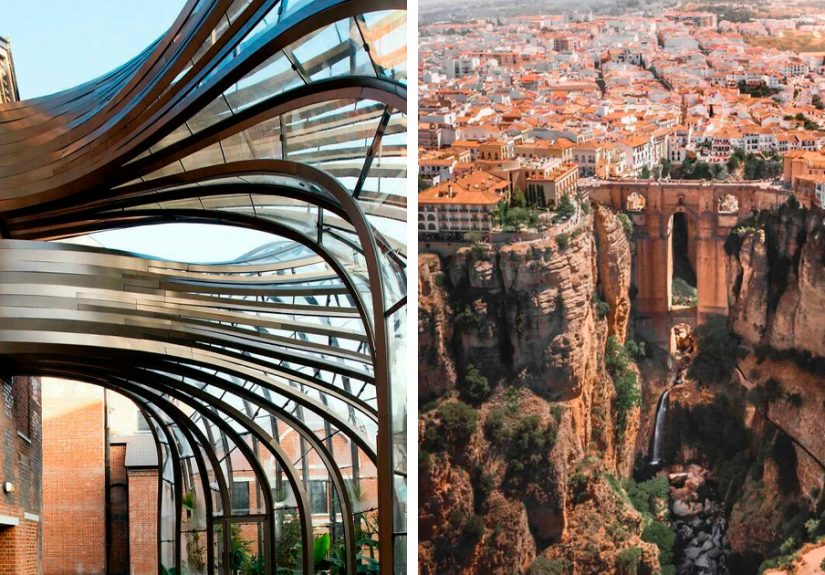
- They made bridges beautiful, not just useful. A great bridge connects more than two sides of a river. It connects identity, memory, and place.
- They kept structure visible when it added meaning. Exposed beams, arches, or frames can turn engineering into theater without becoming cheesy.
- They reused old buildings creatively. Turning warehouses, schools, factories, and churches into new spaces is not settling for second best. It is architecture with memory.
- They treated renovation as design, not cleanup. The smartest adaptive reuse projects keep the soul of the original while making the new work feel precise and fresh.
- They gave small spaces superpowers. Fold-down tables, built-in storage, sliding partitions, and carefully planned circulation can make tiny homes feel shockingly generous.
- They made stairs worth taking. The best staircases are not circulation devices. They are social stages, sculptural moments, and excuses to skip the elevator.
- They made thresholds feel ceremonial. A good entry tells you that you have arrived somewhere that matters, even if the building itself is modest.
- They designed for sound, not just sight. Quiet libraries, resonant chapels, calm homes, and welcoming restaurants all depend on acoustic attention that most people only notice when it is missing.
- They gave public buildings warmth. Civic architecture succeeds when it feels important without acting smug about it.
- They softened modernism with craft. Clean lines are great, but clean lines plus tactile materials are where the party starts.
- They made concrete feel human. With the right light, scale, wood, and detailing, concrete can feel serene instead of stern.
- They used wood to bring warmth and regional identity. Pacific Northwest modernism is full of buildings that prove understatement can still be unforgettable.
- They designed around climate instead of pretending weather is rude. Shade, airflow, thermal mass, and orientation are not side notes. They are the plot.
- They used deep overhangs and screens well. Nothing says thoughtful design like a building that knows where the sun is going before you do.
- They turned necessity into beauty. Ventilation towers, chimneys, drains, louvers, and shading devices can become signature features when designed with care.
- They embraced curves when curves made sense. Organic form can make a building feel less imposed and more alive.
- They left room for surprise. A sudden skylight, a hidden garden, a compression before a dramatic openingthese moments give architecture personality.
- They thought about how materials age. Great buildings usually get better with weather, not worse. Patina is not failure. It is character with receipts.
- They celebrated craftsmanship instead of hiding it. Joinery, stone cutting, metalwork, plaster, tile, and wood detailing can quietly carry a whole project.
- They made corners disappear. When glass meets landscape with almost no visual interruption, the boundary between indoors and outdoors becomes wonderfully suspicious.
- They used color sparingly and smartly. A bold accent in the right place can do more than a rainbow having a meltdown.
- They treated schools as places of dignity. Good educational buildings give students daylight, calm, flexibility, and the sense that their environment believes in them.
- They designed for well-being. Natural light, fresh air, movement, and comfort are not luxuries. They are baseline signs that someone cared.
- They shaped public space, not just the building object. The plaza, bench, path, porch, and courtyard matter as much as the walls.
- They used landscaping as part of the architecture. The best projects treat plants, paths, and topography as first-class design elements.
- They made libraries and reading spaces feel sacred. Not in a preachy way. More in a “wow, I suddenly want to read for four hours” way.
- They turned windows into places to inhabit. A window seat is proof that architecture sometimes loves us back.
- They made ceilings interesting. Skylights, coffers, vaults, timber grids, and sculpted planes remind people that looking up is still free.
- They handled historic buildings with respect. Good preservation is not pretending time stopped. It is adding a new chapter without vandalizing the book.
- They made infrastructure feel civic. Stations, bridges, terminals, and transit halls can feel grand without wasting everyone’s time.
- They designed memorable handrails, doors, and hardware. Small details shape daily contact, and daily contact shapes how people judge a place.
- They created flexible floor plans. Buildings that adapt over time are almost always more intelligent than buildings that assume life never changes.
- They reused embodied value. Saving an old structure can preserve energy, history, and urban texture all at once. That is a strong triple play.
- They designed with community input. When architecture listens first, the final result usually feels less like a statement and more like a gift.
- They made ordinary functions feel special. A kitchen, hallway, bath, or classroom can become memorable when proportion and detail are handled with real care.
- They understood human scale. Big buildings work better when entrances, edges, seating, and details still speak fluent human.
- They gave people places to pause. Landings, alcoves, terraces, and shaded edges create moments of rest that make buildings more generous.
- They balanced precision with warmth. Too much perfection can feel sterile. The best architecture keeps control without losing life.
- They integrated art instead of pasting it on later. Murals, carved surfaces, custom metalwork, and mosaics feel richer when they belong to the architecture itself.
- They made nighttime matter. Good lighting turns a building into a different experience after dark without making it look like it is auditioning for a sci-fi reboot.
- They designed for emotion, not only performance. The special projects are the ones that solve practical problems and still manage to move people.
- They built places that age with dignity. The ultimate sign of success is not that a building photographs well on opening day. It is that people love it years later.
What These 50 Wins Tell Us About Great Architecture
If you read through those examples and noticed the same ideas repeating, that is because excellence in architecture is rarely accidental. It comes from integration. The building, the site, the community, the materials, the climate, and the daily experience all need to speak to each other. When one of those parts is ignored, even a flashy project can feel hollow. When they work together, even a restrained project can feel extraordinary.
That is also why “special” does not always mean expensive or dramatic. A humble school renovation with better daylight and circulation may improve more lives than a luxury home with a cantilever so aggressive it looks like it owes money. The smartest architects know that beauty and usefulness are not enemies. Craft and sustainability are not enemies either. In fact, the most enduring work often proves that the details making a building delightful are the same details making it healthier, more efficient, more adaptable, and more loved.
Architects succeed at this level when they stop designing only for the camera and start designing for memory. People remember how a place welcomed them, how the air felt, how the materials sounded underfoot, how the light changed in the afternoon, and whether the space made them want to linger. That is the real scoreboard. Not the ribbon cutting. Not the buzzwords. Not the caption under a moody photo. The feeling.
Experiences That Make This Kind of Architecture Memorable
What really stays with people after visiting extraordinary architecture is not usually a floor plan they could redraw from memory. It is the chain of sensations. You walk up to a building and notice the way the path slows you down just enough. The entry is shaded. The door handle has weight. The ceiling compresses slightly, then the interior opens into a room full of daylight. Suddenly you are not just entering a building. You are being guided into an experience. That is the kind of effort people feel even when they cannot name it.
One of the most powerful experiences in architecture is the feeling that a building understands where it is. Maybe it uses rough stone that echoes the surrounding terrain. Maybe the windows catch a specific kind of morning light. Maybe the roofline follows the horizon instead of trying to dominate it. In those moments, architecture feels less like an object and more like a conversation with the landscape. People remember that because it feels calm, grounded, and strangely generous.
There is also a special pleasure in noticing craftsmanship up close. A stair tread that meets a wall perfectly. A wood joint so precise it feels inevitable. Metalwork that catches light in a way that changes across the day. These details create trust. They tell visitors that the building was not rushed, and that somebody cared enough to solve problems beautifully instead of merely hiding them. That kind of care is contagious. It makes people slow down and look harder, which is one of the best compliments a building can receive.
Adaptive reuse creates a different but equally rich experience. In reused buildings, people can often sense layers of time at once. An old brick wall sits beside a crisp new insertion. Timber beams carry history overhead while modern lighting quietly updates the mood. The result can feel emotionally deeper than brand-new construction because it does not erase what came before. It acknowledges memory and adds to it. Good architecture does not always start from zero. Sometimes it starts by listening.
Then there is delight, the quality that turns admiration into affection. Delight might be a hidden courtyard, a rooftop path, a reading nook tucked into a thick wall, or a bridge that makes an ordinary commute feel cinematic. These moments matter because they humanize architecture. They remind us that buildings are not just containers for activity. They can elevate routine. They can make waiting pleasant, movement graceful, work calmer, and home more restorative.
In the end, the most special architecture succeeds because it respects the fact that people experience buildings with their whole bodies. We see them, yes, but we also hear, touch, move through, rest inside, and remember them. When architects put in the effort to shape all of that, the result goes beyond style. It becomes a place people carry with them long after they leave. That is the real success story, and it never goes out of style.
Final Thoughts
Great architects do not become memorable by adding random flourishes and hoping nobody asks questions. They become memorable by caring more, noticing more, and refining more. The buildings we love most are usually the ones where effort became elegance: where sustainability met beauty, where function met delight, and where every small decision pulled in the same direction. That is what makes something extra special. Not excess. Not ego. Just intelligence, craft, and a stubborn commitment to making life feel better in three dimensions.