Table of Contents >> Show >> Hide
- What a Capacitor Leakage Tester Actually Measures
- Why People Want One on the Bench
- Why This Project Demands Respect
- The Core Design Goals of a Professional-Looking Tester
- What “Professional Finish” Really Looks Like
- Measurement Quality: The Stuff That Quietly Makes or Breaks the Tool
- Safer Alternatives to a Fully DIY Build
- Common Mistakes That Make DIY Testers Feel Amateur
- A Better Definition of Success
- Bench Experiences: What This Kind of Project Teaches You
- Conclusion
There is a certain kind of electronics project that whispers, “This will be simple,” right before it steals your weekend, your bench space, and at least one screwdriver you swear was just here a second ago. A capacitor leakage tester is one of those projects. On paper, it sounds straightforward: apply voltage, watch current, judge capacitor, feel smart. In real life, it lives at the intersection of precision measurement, stubborn old parts, and the very serious fact that capacitors can store enough energy to turn a casual mistake into a story you would rather not tell.
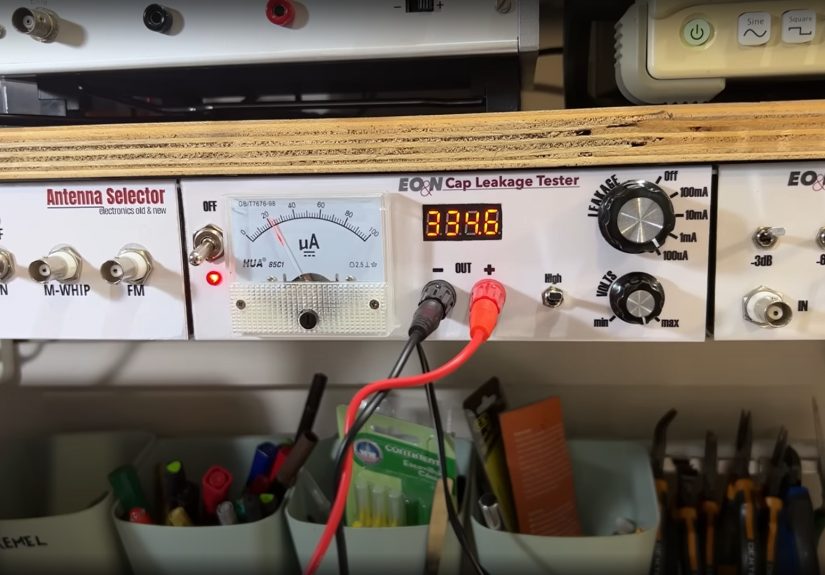
That is exactly why the idea of a DIY capacitor leakage tester with a professional finish is so appealing. You are not just chasing a gadget. You are building a tool mindset: accuracy, consistency, clean presentation, and respect for safety. A good leakage tester is less about looking like a sci-fi prop and more about doing three things well: applying a controlled DC stress, observing tiny current behavior with stability, and making the whole process feel deliberate instead of improvised.
This article takes a safety-first approach. Rather than walking through a risky live-build recipe, it explains what a capacitor leakage tester should do, what separates a hobby-grade lash-up from a pro-looking instrument, and how to think about the enclosure, interface, measurement strategy, and bench workflow so the final result looks polished and behaves like a real tool.
What a Capacitor Leakage Tester Actually Measures
Capacitance tells you how much charge a capacitor can store. Leakage tells you how badly it behaves while doing it. Even a healthy capacitor is not a perfect bucket. Given enough time, some current sneaks through the dielectric. That tiny current is the leakage current, and it matters because it affects reliability, standby performance, bias stability, and sometimes whether a vintage repair works at all.
In practical bench work, a leakage test usually means applying a DC voltage to the capacitor, waiting for the initial charging current to calm down, and then observing the remaining current after a soak period. That remaining current is what you care about. If it stays too high, the part may be degraded, damaged, contaminated, improperly stored, or simply the wrong type for the job.
That sounds neat and tidy until reality barges in wearing muddy boots. Leakage is affected by capacitor chemistry, voltage rating, capacitance value, temperature, storage history, and time under bias. Electrolytics, for example, can show higher initial leakage that drops as the oxide layer reforms. Film and ceramic parts usually behave differently. In other words, a good tester is not just a voltage source with a meter glued to it. It is a system designed to separate normal settling behavior from genuinely suspicious current.
Why People Want One on the Bench
A dedicated capacitor leakage tester is useful for three kinds of people: restoration hobbyists, troubleshooting technicians, and measurement nerds who hear phrases like “guarding” and “low nanoamp drift” and think, “Yes, this is my jam.”
For vintage electronics repairs
Older electrolytics may still measure close to nominal capacitance yet leak badly under rated voltage. That is the kind of part that smiles for the meter and then misbehaves the moment real voltage shows up. Leakage testing can reveal problems that a basic capacitance check misses.
For troubleshooting
In power supplies, timer circuits, audio stages, and precision analog sections, excessive leakage can drag voltages around, create heat, and cause subtle failures that are maddening to diagnose. A leakage tester gives you one more way to stop guessing.
For quality screening
If you buy surplus components, salvage parts, or mystery bags that look like they were stored in a garage through three presidents and two floods, leakage testing becomes less of a luxury and more of a survival skill.
Why This Project Demands Respect
Now for the serious part. Many leakage tests involve elevated DC voltage and parts that can retain charge after power is removed. That means this is not the kind of project where “close enough” wiring, unlabeled jacks, and naked terminals count as charming. They count as red flags.
If you want a tester with a professional finish, start by redefining what “professional” means. It does not mean more knobs. It means safer energy handling, better isolation, controlled discharge, clearer labeling, predictable measurement behavior, and an enclosure that does not look like it was assembled during a thunderstorm.
Think of it this way: a polished front panel is nice, but a proper discharge path is nicer. Laser-printed labels are great, but shrouded connectors are even better. The best-looking tester on the bench is the one that does not surprise you.
The Core Design Goals of a Professional-Looking Tester
Even if you never move beyond the concept stage, these goals define what separates a serious tool from a risky experiment.
1. Stable voltage application
The tester should apply DC stress smoothly and predictably. The key idea is control. Sudden application, excessive overshoot, or a source that drifts around defeats the purpose of leakage measurement. You want the capacitor to see a known voltage, not a dramatic performance.
2. Current limiting
If the part under test is shorted or badly degraded, the tester should not respond by reenacting a tiny industrial accident. A professional mindset always assumes the capacitor might fail, and the measurement path should be designed accordingly.
3. Clear measurement timing
Leakage current is not meaningful the instant voltage is applied. Charging current must decay first. A serious tester needs a consistent soak-and-read workflow, whether that is indicated with a timer, a simple status light, or an explicit note on the panel that reminds the operator to wait before judging the reading.
4. Safe discharge behavior
Stored energy is where projects stop being cute. A professional instrument handles discharge intentionally, not as an afterthought. The user should be able to verify that the capacitor is at a safe state before handling it.
5. Low-leakage layout thinking
This is where many DIY projects lose accuracy. When you try to measure very small currents, dust, flux residue, damp air, poor insulation spacing, and messy wiring can all become part of the circuit whether you invited them or not. A clean internal layout is not cosmetic. It is measurement performance.
What “Professional Finish” Really Looks Like
A good finish is not about pretending your bench is a lab from a superhero movie. It is about making the tool intuitive, durable, and trustworthy.
Use a proper enclosure
A flimsy generic box can work for low-risk gadgets, but a leakage tester deserves a real enclosure with solid mounting, strain relief, and enough space for orderly separation between the high-voltage section, measurement section, and user interface. Aluminum offers rigidity and shielding benefits. Flame-retardant ABS enclosures are also popular when chosen thoughtfully. What matters most is that the case matches the electrical risk, the internal spacing needs, and the bench environment.
Lay out the front panel like a real instrument
Group controls by function. Keep the power area separate from the test terminals. Make the output clearly labeled. Keep text readable from a standing position. Use consistent typography. Avoid the classic DIY disease where every label is a different size and one switch is mysteriously upside down because “it fit better that way.”
Choose connectors that reduce bad decisions
Professional gear tries to make the safe action the easiest action. Shrouded jacks, covered terminals, guarded inputs, and keyed connectors all help. Bare metal binding posts may look retro-cool, but this is one of those moments where retro should not win.
Add deliberate visual cues
Use status indicators that communicate the tester’s state at a glance. Power on. Test active. Discharge in progress. Safe to disconnect. A device that tells the truth with light and labeling is already halfway to feeling professional.
Finish the case like you mean it
Deburred cutouts, straight panel drilling, consistent fasteners, and either a clean powder-coated finish or neatly applied graphics make a huge difference. Nothing says “prototype forever” like burrs around every hole and a label that was cut with craft scissors while someone balanced coffee on the lid.
Measurement Quality: The Stuff That Quietly Makes or Breaks the Tool
If you want your DIY capacitor leakage tester to feel professional, give as much attention to invisible details as visible ones.
Keep the measurement node clean
Leakage measurement lives in a world where contamination matters. Finger oils, solder flux residue, and grime can create unwanted leakage paths. Clean boards, careful insulation spacing, and disciplined routing are not overkill. They are the difference between believable readings and numbers that behave like they are haunted.
Respect temperature and settling time
Leakage is not a fixed tattoo on the part. It changes with temperature and time under voltage. That is why comparing two capacitors fairly requires a consistent test approach. If one part was measured after ten seconds and another after five minutes, your results may say more about your workflow than the components.
Understand the part type
A low-leakage aluminum electrolytic, a standard general-purpose electrolytic, a film capacitor, and a supercapacitor do not all play by the same rules. A professional-style tester should be matched to the kinds of parts you actually evaluate. Otherwise, the project turns into a one-size-fits-none box with a fancy panel and an identity crisis.
Safer Alternatives to a Fully DIY Build
Let us say the idea still excites you, but you also prefer your eyebrows where they are. Fair. There are safer ways to pursue the same goal.
Use commercial insulation or leakage instruments where appropriate
Many professional meters and electrometer-style instruments are designed for high-resistance and low-current work, often with better guarding, discharge behavior, and documentation than a homebrew setup.
Build the enclosure and interface around a vetted measurement core
One smart compromise is to treat the project as an integration and packaging challenge instead of a ground-up electrical design challenge. The “professional finish” then comes from panel design, labeling, fixture management, and workflow improvements rather than risky reinvention of the measurement engine.
Create a test station, not just a tester
Sometimes the most professional result is a small bench station with clear storage for leads, a capacitor holder, a discharge verification step, and a logging sheet or digital record. Fancy boxes are nice. Repeatable workflow is nicer.
Common Mistakes That Make DIY Testers Feel Amateur
- Confusing capacitance testing with leakage testing: They are related, but not interchangeable.
- Ignoring discharge verification: “I turned it off” is not the same as “it is safe.”
- Poor labeling: If a guest on your bench cannot tell what the terminals do, the panel needs work.
- Crammed enclosure layout: Tight spacing looks clever until it becomes leakage, heat, or service trouble.
- Messy internal wiring: Professional gear looks calm inside. It does not resemble electronic spaghetti.
- No plan for bad parts: Assume a capacitor can fail short, vent, or behave unpredictably.
- Decorating before stabilizing performance: Never let graphics outrun reliability.
A Better Definition of Success
The best DIY capacitor leakage tester with a professional finish is not the one with the most dramatic panel meter or the most “lab-like” faceplate. It is the one that helps you evaluate parts consistently, keeps safety front and center, and turns bench work into a more organized, confident process.
In that sense, “professional finish” is really three finishes at once. There is the physical finish, meaning the enclosure, labels, hardware, and layout. There is the electrical finish, meaning stable measurement behavior and sensible protection. And there is the workflow finish, meaning the operator always knows what state the tester is in, what the next step is, and when the capacitor is safe to touch.
Get those three right, and the project has already won, even before the first glamorous beauty shot hits your workbench Instagram.
Bench Experiences: What This Kind of Project Teaches You
Any project related to capacitor leakage testing teaches humility at an impressive rate. On day one, the idea seems elegant. You imagine a clean enclosure, a tidy front panel, and readings that glide into place like a precision watch. Then real bench life shows up. The first surprise is how stubborn leakage measurement can be. Tiny currents are drama queens. They react to dust, residue, humidity, lead dress, and the electronic equivalent of bad vibes. A circuit that behaved perfectly in your head can become noisy and indecisive on the bench.
That is why one of the most valuable experiences in this topic has nothing to do with style and everything to do with patience. The moment you start treating wiring routes, insulation spacing, and board cleanliness as part of the measurement system, your whole approach improves. Suddenly, a neat interior is not just pretty. It is functional. A wiped-down board matters. A clean standoff matters. A carefully separated measurement section matters. The project starts teaching discipline instead of just electronics.
Another common experience is realizing that old capacitors have personalities. Some settle down politely after a soak period. Others act suspicious for longer than expected. Some parts look awful but behave acceptably. Others look fine and quietly fail the moment real voltage enters the room. That experience is what makes leakage testing useful. It reminds you that a component can pass a simple capacitance check and still be untrustworthy in service. Bench confidence starts to come from observation rather than assumption.
The enclosure side of the project is just as educational. A professional finish rarely appears by accident. It comes from measuring panel cutouts twice, using templates, thinking about switch spacing before drilling, and resisting the temptation to improvise just because the step bit is already in your hand and you are feeling lucky. Many builders discover that the most satisfying part of the whole project is not the first powered test. It is the moment the lid closes cleanly, the labels line up, and the tool finally looks like it belongs next to real instruments instead of hiding behind them.
There is also a psychological shift that happens when a project stops looking temporary. A clean front panel changes how you use the tool. You slow down. You follow a sequence. You read the labels. You respect the process more. That matters with anything involving stored energy. In a strange way, making a tool look professional can encourage more professional behavior from the person using it.
And yes, there is humor in the process too. Every electronics bench eventually produces at least one “temporary” test lead that survives long enough to qualify for voting rights. Every builder has a moment where they discover that the panel label is beautifully centered on the wrong side of the case. Every tidy wiring plan eventually collides with one connector that refuses to fit unless the universe is re-soldered. That is normal. The goal is not perfection. The goal is learning enough each round that the next version is calmer, cleaner, and safer.
In the end, experiences around a capacitor leakage tester are less about building a flashy gadget and more about building judgment. You learn that precision work rewards cleanliness. You learn that safety features are not decorations. You learn that a professional finish is really a collection of careful decisions stacked on top of each other. And perhaps most importantly, you learn that the coolest-looking tool on the bench is the one you trust because it was designed with restraint instead of bravado.
Conclusion
A DIY capacitor leakage tester with a professional finish is a compelling idea because it combines craftsmanship with real diagnostic value. But the most successful version is not a reckless build with a shiny faceplate. It is a safety-first instrument concept built around stable measurement, thoughtful enclosure design, clean labeling, and respect for stored energy. If you approach it like a serious bench tool instead of a weekend dare, you end up with something far more valuable than a cool project: you develop the habits that make every future electronics project better.