Table of Contents >> Show >> Hide
- Why This Amazon Tiny Home Is Getting So Much Attention
- What You’re Actually Getting
- The Big Catch: The Base Price Is Not the Whole Budget
- Is It a Tiny House, an ADU, a Modular Home, or Something Else?
- Why Local Codes and Foundations Matter So Much
- Energy Efficiency: Small Space, Big Impact
- Who This Kind of Amazon Tiny Home Makes Sense For
- Who Should Probably Slow Down
- What to Check Before You Buy
- The Real Appeal of a Tiny Home With a Covered Porch
- What the Experience Can Actually Feel Like
- Final Thoughts
There are two kinds of people in this world: people who scroll Amazon for paper towels, and people who somehow end up staring at prefab tiny houses at 11:47 p.m. thinking, “You know what? I could become a porch person.” This particular Amazon tiny home is tailor-made for the second group. It has the headline-grabbing feature that makes almost every small home feel more lovable: a covered porch.
And honestly, that one detail does a lot of heavy lifting. A tiny home can be practical, efficient, and cleverly laid out, but the second you add a covered porch, it stops feeling like a box and starts feeling like a place. A place to sip coffee, hide from the sun, listen to rain on the roof, or pretend you moved to the countryside even if you are technically still 17 steps from your main house.
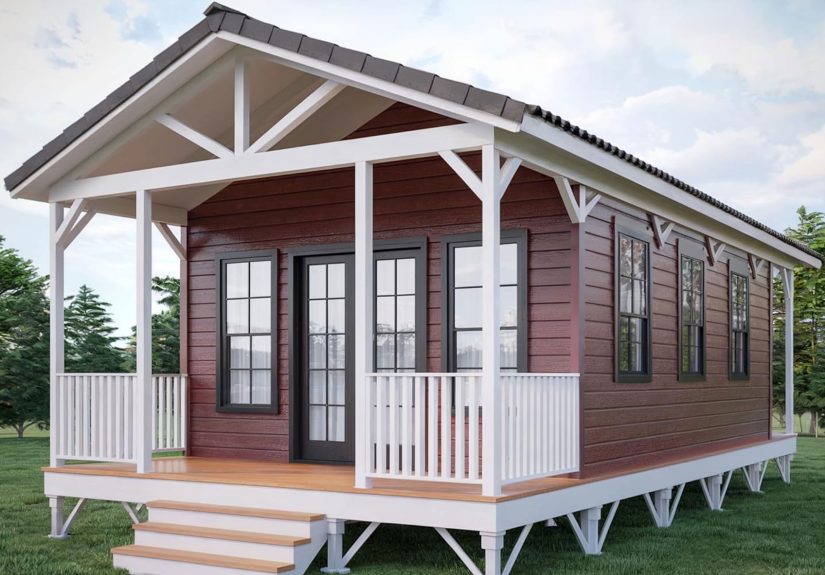
The Amazon tiny house that has been making the rounds online is a compact prefab model with a one-bedroom layout, a bathroom, living and dining space, and a front porch that gives it extra charm. On paper, it looks like a smart little answer to a very modern problem: how to get more living space without signing your soul over to a 30-year mortgage. But as with most things that look suspiciously convenient online, the real story is more interesting than the product title.
If you are curious whether this Amazon tiny home is a brilliant buy, a fun backyard dream, or a “please call zoning before you click checkout” situation, here is what to know.
Why This Amazon Tiny Home Is Getting So Much Attention
The appeal is easy to understand. The model recently highlighted by major U.S. home and lifestyle publications comes in at about 320 square feet, with a footprint around 16 by 20 feet. That is not mansion territory. It is not even “my closet has a sitting area” territory. But it is enough room for a focused, intentional layout that includes the essentials: bedroom, bath, living area, dining space, and that all-important covered porch.
Its materials also help explain the buzz. The home has been described as using a galvanized steel frame, water-resistant materials, insulated panels, and secure glass windows. In plain English, that means it is being marketed as sturdier and more weather-ready than the flimsy fantasy some people imagine when they hear “tiny house kit.” That matters, because a tiny home is only adorable until the first storm makes it feel like a fancy garden shed with opinions.
There is also the price hook. A base price in the neighborhood of $25,000 sounds dramatically lower than the cost of a traditional house, a major addition, or even some high-end backyard studios. That is the sort of number that makes people sit up straight, open a calculator, and begin muttering phrases like “guest suite,” “rental income,” and “weekend cabin” under their breath.
But the covered porch is the emotional center of the whole package. A tiny home with no porch says, “I am efficient.” A tiny home with a porch says, “I am efficient, but I also know how to relax.” Big difference.
What You’re Actually Getting
A compact but workable layout
The best tiny homes do not try to pretend they are large. They lean into smart zoning instead. In this case, the layout appears designed to separate daily functions in a way that still feels livable: a private sleeping space, a bathroom, a main room for lounging and eating, and enough window area to keep the interior from feeling gloomy.
That is important, because natural light is a small-home superpower. In a compact footprint, good windows can make a room feel open, less cramped, and more expensive than it is. When buyers say a tiny home “lives larger” than expected, they are often really talking about light, flow, and the psychological magic of not bumping into visual clutter every five seconds.
Materials that sound promising
Steel framing and insulated wall panels are not just nice marketing phrases. They point to the bigger trend behind prefab housing: off-site construction that aims to be faster, more controlled, and more consistent than some traditional site-built work. That does not automatically make every Amazon tiny house a masterpiece, of course. It does mean buyers are right to pay attention to the bones of the structure, not just the cute photos of a staged porch chair and potted fern.
If a small home includes insulation and decent window systems, that can make a noticeable difference in comfort. In any compact space, heat gain and heat loss are hard to ignore. When every square foot counts, temperature swings feel personal.
The porch is not just decoration
A covered porch adds functional square footage even if it does not count on paper. It creates a transition zone between inside and outside. It gives you a shaded entry. It gives muddy shoes somewhere to calm down before invading the floor. It gives guests a place to gather without forcing everyone into one small room like a game of polite human Tetris.
In other words, the porch is the secret weapon. It is the reason this kind of tiny home feels more like a cottage and less like a compact unit dropped from the internet sky.
The Big Catch: The Base Price Is Not the Whole Budget
This is where the fantasy meets the clipboard.
Buying a prefab tiny home on Amazon can absolutely be cheaper than building a full-size house, but the listing price is usually just the opening act. What comes next depends on your location, the home’s classification, and how complete the package really is.
You may still need site preparation, foundation work, utility hookups, delivery coordination, local permits, inspections, interior finish work, and contractor help for assembly or installation. Electrical, plumbing, septic, water access, and HVAC can each become a meaningful line item. The tiny house may be affordable; the process of making it legally livable is where reality sends the invoice.
That does not mean the project is a bad idea. It means buyers need to think like planners, not just shoppers. A tiny home is still a home. It needs a legal place to go, a code-compliant way to sit there, and access to the systems that keep daily life running.
Is It a Tiny House, an ADU, a Modular Home, or Something Else?
This is one of the most confusing parts of the whole category, and it matters more than most buyers expect.
“Tiny home” is a broad consumer term. It can describe homes on wheels, prefab modules, panelized kits, container-based structures, park models, backyard cottages, and more. Local governments, lenders, insurers, and inspectors usually care less about the cute label and more about the legal classification.
If a structure is intended for permanent living, local code requirements may apply differently than they would for a seasonal or movable unit. In many jurisdictions, tiny homes used as permanent dwellings fall under residential code frameworks, and homes under 400 square feet may be treated under tiny-house provisions derived from the International Residential Code’s small-dwelling appendix. If the unit is placed as a backyard residence, it may need to qualify as an accessory dwelling unit, or ADU, under local zoning rules.
That is why two homes that look almost identical online can have very different real-world paths to approval. One may work beautifully as a guest house or office. Another may be restricted by setbacks, minimum lot size, utility rules, or occupancy standards. The tiny-home world is full of charm, but zoning departments remain gloriously unromantic.
Why Local Codes and Foundations Matter So Much
The internet loves a quick setup story. Local building departments love paperwork. Guess which one wins?
Before buying any Amazon tiny home, you need to know whether your city or county allows that type of structure on your lot, where it may be placed, and what permits are required. You also need to confirm how the home must be engineered for your area’s climate and loads. A home that works in one region may need different structural specs in another because of wind, snow, or seismic rules.
Foundation requirements matter, too. Depending on the type of tiny or prefab home, the structure may need a slab, piers, or another code-compliant foundation system. For many buyers, this is the moment when the project stops feeling like online shopping and starts feeling like construction. That is not a flaw. It is just the part nobody puts in the glamour photo.
Energy Efficiency: Small Space, Big Impact
Tiny homes have a reputation for efficiency, and often for good reason. Smaller spaces generally require less energy to heat and cool. But “small” does not automatically equal “efficient.” A badly insulated tiny home with poor windows can still be uncomfortable and surprisingly expensive to condition.
That is why the details in this Amazon tiny home listing are worth noticing. Insulated panels and glass windows are more than brochure filler. In a compact home, the thermal performance of walls and windows has an outsized effect on comfort. Good insulation helps resist heat flow, while well-chosen windows can reduce unwanted heat loss in winter and limit excessive heat gain in summer.
If you are placing a tiny home in a hot, humid, cold, or windy region, this becomes even more important. The goal is not just to own a tiny house. The goal is to enjoy being inside it in July and January, instead of staring dramatically into the middle distance and regretting every life choice.
Who This Kind of Amazon Tiny Home Makes Sense For
This type of prefab tiny home can make a lot of sense for the right buyer. It is especially appealing for:
Backyard guest space. If local rules allow it, a tiny home with a covered porch can function as an attractive guest suite for family or long-term visitors.
Home office or studio use. The porch adds a residential feel that makes the structure more welcoming than a basic shed office.
Vacation property. For a rural lot or getaway setting, a porch-equipped tiny home can feel much more relaxing than a plain utility-style box.
Downsizers. Buyers who genuinely want less space, lower overhead, and simpler living may see real value here.
Style-conscious minimalists. Some people want compact living, but they do not want it to feel temporary. The porch helps this model land on the right side of that line.
Who Should Probably Slow Down
If you want a turnkey house that arrives ready for instant full-time occupancy, you may need to temper expectations. Likewise, if your area has strict zoning, HOA restrictions, difficult utility access, or harsh climate demands, this kind of purchase can become more complex than the listing suggests.
And if your main reason for buying is “it looked cheap compared to everything else,” pause there. Low base pricing is exciting, but the smartest tiny-home buyers do not ask only, “How much is the unit?” They ask, “What is my all-in cost to make this legal, safe, comfortable, and useful?” That second question is far less glamorous and far more important.
What to Check Before You Buy
Before you bring home a prefab tiny house from Amazon, make sure you can answer the following:
Is this allowed on my property?
What permits will I need?
Does the structure meet local residential or ADU standards?
What kind of foundation is required?
How will I connect power, water, sewer, or septic?
What exactly is included in the purchase price?
Is insulation adequate for my climate?
What wind, snow, and weather ratings apply?
Will I need a contractor, engineer, or installer?
What is the realistic total cost after site work and hookups?
If that list feels long, good. Better a long checklist now than a short panic attack later.
The Real Appeal of a Tiny Home With a Covered Porch
Here is the deeper reason this Amazon tiny home stands out: the covered porch makes the house feel emotionally bigger, not just visually nicer. Tiny living works best when every area has more than one purpose. Inside, the living room may also be the dining space, office, reading nook, and occasional yoga zone. Outside, the porch becomes your extra room.
It is where you cool off after carrying groceries. It is where you sit when the interior feels one coffee mug too full. It is where guests naturally gather before entering. It is where rain sounds better, morning light looks prettier, and evening air feels like a reward. A tiny home without outdoor spillover can feel strict. A tiny home with a covered porch feels forgiving.
That is why this trend keeps showing up. The porch is not just about curb appeal. It is about livability.
What the Experience Can Actually Feel Like
Imagine stepping into a tiny home like this for the first time after it is finally set, connected, cleaned, and no longer just a string of tracking updates and contractor phone calls. The first thing you notice is not the square footage. It is the mood. Because the covered porch softens the whole arrival, the home feels less like a unit and more like a retreat.
You walk up with a coffee in hand, and instead of opening the front door directly from bare ground or a concrete pad, you get that small, satisfying pause under the porch roof. It is the kind of moment regular houses take for granted. In a tiny home, it feels luxurious. You have a place to set down a package, shake off the weather, water a plant, or sit for ten quiet minutes before the day begins. That tiny buffer changes the rhythm of the whole home.
Inside, the experience is all about being intentional. You become more aware of what you use, where you put things, and how each part of the layout works for you. There is less space to ignore your habits, which sounds rude at first but quickly becomes useful. You stop buying random furniture that serves no purpose. You start appreciating storage that actually works. A well-placed window suddenly becomes a design feature, a mood booster, and a sanity-preserver all at once.
The porch keeps that sense of usefulness going. On cool mornings, it becomes your breakfast spot. On warm afternoons, it is your shaded reading zone. On rainy evenings, it turns into front-row seating for the weather. Even if the interior is compact, the porch gives you somewhere to breathe without leaving home. It creates a low-pressure social space, too. Friends can sit outside without everyone crowding the kitchen area like they are boarding a very polite elevator.
There is also something deeply appealing about how a tiny home with a porch fits into different seasons of life. It can feel like a first big simplification, a stylish guest house, a backyard office that does not feel like exile, or a vacation hideaway that asks less from your wallet than a full-size second home. The experience is not just about owning less. It is about using space more deliberately and getting more enjoyment out of the space you do have.
Of course, tiny-home life is not magic. You still have to manage storage, maintenance, weather, and the realities of a smaller footprint. But that porch helps smooth the edges. It gives the home generosity. It gives the design a welcome note. And in a category where many models can feel purely functional, that extra bit of comfort is exactly what makes this Amazon tiny home so easy to picture yourself in.
Final Thoughts
This Amazon tiny home with a covered porch is easy to understand and even easier to romanticize. It offers the kind of features buyers want to see right now: a modest footprint, prefab convenience, appealing design, a base price that looks approachable, and a front porch that makes the whole idea feel cozy instead of cramped.
But the smartest way to see it is as a promising starting point, not a complete shortcut. If your property, budget, local codes, and intended use all line up, a prefab tiny house like this could become a guest suite, studio, getaway, or genuinely satisfying small home. If you ignore the practical side, it could become a very expensive lesson in why “Add to Cart” is not the same as “Move-In Ready.”
Still, there is a reason people keep falling for tiny homes with covered porches. They offer something traditional homes have long understood: even a small house feels richer when it makes room for a softer landing. And that, frankly, is porch wisdom.