Table of Contents >> Show >> Hide
- Artichoke 101: Picking the Right “Choke” and Keeping It Fresh
- What You Need: Tools, Ingredients, and a Tiny Bit of Confidence
- How to Prep Artichokes Without Losing Your Mind
- The Best Ways to Cook Artichokes (and When to Use Each)
- Method 1: Steamed Whole Artichokes (Classic, Tender, Foolproof)
- Method 2: Simmered/Boiled Artichokes (Fast Setup, Big Flavor Options)
- Method 3: Roasted Artichokes (Deep Flavor, “Wow” Factor, Minimal Dipping Needed)
- Method 4: Microwave “Steam” (Weeknight Shortcut That Actually Works)
- Method 5: Pressure Cooker / Instant Pot Artichokes (Fastest “Whole Artichoke” Option)
- How to Eat an Artichoke (Without Feeling Like You Missed a Memo)
- Dips and Sauces That Make Artichokes Feel Like a Main Character
- How to Turn Artichokes Into a Scene-Stealing Side Dish
- Troubleshooting: When Artichokes Get Stubborn
- Conclusion
- Real Kitchen Experiences: of “Yep, That Happens”
Artichokes are the divas of the produce aisle. They’re spiky, dramatic, and they refuse to be rushedyet somehow,
they still manage to be the most fun vegetable at the table. Cook them right, and you’ve got a side dish that makes
people pause mid-sentence to say, “Wait… how did you make these?”
This guide walks you through choosing, prepping, and cooking fresh artichokes using methods that actually work in a
real kitchen (not a fantasy cooking show kitchen where nothing boils over). You’ll learn classic steaming, flavor-packed
roasting, quick microwave steaming, grill-finishing for smoky swagger, and pressure-cooker shortcutsplus sauces and
serving ideas that turn “a vegetable” into “the moment.”
Artichoke 101: Picking the Right “Choke” and Keeping It Fresh
How to pick a good artichoke
- Heavy for its size: A weighty artichoke usually means juicy, tender leaves and a better heart.
- Tightly packed leaves: Look for compact leaves that haven’t spread open like they’re waving at you.
- Firm, not floppy: Avoid shriveled tips or dry, cracking leaves.
- Bonus clue: Some ripe artichokes make a faint “squeak” when you squeeze them gentlylike a tiny vegetable violin.
How to store artichokes (so they don’t turn into a sad science project)
- Fridge method: Store whole artichokes loosely wrapped in a bag in the refrigerator and keep them as dry as possible.
- Jar method: Treat them like a bouquettrim the stems and store stem-side down in a jar with water, changing the water daily.
If you bought artichokes and now you’re thinking, “I’ll cook them… eventually,” just know that “eventually” should
not mean “next month.”
What You Need: Tools, Ingredients, and a Tiny Bit of Confidence
Artichokes look like they require specialized equipment and a culinary degree. They do not. Here’s the simple kit:
- Chef’s knife (sturdy enough to cut through a thick stem)
- Kitchen shears (for snipping thorny leaf tips)
- Lemon (or two) to prevent browning and brighten flavor
- Big pot + lid and a steamer basket (or a rack/colander that fits inside)
- Spoon or melon baller (for removing the fuzzy choke)
- Optional: gloves (artichokes can leave your hands tasting like “metallic regret”)
Pro-level detail that’s still easy: some cooks prefer stainless-steel knives and cookware for prep
because reactive metals can discolor artichokes quickly. Discoloration won’t ruin flavor, but stainless can keep things prettier.
How to Prep Artichokes Without Losing Your Mind
Prep is where artichokes try to intimidate you. Your job is to not be intimidated. Think of it as giving the artichoke
a haircut and a quick spa rinse.
Step 1: Rinse like you mean it
Rinse under cool water and gently pry open the leaves a bit so water can flush out any grit hiding inside.
Step 2: Trim the stem (and peel it if you’re fancy)
Slice off the very end of the stem. If the stem is long, peel the tough outer layerbecause the inner stem is tender
and tastes like the heart’s best friend.
Step 3: Snip the thorny tips
Use kitchen shears to snip sharp tips from the outer leaves. This doesn’t affect cooking muchit’s mostly to keep your
dinner guests from feeling like they’re eating a medieval weapon.
Step 4: Trim the top (optional, but recommended for whole artichokes)
Cut about 1/2 to 1 inch off the top to remove the toughest, pointiest bits. If you’re steaming whole, this helps the
steam penetrate.
Step 5: Prevent browning
Artichokes oxidize fast. Keep a bowl of water with lemon juice nearby and drop cut pieces in it. You can also rub cut
surfaces with lemon as you go.
Step 6: Remove the choke (only if halving/quartering)
The “choke” is the fuzzy center that would become a flower. It’s not dangerousjust unpleasant to eat. If you halve or
quarter artichokes, scoop out the fuzzy choke with a spoon. A melon baller or cookie scoop can make this quicker and cleaner.
The Best Ways to Cook Artichokes (and When to Use Each)
There isn’t one “right” way to cook artichokes. There’s the way that fits your time, your vibe, and how badly you want
the kitchen to smell like lemon and victory.
Method 1: Steamed Whole Artichokes (Classic, Tender, Foolproof)
If you want that traditional pull-a-leaf, dip-a-leaf, scrape-and-smile experience, steaming whole artichokes is your move.
- Fill a pot with about 1/2 inch to 1 inch of water. Add salt and (optional) lemon slices, garlic cloves, bay leaf, or herbs.
- Insert a steamer basket or rack so the artichokes sit above the water.
- Place artichokes stem-side up or downeither workscover, and bring to a steady simmer.
- Steam until tender: typically 25–45 minutes depending on size.
- Test doneness by pulling a leaf near the center. If it comes away easily, you’re done. A knife should also slide into the base/heart area without much resistance.
Scene-stealing tip: After steaming, let them drain upside down for a minute so they don’t drip all over your platter like they’re crying.
Method 2: Simmered/Boiled Artichokes (Fast Setup, Big Flavor Options)
Simmering works well when you want to season the cooking liquid aggressively (lemon, herbs, peppercorns). It’s also great
if your steamer basket is missingpossibly because it joined a support group with all the lost socks.
- Fill a pot with enough salted water to cover the artichokes. Add lemon and aromatics if you’d like.
- Bring to a boil, then reduce to a simmer.
- Add artichokes in a single layer, cover, and simmer until leaves pull away easilyoften around 20–35 minutes depending on size.
- Drain well. Consider a quick rest uncovered so steam can escape and the leaves don’t feel waterlogged.
Texture note: Some cooks find boiling can make artichokes a little softer/wetter than steaming. If you
love a firmer bite, steam instead.
Method 3: Roasted Artichokes (Deep Flavor, “Wow” Factor, Minimal Dipping Needed)
Roasting concentrates flavor and gives you caramelized edges. It’s the method for people who want artichokes that taste
like they’ve been to finishing school.
- Heat oven to 425°F.
- Trim artichokes; halve them for faster roasting. Rub cut sides with lemon to prevent browning.
- Scoop out the choke if halved. Brush with olive oil; season with salt, pepper, and (optional) garlic or herbs.
- Place in a baking dish with a splash of water (or broth) to create steam. Cover tightly with foil.
- Roast covered until tenderoften 45–60 minutes depending on size. Uncover for the final 5–10 minutes if you want extra browning.
Side-dish upgrade: Finish with lemon zest and a drizzle of good olive oil. Suddenly it’s not “vegetables,”
it’s “a statement.”
Method 4: Microwave “Steam” (Weeknight Shortcut That Actually Works)
Microwave artichokes are for the nights you want something special but also want to keep your evening plans (which might
be “exist peacefully on the couch”).
- Trim an artichoke so it sits flat. Rinse well; keep a little water between the leaves.
- Place in a microwave-safe dish with about 1/4 inch of water.
- Cover (microwave-safe lid or vented wrap).
- Microwave on high about 4 minutes, then check. Continue 1 minute at a time until a center leaf pulls out easily.
Heads-up: This method works best with very fresh artichokes because the microwave can cook a bit drier than stovetop steaming.
Method 5: Pressure Cooker / Instant Pot Artichokes (Fastest “Whole Artichoke” Option)
If you want whole artichokes with less waiting, pressure cooking is the speed-run.
- Add water to the cooker (follow your model’s minimumoften around 1 to 1 1/2 cups). Add lemon slices or garlic if you want.
- Place a trivet/steamer rack inside. Set trimmed artichokes on top.
- Cook on high pressure:
- Small: ~8–10 minutes
- Medium: ~10–12 minutes
- Large: ~12–15 minutes
- Quick-release carefully, then test doneness by pulling a center leaf.
Why it’s great: You get tender leaves and a plush heart in a fraction of the timeperfect when you want
“impressive” without “three-episode commitment.”
How to Eat an Artichoke (Without Feeling Like You Missed a Memo)
Eating a whole artichoke is interactive. It’s like a snack and a project, in the best possible way.
- Pull off an outer leaf.
- Dip the base of the leaf in sauce.
- Use your teeth to scrape the tender flesh from the leaf. (You’re not eating the whole leafjust the soft part.)
- Discard the remaining leaf in a bowl on the side. (Your future self appreciates this.)
- As you reach the center, leaves get more tender.
- When you hit the fuzzy choke, scoop it out and discard it.
- Eat the heart and peeled stemthose are the prize.
Dips and Sauces That Make Artichokes Feel Like a Main Character
Artichokes are mild and slightly nutty. A good dip turns that gentle flavor into something you remember tomorrow.
Quick lemon-garlic butter
- Melt butter, stir in grated garlic (or garlic powder), lemon juice, lemon zest, salt, and pepper.
- Optional: add chopped parsley for a fresh finish.
“Not-fancy” aioli (fast mayo dip)
- Mix mayonnaise with lemon juice, grated garlic, salt, and a pinch of black pepper.
- Add a little Dijon-style mustard if you like tang.
Bright vinaigrette
- Whisk olive oil with lemon juice (or vinegar), salt, pepper, and a touch of honey.
- Great for roasted or grilled artichokes where you want something lighter than butter.
How to Turn Artichokes Into a Scene-Stealing Side Dish
The difference between “I made artichokes” and “I made those artichokes” is usually one of these moves:
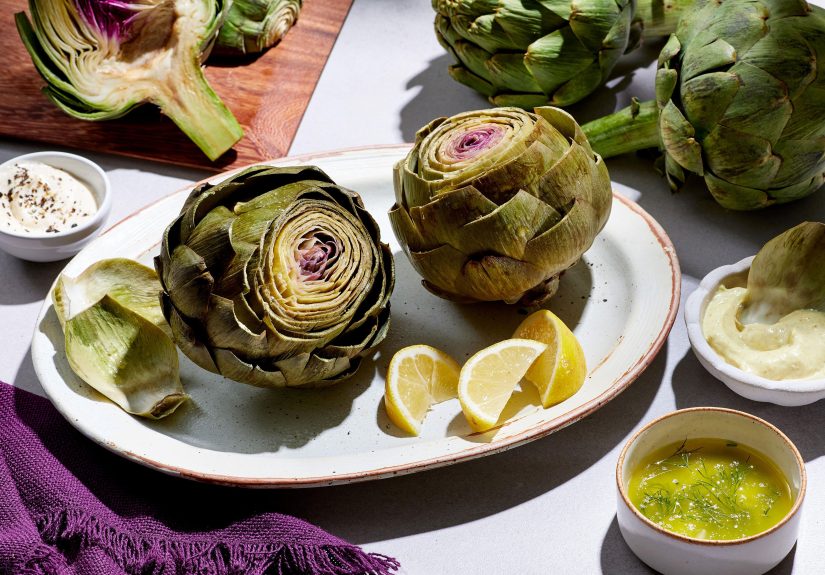
- Serve them on a big platter with lemon wedges and two dips (people love choices).
- Finish with texture: flaky salt, fresh herbs, lemon zest, toasted breadcrumbs, or grated Parmesan-style cheese.
- Make them smoky: steam first, then grill briefly for char marks.
- Go stuffed: pre-steam, then pack herby breadcrumbs between leaves and bake until golden.
- Use halves for drama: roasted halves show off the heart and look instantly “restaurant.”
Troubleshooting: When Artichokes Get Stubborn
“My artichoke is still tough.”
It probably needs more time. Keep steaming/simmering and test again in 5–10 minutes. Size matters herebig artichokes
can be slowpokes.
“It turned brown while I prepped it.”
Totally normal. Lemon water helps, but some discoloration is common and doesn’t ruin taste. If you want it prettier,
rub cut areas with lemon as you go and move quickly.
“The leaves are mushy.”
That’s usually overcooking, or boiling too aggressively. Next time, keep it at a gentle simmer/steam and start checking earlier.
“It tastes bland.”
Salt your cooking water, add aromatics, and don’t skimp on the finishing touches (lemon, herbs, butter/olive oil, or a bold dip).
Artichokes love a little help being their best selves.
Conclusion
Cooking artichokes doesn’t require wizardryjust a solid method and a good test for doneness. Steam them for classic,
dip-friendly fun. Roast them when you want concentrated flavor and a platter that looks like it belongs in a magazine.
Microwave or pressure-cook them when time is tight but you still want something special. Add a bright dip, finish with lemon,
and you’ve got a side dish that feels like an event.
Real Kitchen Experiences: of “Yep, That Happens”
The first time most people cook artichokes, the experience is roughly 30% “I am a capable human adult” and 70% “Why does
this vegetable have armor?” That’s normal. Artichokes look complicated because they’re not shaped like the other produce
that politely lies there waiting to be sliced. They’re layered. They’re pointy. They’re basically a vegetable puzzle.
One of the most common beginner moments is the lemon-water scramble. You trim one artichoke, turn around
to rinse your knife, and the cut edge has already started to brown like it’s auditioning for a vintage photo filter.
That’s when people learn the “set up your bowl first” lesson. Once you’ve got lemon water ready, prep becomes calmer:
trim, rub with lemon, dunk, repeat. It feels less like damage control and more like a system.
Another classic moment: the doneness check that lies. You pull an outer leaf and it resists, so you
assume it’s not ready. But outer leaves are naturally tougher. The better test is a leaf closer to the center or a gentle
knife poke into the base. When an artichoke is done, it doesn’t just “cook”it relaxes. Leaves come away easier, the heart
feels tender, and the whole thing smells brighter. People often say the kitchen suddenly smells like lemon and something
vaguely fancy, even if you’re wearing sweatpants.
Serving artichokes also creates a memorable table vibe. There’s usually a brief pause as everyone remembers how to eat
one. Then the rhythm kicks in: leaf, dip, scrape, discard. It’s weirdly sociallike a snack you have to pay attention
to. If you put out two dips (say, lemon-garlic butter and a quick mayo-aioli), people start debating which one is “the
best,” and congratulations, your side dish just became the conversation.
Leftovers are their own experience. A chilled cooked artichoke can be surprisingly good the next day, especially if you
slice it and turn it into something newlike roasted halves reheated in the oven or the heart chopped into a salad. Many
cooks end up realizing the stem is underrated too: once peeled, it tastes like a mini heart. That discovery tends to
produce the same reaction every time: “Wait… the stem is good? Why did nobody tell me?”
The biggest lesson people take away is that artichokes reward patience more than precision. You don’t have to be perfect
with trimming. You don’t need a flawless timeline. You just need enough heat, enough time, and a good dip. After a couple
tries, artichokes stop feeling intimidating and start feeling like a reliable “wow” movesomething you can make when you
want dinner to feel special without turning your kitchen into a disaster zone.