Table of Contents >> Show >> Hide
- Quick index
- How this ranking works
- #9: Voyagers (2021)
- #8: The Lucky Ones (2008)
- #7: The Marsh King’s Daughter (2023)
- #6: The Upside (2019)
- #5: Inheritance (2025)
- #4: Interview with the Assassin (2002)
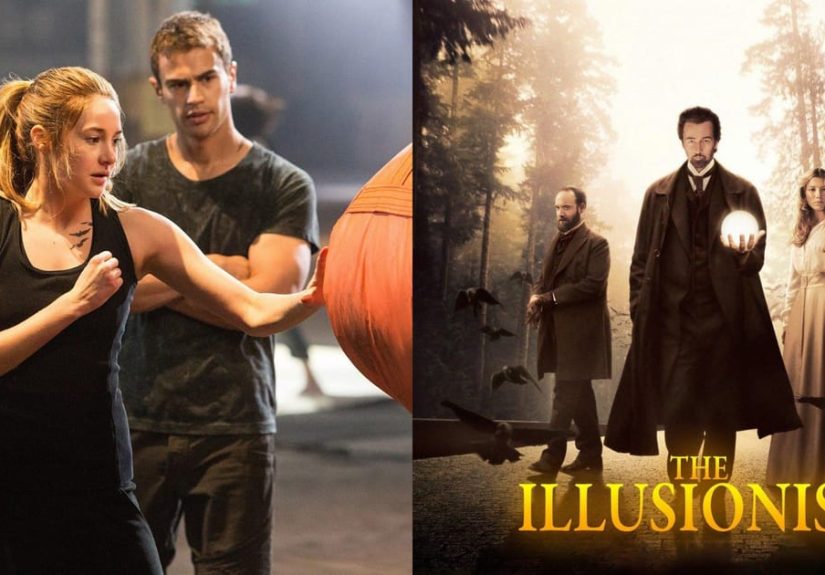
- #3: Divergent (2014)
- #2: Limitless (2011)
- #1: The Illusionist (2006)
- Where to start if you’re new to Neil Burger
- of “ranking-night” experience: How it feels to marathon Neil Burger
- SEO tags (JSON)
Neil Burger is one of those directors who makes movies about being someoneand then kindly (or rudely) asks you to consider
whether that “someone” is a mask, a performance, or a clever lie you told yourself to get through Tuesday.
His filmography hops from smoky turn-of-the-century stage magic to a slick “smart pill” thriller, from YA dystopia to an odd-couple
dramedy, and even into the cold vacuum of space where hormones and bad decisions travel at the speed of plot.
Ranking Burger’s movies is tricky because his best stuff isn’t just about twists; it’s about perception.
Who controls the story? Who’s watching? Who’s manipulating the room? And who’s about to learn an important life lesson…
five minutes too late? To keep this list fair (and fun), I’m weighing a mix of craft, rewatchability, cultural footprint,
and how distinctly “Burger-ish” the movie feelsstylish momentum, identity games, and a slightly mischievous grin behind the camera.
Quick index
- #9: Voyagers (2021)
- #8: The Lucky Ones (2008)
- #7: The Marsh King’s Daughter (2023)
- #6: The Upside (2019)
- #5: Inheritance (2025)
- #4: Interview with the Assassin (2002)
- #3: Divergent (2014)
- #2: Limitless (2011)
- #1: The Illusionist (2006)
How this ranking works
Think of this list as a blend of “Which movie is best?” and “Which movie most proves Burger knows exactly what he’s doing?”
That means a film can place high even if it’s messyso long as it’s inventive, energetic, and memorable.
And a technically fine movie can place lower if it feels like the premise is stuck in neutral.
(Not every high-concept vehicle gets to hit the turbo button.)
#9: Voyagers (2021)
Lord of the Flies… with seatbelts that definitely won’t hold.
Burger’s space-thriller sends a group of young colonists toward a distant planetemotion suppressed, intelligence boosted, order maintained.
Then the mission goes sideways, and the movie becomes a study in fear, lust, and power struggles on a ship that feels way too small for all that chaos.
The premise is genuinely ripe: it’s a pressure cooker about what happens when you remove history, family, and social structure and
ask human nature to “just behave.”
The problem is that Voyagers often circles familiar orbit instead of discovering something new.
It has flashes of tension and a few sharp turns, but it rarely digs deep enough into its own ideasand by the time it’s ready to get truly interesting,
it’s almost over. If you want Burger’s obsession with identity and performance, this one plays more like a rough sketch than a finished illusion.
#8: The Lucky Ones (2008)
A road trip with heart… and a transmission that occasionally slips.
On paper, The Lucky Ones is a solid human-scale drama: three people returning from war find their lives complicated, their plans scrambled,
and their emotions not nearly as “back to normal” as everyone expects. Burger is good at moving stories forward briskly, and here he tries to
balance humor, tenderness, and the awkward truth that home can feel like a foreign country.
Where it struggles is tonal consistency. Some scenes land with lived-in warmth; others feel like they’re checking boxes on a
“serious but uplifting” worksheet. You can see Burger reaching for intimacy and honesty, but the movie never quite finds a rhythm that feels inevitable.
Still, it’s a reminder that he’s not only a high-concept guyhe’s also interested in the quiet ways people rebuild themselves.
#7: The Marsh King’s Daughter (2023)
Survival thriller meets family traumatense, but a little too careful.
This wilderness thriller centers on a woman whose ordinary life hides a terrifying past: her fatherthe “Marsh King”once held her and her mother
captive in the wild. When he escapes prison, she’s forced to confront everything she survived and everything she learned just to stay alive.
It’s a strong setup for Burger’s themes: identity, control, and the uneasy idea that the person who harmed you might also have shaped your skills.
The cast does a lot of heavy lifting, and the best stretches have a chilly, patient dread.
But the movie can feel slow when it needs to tighten the screws, and the payoff doesn’t fully cash the checks the premise writes.
Even so, Burger’s direction gives the story a clean sense of forward motionand the best moments feel like a battle between instinct and fear.
#6: The Upside (2019)
A crowd-pleaser with real chemistryplus a few “paint-by-numbers” corners.
A wealthy quadriplegic hires a struggling parolee as a caretaker, and an unlikely friendship changes both of their lives.
If this sounds like it could drift into cliché… it sometimes does. But the central pairing works, and Burger keeps the story moving with enough
snap that the sentiment doesn’t completely sink the ship.
The best version of The Upside is the one that leans into genuine connectionawkwardness, humor, and the slow discovery that dignity isn’t charity.
The weaker version is the one that reaches for easy uplift at the cost of nuance.
Still, as a “put it on and feel something” movie, it’s effectiveand it shows Burger can steer star-driven material with a steady hand.
#5: Inheritance (2025)
Modern thriller Burger: sleek, restless, and built for bingeing.
Inheritance pushes Burger back toward the kind of tension he handles well: secrets, identity shifts, and a protagonist who discovers
that the story they’ve been living is not the whole story. Without getting tangled in spoilers, the movie plays like a chase through half-lit corridors
where each door opens into a new version of the truth.
What makes it work (when it works) is Burger’s knack for momentum. He’s good at turning information into suspensegiving you just enough clarity
to feel smart, then pulling the rug a few inches to keep you alert. If you like thrillers that prioritize movement, paranoia, and “wait… what?” energy,
this one belongs in your Burger marathon.
#4: Interview with the Assassin (2002)
A debut that swings bigbecause subtlety is overrated when you’re onto something.
Burger’s first feature is a conspiracy-laced drama built around an interview with a man who claims to have been involved in one of America’s most
mythologized tragedies. Structurally, it’s simple: testimony, doubt, and the uncomfortable question of why we’re so hungry to believe certain stories.
Even if you don’t buy every beat, the movie announces a director fascinated by narratives as weapons.
Who’s performing? Who’s manipulating? Who wants to be believed badly enough to rewrite reality?
That obsessiontruth as something staged, edited, and soldbecomes a signature in Burger’s later work.
As a debut, it’s bold, tense, and conceptually sticky in a way that lingers after the credits.
#3: Divergent (2014)
Big franchise machine, surprisingly human engine.
Burger stepped into YA dystopia with factions, tests, and a heroine who doesn’t fit the system designed to define her.
In lesser hands, Divergent could’ve been pure assembly-line: pretty production design, loud training montages, sequel-baiting into eternity.
But Burger finds a clean, propulsive shapeespecially early onturning “initiation” into a tense coming-of-age thriller.
The film’s identity theme fits him like a tailored coat: the scariest thing isn’t the violence; it’s being labeled, sorted, and told who you are allowed to be.
Burger also brings clarity to action and geography (a gift in a genre that sometimes edits itself into confetti).
Whatever you think of the broader franchise, this first installment has the strongest “fresh start” energyand it shows Burger can scale up without
losing the emotional thread.
#2: Limitless (2011)
The ultimate “what if I finally got my life together?” fantasyserved with extra menace.
A struggling writer takes a mysterious drug that unlocks extraordinary mental acuitythen rides that advantage straight into money, power,
and the kind of trouble that wears a suit and smiles politely. Burger directs Limitless with glossy visual swagger, turning cognition into cinema:
accelerated perception, heightened confidence, and the seductive idea that you could become your “best self” overnight.
The movie’s fun is how quickly it turns wish-fulfillment into paranoia. Every gain comes with a cost, and the story keeps asking:
if you could optimize your brain, would you optimize your ethics… or just your ambition?
It’s not a PSA (and it shouldn’t be), but it’s a sharp little fable about hungercreative, financial, and existential.
Burger’s direction is the secret sauce: even when the script wobbles, the ride stays charismatic and fast.
#1: The Illusionist (2006)
Burger at his best: romance, control, and the art of making you lean forward.
The Illusionist is Burger’s most complete “signature” film: a period mystery built around performance, perception, and power.
A magician named Eisenheim uses his craft to challenge the authority of a Crown Princewhile an inspector stands between loyalty to the state
and a growing sense that he’s witnessing something bigger than law.
The movie is gorgeously moody, paced like a confident con, and anchored by a moral tug-of-war that never feels like a simple good-vs-evil diagram.
Burger also understands the delicious irony of filming magic: cinema itself is illusion, and the movie plays with that idea without turning smug.
It’s romantic, tense, and rewatchablebecause once you know the shape of the trick, you can appreciate the craftsmanship of the hands.
If you’re only watching one Neil Burger film, start here.
Where to start if you’re new to Neil Burger
- Want prestige mystery + atmosphere? Start with The Illusionist.
- Want stylish modern thriller energy? Go with Limitless, then Inheritance.
- Want big studio scale? Try Divergent for the cleanest franchise “pilot.”
of “ranking-night” experience: How it feels to marathon Neil Burger
Watching every Neil Burger movie back-to-back is like spending a weekend with a friend who’s charming, slightly suspicious,
and very good at redirecting the conversation right when you think you’ve figured them out. You start with the surface differencesperiod Vienna,
modern Manhattan, dystopian factions, deep space, wilderness survivalbut the longer the marathon goes, the more you notice the repeating heartbeat:
Burger loves protagonists who are reinventing themselves under pressure, sometimes by choice, sometimes by necessity, and sometimes because the world
leaves them no other option.
A fun way to experience this ranking is to watch the films in “theme pairs.” Put The Illusionist next to Limitless, and you’ll feel how
Burger translates the same ideacontrol the room, control the storyinto two totally different languages. One uses velvet curtains and candlelight; the
other uses neon, money, and velocity. Then pair Divergent with Interview with the Assassin. One is a glossy studio ride about being sorted
into an identity; the other is a smaller, tenser study of how identities get constructed through testimony, belief, and the audience’s appetite for meaning.
The “experience” of ranking them is also weirdly revealing about you. If you value mood and craft, you’ll keep drifting back to
The Illusionistit’s the kind of movie that makes you want to dim the lights even if it’s noon. If you’re addicted to momentum, you’ll
probably defend Limitless with the passion of someone who’s ever said, “Okay, Monday I’m getting my life together,” and actually meant it.
If you love clean world-building and a strong entry point, Divergent starts to look better in hindsight because it understands the assignment:
introduce the rules, make the heroine feel human, and keep the camera from losing its mind during action scenes.
And yes, the lower-ranked films still have “Burger moments.” In the weaker entries, you can often spot the exact scene where the movie briefly becomes
sharperwhere a character has to choose between comfort and truth, or where a new piece of information reframes what you thought you were watching.
That’s the enjoyable part of a full filmography marathon: even when a movie doesn’t fully stick the landing, you can see the same instincts at work.
It’s like hearing an artist’s early demos. Not everything is polished, but the voice is already there.
If you want to make the night even more fun, keep a running “Burger Bingo” card: identity reveal, mentor figure,
system that categorizes people, performance as power, truth hidden in plain sight, and
the moment someone realizes the rules were never real. By the end, you won’t just have a rankingyou’ll have a map of what Burger
keeps coming back to, and why his best films feel like they’re winking at you from behind the curtain.