Table of Contents >> Show >> Hide
- What “Grassroots” Really Means at Blenheim Forge
- Knife Nerd Corner: Steel, Cladding, and Why It Actually Matters
- The Blenheim Look: Where Design Meets “Built to Work”
- Which Blenheim Forge Knife Should You Buy First?
- How to Buy Blenheim Forge Knives in the U.S.
- Carbon Steel Reality Check: Patina, Rust, and the Few Rules That Matter
- Sharpening Without Drama: How to Keep a Blenheim Forge Edge Singing
- So… Are Blenheim Forge Knives Worth It?
- Experiences: Living With a Blenheim Forge Knife (What Owners Tend to Notice)
Some brands are born in boardrooms. Blenheim Forge was born in the far more sacred place: a backyard where grown adults
decided a meat smoker and a hot tub weren’t enough, so obviously the next DIY project should be… forging kitchen knives.
(If your weekend hobbies don’t occasionally involve fire and questionable ambition, are you even living?)
Today, Blenheim Forge is one of the most buzzed-about names in hand-forged kitchen knivesespecially among cooks who
like their tools a little obsessive: Japanese-inspired blade geometry, carbon-steel performance, and a distinctly London
vibe that feels equal parts punk workshop and design studio.
What “Grassroots” Really Means at Blenheim Forge
From back-garden experiments to a railway-arch workshop
Blenheim Forge officially started in 2014, founded by Jon Warshawsky and James Ross-Harristwo housemates in South London
who were self-taught and initially “had next to no idea” how to make a knife. Their early setup was as scrappy as it gets:
a homemade forge, fire bricks, charcoal, and the kind of trial-and-error that would make a health-and-safety officer faint.
Not long after, the team expanded to include Richard Warner (described by the forge as a machine-building wizard) and moved
into Arch 229 on Blenheim Grovea railway arch with a long metalwork history. That location matters: it’s not a sterile factory.
It’s a working forge where steel gets shaped the old-fashioned wayheat, hammer, repeat.
Why chefs (and serious home cooks) got interested
The “grassroots” part isn’t just a cute origin story. It shows up in how the brand grew: feedback-driven, craft-first,
and built around performance rather than hype. In interviews, the founders talk about how early knives evolved based on what
cooks noticedcomfort, balance, thickness, and how the blade moved through food. Over time, the knives became highly sought after
by chefs and dedicated home cooks, and the company now sells to customers worldwide.
In other words: Blenheim Forge didn’t start by asking, “How do we scale?” They started by asking, “Why did my edge die after two onions?”
That’s a much more respectable business plan.
Knife Nerd Corner: Steel, Cladding, and Why It Actually Matters
Blue Paper steel: the “clean-cutting” obsession
Blenheim Forge became known early for working with Japanese Blue Paper steel (“Aogami”), a high-quality carbon steel prized for
fine edges and sharpenability. In their Classic Range, they describe using Japanese Blue Paper steel as the core, paired with
a tougher cladding materialaiming for a blade that holds a crisp edge and feels rewarding to maintain.
Carbon steel is the high-maintenance friend who’s totally worth it: incredible performance, but it expects you to text back
(wipe it dry) and not ghost it (leave it wet in the sink).
San Mai construction: a performance sandwich
A lot of Blenheim Forge knives use a “san mai” style buildthink of it as a core steel (the cutting edge) protected by outer layers
(cladding). The Classic Range pairs a Blue Paper core with folded iron cladding. The look is distinctive, and the idea is practical:
keep the edge steel optimized for cutting while letting the cladding add toughness and character.
Stainless-clad carbon: the “best of both worlds” pitch
If you love carbon-steel performance but don’t love the idea of constantly babysitting your knife, the Stainless Clad Range is
Blenheim Forge’s answer. They describe this steel as made to their spec by Takefu Steel mill in Echizen, Japan: a laminate with a core
of Hitachi Blue Super (Aogami Super), sandwiched between stainless layers for easier maintenance.
The result is a knife where the outer jacket resists corrosion better than full carbon steel, while the edge still behaves like
the sharp, hard, glorious carbon steel chefs obsess over.
Hardness and trade-offs: sharpness isn’t free
Many Blenheim Forge knives are heat-treated into the low 60s on the Rockwell scale (HRC), which helps edge retention and bite.
But harder steel can be less forgiving: twisting in a hard squash, scraping on a board like you’re shoveling snow, or using the blade
as a pry bar can lead to chips or premature dulling. Performance tools reward good habitsand punish chaotic ones.
The Blenheim Look: Where Design Meets “Built to Work”
Handles: wood, metal, and a very specific vibe
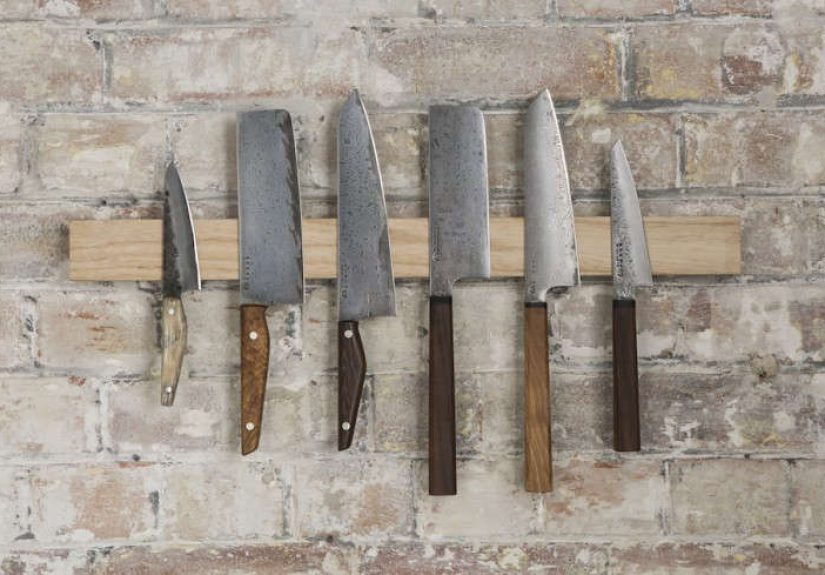
Blenheim Forge pays serious attention to handle materials and aesthetics. Their Classic Range is commonly associated with walnut
and copper details, while the Stainless Clad Range is often paired with dark fumed oak and a brass ferrule. It’s functional, yes,
but it also looks like something you’d see on a magazine counter next to a beautifully imperfect ceramic mugbecause you would.
Finish: forged texture, not factory polish
Many blades keep a dark forged finish higher up on the bladeless “mirror shine,” more “workshop truth.” It’s not about looking rugged
for the sake of it; it’s about leaving evidence of the process. The knife doesn’t pretend to be mass-produced perfection. It’s a handmade
object that wants you to notice it.
Which Blenheim Forge Knife Should You Buy First?
Blenheim Forge organizes much of its lineup around a few core shapesknives that cover most real kitchens without requiring you to turn into
a full-time collector (though, fair warning, that can happen).
Gyuto: the “one knife” answer for most cooks
A gyuto is the Japanese-style all-purpose chef’s knife. If you want one blade that handles weeknight cooking, dinner parties,
and your sudden ambition to chiffonade basil like you’re on a cooking show, start here. It’s the best match for most home cooks because it can
rock gently, slice cleanly, and handle proteins and veg without drama.
Santoku: compact, confident, and very practical
Prefer a slightly shorter blade that feels nimble? The santoku is a great everyday optionespecially if your cutting board isn’t huge or you
like a more compact, point-and-shoot style. Think: fast prep, lots of vegetables, easy control.
Nakiri: the vegetable specialist (and a joy for prep people)
A nakiri is a vegetable cleaver-style knife with a flat edge that encourages clean, efficient chopping. If you’re the kind of person who finds
onion prep oddly soothing, a nakiri can feel like leveling up. It’s also great for push cuts and for getting full contact on the board.
Petty: the underrated sidekick
A petty knife (often in the 120–150mm range) is perfect for smaller taskscitrus, garlic, trimming, detail work. It’s the knife you grab when a
full-size blade feels like overkill. Many cooks end up using a petty constantly because it’s quick, nimble, and doesn’t ask for a big production.
Specialty shapes: deba, slicers, and the “I cook a lot” tier
Depending on releases and ranges, you may also see specialty shapes like deba or slicing knives. These are more purpose-built and make the most sense
when you already know your style (or when you’ve accepted that your kitchen tools are now a personality trait).
How to Buy Blenheim Forge Knives in the U.S.
Blenheim Forge sells directly online, and they also appear through respected specialty retailers that cater to knife nerds and working cooks.
U.S. shops like Bernal Cutlery (San Francisco) and Epicurean Edge list Blenheim Forge knives, including stainless-clad carbon options and
occasional special configurations.
One more thing: Blenheim Forge also runs limited “Special Editions” style drops (often tied to their mailing list). If you like the thrill of
limited releases, that part of their ecosystem can feel like sneaker culturebut with more onions and fewer resale fights.
Carbon Steel Reality Check: Patina, Rust, and the Few Rules That Matter
Patina isn’t damageit’s a feature
Carbon steel develops a patina: a darkened, oxidized layer that can help protect the blade and tells the story of what you cook.
Some people love this; others panic the first time their knife changes color. The important thing is to understand that patina is normal.
There’s a deeper reason carbon steel is addictive: it slows you down in a good way. Writers have compared carbon-steel tools to a kind of
practicepatience, repetition, and carebecause you can’t treat them like disposable gadgets and expect them to stay perfect.
The non-negotiables: what to do every time
- Wash and dry promptly: Don’t let moisture or food debris sit on the blade.
- Avoid the dishwasher: Heat, detergents, and banging around are a nightmare for edges and handles.
- Oil lightly for storage: A thin coat of food-safe mineral oil helps if you live in a humid area or store the knife for a while.
- Use appropriate cutting boards: Softer boards (like wood) are kinder to hard edges than stone, glass, or metal surfaces.
Rust happensdon’t spiral
Even careful people occasionally find a rust spot. The fix is usually straightforward: gentle abrasion and a little polish, followed by better habits.
The goal isn’t to keep the knife looking “new.” The goal is to keep it cutting beautifully.
Sharpening Without Drama: How to Keep a Blenheim Forge Edge Singing
Sharp knives are safer and more enjoyable to usebut the key is consistency, not heroics. You don’t need to become a master bladesmith.
You just need a repeatable routine.
Whetstones: the gold standard (and yes, it’s a skill)
Many knife experts recommend sharpening with whetstones because it gives you control and preserves the knife’s geometry.
A common approach is to start around a medium grit (often around 1000) and progress to a finer grit (for example 4000+),
then finish with a strop if you like a refined edge.
Some retailers even publish steel-specific guidancefor instance, recommending a medium-to-fine finish for hard carbon steels and warning that ultra-polished
edges can feel slippery on certain foods. Translation: sharper isn’t always better if it’s the wrong kind of sharp for your cutting style.
If you don’t want to sharpen: outsource like a grown-up
Not everyone wants to learn whetstonesand that’s fine. A reputable sharpening service a few times a year (plus good day-to-day care) can keep a knife
performing at a high level. Blenheim Forge also lists sharpening-related offerings on its site, which reflects how central maintenance is to their philosophy.
Safety note (because fingers are valuable)
Use stable surfaces, go slow, and don’t sharpen when you’re tired or distracted. Knife care is satisfying, but it’s not the moment to multitask.
Your texts can wait.
So… Are Blenheim Forge Knives Worth It?
If you want a stainless, no-thought, toss-it-in-the-drawer knife, Blenheim Forge is not your brand. These knives are tools with a relationship requirement.
They ask you to dry them. They ask you to store them properly. They ask you not to use them like a crowbar.
But if you like cookingand you like the idea that your tools can make you betterBlenheim Forge has a compelling case:
serious steel, thoughtful geometry, and a handmade identity that feels unmistakably South London. It’s not “luxury” in the jewelry sense.
It’s luxury in the “this makes my daily life more enjoyable” sense.
And honestly, if a knife makes you excited to cook a Tuesday dinner? That’s the best kind of fancy.
Experiences: Living With a Blenheim Forge Knife (What Owners Tend to Notice)
The first “experience” most people talk about isn’t the unboxingit’s the first cut. A well-made carbon-steel edge doesn’t just slice; it glides with a kind
of calm confidence. Tomatoes stop being a test of frustration and become a neat, satisfying stack of thin rounds. Onions fall into clean dice instead of
turning into slippery chaos. Herbs cut without bruising, which means your basil looks like basil, not like it lost a fight.
The second experience is the handle. Blenheim Forge knives often get described as feeling deliberately shapedlike someone actually used hands and opinions
to make decisions. A good handle disappears while you work. You stop thinking about grip and start thinking about rhythm. That matters more than most people
realize, because a kitchen knife is a repetition machine: dozens of motions per meal, hundreds per week, thousands per year. Comfort isn’t a bonus. It’s the
whole game.
Then comes the “carbon steel moment,” usually within the first week: the blade changes color. Maybe it’s a soft gray haze. Maybe it’s a bluish tint after
slicing hot protein. Maybe it’s a darker patch after citrus or onions. New owners sometimes worry they did something wrong, but seasoned carbon-steel users
tend to treat it like a rite of passage. The knife is reacting because it’s alive in the chemistry senseforming a patina that can become part protection,
part autobiography. (If your knife could talk, it would mostly talk about onions.)
Another common experience is how these knives change your habits. People who never used to wipe a blade mid-prep suddenly do it without thinkingpartly to
prevent rust, partly because a clean blade just works better. You start paying attention to cutting boards. You stop using glass or stone “because it looks
pretty” and start using wood “because my edge deserves kindness.” It’s not that you become precious; you become intentional. And oddly, that can make cooking
feel more relaxing, not lessbecause your setup starts supporting you instead of fighting you.
Sharpening is where the relationship deepens. Many owners say a Blenheim Forge edge feels rewarding to maintain, especially if they use whetstones.
When the knife comes back to peak sharpness, it doesn’t feel like a disposable “replace it” toolit feels like something you can renew. The process becomes
part of the hobby, like seasoning a cast-iron pan or dialing in espresso. Even if you outsource sharpening, you still notice the difference when the edge is
fresh: less force, more control, cleaner cuts, and a sense that prep is faster because you’re not wrestling your ingredients.
Finally, there’s the subtle experience you can’t put in a spec sheet: pride. Not the weird kind where you lecture guests about steel types (unless they asked).
More like the quiet satisfaction of using something made by real people, in a real workshop, with a real point of view. Blenheim Forge knives tend to feel
like objects you keeptools that age with you, pick up character, and make daily cooking feel just a little more like craft.