Table of Contents >> Show >> Hide
- How Double Vanities Went From Dream Upgrade to Design Time Stamp
- Why Double Vanities Can Make a Bathroom Feel Older
- Why Buyers Care More Than Ever
- The Real Functional Problems With Double Vanities
- When a Double Vanity Still Makes Sense
- What Looks More Current in 2026
- How to Fix the Problem Before You Sell
- The Bigger Resale Lesson
- Real-World Experiences: What Homeowners Learn After Living With Double Vanities
There was a time when a double vanity was the bathroom equivalent of pulling into the driveway in a luxury SUV with heated seats and absolutely no children in sight. Two sinks meant success. Two faucets meant romance. Two mirrors meant, apparently, the marriage was going to make it.
But design trends change, buyer expectations evolve, and what once looked upscale can now read oddly specific to another era. Today, the classic side-by-side double vanity is increasingly falling into the “builder-grade luxury” category: expensive-looking, bulky, overly symmetrical, and not always as practical as people think. In some bathrooms, it is still the right move. In many others, it is the feature quietly making the room feel older, more cramped, and more in need of a redo.
That matters because bathrooms carry a lot of emotional weight in a sale. Buyers notice them fast. They imagine their routines there. They clock the storage, the lighting, the wear, the layout, and yes, the vanity. So when a bathroom centers around a hulking double sink that eats up wall space and delivers less usefulness than promised, it can make the whole room feel datedeven if the tile is new and the faucet is trying its best.
How Double Vanities Went From Dream Upgrade to Design Time Stamp
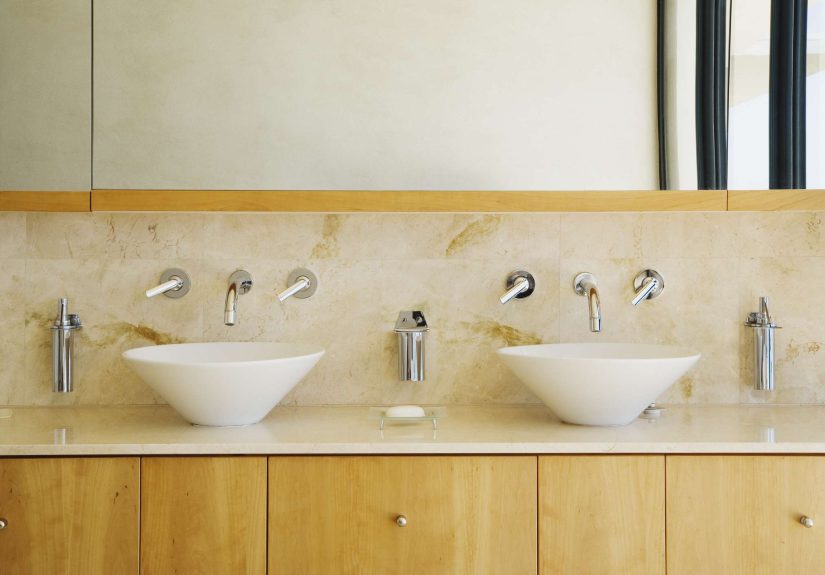
Double vanities became a status symbol during the era when bigger automatically meant better. Primary bathrooms expanded. Matching cabinetry took over. Everything became coordinated to within an inch of its life. If you had enough room, the assumption was simple: put in two sinks, center each under its own mirror, and call it luxury.
The problem is that this formula often created a bathroom that looked polished in a catalog but behaved badly in real life. The sinks swallowed the usable counter. The center drawers became fake. The storage got chopped into awkward compartments. And instead of one well-planned vanity with breathing room, homeowners got a long cabinet full of plumbing obstacles and toothpaste drama.
Worse, the look itself started aging. Many double vanities are tied to design choices that now read instantly dated: heavy espresso cabinetry, identical framed mirrors, Hollywood-style lighting, gray faux-wood floors, all-white builder finishes, or that suspiciously beige “spa” palette that somehow feels both bland and expensive. Once buyers sense a bathroom belongs to a trend cycle that has passed, they start mentally budgeting for change.
Why Double Vanities Can Make a Bathroom Feel Older
1. They create a matchy-matchy look that reads builder-grade
Today’s better bathrooms feel layered, not copied and pasted. Designers are moving away from everything matching exactly. A double vanity, especially one with two identical mirrors, identical sconces, identical sinks, and one giant slab of countertop, can make the room feel like it was installed from a showroom package called “Executive Beige Suite.” Not a great sign.
That does not mean symmetry is always bad. It means symmetry without personality often feels mass-produced. Buyers may not say, “Ah yes, a vanity composition problem,” but they will absolutely say, “It feels dated.” Same issue. Different outfit.
2. They often waste the most valuable square footage in the room
Bathroom design is less about square footage on paper and more about how the space actually works at 7:12 a.m. when somebody is looking for floss and somebody else is blocking the drawer. A double vanity frequently takes up the longest uninterrupted wall, yet gives back surprisingly little. In many cases, a wide single-sink vanity or an offset-sink vanity would provide more usable landing space, better drawer storage, and easier circulation.
That is one reason the old “two sinks equals more function” rule is not as ironclad as it once seemed. If two people cannot comfortably move around the room, open drawers, reach outlets, or set anything down because the vanity is all basins and no brains, the feature becomes decorative plumbing.
3. They can signal an expensive remodel is still ahead
Buyers do not just react to what they love. They also react to what they will have to fix next. An oversized double vanity can suggest the room is stuck in the early-2000s luxury mindset and due for a smarter layout. Even if the rest of the bathroom is clean, the vanity may tell buyers the room needs new cabinetry, new lighting, new mirrors, and maybe a new floor plan to feel current.
That is where resale gets tricky. A bathroom can still be “nice” and yet feel wrong for today. And “nice but wrong” is exactly the kind of feature buyers use to negotiate.
Why Buyers Care More Than Ever
Modern buyers are not only shopping for looks. They are shopping for function, condition, and flexibility. They want bathrooms that feel calm, easy to maintain, and adaptable to real life. That means smart storage, better lighting, good ventilation, durable finishes, and layouts that make sense.
In that environment, a double vanity is no longer an automatic selling point. In fact, it can work against you when it crowds the room, limits storage, or makes a bathroom feel stuck in a previous decade’s idea of luxury.
It is also worth remembering that not every buyer is shopping for the exact same fantasy. Some want spa-like calm. Some want low-maintenance simplicity. Some want aging-in-place practicality. Some want a vanity that can handle skincare products, hair tools, and a charging cable without looking like a chemistry lab exploded. A giant double sink cabinet does not always solve those needs. Sometimes it makes them worse.
The Real Functional Problems With Double Vanities
Counter space disappears faster than people expect
Two sinks sound generous until you realize each one needs elbow room, faucet clearance, mirror space, and splash zone. Suddenly the only open surface left is a narrow strip between the basins where one lonely candle and a bottle of hand soap are fighting for legal custody of the countertop.
That is why many newer bathrooms are rethinking the formula. A larger single sink placed to one side can leave generous counter space for daily use. In practical terms, that can feel far more luxurious than a second basin nobody asked for.
Storage gets chopped up by plumbing
Every sink creates dead zones. Double the sinks, and you often double the awkward cabinetry. Instead of deep drawers, you get shallow drawers, fake fronts, narrow cabinets, or mysterious dead pockets where no object created by humans will ever fit. One of the biggest shifts in bathroom design is not toward more decoration, but toward better hidden function. Drawers, organizers, built-in outlets, styling stations, and vertical towers are doing more of the real work now.
Cleaning becomes a full-time side quest
Two sinks mean two drains, two faucets, two sets of hard-water spots, and twice the opportunity for mystery beard clippings to appear like they pay rent. Buyers may not make decisions based on how annoying a faucet is to wipe down, but they absolutely respond to whether a bathroom feels calm and easy to care for. Complicated-looking bathrooms rarely win that contest.
When a Double Vanity Still Makes Sense
To be fair, the double vanity is not dead. It is just no longer automatically right.
It still makes sense in a genuinely large primary bathroom where the layout supports it and the storage is thoughtfully designed. It can work beautifully when each person has real separation, good task lighting, useful drawer space, and room to move. It can also make sense in higher-end markets where buyers expect a shared primary bath to accommodate two adults at once.
But the key phrase is thoughtfully designed. A 60-inch cabinet with two cramped sinks is not the same thing as a custom setup with real storage, quality materials, and breathing room. One feels aspirational. The other feels like a compromise wearing expensive shoes.
What Looks More Current in 2026
Oversized single vanities
A wider single vanity with one generous sink is quietly becoming the grown-up choice. It looks intentional, leaves more countertop open, improves drawer design, and can make the room feel calmer. In resale terms, it often reads as more custom and less builder-standard.
Separate zones instead of twin clones
If two users really need the space, separate vanity zones feel fresher than one giant double sink block. That could mean a single sink plus a makeup station. It could mean two distinct vanity areas separated by a linen tower. It could mean one main sink and one compact prep zone. The point is flexibility. Not every bathroom needs to look like a hotel chain designed it for a couple arguing about mouthwash.
Warmer wood tones and furniture-style design
Bathrooms are getting softer and less sterile. Wood vanities, warmer neutrals, mixed materials, and furniture-like forms feel more current than the flat, monochrome cabinetry of the recent past. This creates a room that feels designed, not installed.
Smarter storage features
Vanity towers, deep drawers, organizers, built-in outlets, medicine cabinets, and integrated lighting all deliver real value to daily life. Buyers notice when a bathroom has a place for hair tools, extra towels, backup soap, and the thousand tiny objects that somehow reproduce in drawers at night.
How to Fix the Problem Before You Sell
Do not gut the room just for trends
If your bathroom is in good condition and the double vanity is well-proportioned, you may not need a full remodel. Replacing a perfectly functional vanity just because design Instagram got a new mood board can be a financially rude awakening.
Instead, ask the better question: does the vanity make the room feel tight, dated, or overdone? If yes, then a smarter update may help your home show better.
Focus on what buyers actually notice
Fix damaged tile, peeling caulk, poor lighting, tired mirrors, old hardware, and any signs of water issues first. Those are the things that make buyers nervous. A bathroom does not need to look trendy. It needs to look clean, functional, and thoughtfully maintained.
Make the vanity feel intentional
If replacing it is not in the cards, update the presentation. Swap out builder-grade mirrors. Change the lighting. Repaint cabinetry if the finish is dragging the room into the past. Clear the counters. Add fresh hardware. Style lightly. A double vanity that once looked like a suburban command center can look dramatically better when the visual clutter disappears.
Use neutral, not boring
Neutral sells, but sterile does not. Aim for warm whites, soft browns, natural wood tones, flattering light, and layered textures. That combination appeals to more buyers than icy gray, blinding white, or anything trying too hard to be “luxury.” Buyers want a bathroom that feels easy to live in, not a room that looks like it was sponsored by grout.
The Bigger Resale Lesson
The issue is not really the second sink. It is what the second sink often represents: an outdated idea of what luxury looks like. Buyers today are more impressed by thoughtful planning than by duplicate fixtures. They want bathrooms that use space wisely, feel fresh without being fussy, and solve daily problems instead of inventing new ones.
That is why double vanities can date a bathroom and make a home harder to sell. They are often a clue that the room was designed for appearances first and real life second. And when buyers see that, they start wondering what else in the house was chosen for show instead of function.
In other words, the double vanity did not ruin your resale prospects all by itself. It just might be the loudest thing in the room saying, “Hi, I am from 2008, and I still think matching framed mirrors are the height of sophistication.”
Real-World Experiences: What Homeowners Learn After Living With Double Vanities
Ask people who have actually lived with a double vanity for a few years, and the answers get interesting fast. At first, most homeowners love the idea of “his and hers” sinks because it sounds organized, upscale, and very adult. Then real life moves in with electric toothbrushes, skin care bottles, teenage hair products, shaving tools, half-burned candles, and one hand towel that apparently belongs to no one yet is always damp.
One of the most common experiences is realizing that two sinks do not automatically create more personal space. In a lot of bathrooms, both people still end up drifting toward the same better-lit mirror, the same convenient drawer, or the same outlet. So instead of two equal stations, the room develops a favorite side and a “why is this faucet even here?” side. That can make the second sink feel less like a feature and more like an expensive decorative gesture.
Another recurring complaint is storage. Homeowners assume a bigger vanity means more room to stash things, but the double plumbing can carve up the cabinet so badly that the storage becomes weirdly unusable. You wind up with narrow drawers for tiny items, fake fronts where useful drawers should have been, and under-sink caves that only hold cleaning supplies, tangled cords, and unresolved regret. By contrast, people who switch to a wide single-sink vanity often talk about the relief of finally having broad drawers that fit actual objects made for modern grooming routines.
There is also the resale psychology homeowners only notice when it is time to list. A double vanity that once felt luxurious can suddenly feel like the room’s most dated feature when paired with old mirrors, old lighting, and tired finishes. Sellers start noticing that the vanity dominates every photo. It can make the room look heavier, busier, and more obviously tied to the year it was installed. A simpler, cleaner vanity often photographs better because it lets buyers notice the room instead of just the cabinetry.
Designers and stagers see this all the time. They do not necessarily tell homeowners, “Double vanities are bad.” What they often say instead is, “This room needs to feel lighter, warmer, and less crowded.” That can mean repainting a vanity, replacing the mirrors, improving lighting, or in some cases removing the second sink so the bathroom gains usable counter space and visual calm. The goal is not to erase function. It is to stop the vanity from overpowering the room.
And then there is the daily cleaning reality, which deserves its own tiny support group. Two sinks mean more toothpaste dots, more faucet spots, more drain maintenance, and more edges where clutter gathers like it got an engraved invitation. Homeowners who are honest about it often say they would rather have one beautifully planned sink area than two smaller mess zones.
That lived experience is the whole point. Trends come and go, but convenience always leaves receipts. The bathrooms that age best are not the ones with the most fixtures. They are the ones that quietly make mornings easier, storage smarter, and resale less stressful.