Table of Contents >> Show >> Hide
- Why Dark Interiors Work (And Why They Don’t Have to Feel Depressing)
- The Ground Rules of “Eerie, But Elevated”
- Eva Kosmas Flores–Inspired: 8 Dark Ideas for Eerie Interiors
- 1) Build a mood board from horror films (Yes, really)
- 2) Make the table the main character with dark matte ceramics
- 3) Choose “dusty” heirloom gourds over shiny pumpkins
- 4) Rethink “taxidermy” as elegant natural history
- 5) Grow “specimens” in jars for a subtle spooky science vibe
- 6) Raid the medicine cabinet: gauze as ghostly, elegant fabric
- 7) Use dead branches like sculpture
- 8) Swap harsh overhead lighting for firelight (real or faux)
- How to Make Dark Decor Work Year-Round (Not Just in October)
- The “Not a Haunted House Store” Checklist
- Conclusion
- Experience Notes: What It’s Like to Actually Live with Eerie Interiors (An Extra )
Some people decorate for Halloween by buying a plastic spider the size of a small dog and calling it a day. Others (the fun ones)
prefer an eerie interior that feels like a sophisticated thriller: moody, cinematic, a little mysteriousyet still perfectly livable
when it’s not October.
That’s where the “dark, natural, and not-at-all-kitschy” approach comes inpopularized in part by Pacific Northwest creative
Eva Kosmas Flores, known for atmospheric styling that borrows from film, nature, and old-world texture. Her vibe is
less “haunted carnival,” more “beautiful old house with secrets (and excellent dinnerware).”
Why Dark Interiors Work (And Why They Don’t Have to Feel Depressing)
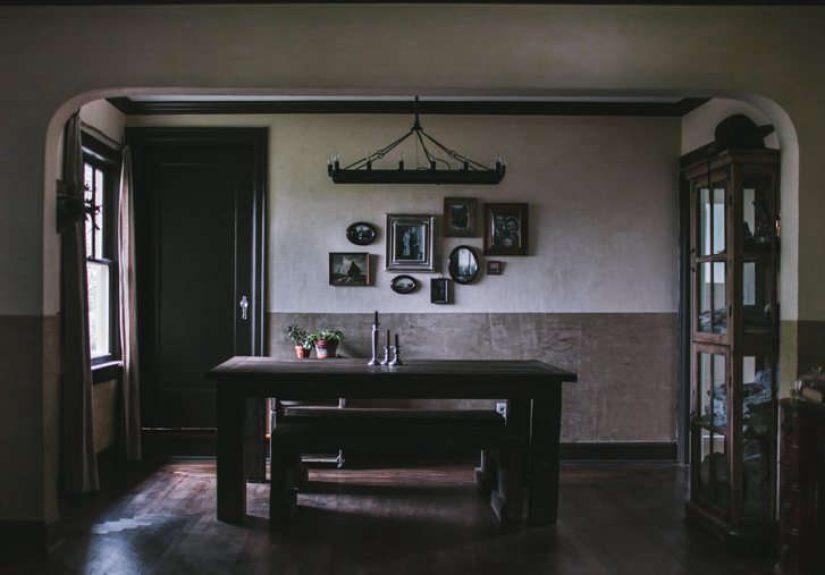
The secret isn’t “make everything black.” It’s contrast, texture, and control. Dark palettes can make a room feel cocooning,
intimate, and intentionalespecially when you balance them with warm lighting, tactile materials, and a clear point of view.
Think: charcoal walls with linen curtains, blackened wood with brass accents, smoky glass with a soft wool rug.
Dark design also photographs beautifully (hello, depth and shadow), which is why it shows up everywhere from design magazines to your
social feed. But the real win is how it makes everyday life feel a little more cinematiclike you might casually sip tea while solving
a Victorian mystery. (Optional, but encouraged.)
The Ground Rules of “Eerie, But Elevated”
1) Pick a story, not just a color
“Moody” isn’t a paint swatchit’s a narrative. Decide what you want the room to feel like: a midnight library, a winter cabin, a
gothic greenhouse, a noir dining room. When the story is clear, your choices get easier (and your home avoids looking like you panic-bought
black candles at the last minute).
2) Texture is your best friend
Dark rooms rely on texture for dimension. Mix matte and sheen, rough and smooth: plaster walls, velvet upholstery, aged wood, stone,
ceramics, woven baskets, and metal with patina. The goal is depthnot a flat void that absorbs joy and Wi-Fi.
3) Lighting is the “spell” that makes it all feel intentional
Overhead lights alone can turn moody into mugshot. Layer lighting: ambient (overall glow), task (reading/working), and accent (art, shelves,
corners). Warm bulbs, dimmers, shaded lamps, and candlelight (real or faux) are the difference between “eerie chic” and “why is this room
interrogating me?”
Eva Kosmas Flores–Inspired: 8 Dark Ideas for Eerie Interiors
Below are eight ideas associated with Eva Kosmas Flores’ approach to dark, naturalistic, slightly spooky interiorsdesigned to work for
Halloween and the other eleven months when you still want your home to feel magical, not merchandise-driven.
1) Build a mood board from horror films (Yes, really)
Some horror films use interior design like a character: pale plaster, creaky wood floors, heavy drapery, vintage silhouettes, long shadows.
Instead of copying props, study the visual language: monochrome palettes, stark contrast, negative space, and deliberate restraint.
- Try this: Choose one “film feeling” (noir, folk horror, gothic) and translate it into materials: plaster, dark-stained wood, iron, linen.
- Avoid this: Turning your living room into a costume aisle. If it honks, squeaks, or glows neon, step away.
2) Make the table the main character with dark matte ceramics
Dark serveware adds instant dramaand it’s surprisingly flattering to food. Matte black or charcoal plates make jewel-toned produce,
roasted vegetables, and candlelit dinners look lush. The trick is matte: it reads earthy and quiet instead of glossy and staged.
- Try this: Pair dark plates with natural linens (oatmeal, flax, smoky gray) and one “odd” element (a tarnished candlestick, a branch, a dried bouquet).
- Avoid this: Over-theming. One skull-shaped napkin ring is “wink.” Twelve is “you okay?”
3) Choose “dusty” heirloom gourds over shiny pumpkins
If you want Halloween that whispers instead of screams, skip the glossy orange parade. Look for winter squash and heirloom gourds in muted
tonescreams, pale oranges, tans, dusty greens. Their natural matte skin reads antique and sculptural, like found objects rather than decor.
- Try this: Cluster small gourds along a table runner, staircase, or windowsill where the shapes silhouette at night.
- Pro move: Use odd numbers (3, 5, 7) and vary height for a still-life effect.
4) Rethink “taxidermy” as elegant natural history
The point isn’t to make your guests wonder if a squirrel is judging them. It’s to bring in the natural-history mood: antlers,
vintage specimen imagery, old botanical prints, feathers under glass, or sculptural branches. If actual taxidermy feels like too much,
go for a “museum shelf” look instead.
- Try this: Create a small vignette: a framed vintage-style print + a dark ceramic vessel + one natural element (antlers, a branch, dried pods).
- Avoid this: Random creepy objects with no context. Eerie works best when it feels curated.
5) Grow “specimens” in jars for a subtle spooky science vibe
A row of glass vessels with roots trailing in water looks quietly otherworldlylike a greenhouse met an apothecary. The key is to keep it
botanical, not cartoonish. Think moss balls, water-friendly plants, and simple glass shapes that let the organic forms do the talking.
- Try this: Use clear jars in a cluster on a kitchen sill or shelf; keep the water line consistent for a clean look.
- Practical tip: Change water regularly and keep jars out of harsh direct sun if algae becomes a problem.
6) Raid the medicine cabinet: gauze as ghostly, elegant fabric
Gauze is unexpectedly perfect for eerie styling because it moves. Draped over a banister, wrapped around a chandelier chain, or layered on a
table, it reads like fog in fabric formlight, airy, and slightly unsettling (in a good way).
- Try this: Use fine-weave cotton gauze in long lengths. Let it cascade rather than bunch.
- Avoid this: Anything that looks like a party store mummy wrap. You’re aiming for “mist,” not “middle school play.”
7) Use dead branches like sculpture
Bare, twisting branches add instant atmospherehaunting silhouettes, natural geometry, and a little wildness. One dramatic branch in a tall
vase can replace a whole pile of seasonal clutter.
- Try this: Choose one gnarled branch with an interesting shape; keep the vase simple and heavy.
- Safety/cleanliness: Make sure branches are dry and clean; avoid anything that sheds sap or brings in hitchhiking bugs.
8) Swap harsh overhead lighting for firelight (real or faux)
Candlelight instantly upgrades a room’s moodsoft shadows, warm glow, and a dramatic flicker that makes everything feel more intentional.
You don’t need a thousand candles; you need placement: a few grouped together, or a single statement candelabra.
- Try this: Cluster candles on a tray with a few natural elements (stones, dried leaves, seed pods) for a grounded look.
- Don’t burn your house down: Keep flames away from gauze, branches, curtains, and anything that whispers “I’m flammable.” LED candles can still look great.
How to Make Dark Decor Work Year-Round (Not Just in October)
The fastest way to turn “eerie” into “everyday” is to anchor it with timeless design moves: moody paint, cohesive palettes, and layered
lighting. Dark rooms don’t have to be visually heavythey can be rich, calm, and surprisingly cozy.
Use dark paint like a tailored suit: fitted, intentional, and flattering
Deep shades (charcoal, inky blue, forest green, near-black brown) can feel envelopingespecially in bedrooms, dens, and dining rooms.
If you’re nervous, start with one small room or one architectural feature: built-ins, a fireplace wall, or even the back of a bookshelf.
Try “color drenching” for instant drama
Color drenchingpainting walls, trim, and sometimes ceiling the same shadecreates a seamless, immersive effect that can make a space feel
intentionally cocooned rather than chopped up. Dark color drenching can be especially good when you want a room to feel like a retreat.
Balance dark with glow and grain
Dark interiors love warm wood, woven textures, and metals with warmth (brass, aged bronze). Add pale linens or creamy upholstery to keep the
room breathable. Even a single light elementcurtains, a rug, a large piece of artcan keep the mood from tipping into “cave you can’t find
your phone in.”
Lighting: more lumens, more layers, more kindness
Dark walls reflect less light, so you often need more lamps (or brighter bulbs) than you think. Use a mix of table lamps, floor lamps,
sconces, and accent lighting to keep corners from collapsing into shadow. Dimmers are the cheat code: bright for cleaning, low for ambiance,
medium for living like a functional human.
The “Not a Haunted House Store” Checklist
- Limit your palette: Choose 2–3 core tones (e.g., charcoal + warm ivory + aged brass) and let texture do the rest.
- Repeat materials: If you use black metal once, echo it again (frames, hardware, lighting) so it feels intentional.
- Keep novelty to one moment: One spooky nod (a candelabra, a dark still-life, a branch) is chic. Ten is clutter.
- Let nature be the drama: Dried florals, seed pods, branches, stonethese read elevated because they’re not “seasonal plastic.”
- Edit ruthlessly: Dark rooms shine when there’s breathing room. Negative space is part of the mood.
Conclusion
Creating eerie interiors doesn’t require a fog machine or a lifelong commitment to black velvet. The most memorable dark spaces are
restrained: cinematic inspiration, matte textures, natural elements, and lighting that makes everything feel rich instead of harsh.
Borrow a few of Eva Kosmas Flores’ ideasdark ceramics, dusty gourds, branches, candlelightand you’ll get a home that feels spooky-elegant
in October and quietly luxurious the rest of the year.
Experience Notes: What It’s Like to Actually Live with Eerie Interiors (An Extra )
Let’s talk reality: “dark and moody” looks gorgeous in photos, but what does it feel like on a random Tuesday when you’re holding laundry
and questioning your life choices? Here are common, real-world experiences people report when they lean into eerie interiorsplus a few
practical surprises you’ll want to know before you paint the world charcoal.
The first week is a glow-up. Even small changesswapping bright white bulbs for warm ones, adding a dimmer, switching to
matte black dinnerwaremake the space feel instantly more deliberate. Many people say the room feels “calmer” at night because the lighting
is softer and the palette isn’t shouting. Dinner becomes an event. Tea tastes more poetic. Your playlist mysteriously shifts toward jazz
and “songs that sound like rain.” (No judgment.)
Then comes the adjustment period. Dark walls and decor can reveal where your lighting plan is weak. You might notice one
corner turning into a black hole, or that overhead lighting makes everything look flat. The fix is rarely expensive: add a floor lamp,
place a small table lamp on a shelf, or tuck an accent light behind a plant. People are often surprised that the “moody look” is less about
owning dramatic objects and more about giving the room enough layered light to feel comfortable.
Guests react in two predictable ways. The first group says, “Oh wow, this is so cozy,” and then refuses to leave your
dining table. The second group asks, “Is this… a theme?” That’s your cue to lean into the elevated part: tell them it’s inspired
by natural history, film lighting, or old-world textures. (Do not say, “It’s my villain era.” Unless you’re ready to commit.)
Daily life gets easier when you choose functional ‘eerie.’ A branch centerpiece? Beautifuluntil it drops bits on your
table. The solution many people land on is “one big statement, fewer fussy pieces”: a single branch in a sturdy vase, a simple tray of
LED candles, a few jars with plants that can tolerate your level of responsibility. The eerie interior that lasts is the one that doesn’t
require constant resetting.
Cleaning can be surprisingly forgiving. Matte finishes hide smudges better than glossy ones, and dark patterned textiles
can be more practical than stark white. The downside: dust is more visible on black surfaces in direct sunlight. Many people solve this by
mixing tones (charcoal instead of pure black), adding textured materials (linen, plaster, wood grain), and using fewer large reflective
surfaces that show every speck.
If you have kids or pets, eerie can still be friendly. The trick is to keep the “spooky” elements out of reach and choose
durable materials: washable slipcovers, sturdy rugs, flameless candles, and branches placed where they can’t be tackled. Families often say
the moodier palette actually feels restful at nightespecially in bedroomsbecause it’s less visually stimulating than bright, high-contrast
decor.
The biggest surprise? Once the novelty wears off, an eerie interior tends to feel less like “Halloween” and more like a
personal signaturewarm, layered, and intimate. People who stick with it usually say the same thing: the home feels more like a sanctuary.
And honestly, in a world full of fluorescent lighting and notifications, a little candlelit, moody calm is practically self-care.