Table of Contents >> Show >> Hide
- The Character at the Center of the Cereal Mystery: Sheriff Andy Taylor
- Back When Sponsors Were Practically Roommates
- Why a Bowl of Grape-Nuts Helped Build Mayberry
- From Sponsor-Friendly Detour to Sitcom Landmark
- Yes, the Characters Also Sold the Cereal
- So Was Andy Taylor “Only” Created to Sell Breakfast Cereal?
- The Marketing Lesson Mayberry Still Teaches
- Conclusion: The Most Wholesome Origin Story in TV History
- Experiences & Cultural Echoes: Living With the “Cereal Sitcom” Fact (Extra)
There are plenty of reasons your favorite classic sitcom characters exist: brilliant writing, great casting,
a network that needed a hit, and maybe a producer who owned a particularly lucky blazer.
But sometimes, television history has a quieter (and crunchier) origin story.
Sometimes a character shows up because somebody, somewhere, looked at a bowl of cereal and thought:
“You know what this needs? A lovable sheriff.”
That’s not a metaphor. In the late 1950s, when TV was still deep in its “brought to you by…” era,
sponsors didn’t just buy ad timethey could influence the tone of a show, the setting, and even the kind of
family America saw on screen. And in one of the strangest (and most wholesome) examples of sponsor-driven
storytelling, Sheriff Andy Taylorthe calm, kind center of The Andy Griffith Showfirst arrived
in viewers’ living rooms because a cereal brand wanted something that felt more “all-American.”
Yes: one of the most beloved small-town sitcom characters in U.S. history has an origin story tied to a breakfast
cereal promotion. The Mayberry vibe didn’t just happen. It was, at least in part, a branding decision.
A delicious, lightly nutty branding decision.
The Character at the Center of the Cereal Mystery: Sheriff Andy Taylor
If you’ve never watched The Andy Griffith Show, here’s the elevator pitch:
a widowed sheriff raises his young son in the fictional town of Mayberry, North Carolina,
while keeping the peace with a mix of patience, gentle wisdom, and the occasional “Barney…”
(said the way a parent says a child’s full name when the child is holding scissors).
The show ran on CBS from 1960 to 1968 and became a defining example of “comfort sitcom” long before anyone
called it that. It was hugely successful in its original run and remains a cultural shorthand for an idealized,
neighborly America. That part is well known.
What’s less widely known is how America first met Andy Taylor.
His first appearance wasn’t in the pilot episode of his own series.
It was in a February 1960 episode of The Danny Thomas Show called
“Danny Meets Andy Griffith.”
Back When Sponsors Were Practically Roommates
Modern viewers are used to a clean division: the show is the show, and the ads are the ads.
But early American television often ran on “single sponsorship,” a model inherited from radio.
A sponsor didn’t just advertise during a programit could be closely identified with it, and sponsors (often through
ad agencies) could exert meaningful influence over programming and presentation.
Scholars of early U.S. television advertising describe those early sponsored programs bluntly:
entertainment was frequently treated as an “advertising vehicle,” with sponsors controlling programs and ad agencies
overseeing production. In other words, the sponsor wasn’t merely paying the bills; it sometimes helped pick the wallpaper.
Sponsors wanted shows that made their products look goodnot just through commercials, but through the overall vibe:
Is the family likable? Does the world feel safe? Are people yelling too much for a “wholesome” brand?
(Because nothing says “maybe skip the bran” like a household argument that could rattle the milk off the table.)
Why a Bowl of Grape-Nuts Helped Build Mayberry
Here’s the core twist: Post Grape-Nuts was associated with the sponsorship ecosystem around
The Danny Thomas Show, and the cereal brand’s public image leaned “wholesome,” “family,” and “trust us,
we have fiber.” According to the cereal brand’s own history, the show’s urban, discordant family tone didn’t match the
sponsor’s preferred imageso an episode was crafted that put Danny Thomas in a gentler, small-town setting.
That setting was Mayberry, and the sheriff he met there was Andy Taylor.
If you’re imagining a marketing executive sliding a note across a conference table that reads,
“ADD SMALL TOWN. REDUCE CITY STRESS. INCREASE FISHING POLES,” you’re not far off in spirit.
A sponsor wanted an atmosphere that aligned with its brand. Writers and producers delivered an episode that looked and felt
like a warm slice of Americana. And audiences responded immediately.
The Episode That Introduced Mayberry to America
In “Danny Meets Andy Griffith,” Danny Williams (Danny Thomas) drives through Mayberry and gets pulled over.
The sheriff isn’t starstruck. He’s polite, firm, and utterly unbothered by big-city energy.
It’s a classic culture clash: Danny’s “let’s keep moving” speed meets Mayberry’s “we’ll get to it when we get to it”
rhythm.
It also functioned as what TV historians call a backdoor pilotan embedded introduction to a new series
inside an existing show. The episode aired on February 15, 1960, and it was explicitly positioned as the
pilot for what became The Andy Griffith Show.
From Sponsor-Friendly Detour to Sitcom Landmark
Once Mayberry hit the screen, it didn’t feel like a one-off gimmick. It felt like a world.
The sheriff wasn’t a punchlinehe was the grounding force. Andy Taylor’s appeal came from restraint:
he wasn’t trying to dominate every scene; he was trying to keep things steady, often by letting other people spin themselves
into a tizzy and then gently guiding them back out.
That balance became the show’s signature. And it grew beyond the “cereal origin story” quickly.
As producers refined the series, they built out Mayberry into an ensemble of unforgettable characters
especially Deputy Barney Fife, whose anxious overconfidence is basically the human form of coffee jitters.
The Andy Griffith Show premiered later that year on CBS (with its debut dated to early October 1960)
and became a defining sitcom of the era, ranking extremely well in the ratings and leaving a long afterlife in syndication.
The show’s tonewarm, neighborly, lightly nostalgicturned Mayberry into a symbolic place, not just a setting.
Yes, the Characters Also Sold the Cereal
If you’re thinking, “Okay, but where’s the actual cereal part?”don’t worry, it’s here.
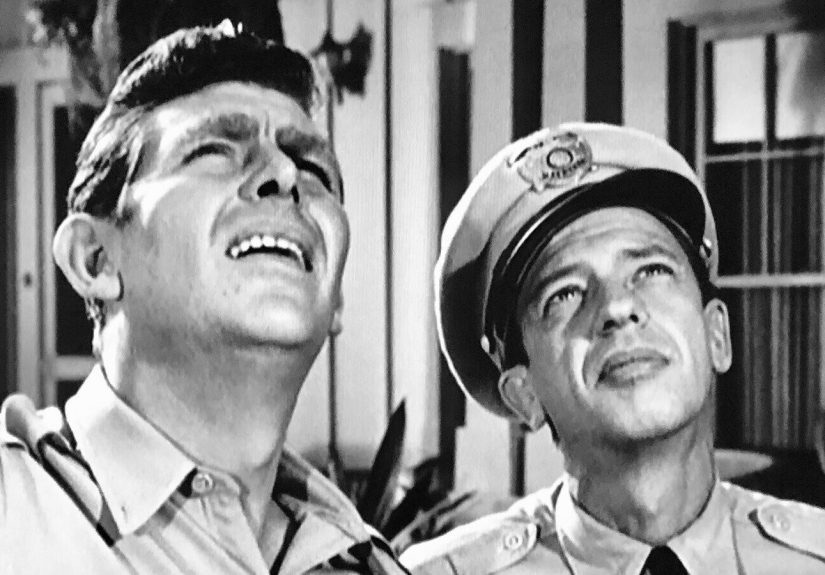
The link wasn’t subtle: during original airings, commercial breaks featured Andy Griffith and Don Knotts promoting
Grape-Nuts. In other words, the fictional sheriff and his deputy didn’t just live in Mayberry;
they also stepped out of it to remind America to eat their whole grains.
This kind of brand-star fusion was common in the era: sponsors wanted audiences to associate a beloved character with a
product. It’s the ancestor of modern influencer marketing, except your influencer is wearing a sheriff’s uniform and trying
to keep Barney from accidentally arresting the entire breakfast table.
So Was Andy Taylor “Only” Created to Sell Breakfast Cereal?
The headline version is irresistible: “Classic sitcom character created to sell cereal.”
But the more accurate (and more interesting) version is: sponsorship pressures helped shape the conditions
that produced Andy Taylor and Mayberry.
The creative engine still matteredproducers, writers, and performers were building something that stood on its own.
But early TV was a world where sponsors had real leverage over content, and brand alignment could influence what kinds of
stories got told. A sponsor wanting “wholesome” could push a show away from noisy urban friction and toward a calmer, more
idyllic setting.
In that light, Andy Taylor’s creation is a perfect snapshot of the era:
a character born at the intersection of artistry, business, and the belief that a warm smile pairs nicely with wheat and barley.
The Marketing Lesson Mayberry Still Teaches
1) Brand safety isn’t newit just used to be louder
Today we talk about “brand safety” in terms of ad placement and online content moderation.
Back then, sponsors could influence the program itself. If the tone didn’t fit the brand, the solution wasn’t
“change the targeting”it was “change the story.”
2) Audiences crave comfort, and comfort sells
Mayberry worked because it offered emotional relief: slower rhythms, lower stakes, kinder conflict.
Whether or not a cereal sponsor helped set the table, the meal was satisfying on its ownand people came back for seconds.
3) “Branded content” isn’t a modern invention
If you’ve ever rolled your eyes at a podcast host reading an ad in the same tone they use for the show,
congratulations: you’ve met the great-grandchild of sponsor-era TV.
Andy and Barney pitching cereal is a time capsule of the same basic strategyjust with fewer promo codes.
Conclusion: The Most Wholesome Origin Story in TV History
It’s easy to laugh at the idea that an iconic sitcom sheriff traces his roots to a cereal promotion.
But it’s also kind of beautiful. It shows how tangled American entertainment has always been with American commerce
and how, occasionally, that tangle produces something genuinely lasting.
A sponsor wanted “wholesome.” Producers and writers built a small town. A performer gave the sheriff warmth and authority.
A kid walked with his dad down a path with fishing poles. And suddenly, the country had Mayberry.
So yes: in the weirdest way, breakfast cereal helped give America one of its favorite TV father figures.
If that doesn’t make you look at your pantry with a little more respect, nothing will.
Experiences & Cultural Echoes: Living With the “Cereal Sitcom” Fact (Extra)
Learning that a classic sitcom character was only created to sell breakfast cereal tends to hit people in stages.
Stage one is disbelief: “No way. Not that character.” Stage two is curiosity: “Wait… so the ads were actually
part of the show’s DNA?” Stage three is the grin you can’t quite hide, because suddenly television history feels less like a
museum and more like a messy kitchenfull of good intentions, weird shortcuts, and the occasional marketing memo taped to the
fridge.
For many fans, the first “experience” of this story isn’t reading it in a book. It’s stumbling across an old sponsor spot,
a clip where familiar characters step out of their fictional world to endorse something real. There’s a specific kind of
whiplash in seeing a beloved sitcom dad talk up cereal with the same steady voice he used to talk up patience, responsibility,
and not letting your deputy carry a loaded weapon unsupervised. The effect is strangely comfortinglike discovering your
favorite teacher had a side gig as a camp counselor. It doesn’t ruin the magic; it adds a layer to it.
People who grew up on reruns often describe The Andy Griffith Show as “safe TV”the kind you watched with parents,
grandparents, or anyone who liked their comedy gentle and their problems solvable in under half an hour. That shared viewing
experience becomes part of the show’s legacy. So when you find out the show’s origins were nudged by a brand’s desire for a
wholesome image, it can feel oddly consistent: of course it came from someone insisting on “wholesome.” The whole town is
basically the physical embodiment of that word.
There’s also an “aha” moment where modern media suddenly makes more sense. If you’ve ever noticed a streaming show
suspiciously lingering on a soda label, or a character raving about a snack with the enthusiasm of a paid spokesperson,
you’ve seen the same impulsejust dressed differently. The Mayberry story turns into a mental lens: you start spotting the
ways advertising shapes storytelling, not always cynically, but structurally. Sometimes a sponsor’s needs create constraints,
and constraints create creativity. A town designed to feel calm and decent becomes the setting for better character comedy.
A sheriff designed to be reassuring becomes the anchor for an ensemble. The bowl of cereal becomes, unintentionally, a
launching pad for something bigger than the pitch.
And then there’s the nostalgia factor. The older sponsorship model had a blunt honesty to it: “This is brought to you by
X.” Today, advertising can be frictionless and invisible, woven into feeds and algorithms until you can’t tell where the
recommendation ends and the pitch begins. In contrast, those vintage sponsor moments feel almost charmingly straightforward.
It’s like the show is saying, “We’re going to entertain you, and then we’re going to tell you about cereal, and we’re not
going to pretend these things are unrelated.” That transparency can feel refreshingespecially when the product is something
as harmless as breakfast.
Ultimately, the experience of this story is a reminder that pop culture is built by more than inspiration. It’s built by
budgets, sponsors, schedules, and a thousand decisions made by people trying to keep a show on the air. Sometimes those
decisions are purely artistic. Sometimes they’re purely commercial. And sometimesrarely, wonderfullyyou get the hybrid:
a classic sitcom character who starts as a brand-friendly idea and becomes a genuine icon. The next time you hear a theme
whistle or see a small-town set on screen, it’s hard not to wonder what else started because somebody wanted to sell
something. Hopefully, at minimum, it was something tasty.