Table of Contents >> Show >> Hide
- What Counts as a “Leg Workout,” Anyway?
- The 15 Best Leg Exercises (With How-To Cues)
- 1) Back Squat (Barbell or Smith Machine)
- 2) Front Squat
- 3) Goblet Squat (Dumbbell or Kettlebell)
- 4) Bulgarian Split Squat
- 5) Walking Lunge
- 6) Reverse Lunge
- 7) Step-Up
- 8) Romanian Deadlift (RDL)
- 9) Single-Leg Romanian Deadlift
- 10) Trap Bar Deadlift (If You Have One)
- 11) Hip Thrust (Barbell or Dumbbell)
- 12) Glute Bridge
- 13) Leg Press
- 14) Hamstring Curl (Seated, Lying, or Nordic Progressions)
- 15) Standing or Seated Calf Raise
- How to Plan a Leg Day (So It Actually Works)
- Sample Leg Day Plans (Pick One and Run It for 4–6 Weeks)
- Common Leg Day Mistakes (And How to Fix Them)
- Safety Notes (Especially If You’re New to Lifting)
- Extra: Real-World “Leg Day Experiences” People Talk About (500+ Words)
- Conclusion
A great leg workout is basically a life upgrade. Strong legs help you sprint, jump, hike, dance, carry groceries like a superhero,
and stand up from a chair without making the “I am becoming furniture” sound. And yeswell-planned leg day can also build muscle,
shape your glutes, and make your jeans question their career choices.
This guide breaks down the 15 best leg exercises (with coaching cues you can actually use), then shows you how to
plan a leg day based on your goalstrength, muscle growth, athletic performance, or a “please let me walk tomorrow”
level of soreness. You’ll get sample leg day templates, set/rep ideas, exercise order, rest times, and a few hard-earned lessons
people learn the fun way (read: the wobbly-stairs way).
What Counts as a “Leg Workout,” Anyway?
A smart lower-body workout trains your legs from multiple anglesbecause your lower body isn’t one big “leg muscle.”
You’re working the quads (front of thigh), hamstrings (back of thigh),
glutes (yes, those), calves, plus stabilizers like the adductors (inner thigh) and the core.
The best leg workouts include:
- Squat patterns (knee-dominant): great for quads and overall leg strength
- Hinge patterns (hip-dominant): great for hamstrings, glutes, and the “posterior chain”
- Unilateral work (single-leg): balances strength side-to-side and boosts stability
- Accessories: targeted moves for hamstrings, quads, calves, and glute detail
The 15 Best Leg Exercises (With How-To Cues)
These are the “greatest hits” of leg daymix-and-match them based on your equipment, experience, and goals.
You don’t need all 15 in one workout unless you’re training for the world record in “longest gym session.”
1) Back Squat (Barbell or Smith Machine)
The classic leg builder. Back squats train quads, glutes, and core bracing. Cues: brace your torso like you’re about to cough,
keep your feet rooted (tripod foot: heel, big toe, little toe), and let your knees track in the same direction as your toes.
Start with a range of motion you controldepth comes with mobility and practice, not wishful thinking.
2) Front Squat
Front squats shift emphasis toward the quads and demand an upright torso (hello, core and upper back). Cues: keep elbows high,
“sit between your heels,” and stay tall through the chest. If wrist/shoulder mobility is a struggle, try straps or a cross-arm grip.
Great for people who want strong legs without turning every rep into a lower-back argument.
3) Goblet Squat (Dumbbell or Kettlebell)
The goblet squat is beginner-friendly and surprisingly humbling when done right. Cues: hold the weight close to your chest,
keep ribs down (don’t “flare” to fake depth), and control the bottom position. This is also an excellent teaching tool for squat mechanics
before loading a barbell heavier than your weekend plans.
4) Bulgarian Split Squat
A single-leg masterpiece that builds quads and glutesplus emotional resilience. Cues: keep a slight forward torso lean,
drive through the front foot, and control the descent. Start bodyweight, then add dumbbells. If balance is an issue,
hold onto a rack lightly (that’s not cheating; that’s not face-planting).
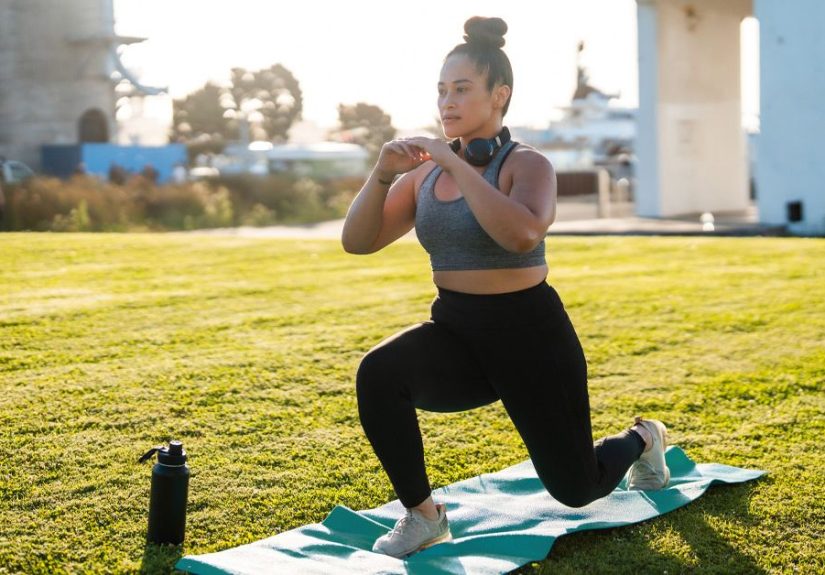
5) Walking Lunge
Walking lunges combine strength, stability, and a cardio “bonus” you didn’t ask for. Cues: take a long enough step that
your front heel stays down, keep your torso proud, and push the floor away to move forward. Great for athletes and anyone trying
to build leg endurance without running (or without liking running).
6) Reverse Lunge
Reverse lunges are often kinder on the knees than stepping forward, and they still hit quads and glutes hard.
Cues: step back quietly (no stomp), keep weight centered over the front foot, and drive up through the midfoot/heel.
If your goal is confident, stable legs, reverse lunges are a top-tier pick.
7) Step-Up
Step-ups look simple until your glutes start filing complaints. Cues: choose a box height that lets you keep control,
place the whole foot on the box, and avoid pushing off the back foot like it’s doing most of the work. Think “stand up on the box,”
not “launch myself and hope.” Fantastic for unilateral strength and real-world carryover.
8) Romanian Deadlift (RDL)
The RDL is a hip hinge that trains hamstrings and glutes while reinforcing strong positioning. Cues: keep a neutral spine,
soften the knees, and push hips back like you’re closing a car door with your butt (classy and effective).
Stop when you feel a strong hamstring stretchdon’t chase the floor if your back starts rounding.
9) Single-Leg Romanian Deadlift
This move is part hamstring-builder, part balance test, part “why is my ankle doing that?” Cues: hinge from the hip,
keep hips square, and reach the free leg back like a counterbalance. Use a light dumbbell at first or touch a wall for stability.
Great for ironing out side-to-side strength differences.
10) Trap Bar Deadlift (If You Have One)
The trap bar deadlift is a lower-body powerhouse that many lifters find more comfortable than a straight bar from the floor.
It trains legs and hips with a more upright torso for many people. Cues: brace hard, push the floor away,
keep the handles close to your center of mass, and lock out by squeezing glutesnot by leaning back like you’re dodging rain.
11) Hip Thrust (Barbell or Dumbbell)
If glute strength is on your vision board, hip thrusts belong on your leg day. Cues: keep ribs down, chin tucked,
and finish by squeezing glutes at the top (not by hyperextending your lower back). Pause for a second at lockout.
Strong glutes support sprinting, jumping, and many compound liftsplus they make stairs feel less like a plot twist.
12) Glute Bridge
The glute bridge is the simpler cousin of the hip thrust and a great option for home workouts. Cues: drive through heels,
keep the pelvis level, and hold the top for a beat. You can progress with a band around the knees, a dumbbell on the hips,
or single-leg reps (which are… memorable).
13) Leg Press
The leg press lets you load the legs heavily with less balance demand. Cues: keep your lower back supported,
don’t let your hips roll up at the bottom, and control depth. Foot placement changes emphasis:
lower on the platform tends to feel more quad-heavy, higher can feel more glute/hamstring-involved for many lifters.
Don’t bounce repsyour knees are not a trampoline.
14) Hamstring Curl (Seated, Lying, or Nordic Progressions)
Hamstring curls are a direct way to train knee flexion strengthuseful for balanced legs and athletic resilience.
Cues: keep hips down, move with control, and squeeze at peak contraction. If you’re advanced and want a challenge,
look into Nordic curl progressions (assisted, partial range). Your hamstrings will remember your name.
15) Standing or Seated Calf Raise
Calves get ignored until you realize they help with sprinting, jumping, and ankle stability. Cues: use a full range of motion,
pause at the top, and lower slowly. Standing raises emphasize the gastrocnemius (more involved with a straighter knee),
while seated raises hit the soleus more (knee bent). Either way: controlled reps beat ego reps every time.
How to Plan a Leg Day (So It Actually Works)
Step 1: Pick Your Goal
- Strength: heavier loads, lower reps, longer rest
- Muscle growth (hypertrophy): moderate reps, solid volume, controlled tempo
- Endurance/conditioning: lighter loads, higher reps, shorter rest
- Athletic performance: strength + power + unilateral stability
Step 2: Choose 5–8 Exercises, Not 15
A well-built leg day usually includes:
1 squat pattern, 1 hinge pattern, 1 unilateral exercise,
plus 2–4 accessories (quads/hamstrings/glutes/calves). If time is tight, do fewer exercises well.
If time is long, add accessoriesnot extra “max-out” sets that turn form into modern dance.
Step 3: Put Exercises in the Right Order
A reliable sequence:
- Warm-up + activation
- Big compound lift (squat or deadlift pattern)
- Second main lift (hinge or squat variation)
- Unilateral work (split squat, lunge, step-up)
- Accessories (leg press, curls, extensions, calves)
- Optional finisher (sled pushes, light tempo work, short conditioning)
Step 4: Use Sets, Reps, and Rest That Match the Goal
Here are practical starting points (adjust based on your experience and recovery):
- Strength: 3–5 sets of 3–6 reps on main lifts; rest ~2–5 minutes; accessories 2–4 sets of 6–10 reps
- Hypertrophy: 3–4 sets of 6–12 reps on main lifts; rest ~60–120 seconds; accessories 2–4 sets of 10–20 reps
- Endurance/conditioning: 2–4 sets of 12–20+ reps; shorter rests (~30–60 seconds) and lighter loads
Keep most sets at 1–3 reps shy of failure on compound lifts (good form stays the priority), and push closer to fatigue
on safer accessories like curls, extensions, and calves.
Step 5: Progress Over Time (Without Getting Greedy)
Your body adapts when you gradually increase challengeoften called progressive overload. Simple ways to progress:
- Add 5 lb to a lift when you hit the top of your rep range with clean form
- Add 1–2 reps per set before adding load
- Add a set (volume) for a few weeks, then deload
- Slow the lowering phase (tempo) or add a pause to make the same weight harder
If you’re a teen or new lifter, prioritize technique and gradual progression over maxing out.
Strong form is the long-term shortcut.
Step 6: Don’t Skip the Warm-Up (Your Knees Will Send Thank-You Notes)
A solid 8–12 minute warm-up:
- 2–4 minutes easy cardio (bike, brisk walk)
- Dynamic mobility: hip circles, leg swings, ankle rocks
- Activation: glute bridges, bodyweight squats, lunges
- Ramp-up sets: a few lighter sets of your first main lift
Sample Leg Day Plans (Pick One and Run It for 4–6 Weeks)
Leg Day A: Strength Focus (Gym)
| Exercise | Sets x Reps | Notes |
|---|---|---|
| Back Squat | 4 x 3–6 | Rest 2–4 minutes, crisp reps |
| Romanian Deadlift | 3 x 6–8 | Control the lowering phase |
| Bulgarian Split Squat | 3 x 8 each side | Use dumbbells, steady tempo |
| Hamstring Curl | 3 x 10–12 | Pause and squeeze each rep |
| Calf Raise | 4 x 10–15 | Full range, slow negative |
Leg Day B: Hypertrophy Focus (Gym)
| Exercise | Sets x Reps | Notes |
|---|---|---|
| Front Squat or Goblet Squat | 3–4 x 6–12 | Rest 60–120 seconds |
| Leg Press | 3 x 10–15 | Controlled depth, no bounce |
| Walking Lunge | 2–3 x 10–14 steps | Long stride, upright torso |
| Leg Extension | 2–3 x 12–20 | Easy to push close to fatigue |
| Seated or Standing Calf Raise | 4 x 12–20 | Pause top and bottom |
Leg Day C: Home (No Machines Required)
| Exercise | Sets x Reps | Notes |
|---|---|---|
| Goblet Squat (Backpack or Dumbbell) | 4 x 8–15 | Slow down if weight is light |
| Reverse Lunge | 3 x 8–12 each side | Control the step back |
| Single-Leg RDL (Bodyweight or Light Load) | 3 x 8–12 each side | Use wall support if needed |
| Glute Bridge (Band optional) | 3 x 12–20 | Hold top for 1 second |
| Calf Raise (Stairs if available) | 4 x 12–25 | Slow lowering, full stretch |
Common Leg Day Mistakes (And How to Fix Them)
- Skipping warm-ups: do 8–12 minutes of mobility + ramp-up sets.
- Going too heavy too soon: earn the weight with clean reps; your joints will appreciate the patience.
- Only doing quads (or only glutes): balance squat and hinge patterns across the week.
- Rushing rest times: short rest can be great for hypertrophybad for heavy strength sets.
- Ignoring recovery: legs often need 48+ hours between hard sessions; sleep and food matter.
Safety Notes (Especially If You’re New to Lifting)
If you have pain (sharp, pinchy, or joint-focused), stop and reassesspain is not a “bonus rep.”
Consider a qualified coach for form checks. Teens can absolutely strength-train, but the smart approach is
technique-first, gradual loading, and avoiding reckless max attempts. Your future self would like knees that still work.
Extra: Real-World “Leg Day Experiences” People Talk About (500+ Words)
Leg day has a reputation, and honestly? It’s earned. Not because leg workouts are inherently miserable, but because they’re
honest. Your legs are big muscles that do big jobs, so when you challenge them, they respond with big feedback.
Here are common experiences people reportand how to use them to train smarter, not just harder.
1) The “Stairs Are Now a Puzzle” Moment
A day after a tough leg workout, many people discover a brand-new relationship with staircases. Descending stairs often feels
harder than going up because your quads are doing a controlled “braking” action. This is normal delayed-onset muscle soreness (DOMS),
especially if you introduced a new exercise (hello, Bulgarian split squats) or emphasized slow lowering phases.
The fix isn’t panicit’s planning: start new movements with fewer sets, and increase gradually over a few weeks.
2) The Pump vs. The Burn vs. The “Okay, That’s Enough” Signal
During leg workouts, you’ll feel different sensations: a “pump” (muscle fullness), a burning feeling (metabolic fatigue),
and a form breakdown warning (technique starts changing). People often confuse the burn with “good pain,” then push through sloppy reps.
A better rule: chase effort, not chaos. If your knees cave in, your back rounds, or your range of motion turns into a half-rep festival,
end the set. Save the “push to the edge” energy for safer accessories like hamstring curls, leg extensions, and calf raises.
3) The Confidence Boost You Didn’t Expect
One underrated “experience” is how leg training changes how you move through the world. People often notice they stand taller,
feel more stable walking, and have more pop in athletic activities. Unilateral exerciseslunges, step-ups, split squatsespecially
build that “I’m not wobbly anymore” confidence. It’s not just about aesthetics; it’s about feeling capable in your body.
4) The “Why Am I Hungry?” Surprise
Big lower-body sessions can spike appetite. That’s not you “failing” at nutritionit’s your body asking for recovery resources.
Many lifters find they recover better when they eat a balanced meal with protein and carbs after training and stay hydrated.
If you chronically under-eat, your leg workouts start to feel heavier, your progress slows, and you’ll be sore longer.
Recovery is not a luxury item; it’s part of the program.
5) The Mental Game: Leg Day Trains Your Brain, Too
Leg workouts demand focus. Squats and hinges require bracing, breathing, and staying presentbecause the weight does not care
about your thoughts. A common experience is pre-set nerves, especially on heavy compound lifts. The solution is a consistent routine:
a calm warm-up, a few ramp-up sets, and a cue or two (“brace,” “push the floor away,” “knees track toes”). Over time,
people report that this ritual makes hard sets feel more manageable and progress more predictable.
6) The Plateau Phase (And Why It’s Not the End)
Many lifters experience a period where the scale, the mirror, or the numbers on the bar don’t change much. This is normal.
Often, the fix is boring and effective: add a rep, add a small amount of weight, improve your form, or get more consistent with rest and sleep.
Sometimes the fix is variety: swap back squats for front squats, switch walking lunges to reverse lunges, or trade RDLs for trap bar deadlifts.
The key experience most successful lifters share is this: they keep showing up and make small, sustainable changes instead of blowing up the plan.
If leg day has ever scared you, you’re not alone. But once you build a plan that fits your goaland you stop treating every session like a
reality show elimination challengeleg workouts become less “dread” and more “I can handle hard things.” That’s a win that carries
well beyond the gym.
Conclusion
The best leg workouts combine smart exercise selection with a plan you can repeat, progress, and recover from.
Build your leg day around a squat, a hinge, a unilateral move, and a few accessories. Match sets, reps, and rest to your goal.
Then progress graduallybecause consistency beats “hero workouts” every time.