Table of Contents >> Show >> Hide
- Why Jeans Are So Hard to Organize (And Why Hanging Helps)
- Two Types of Blue Jean Hanging Organizers
- How to Choose the Best Hanging Organizer for Jeans
- Set It Up So It Doesn’t Sag (Or Annoy You Daily)
- How to Fold Jeans for a Hanging Organizer
- A Simple System: Organize Jeans by the Way You Actually Wear Them
- Denim Care Tips That Pair Perfectly With Hanging Storage
- DIY: Make a Hanging Organizer From Old Blue Jeans
- Troubleshooting: Common Problems (With Easy Fixes)
- Real-Life Experiences: What It’s Like Living With a Blue Jean Hanging Organizer (500+ Words)
- Conclusion: A Closet Upgrade That Actually Sticks
Blue jeans are basically the SUVs of clothing: sturdy, reliable, and somehow always taking up more space than you
think they should. If your denim pile has started to resemble a modern art installation (titled “I Swear I’ll
Fold This Later”), a blue jean hanging organizer can be the simple, sanity-saving upgrade your
closet needs.
The fun part is that “blue jean hanging organizer” can mean two things:
(1) a hanging closet organizer for storing jeans neatly in cubbies, or
(2) an organizer made from actual blue jeans (hello, upcycled denim pocket magic).
This guide covers bothso whether you want a cleaner closet or a clever DIY moment, you’re in the right place.
Why Jeans Are So Hard to Organize (And Why Hanging Helps)
Jeans are heavier and bulkier than most everyday clothing. That’s great when you’re walking through life like you’re
starring in a denim commercialbut not so great when you’re trying to fit six pairs into one drawer that clearly
wasn’t built for your emotional-support skinny jeans.
A hanging closet organizer takes advantage of vertical space. Instead of stacking jeans into a
precarious tower (that collapses the moment you remove one pair), you store them in separate shelves or compartments.
The result: less mess, faster outfit decisions, and fewer “Where did my black jeans go?” mysteries.
Two Types of Blue Jean Hanging Organizers
1) Hanging Shelf Organizer (Best for Storing Jeans in a Closet)
This is the classic fabric-and-shelves unit that hangs from a closet rod. You fold jeans and slide them into cubbies.
Some versions include side pockets for belts, socks, or the random lint roller you can never find when you need it.
2) Upcycled Denim Pocket Organizer (Best for Creating Storage From Old Jeans)
This is the creative cousin: you cut pockets from old jeans, attach them to a backing, and create a hanging organizer
that stores small itemsmail, craft tools, chargers, hair accessories, kid stuff, or the spare keys you always swear
are “somewhere safe.”
How to Choose the Best Hanging Organizer for Jeans
Start with the “Denim Math”: Size, Shelf Count, and Fold Style
Before you click “add to cart,” do two quick checks:
- Closet height: Hanging organizers are tall. Make sure you’ll still have space below for shoes or bins if you want them.
- Jeans fold footprint: If you fold jeans into a compact rectangle or file-fold them vertically, smaller cubbies can work. If you fold into thicker stacks, you’ll want deeper shelves.
A practical setup for many closets is a 5–6 shelf unit, where each compartment holds 1–2 pairs depending on denim thickness.
If you’re organizing a household with multiple people (or you just really love denim), you might prefer two smaller units
rather than one giant organizer that turns your closet rod into a weightlifting competition.
Pay Attention to Weight Capacity (Jeans Aren’t Light)
Some hanging organizers are built for sweaters and tees. Jeans require sturdier construction: reinforced shelves, strong
stitching, and reliable hooks. Look for product descriptions that mention a total weight capacity and shelf reinforcement.
A smart rule of thumb: if the organizer includes rigid shelf inserts (often fiberboard), it’s usually better suited for heavier items.
If it’s a very floppy non-woven fabric unit with no shelf supports, it may sag under denim fast.
Material Matters: Canvas, Non-Woven Fabric, and Breathability
Hanging organizers often come in canvas, polyester, or non-woven fabric. For jeans, prioritize:
- Reinforced shelves: Less bowing, less “my jeans are slowly turning into a denim hammock.”
- Breathable fabric: Helps prevent musty smells, especially if you store jeans you’ve worn once and plan to re-wear.
- Strong hooks: Metal hooks tend to feel sturdier than thin plastic ones.
Extra Features That Actually Help
- Side pockets: Great for belts, wallets, small accessories, lint rollers, or stain-remover pens.
- Zippered or reinforced sides: Helps the organizer keep its shape over time.
- Multiple hanging points: Better stability and weight distribution.
Set It Up So It Doesn’t Sag (Or Annoy You Daily)
Step 1: Pick the Right Closet Rod Spot
Choose a section of rod where the organizer can hang straight without getting crushed by bulky coats or jammed against a wall.
If your rod already groans when you add one more hanger, consider moving some items to a different area or using a freestanding rack.
Step 2: Balance the Weight
Put heavier denim on the lower shelves when possible. This helps the organizer hang straighter and reduces strain on the top seams.
If your organizer begins to tilt, you’re probably loading one side more than the other.
Step 3: Label Like You Mean It
Labels sound boring until you realize they prevent the daily scavenger hunt for “the comfy jeans.” Try simple categories:
- Dark wash
- Light wash
- Black/gray denim
- Work jeans
- Weekend jeans
- “These fit only after laundry day” (no judgment)
How to Fold Jeans for a Hanging Organizer
The Flat Fold (Fast and Familiar)
Fold jeans in half lengthwise, smooth them, then fold into a rectangle that matches your shelf depth. This works well if your organizer shelves are roomy.
The File Fold (Best for Seeing Everything at Once)
File folding stores jeans vertically so you can see each pair like folders in a cabinet. It’s especially useful in hanging cubbies because you can pull one pair
without collapsing a stack.
The Travel Roll (Surprisingly Useful at Home, Too)
Rolling is commonly used for packing, but it can also work in hanging shelves when space is tightespecially for stretch denim. Rolled jeans can be grouped by type
(skinny, straight, relaxed) and grabbed quickly.
A Simple System: Organize Jeans by the Way You Actually Wear Them
The best organizer is the one you’ll maintain. Try one of these realistic systems:
System A: The “Outfit Builder”
- Top shelves: Everyday favorites
- Middle shelves: Work-appropriate pairs
- Bottom shelves: Weekend/yardwork denim
System B: The “Color Story”
- Black/charcoal
- Dark indigo
- Medium wash
- Light wash
- White denim (for the brave)
System C: The “Fit Lineup”
- Skinny/slim
- Straight
- Bootcut
- Wide leg
- Shorts/cropped denim
Denim Care Tips That Pair Perfectly With Hanging Storage
A hanging organizer doesn’t just save spaceit can support better denim habits:
- Air out “worn once” jeans: If you re-wear denim between washes, give jeans time to breathe before putting them back into a tight cubby.
- Avoid harsh sunlight when drying: Hanging denim in the shade can help reduce fading.
- Don’t store damp jeans: Moisture trapped in folded denim is an open invitation to musty smells.
DIY: Make a Hanging Organizer From Old Blue Jeans
If you have jeans that no longer fit, are too worn to donate, or have “character” (aka mystery stains that will not leave),
turn them into storage. Denim pockets are durable, structured, and oddly satisfying to fill with useful stuff.
What You’ll Need
- 1–3 old pairs of jeans (more if you want lots of pockets)
- Scissors (fabric scissors if possible)
- A backing: sturdy fabric, a canvas panel, or a thin board
- Needle and thread (or a sewing machine), plus pins or fabric clips
- A hanging method: grommets + cord, a wooden dowel, or a closet hanger attachment
How It Comes Together (High-Level Steps)
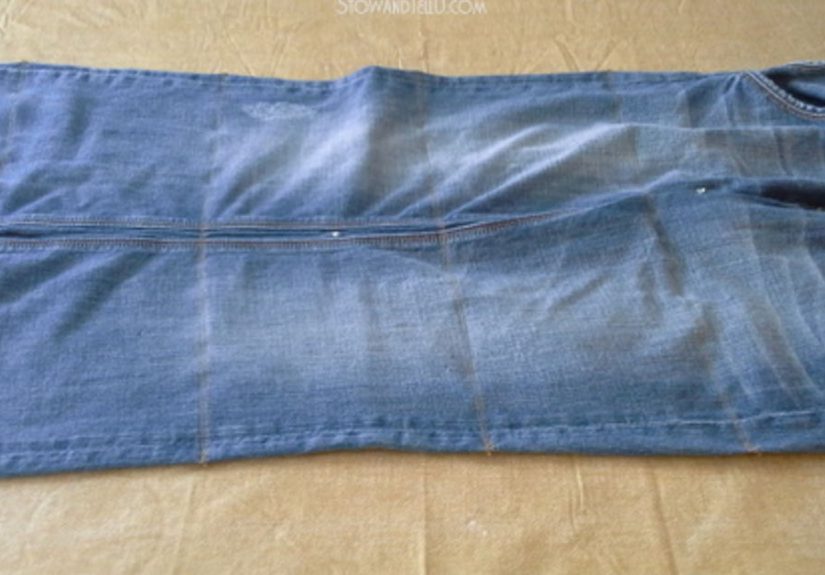
- Cut out pockets: Remove back pockets and any extra sections you want (belt loops can become little hooks).
- Plan your layout: Arrange pockets on the backingstagger them if you want more visual interest and easier access.
- Attach pockets: Sew around the sides and bottom of each pocket, leaving the top open (obviouslyunless you want a pocket you can’t use).
- Add hanging hardware: Use grommets at the top corners, sew a casing for a dowel, or secure the organizer to a sturdy hanger.
- Reinforce stress points: Extra stitching at top corners and pocket edges helps the organizer last longer.
Where a Denim Pocket Hanging Organizer Works Best
- Entryway: Mail, keys, dog leash, sunglasses
- Craft area: Scissors, markers, glue sticks, measuring tape
- Bathroom: Hair tools, brushes, skincare backups
- Kids’ room: Small toys, flashcards, art supplies
- Home office: Chargers, sticky notes, pens, receipts
Troubleshooting: Common Problems (With Easy Fixes)
Problem: The Organizer Sags in the Middle
- Move heavier jeans to the bottom shelves.
- Reduce the number of pairs per cubby.
- Choose an organizer with stronger shelf inserts next time.
Problem: Jeans Slide Around and Look Messy
- Use the file-fold method so each pair stands upright.
- Add simple shelf dividers or small bins inside compartments.
- Group similar denim together for less “denim drift.”
Problem: You Forget What You Own
- Keep the organizer at eye level.
- Store “off-season” jeans elsewhere (bin, shelf, or suitcase storage).
- Leave one compartment empty as a “buffer” so you can put jeans away quickly.
Real-Life Experiences: What It’s Like Living With a Blue Jean Hanging Organizer (500+ Words)
Let’s talk about what happens after the Pinterest-perfect setupthe part where you actually use the organizer every day.
Because in real closets, denim doesn’t float gracefully into cubbies while soft music plays. Real jeans are heavy, your morning is rushed,
and at least one pair is always half inside-out because you took them off like you were escaping a denim trap.
One of the first “aha” moments people tend to have is that hanging organizers make outfit decisions fasternot because you suddenly become
a minimalist, but because you can see your options without digging. When jeans are stacked, the pair you want is always on the bottom, and
the act of pulling it out turns the entire pile into a denim landslide. With compartments, you grab the pair you want and the others stay put.
It’s the closet equivalent of traffic control.
The second experience is learning the organizer’s true capacity. Product photos often show shelves holding fluffy sweaters like clouds.
Jeans are… not clouds. In real use, many people find a sweet spot at one or two pairs per cubby, depending on thickness. A compartment that fits
two pairs of lightweight stretch denim might only fit one pair of rigid, heavyweight jeans. The organizer teaches you your denim “density.”
If you try to force three pairs into one shelf, the fabric bows, the shelf sags, and you start quietly negotiating with your closet like,
“Okay, fine, you win.”
A surprisingly helpful habit is assigning shelves based on how often you wear each pair. The most-used jeans go in the easiest-to-reach compartments.
Special occasion denim (yes, that’s a thinghello, “nice jeans”) can go higher up. “Messy work” jeans go low, where they’re easy to grab on the way
to the garage or garden. This setup doesn’t just organize your clothes; it organizes your week.
Another common real-life win: the organizer becomes a built-in “landing zone” for jeans you plan to re-wear. Many people don’t wash jeans after
every wear, so there’s often a limbo categoryclean enough to wear again, not clean enough to put back with fully fresh laundry. A hanging organizer
can handle that if you reserve one compartment for “re-wear denim,” ideally after the jeans have aired out for a bit. This keeps that in-between
pair from draping over a chair like a denim ghost haunting your bedroom.
If you try the DIY denim-pocket organizer version, the experience is different but equally satisfying. People often describe it as “weirdly useful”
because denim pockets are sturdier than most fabric organizers. They hold shape, they don’t flop, and they’re made to handle weight. A pocket organizer
near the door becomes the place where life’s small essentials finally stop vanishing: keys, lip balm, earbuds, tape measure, spare change, that one pen
that still works. And because it’s made from jeans, it looks casual and intentionallike you planned this, rather than desperately trying to tame clutter
with whatever you could find in a drawer.
The biggest real-life lesson? Maintenance is easier when you build in “breathing room.” Leaving one shelf empty (or only lightly filled) makes it simpler
to put jeans away quickly. It gives you a buffer for laundry day, for trying on outfits, or for the inevitable moment when you buy a new pair of jeans and
refuse to admit it means you should donate an old pair. The organizer works best when it supports your habits instead of demanding perfection.
Conclusion: A Closet Upgrade That Actually Sticks
A blue jean hanging organizer is one of those rare organizing tools that can improve both your space and your routine. Hanging shelf organizers
make denim easy to see, grab, and put away without toppling stacks. Upcycled denim pocket organizers turn old jeans into durable storage that looks cool and works hard.
Choose a sturdy organizer built for weight, fold jeans in a way that matches your compartments, and organize by how you really livenot how an influencer’s closet
looks at 9:00 a.m. on a Tuesday. Your future self (late for something, holding coffee, searching for the one pair of jeans that feels right) will be genuinely grateful.