Table of Contents >> Show >> Hide
- The 8-8-8 Model Was Never a Universal TruthIt Was a Labor Reform Goal
- Why the 8-Hour Workday Doesn’t Feel Like 8 Hours Anymore
- Why Women Feel the Breakdown Faster
- The Sleep Slice Is Getting Squeezed (And That Has Consequences)
- Economic Reality: One Job, Two Jobs, Side Hustles, and “Always On”
- So What Replaces the 8-8-8 Model?
- A More Honest Daily Model: The “8-8-8” Reality Check
- Real-Life “8-8-8” Stories (Composite Experiences)
- Conclusion: The Model Isn’t “Broken” Because You’re Doing It Wrong
There’s a classic idea that life fits neatly into three equal slices: 8 hours of work,
8 hours of sleep, and 8 hours of play. Simple. Elegant. Like a perfectly
cut pizzaif your pizza came with a commute, childcare, Slack notifications, and a mysterious drawer full of unmatched socks.
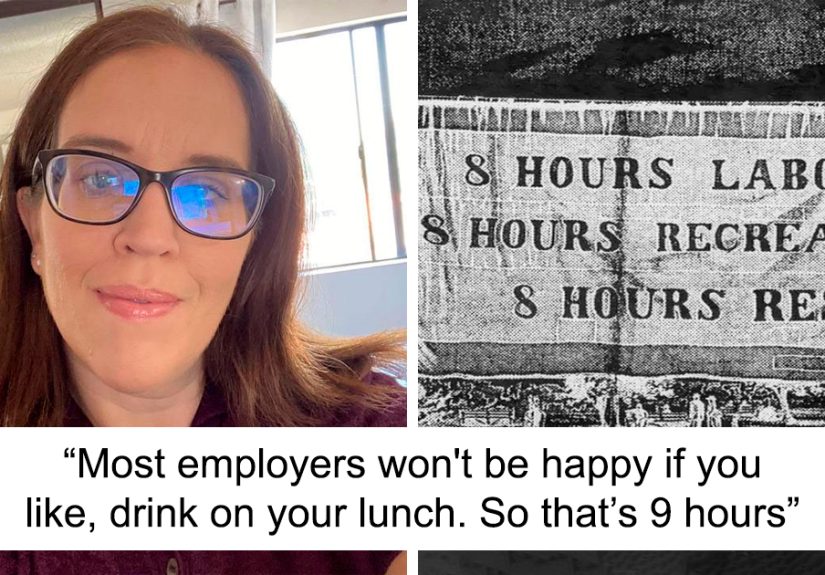
In a viral, widely relatable rant (the modern-day version of yelling into the town square, but with better lighting),
a woman breaks down why the “8-8-8” model doesn’t add up anymore. Not because people are “lazy” or “bad at time management,”
but because the math assumes a world that no longer existsif it ever did for most people.
Let’s unpack what changed, why it hits women especially hard, and what a more realistic (and humane) daily rhythm can look like in 2026 and beyond.
The 8-8-8 Model Was Never a Universal TruthIt Was a Labor Reform Goal
The “eight hours work, eight hours recreation, eight hours rest” slogan came out of labor reform movements that pushed back against brutal,
exhausting workdays. The point wasn’t that everyone’s day would forever be perfectly balancedit was that workers deserved boundaries.
A shorter workday was revolutionary because it admitted something radical: humans are not steam engines.
Over time, the ideal hardened into a cultural expectation. We started treating the 8-hour workday like gravitysomething that just “is,”
rather than a policy choice shaped by economics, technology, and power. And that’s the first crack in the model:
it assumes work is stable, predictable, and contained.
Why the 8-Hour Workday Doesn’t Feel Like 8 Hours Anymore
1) The workday leaksdigital “after-hours” is now a default
Even if you clock “only” eight hours, many jobs now come with an invisible subscription package:
checking messages, responding “real quick,” thinking about work while trying to relax, and doing unpaid prep.
Work follows you because your work tools live in your pocketright next to your photos, your bank app, and that game you swore you deleted.
This is how an 8-hour job becomes a 10-hour mental occupation without a formal overtime line item.
And the 8-8-8 model has no category for “being on standby.”
2) The commute is the uninvited “ninth hour”
The model also assumes that “work” starts at the workplace and ends when you leave it. But many people spend substantial time getting to and from work.
Remote work highlighted this instantly: when the commute disappears, people “find” time they didn’t know they had.
Research on work-from-home time savings suggests the average daily commute time saved is meaningful, and the interesting part is what people do with it:
some of it goes back to work, and some of it goes to caregiving and life admin. Translation: even when people win time, they often use it to patch holes
in a schedule that was already overdrawn.
3) The “8 hours of play” is actually “8 hours of everything else”
The woman’s core point is blunt: the model acts like the non-work portion of life is leisure.
But for most adults, those hours include cooking, cleaning, laundry, errands, caregiving, planning, emotional labor,
and the special hobby known as “trying to get a doctor’s office to answer the phone.”
When people say, “I don’t even have time to relax,” they’re not being dramaticthey’re reading the fine print.
The model calls it “play,” but real life calls it “maintenance.”
Why Women Feel the Breakdown Faster
The 8-8-8 idea collapses for everyone under modern pressure. But it often collapses first for women because of an old reality with a new name:
the second shiftunpaid household and caregiving work that still falls disproportionately on women in many families.
Time poverty is real, and it’s measurable
U.S. time-use data consistently shows women are more likely to do household activities on a given day and, on days they do them, spend more time than men.
That difference isn’t just annoyingit’s schedule-breaking. A system that assumes “free time” exists will punish the person who has less of it.
Caregiving doesn’t fit in neat blocks
Care work isn’t like a meeting you can move to Thursday. It pops upsick kids, aging parents, school pick-ups, prescriptions,
“Mom, where is my” (insert any object that is currently in their hand). These tasks shred the clean geometry of 8-8-8.
And because caregiving is often treated like a private problem instead of a public infrastructure issue, families solve it with individual sacrifice
frequently women’s time, career momentum, sleep, or all three.
The Sleep Slice Is Getting Squeezed (And That Has Consequences)
The 8-8-8 model assumes you’ll actually get 8 hours of sleep, which is hilarious in the way a comedy is hilarious until you realize it’s a documentary.
Health guidance for adults commonly recommends at least 7 hours of sleep per night, yet many people fall short.
When schedules tighten, sleep is often the first thing to get “borrowed” againstbecause you can’t borrow hours from your job as easily as you can borrow
hours from your future self.
Long hours and irregular schedules don’t just feel badthey raise risk
Research and workplace safety guidance link long work hours, shift work, and fatigue to higher risks of errors, injuries, and health problems.
It’s not just about being tired. Fatigue changes reaction time, decision-making, mood, and resilience. In other words:
it makes life harder, and then life gets even harder because you’re fatigued.
The 8-8-8 model assumes sleep is protected by default. Modern life treats sleep like an optional app you can uninstall to free up storage.
Spoiler: your brain is not impressed.
Economic Reality: One Job, Two Jobs, Side Hustles, and “Always On”
Another reason the model doesn’t work: it assumes a single, stable job with a predictable schedule.
But many households rely on multiple incomes, multiple jobs, gig work, or unpredictable shifts.
The “8 hours of work” slice becomes “however many hours it takes to keep up.”
Meanwhile, the boundary between paid and unpaid work blurs. If you’re scheduling your own shifts, chasing clients,
driving for extra cash, or freelancing at night, the day stops being three equal blocks and becomes a patchwork quilt.
And yes, some quilts are beautiful. This one is usually just… itchy.
So What Replaces the 8-8-8 Model?
The woman’s argument isn’t “burn everything down and never work again.” It’s more practical:
stop using a broken model to judge your life. If the template doesn’t match reality, the problem is the templatenot you.
1) Think in “energy budgets,” not just time budgets
Two people can both have 16 waking hours and live completely different realities.
A parent of a toddler and a person caring for an aging relative aren’t “bad at balance”they’re operating under a different load.
Instead of asking “How do I fit everything in?” ask “What drains me, what restores me, and what can I redesign?”
2) Create boundaries that are visible, not vibes-based
Vibes-based boundaries are how you end up answering emails at 10:47 p.m. while whispering, “It’s fine.”
Try concrete rules:
- Hard stop rituals: shut down laptop, write tomorrow’s first task, physically leave the work zone.
- Notification pruning: fewer pings, fewer “urgent” false alarms.
- Office hours for messages: if it’s not an emergency, it can wait.
3) Treat “life admin” like real work (because it is)
Cooking, cleaning, caregiving, and household management aren’t hobbies.
They’re labor that keeps people alive and functional. When families name these tasks and divide them intentionally,
the schedule stops gaslighting everyone.
A simple tool: make a shared “home ops” list (like a project board) and rotate ownership.
Not “helping,” not “pitching in”owning.
4) Support structural changes that reduce time poverty
Individual hacks help, but they can’t solve structural problems. Policies and workplace norms matter:
predictable schedules, reasonable staffing, paid leave, fair overtime rules, childcare access, and realistic workloads.
Companies also experiment with alternative schedules (like compressed weeks or four-day workweeks) to protect focus time and reduce burnout.
Not every job can be remote. Not every workplace can shift to a four-day week. But every workplace can stop pretending
that humans run best on endless output with zero friction.
A More Honest Daily Model: The “8-8-8” Reality Check
If we updated the model to match modern life, it might look more like this:
- Work (paid): meetings, tasks, commuting, messages, planning, “quick questions.”
- Work (unpaid life work): meals, cleaning, caregiving, errands, scheduling, emotional labor.
- Recovery: sleep, downtime, movement, hobbies, quiet, connection.
The real goal isn’t perfect symmetry. It’s enough recovery to stay healthy and enough control to live a life that isn’t just survival.
Real-Life “8-8-8” Stories (Composite Experiences)
Below are composite experiencesbuilt from common patterns many workers describeshowing how the 8-hour work/sleep/play model breaks in the real world.
These are not one person’s literal diary. They’re a mirror held up to modern schedules.
1) The “I Work 8 Hours, But I’m Busy for 12” Day
A woman with a standard office job technically works 9 to 5. But her day starts at 6:30 a.m. because she needs time to get kids ready,
pack lunches, and do the drop-off sprint. Work begins after a commute, and it ends… sort of. She leaves the office at 5, but traffic turns
“going home” into a second job. After dinner, she cleans up, checks backpacks, signs a school form she forgot about, and finally sits down
right as her phone buzzes with a “quick” message from work.
She tells herself she’ll answer in the morning, but she’s worried it will look bad. She answers. It becomes a thread.
Now it’s 9:40 p.m., and her “free time” is basically a short film called Scrolling While Exhausted.
She goes to bed later than planned, because the only quiet time she got all day was the time she stole from sleep.
2) The “Second Shift” Isn’t a MetaphorIt’s a Schedule
Another woman works a hospital-adjacent job with rotating shifts. Her week isn’t predictable, so she’s always planning ahead:
childcare coverage, meals, transportation, appointment juggling. On paper, she gets days off. In practice, those days are filled
with errands and recovery. She spends a “day off” doing laundry, grocery shopping, and catching up on calls that can’t be made during shifts.
People say, “At least you have time during the day!” But that “time” is often spent sleeping at odd hours, trying to keep her body from
turning into a permanently stressed-out raccoon. The 8-8-8 model assumes a stable rhythm. Her life runs on rotating survival mode,
and “play” becomes something she schedules like a dentist appointmentrarely, and only when absolutely necessary.
3) The High-Achiever Trap: When Flexibility Turns into Infinite Work
A remote worker loves not commuting. She does, genuinely, get more time backuntil her calendar fills up with meetings because “you’re home anyway.”
The boundary between work and life fades. She starts earlier because it’s convenient. She ends later because she can.
She takes a break to switch the laundry, then answers messages, then finishes a report after dinner “just to get ahead.”
Her job isn’t asking her to work nonstop in a single explicit command. It’s a thousand tiny nudges:
the culture of responsiveness, the pressure to prove remote work “works,” the fear of being seen as replaceable.
She realizes she has traded a commute for a different cost: constant availability. Her day is flexible, yes
but it’s flexible in the way a rubber band is flexible right before it snaps.
4) The Caregiver Math Problem That Never Balances
One woman is caring for an aging parent while working full-time. Her schedule looks normal until you add what doesn’t show up on a timesheet:
medication pick-ups, appointment coordination, insurance calls, unexpected emergencies, and the emotional weight of watching someone you love struggle.
She tries to follow the 8-8-8 plan and feels like she’s failing. But she isn’t failingshe’s trying to run a modern life on a model that assumes
caregiving is minimal, outsourced, or invisible. Her “play” time becomes her coping time: a short walk, a TV episode, a few minutes of quiet.
She learns that balance isn’t about equal slices. It’s about not collapsing.
Conclusion: The Model Isn’t “Broken” Because You’re Doing It Wrong
The woman’s point lands because it’s not theoreticalit’s lived. The 8-hour work/sleep/play model doesn’t fail because people forgot how to plan.
It fails because it assumes a stable workday, protected boundaries, and a large pool of “leisure” hours that most adults don’t actually have.
If your day doesn’t fit the template, you’re not defective. You’re responding to reality.
The healthier goal isn’t forcing modern life into an old sloganit’s building schedules, workplaces, and policies that protect sleep,
reduce time poverty, and respect that unpaid labor is still labor.
The updated dream isn’t “8-8-8.” It’s: enough rest, enough support, and enough control over your time to live like a personnot a production machine.