Table of Contents >> Show >> Hide
- What Allegedly Happened: A Break-Stacking Routine Turns Into a $1,117 Demand
- Why Everyone’s Mad (And It’s Not Just Because We Love Drama)
- Time Theft vs. “I Did What My Supervisor Told Me”
- What Federal Rules Say About Breaks (In Plain English)
- Can an Employer Demand Repayment for “Hours Not Worked”?
- The Hidden Problem: Bad Timekeeping Systems Create Bad Breakup Stories
- Remote Work, Monitoring, and the Modern “Were You Really Working?” Panic
- If You’re the Employee in This Situation: Practical Steps That Don’t Involve Panic-Googling at 2 A.M.
- If You’re the Employer: How to Avoid Becoming the Villain of Everyone’s Group Chat
- So… Was This Employee “Logging Hours Without Working”?
- Conclusion: The Clock Is a ToolNot a Weapon
- Extra: Real-World Experiences and Lessons From “Time Theft” Accusations (About )
If you’ve ever stared at a timesheet and thought, “This little grid holds way too much power over my life,” welcome.
The internet just found a new villain: a workplace breakup story where an employee says they were fired, then hit with a
not-so-friendly request to pay back over a grandplus a sprinkle of “we’ll get legal involved” for seasoning.
It’s the kind of situation that turns comment sections into a digital town hall: half courtroom drama, half group therapy,
and one guy yelling “LAWYER UP!” like it’s a cheat code. But underneath the memes is a real (and surprisingly common)
tension in American workplaces: What counts as “working,” who controls the clock, and what happens when a manager’s casual
“sure, that’s fine” collides with payroll reality.
What Allegedly Happened: A Break-Stacking Routine Turns Into a $1,117 Demand
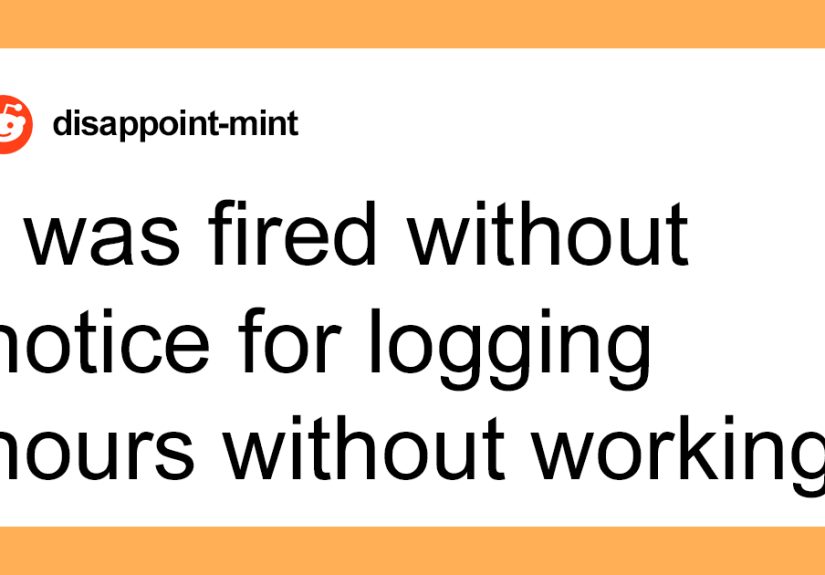
Here’s the snapshot that sparked the outrage. An employee described being told they could take lunch and breaks at the end
of the day and leave earlybasically “bank your breaks and dip.” Later, they said they were fired without notice for
“logging hours without working.” After the termination, the former employer (or at least a supervisor) allegedly demanded
repaymentaround $1,117and dangled the idea of legal action or even police involvement if the money
wasn’t returned.
The detail that really poured gasoline on the fire: when the employee asked for specificslike which hours were supposedly
“stolen”they claimed they were threatened with more legal action for asking questions. If you’re thinking,
“Isn’t documentation the whole point of payroll disputes?” yes. That’s why people were furious.
Add a few extra complications mentioned in coverage and discussion: the employee said they received their last paycheck
by direct deposit but had issues around other loose ends (like retrieving personal items or getting an official termination
letter). They also believed another worker left at the same time but wasn’t asked to repay anythingraising the specter of
inconsistency, favoritism, or plain old chaos.
Important note: we’re hearing one side of a story that went viral, and viral stories are not sworn testimony. Still, the
scenario is believable because it sits right in the messy intersection of timekeeping, manager “permission,” and wage-and-hour rules.
Why Everyone’s Mad (And It’s Not Just Because We Love Drama)
1) The power imbalance is loud
Getting fired is already destabilizing. Adding a retroactive payback demand feels like a workplace version of
“you can’t break up with me, I break up with you.” People reacted strongly because it reads like financial intimidation:
“Pay us, or else.” Even if the employer believes time was misreported, the tone and timing matter.
2) “Show your work” should apply to employers too
If you accuse someone of time theft or timesheet fraud, the expectation is that you can point to the entries and explain
the discrepancy. Threatening legal action when someone asks for details looks (to the internet, anyway) like bluffing,
bullying, or both.
3) The break-time confusion is extremely American
In the U.S., many workers assume breaks are guaranteed. At the federal level, breaks aren’t requiredbut once a company
offers breaks, how those breaks are treated for pay can get technical fast. That technicality is exactly where this story
lives: if someone “stacks” breaks to leave early, are they taking paid rest time? Unpaid meal time? A mix? Did a supervisor
approve it? Was approval consistent? Was it in writing? Cue the internet fuming.
Time Theft vs. “I Did What My Supervisor Told Me”
Let’s define terms, because “time theft” gets tossed around like confetti at an office party nobody wanted.
In payroll-world language, time theft generally means reporting time not actually workedeverything from buddy punching to
padding hours to “I was totally working while watching eight consecutive videos on how to make ramen.”
Even mainstream payroll and HR resources describe time theft as recording time you didn’t work, including leaving early but
clocking out later, arriving late but clocking in earlier, or falsifying timesheets. That’s the employer’s concernand it’s real.
A lot of businesses worry about it, especially in hourly environments.
But here’s the key distinction: time theft usually implies deception. This viral story doesn’t read like
secret deception. It reads like permission (possibly informal, possibly dumb) that later got reframed as wrongdoing.
When “leave early” might be legitimate
Sometimes leaving early is perfectly allowed:
- Paid rest breaks: Short breaks (think 5–20 minutes) are typically treated as compensable work time under federal guidance once offered.
- Flexible schedules: Some workplaces let employees shift timestart earlier, leave earlierif total hours are met.
- Manager-approved adjustments: If a supervisor authorizes a practice and it’s consistent with policy, it may be fineeven if it’s not the neatest for payroll.
The problem is that “fine” is doing a lot of work in that sentence. Approval that’s verbal, inconsistent, or undocumented
is like building a house out of Jell-O: it looks stable until someone sneezes.
When “break stacking” can backfire
Break stacking can become a mess when:
- The employer treats the end-of-day “break” as an unpaid meal period, but the employee is still on the clock (or recorded as on the clock).
- The employee is not fully relieved of duties during meal periods (which can make the time compensable).
- State meal/rest break laws add extra rules (many states do).
- Payroll systems automatically deduct meal breaks, but the reality on the ground doesn’t match.
Translation: the clock doesn’t care that your supervisor said “sure.” The system wants categories, timestamps, and consistency.
Humans prefer vibes. Conflict is inevitable.
What Federal Rules Say About Breaks (In Plain English)
Here’s the federal baseline, simplified:
- Meal periods (often 30+ minutes) are generally not paid time if the employee is completely relieved from duty.
- Short rest breaks (often 5–20 minutes) are generally counted as hours worked when an employer allows them.
- The Fair Labor Standards Act (FLSA) doesn’t require breaksbut it does care about accurate timekeeping and paying people correctly once time is considered “hours worked.”
This matters because the viral scenario basically asks: were those end-of-day “breaks” unpaid meal time (not payable) or paid rest time (payable)?
If they were paid breaks, leaving early could still be paid. If they were unpaid, recording them as paid could be a payroll problem.
And yes, it can get even messier if the workplace had a practice that effectively let people turn unpaid time into paid timeintentionally or accidentally.
If that happened, it’s a management and compliance failure, not a magical moral crime committed by one unlucky employee.
Can an Employer Demand Repayment for “Hours Not Worked”?
This is where the story turns from “work drama” into “wait, can they even do that?”
The real answer is: it dependson evidence, on how pay was handled, and on state wage deduction laws.
But we can outline the big concepts without turning this article into a law school final.
1) “Free and clear” pay and the anti-kickback idea
Federal wage rules include the concept that wages should be paid “free and clear,” meaning employers generally can’t demand
that employees kick back wages for the employer’s benefit in a way that undermines minimum wage and overtime protections.
In practice, this principle is why employers can’t casually shift business costs onto workers by clawing back pay through deductions
that push pay below legal thresholds.
Even guidance on wage deductions (like uniforms, tools, or losses) emphasizes that deductions can’t cut into minimum wage or overtime.
And that same “don’t shift business costs onto the worker” theme shows up again and again in wage-and-hour enforcement.
2) Overpayments are one thing; “you stole time” is another
If a company accidentally overpays you (like an extra zero on a bonus, congrats), many states allow employers to recoup
overpayments under certain conditions. But a demand for repayment tied to alleged time theft isn’t always treated like a simple overpayment.
It’s more like: “We think you were paid based on misrepresentation.”
That difference matters because employers may need to prove what happened, and state laws often regulate paycheck deductions,
final pay, and whether an employee must consent in writing to certain deductions. Some states require notice or a dispute process.
Others permit limited deductions. Many treat it as a state-by-state maze.
3) If they really want the money, they may have to sue (and that’s hard)
HR and employment law commentary often points out that an employer with definitive proof of time theft can seek repayment,
but the practical path may involve court claims like fraud, conversion, civil theft, or breach of dutyespecially if the employee refuses.
That’s expensive, slow, and not guaranteed. Which is why many companies don’t do it unless the losses are significant or the facts are very strong.
This is why the viral “pay us or we’ll sue” move set off alarm bells. The internet’s collective gut reaction:
if you had a slam-dunk case, you’d present documentationnot threats.
The Hidden Problem: Bad Timekeeping Systems Create Bad Breakup Stories
The least satisfyingbut most accurateexplanation for a lot of these situations is also the most common:
timekeeping policies exist, but nobody follows them the same way.
Many workplaces run on informal manager approvals that never make it into a written policy. A supervisor says,
“Just leave early, it’s fine,” because they want a happy team and fewer problems today. Then payroll, compliance,
or a new manager shows up later and says, “Wait… what is this?”
When that happens, companies sometimes panic and overcorrect. And when companies panic, workers become collateral damage.
The viral story resonated because it felt like a worker got punished for a practice the workplace itself created.
Remote Work, Monitoring, and the Modern “Were You Really Working?” Panic
Even though this story wasn’t exclusively about remote work, it belongs to the same era: the era of “prove you were productive.”
As remote and hybrid work normalized, some managers leaned into monitoring tools to track activity, screen time,
and “presence.” Others tried to measure output instead of mouse movement (a healthier approach, generally).
Management research has warned that invasive monitoring can backfire by undermining trust and creativitywhile more transparent,
fair, and purpose-driven oversight tends to work better. That’s relevant here because the viral anger wasn’t only about
the money; it was about the vibe of suspicion.
Workers are tired of being treated like they’re always one bathroom break away from a felony.
Employers are tired of paying for time they can’t verify.
The solution is rarely a threat. It’s clarity.
If You’re the Employee in This Situation: Practical Steps That Don’t Involve Panic-Googling at 2 A.M.
This isn’t legal advicebut it is the common-sense checklist people wish they had before things got weird:
Document what you can (without turning into a private investigator)
- Save any written instructions about breaks, schedules, or leaving early.
- Keep pay stubs, time records, and any termination-related messages.
- If communication continues, keep it in writing (email/text) when possible.
Ask for specifics calmly, once
If someone claims you owe money, it’s reasonable to ask for a written breakdown. If they refuse to provide it and escalate to threats,
that’s useful information all by itself.
Know that state agencies exist for a reason
Wage-and-hour disputes often run through state labor agencies, not cinematic courtroom speeches. If the dispute involves unpaid wages,
final pay, or questionable deductions, your state’s labor department (or equivalent agency) may have a complaint process.
Don’t confuse a threat with a filed case
A threat is not the same as a lawsuit. A demand is not the same as a judgment. If formal legal paperwork arrives,
that’s when you respond through the proper channels.
If You’re the Employer: How to Avoid Becoming the Villain of Everyone’s Group Chat
If you want to prevent time theft, you can. Payroll platforms have been singing that song for years:
clear time-and-attendance policies, consistent enforcement, and tools that reduce “buddy punching” and inaccurate reporting.
But here’s the twist: your policy has to match reality.
Make break rules painfully clear
- Are rest breaks paid? If so, how many and how long?
- Are meal breaks unpaid? Under what conditions?
- Can employees combine breaks to leave early, or is that prohibited?
- What must be recorded on the timesheet?
Train managers not to freestyle payroll
A manager’s offhand “sure” can become a compliance headache later. If you don’t want break stacking, don’t allow it.
If you allow it, document it. “Unwritten policy” is just another name for “future lawsuit fan fiction.”
Use monitoring ethically (and transparently)
If you’re tracking productivityespecially with remote employeesbe transparent, explain the purpose, and avoid surveillance theater.
Research-backed advice: focus on outcomes and trust-building practices rather than treating monitoring like a substitute for leadership.
So… Was This Employee “Logging Hours Without Working”?
The honest answer is: we can’t know from the outside. But we can say why the internet sided with the employee:
the alleged facts pointed to manager-approved behavior, vague accusations, and a repayment demand that didn’t come with clear documentation.
In workplace disputes, clarity is kindness. And threats are the opposite of clarity.
Conclusion: The Clock Is a ToolNot a Weapon
This viral blow-up hit a nerve because it’s not just about one employee and one company. It’s about how easily “timekeeping”
becomes “time policing,” and how quickly messy policies turn into personal crises.
If you’re an employee, protect yourself with documentation and calm, written communication. If you’re an employer, build a system
that doesn’t rely on vibes and memory. And if you’re anyone who’s ever filled out a timesheet, take comfort in this truth:
you’re not alonemillions of people are also one awkward payroll email away from becoming the main character.
Extra: Real-World Experiences and Lessons From “Time Theft” Accusations (About )
Over and over, workplace stories like this follow a few recognizable patterns. Not because workers are secretly running a criminal
empire from the break room, but because timekeeping is one of those systems that looks simple until it meets human behavior.
Here are some common “in-the-wild” scenarios people describeand what tends to calm the chaos.
Experience #1: The “Manager Approved It… Until They Didn’t” Whiplash
One week, a supervisor says, “If you finish your tasks, go ahead and head out early.” People do exactly thatwork fast,
close out the day, and leave. Then a different supervisor notices the schedule doesn’t match the badge swipe, or payroll asks why
departures are earlier than recorded. Suddenly the same behavior gets reframed as “stealing time.” The fix is boring but powerful:
write down the rule. If leaving early is allowed, define what “allowed” means (output-based? shift coverage? pre-approval?).
If it’s not allowed, stop saying it is.
Experience #2: The Auto-Deduct Meal Break Trap
Some employers automatically deduct a meal period from every shift. That’s not inherently evil, but it becomes a problem when
employees don’t actually get a real meal break (or keep working while “off the clock”). Then the employer’s records say one thing,
the employee’s reality says another, and everyone loses. The clean approach is to require employees to confirm meal breaks
were taken (or provide an easy way to report missed breaks) and to train managers not to “encourage” off-the-clock work.
Experience #3: The “We Want Repayment” Letter That Feels Like a Shake-Down
Repayment demands often land badly because they arrive with confidence but without receipts. A reasonable request sounds like:
“Here are the dates, hours, policy, and calculation. Here’s how to dispute it.” An unreasonable one sounds like:
“Pay this number we made up, or else.” Employees who stay calm and ask for a written breakdown typically learn quickly whether
the employer has real documentation or is trying to scare them into compliance.
Experience #4: Remote Work and “Activity = Work” Myths
In hybrid jobs, “working” can mean thinking, reading, planning, writing, meeting, or troubleshootingnot just typing.
Some monitoring tools track activity that doesn’t reflect actual productivity, which can lead to false accusations.
The healthiest teams define outcomes (deadlines, deliverables, quality standards) and use check-ins to remove obstacles,
not to hunt for “gotcha” moments.
Experience #5: The Best Defense Is Boring Consistency
Workers who avoid timekeeping drama tend to do the same few things: keep their own notes of schedule changes, save approvals in writing,
report inconsistencies early, and don’t rely on “everyone does it” as a safety plan. Employers who avoid becoming internet villains
do the mirror image: clear policies, consistent enforcement, and manager training that treats payroll rules as rulesnot optional suggestions.
If this whole topic feels exhausting, that’s because it is. But it’s also solvable. Most “time theft” blow-ups aren’t about a single bad actor.
They’re about unclear expectationsuntil the day someone decides to enforce the clock like it’s a personality.